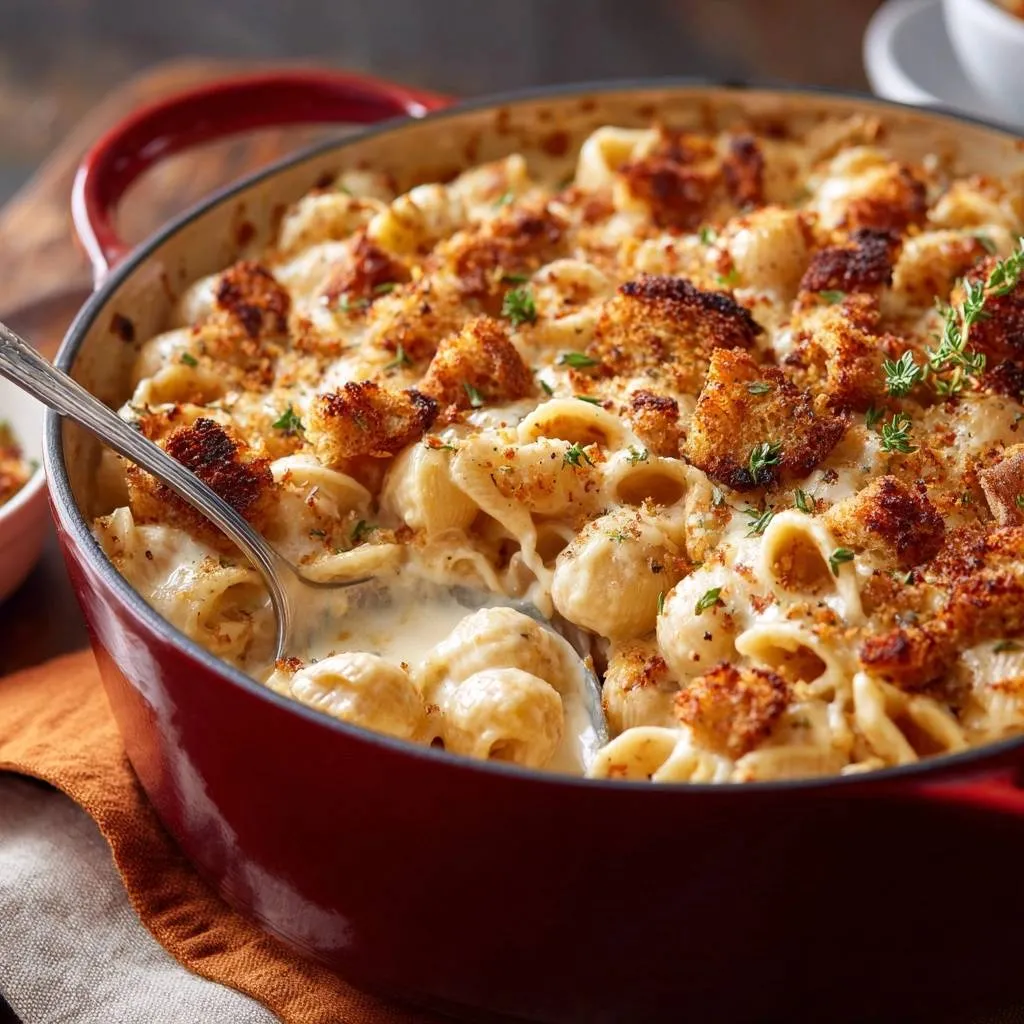
Tired of mac and cheese with a soggy, disappointing crust that turns mushy five minutes after it hits the table? This cast iron mac and cheese fixes that forever. You get a creamy, velvety sauce hugging every piece of cavatappi pasta, topped with golden panko that’s shatteringly crisp every time.
Here’s why it works so well. The cast iron skillet holds heat like a champ, letting you build a perfect roux right on the stovetop before sliding it into the oven. Then, a quick high-heat broil evaporates any steam for that permanent crunch, no sogginess in sight.
One key tip proves it: toss the panko in just-melted butter, not a wet mix. This keeps it dry enough to crisp up under the broiler while the sauce stays smooth below. You’ll never go back to sad, steamed toppings.
Why Cast Iron Elevates Mac and Cheese
Cast iron’s magic comes from its unbeatable heat retention. It keeps a steady 375F for even baking, then spikes fast for broiling. Glass or metal pans just steam everything, leading to limp crusts.
Therefore, this cast iron mac and cheese delivers superior browning through the Maillard reaction. The skillet’s thick thermal mass crisps the top perfectly. No more soggy disappointments.
In addition, you build flavor in one pan. The fond from the roux sticks around, deepening the taste of your skillet-baked macaroni.
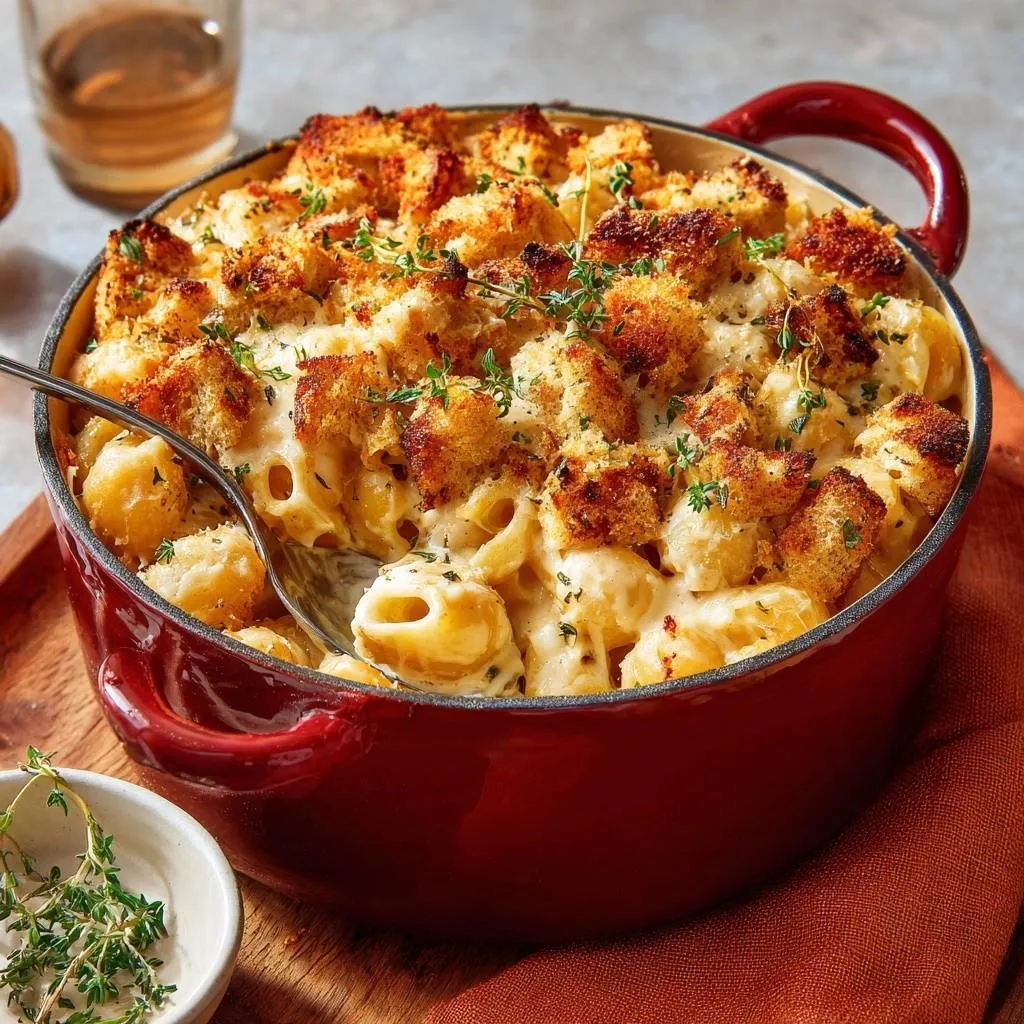
Cast Iron Skillet Heat Retention Benefits
Cast iron’s thermal mass holds 375F steady, so your sauce thickens evenly without hot spots. Aluminum pans lose heat fast, causing uneven results. That’s why this cast iron mac and cheese shines.
Plus, it ramps up quickly to broil temps. You get deep browning fast, locking in crunch.
From Stovetop Roux to Oven Crisp
Everything happens in one skillet, so you skip extra dishes. The roux’s fond infuses the sauce with rich flavor. Seamless shift from stove to oven makes cast iron mac and cheese a winner.
Key Ingredients for Creamy Cast Iron Mac
Cavatappi pasta holds sauce better than elbows because its twists trap cheese perfectly. Sharp cheddar brings tang that cuts through richness, while mozzarella adds stretchy melt. Whole milk ensures a velvety béchamel, not watery skim.
Don’t skip mustard powder; it emulsifies the sauce for smoothness. Garlic powder distributes flavor evenly without raw bite. Fresh parsley and thyme brighten the crunchy top post-bake.
Grate your own cheese always. Pre-shredded has starch that clumps. These picks make your cast iron mac and cheese foolproof.
Pasta and Cheese Blend Ratios
Cook 16 oz cavatappi 1 minute under al dente. The 4 cups sharp cheddar to 1 cup mozzarella ratio melts smoothly; mozzarella lowers the temp for no separation. Whole milk gelatinizes the roux thick.
Seasonings and Fresh Herbs Impact
Mustard powder adds acid to emulsify fats. Garlic powder blends seamlessly. Use fresh parsley and thyme; if dried, halve amounts for punch without overpowering your skillet mac and cheese.
Equipment Essentials for Cast Iron Mac
Grab a 10-12 inch cast iron skillet; Lodge works great and seasons naturally for non-stick sauce. It must be broiler-safe. Add a large pasta pot and sturdy whisk.
Skip non-oven-safe pans. This setup nails cast iron mac and cheese every time.
Skillet Size and Preheating Tips
A 10-12 inch skillet fits 16 oz pasta in a single layer. Preheat it empty at 375F; it jumpstarts the roux for better searing in your cast iron mac and cheese.
Mastering the Roux in Cast Iron
Start with al dente cavatappi. Melt 3 tbsp butter medium heat, whisk in 1/4 cup flour for 2 minutes till bubbly and nutty-smelling. No raw taste here.
Slowly whisk in 4 cups whole milk. Stir constantly 5 minutes till it coats a spoon; starch gelatinizes for thickness. This base makes cast iron mac and cheese creamy.
Off heat, stir in cheeses till smooth. Fold in pasta gently. Pro tip: warm pasta absorbs sauce better, so don’t rinse it cold.
Perfect Al Dente Cavatappi Timing
Boil in heavily salted water; it seasons pasta inside out. Cook 1 minute less than package, drain warm. Warm noodles soak up sauce better than shocked-cold ones in cast iron mac and cheese.
Building Thickened Cheese Sauce
Whisk medium till 185F, about 5 minutes. Off heat, add cheese slowly for melt without breaking. Fold pasta till coated; overmixing toughens it.
Science of No-Soggy Breadcrumb Crust
Dry panko tossed in 1 tbsp just-melted butter gets an even sheen, not soggy. Herbs stick right in. High broil at 500F+ evaporates steam fast, dehydrating for crunch.
Maillard reaction browns it golden with nutty flavor. Wet mixes steam and wilt. This method keeps cast iron baked mac topping crisp forever.
For a truly satisfying crunch, explore how to achieve that perfect texture in creamy bacon mac and cheese.
Sprinkle evenly. The brief blast locks it in while sauce stays velvety below.
For another comforting, cheesy casserole, try creamy cheesy chicken and rice bake.
Panko Tossing Technique Explained
Melt butter separate, toss panko till shiny but dry. Add parsley, thyme, pinch salt. Even coat means uniform crunch on cast iron mac and cheese.
Broil Timing for Deep Golden Crisp
Bake 20 minutes at 375F till bubbly. Broil high, rack 6 inches from heat, 2-3 minutes. Watch closely; rest 5 minutes to set the cast iron baked mac crust.
Step-by-Step Cast Iron Mac Assembly
Cook pasta al dente, build roux in skillet, whisk milk to thicken. Stir cheeses off heat till melted, fold in pasta fully. Top with butter-tossed panko mix.
Bake uncovered 20 minutes till edges bubble. Broil 2-3 minutes for gold. Let rest; serve hot for perfect cast iron mac and cheese.
Layering Pasta into Velvety Sauce
Fold warm pasta gently into sauce till every twist coats. Avoid stirring hard; it breaks the emulsion in your cast iron mac and cheese.
Avoiding Cast Iron Mac Pitfalls
Soupy sauce? You overcooked roux or used skim milk. Grainy cheese means high-heat stirring; always off-heat. Pale top from wet panko or weak broil.
Prevention beats fixes. Dry toss topping and watch broil closely for flawless cast iron mac and cheese.
Fixing Sauce Separation Issues
Melt cheese low or off-heat. Grate fresh; anti-caking agents cause clumps in cast iron mac and cheese.
Ensuring Even Crispy Topping
Toss panko dry, broil vigilant. Even sprinkle avoids soggy spots.
Flavor Twists on Cast Iron Mac
Swap gouda for smoky depth or add diced chicken pre-sauce. Buffalo sauce drizzle post-bake amps heat. Keep the dry panko broil for crunch in cast iron mac and cheese variations.
Pro tip: stir-ins go in before topping to stay juicy.
Protein-Packed Add-Ins
Mix diced ham or chicken into sauce before pasta. They heat through without drying in cast iron mac and cheese.
Make-Ahead Guide for Cast Iron Mac
Assemble unbaked, cover, fridge up to 24 hours. Add topping fresh before baking. For freezing, par-bake, cool, wrap tight up to 2 months; thaw overnight.
Reheat covered at 350F till hot, then broil crust anew. Perfect for cast iron mac and cheese meal prep.
Freezing and Reheating Steps
Portion into foil pans. Thaw fridge, bake covered, broil to refresh crunchy top on cast iron mac and cheese.
Pairing Sides with Cast Iron Mac
Balance richness with crisp green salad or roasted broccoli. Grilled corn adds sweet crunch. Chardonnay cuts the cream in cast iron mac and cheese nicely.
Round Out Your Meal
Complement your cast iron mac and cheese with fresh, vibrant salads.
- For a refreshing counterpoint to the rich mac and cheese, explore this Harvest Kale and Apple Salad featuring crisp apples and hearty greens.
- Another bright option is the Harvest Apple and Walnut Salad, which offers a pleasant crunch and a touch of sweetness.
Frequently Asked Cast Iron Mac Questions
Can I use elbow pasta instead of cavatappi?
Yes, elbows work, but cavatappi holds more sauce in its twists for better creamy bites. Cook al dente same way; sauce clings less, so stir extra gently in cast iron mac and cheese.
Why is the topping soggy, and how do I fix it?
Soggy comes from wet panko or long broil without watching. Toss dry in just-melted butter, broil high 2-3 minutes max on rack 6 inches away. Steam evaporates fast for permanent crunch in cast iron mac and cheese.
How do I store leftovers and can it freeze?
Store in airtight container fridge up to 4 days. Reheat covered at 350F, then broil to crisp top. Freeze par-baked portions up to 2 months; thaw overnight, bake covered, broil fresh. Avoid full assembly freeze to prevent grainy texture.
Can I make this gluten-free?
Swap gluten-free pasta like rice-based cavatappi, cook 1 minute extra for bite. Use GF flour in roux. Whole milk and cheeses stay; sauce thickens same for gluten-free cast iron mac and cheese.
Scaling for Crowds
Double uses 12-inch skillet max or Dutch oven. Keep ratios; bake longer 25-30 minutes before broil. Single layer ensures even cast iron mac and cheese crunch.
Vegetarian and Dietary Subs
Already vegetarian. For dairy-free, use vegan cheddar, mozzarella, coconut milk. Roux works; broil keeps crunchy top on plant-based cast iron mac and cheese.
Mac and Cheese
Course: Main CourseCuisine: AmericanDifficulty: medium6
servings20
minutes30
minutes650
kcal50
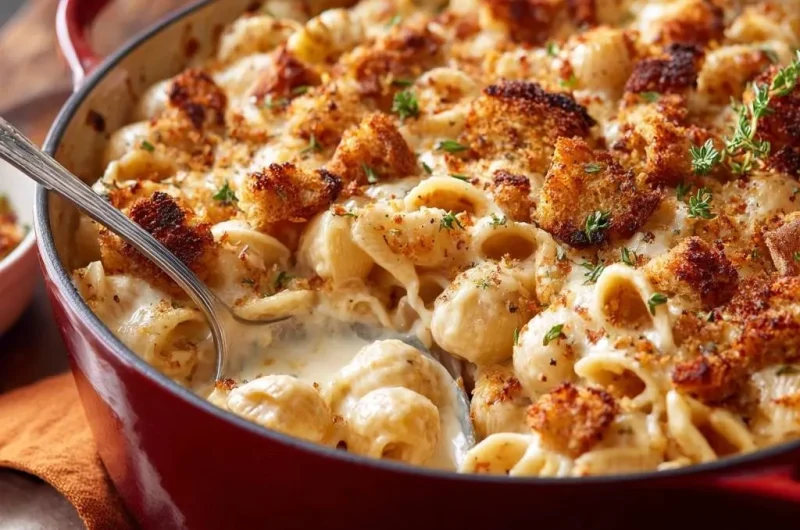
MinutesCreamy, cheesy cavatappi baked in cast iron with a golden breadcrumb topping thats always crunchy, never mushy. This foolproof method uses panko tossed in just-melted butter and a quick high-heat finish to lock in crispiness while the sauce stays velvety.
Ingredients
16 oz cavatappi pasta
4 tbsp unsalted butter (divided)
1/4 cup all-purpose flour
4 cups whole milk
4 cups shredded sharp cheddar cheese
1 cup shredded mozzarella cheese
1 tsp mustard powder
1 tsp garlic powder
Salt and black pepper to taste
1 1/2 cups panko breadcrumbs
2 tbsp chopped fresh parsley
1 tbsp fresh thyme leaves
Directions
- Preheat oven to 375F. Cook cavatappi in salted boiling water for 1 minute less than package directions for al dente. Drain and set aside.
- In the cast iron skillet over medium heat, melt 3 tbsp butter. Whisk in flour and cook 2 minutes until bubbly (roux stage). Slowly whisk in milk. Cook, stirring constantly, until thickened, about 5 minutes.
- Remove from heat. Stir in cheddar, mozzarella, mustard powder, garlic powder, salt, and pepper until smooth. Fold in cooked pasta until fully coated.
- For the no-soggy crust solution: Melt remaining 1 tbsp butter. In a bowl, toss panko with melted butter, parsley, thyme, and a pinch of salt until evenly coated but not wet. Sprinkle evenly over pasta.
- Bake uncovered 20 minutes until bubbly. Increase oven to broil on high. Broil 2-3 minutes watching closely until topping is deep golden and crisp (the dry panko and brief high-heat blast evaporates steam for permanent crunch, no sogginess). Let rest 5 minutes before serving.
Notes
- Use a 12-inch cast iron skillet. Watch closely under the broiler to prevent burning. The dry panko and brief high-heat broil evaporates steam for permanent crunch.