Why Cast Iron Transforms Mac and Cheese
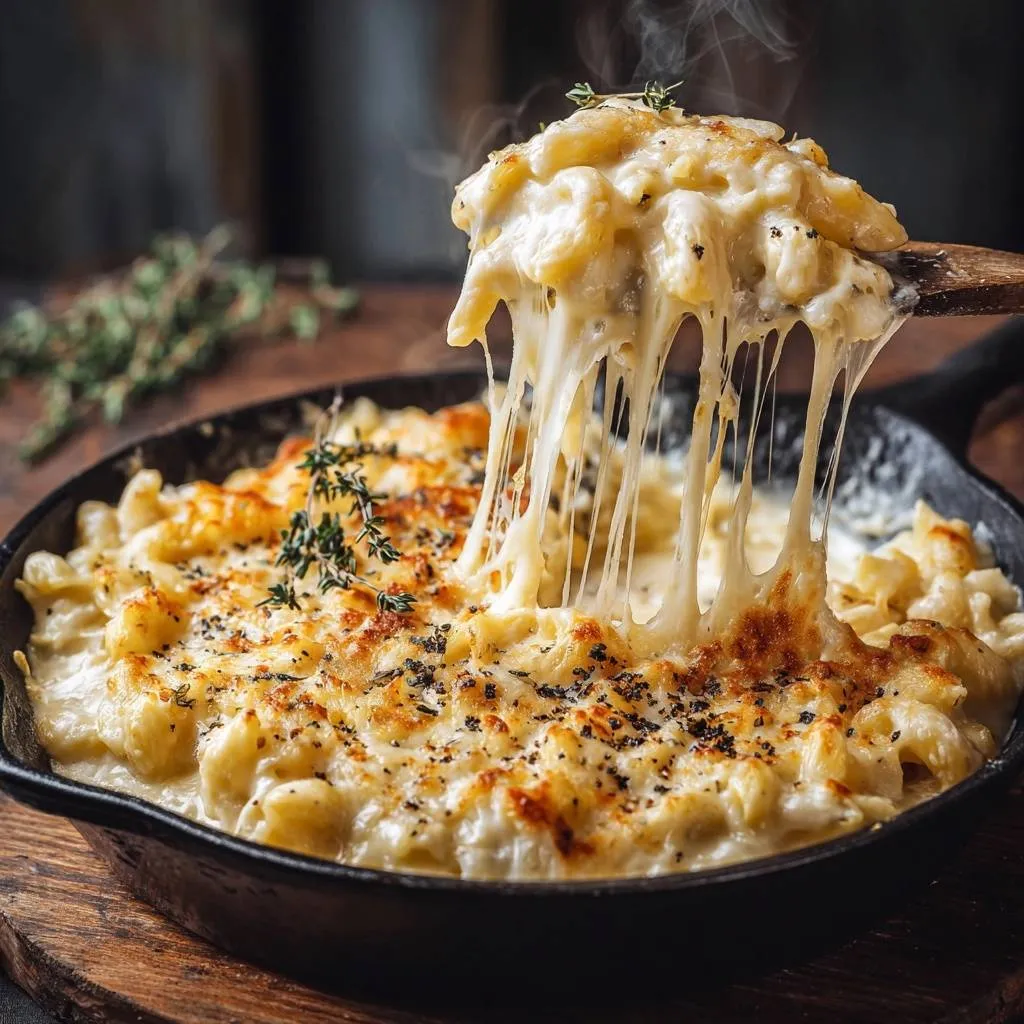
Nothing ruins mac and cheese faster than a grainy, separated sauce that turns into a curdled mess. You’ve stirred in the cheese, and suddenly it’s gritty instead of stretchy. This cast iron mac and cheese fixes that with a one-pan method that delivers ultra-creamy results every time, hot or cold.
Therefore, the cast iron skillet shines here. It holds heat evenly for a crispy top while the off-heat melting trick prevents curdling. You’ll get those epic cheese pulls without the hassle of multiple pots.
For a similar creamy texture, explore these red velvet cream cheese cookies.
Here’s the expertise booster: shred your own sharp cheddar from a block. Pre-shredded stuff has anti-caking agents that make sauce grainy. That simple swap locks in silkiness for perfect cast iron mac and cheese.
Essential Ingredients for Silky Cast Iron Mac and Cheese
Start with 8 ounces elbow macaroni. It holds sauce perfectly in nooks and crannies. Then grab 2 tablespoons unsalted butter, 2 tablespoons all-purpose flour, and 2 cups whole milk for the roux base.
Unsalted butter lets you control salt in the roux. Whole milk thickens smoothly without separating. In addition, 3 cups shredded sharp cheddar (divided) melts best thanks to its acidity.
Dijon mustard (1 teaspoon) and garlic powder (1/2 teaspoon) add depth without overpowering. Salt and black pepper season to taste. Fresh thyme sprigs garnish for an aromatic finish that brightens every bite of your cast iron mac.
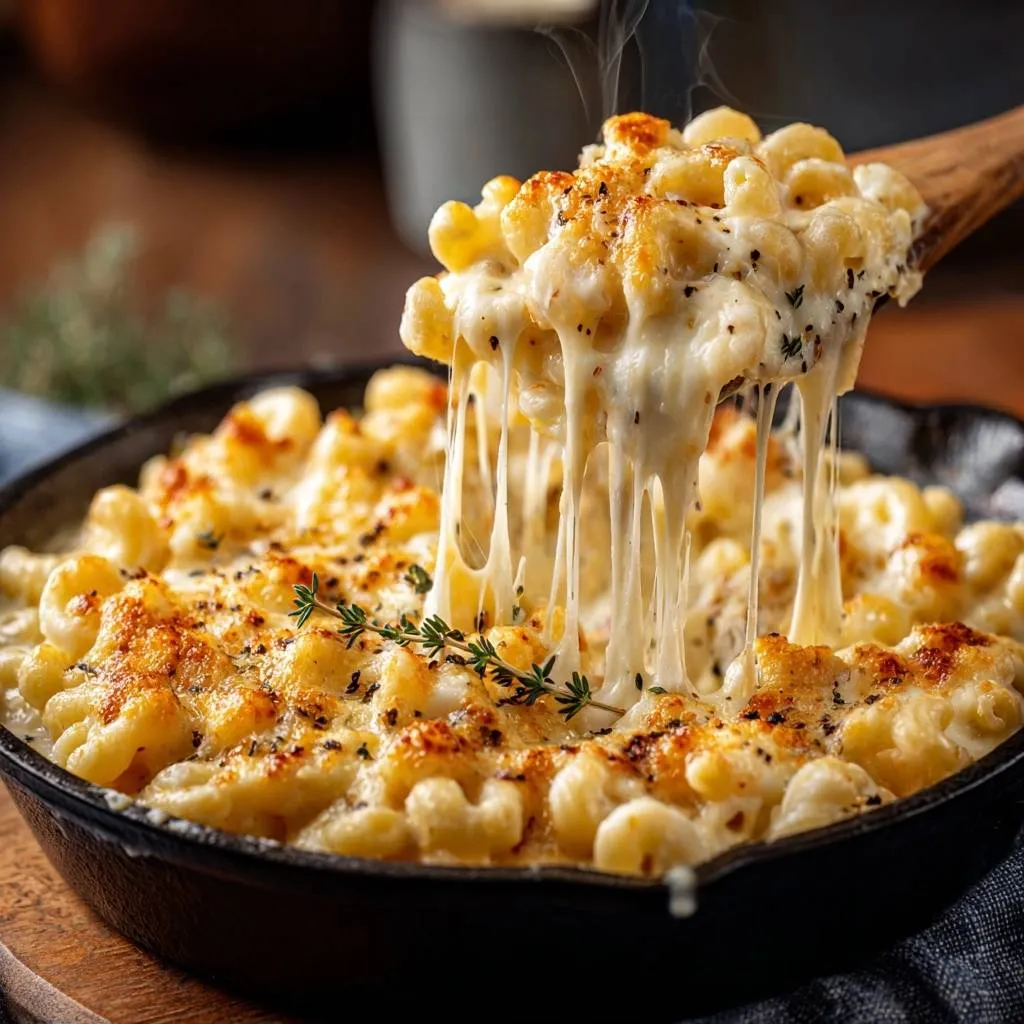
Pro tip: grate cheese fresh. It melts evenly. For dairy-free, try nut milk, but whisk extra to avoid thin sauce.
Cheese Selection: Shredded Sharp Cheddar Breakdown
Sharp cheddar’s acidity cuts through milk fats and prevents separation in cast iron mac and cheese. Mild cheddar lacks that tang and clumps easier.
Therefore, skip pre-shredded. Its starch coating causes graininess. Grate a block yourself for smooth, stretchy melts.
Roux Builders: Butter, Flour, and Milk Ratios
The 2:2:2 ratio (tablespoons butter and flour to cups milk) creates a foolproof béchamel. Whisk constantly over medium heat to dodge lumps.
Flour gelatinizes at the bubbly stage, binding everything. This sets up creamy cast iron mac and cheese sauce.
Equipment Focus: Cast Iron Skillet Advantages
Cast iron’s heat retention crisps the top while baking evenly underneath. It beats glass bakeware, which heats unevenly and sogs out.
A 10-12 inch skillet works best for 4 servings. In addition, its seasoning creates a non-stick surface for sauce coating. Compared to enameled Dutch ovens, plain cast iron browns better.
Preheat in a 400°F oven for precision. That jump-starts even cooking in your cast iron mac and cheese.
Skillet Size and Preheat Precision
Use a 10-inch skillet for 4 servings. It’s oven-safe to 400°F. Preheat empty to ensure the base heats through fast.
Seasoning Care for Sauce Perfection
Well-seasoned cast iron prevents sticking. If needed, rub with oil and bake at 450°F for an hour to refresh. This keeps sauce silky.
The Science of Grain-Free Cheese Sauce
Cheese proteins denature and clump at high heat, causing curds in cast iron mac and cheese. Off-heat tempering melts them gradually at 140-160°F, preserving emulsions.
Therefore, the roux’s starch gelatinizes first to thicken milk proteins. This base holds cheese without breaking. You’ll nail creamy cast iron mac and cheese every time.
Food chemistry keeps it simple: add cheese post-heat in handfuls. Stir vigorously for smooth integration. No more grainy disasters.
Off-Heat Melting: Curd Prevention
Remove sauce from heat, then add cheese handful by handful. Stir until each melts fully. This low temp avoids casein clumping in cast iron mac and cheese.
Roux Thickening Chemistry Basics
Flour’s amylose binds milk at the bubbly stage. Cook 1-2 minutes without browning. That signals readiness for thick, stable sauce.
Step-by-Step: Building Cast Iron Mac and Cheese
Preheat oven to 400°F. These phases build creamy cast iron mac and cheese with pro tips for success.
Phase 1: Al Dente Pasta Prep
Boil 8 ounces elbow macaroni in salted water 1 minute less than package for al dente. Drain. Undercooking prevents mush after baking.
Phase 2: Golden Roux Formation
Melt 2 tablespoons butter in cast iron over medium. Whisk in 2 tablespoons flour 1-2 minutes till bubbly, not browned. Smell nutty, see smooth paste.
Phase 3: Thickened Sauce off Heat
Slowly whisk in 2 cups milk, 1 teaspoon Dijon, 1/2 teaspoon garlic powder, salt, pepper. Cook 4-5 minutes till spoon-coating thick. Remove from heat now.
Phase 4: Tempered Cheese Integration
Add 2 cups shredded cheddar in handfuls off heat. Stir vigorously till silky after each. Mix in pasta, top with 1 cup cheese. Bake 10-12 minutes for bubbly gold.
Avoiding Pitfalls in Cast Iron Mac and Cheese
Overcook roux and it bitters. Add cheese on heat for graininess. Use low-fat milk and sauce thins out. Overboil pasta for sogginess.
Fixes: watch times closely. For cast iron skillet mac, pull at al dente and temper cheese properly. These dodge common fails.
Grainy Sauce Rescue Techniques
If grainy, strain or blend smooth. Prevention wins: off-heat addition. Keeps cast iron mac and cheese perfect.
Baking Time Oversights
Bake 10-12 minutes max. Broil 1 minute for extra bubble if pale. Avoid drying out the top.
Flavor Twists for Cast Iron Mac and Cheese
Swap half cheddar for smoked gouda. Add veggie bacon bits pre-bake. Drizzle truffle oil post-oven.
Spike with buffalo sauce in milk. Upgrade herbs beyond thyme. These keep creamy cast iron mac and cheese exciting.
Protein-Packed Add-Ins
Stir diced chicken or shrimp into sauce pre-cheese. They cook through in oven without toughening. Boosts heartiness.
Spice and Herb Elevations
Add 1/4 teaspoon cayenne or smoked paprika to roux. Use fresh herbs triple dried ratios. Elevates without overpowering.
Make-Ahead and Storage for Cast Iron Mac
Assemble fully, cover, fridge up to 24 hours. Bake from cold, add 5 minutes. Freeze unbaked up to 3 months; thaw overnight before baking.
Reheat in 350°F oven for crisp top. Texture stays creamy. Pro tip: portion before freezing.
Perfect Pairings for Cast Iron Mac and Cheese
Balance richness with roasted broccoli or grilled veggies. A crisp green salad cuts through creaminess.
Pair with sparkling cranberry juice or iced tea. These refresh alongside cast iron mac and cheese.
Troubleshooting Cast Iron Mac and Cheese
Sauce Separation Fixes
Overheat causes separation. Whisk in a splash of hot milk off heat to re-emulsify. Prevention: off-heat cheese.
Texture Troubleshooting Guide
Soggy? Undercook pasta more. Crispy lacking? Higher oven rack. Fixes restore cast iron mac perfection.
Pasta Cooking Errors
Overboil leads to mush. Always 1 minute under al dente. Bake finishes it just right.
FAQ
How do I store leftovers of cast iron mac and cheese?
Store in an airtight container in the fridge for up to 4 days. It reheats well in a 350°F oven for 15-20 minutes to crisp the top; microwave works but softens texture. Freezing baked version lasts 2 months; thaw in fridge and reheat. Unbaked freezes 3 months perfectly; don’t refreeze thawed.
Why did my sauce turn grainy in cast iron mac and cheese?
High heat curdles cheese proteins. Most cooks add cheese while sauce simmers, clumping casein. Fix by tempering off-heat in handfuls, stirring till silky each time. If it happens, blend with hot milk splash. Sharp cheddar grated fresh prevents 90% of issues.
Can I substitute ingredients in cast iron mac and cheese?
Swap whole milk for nut milk, but use full-fat and whisk longer for thickness. Mild cheddar works but lacks tang; sharp melts best. Gluten-free flour 1:1 for roux, though it thickens differently. Skip Dijon? Yellow mustard pinch subs, but flavor dips slightly.
Why isn’t the top browning on my cast iron mac and cheese?
Oven rack too low or time short. Move to upper rack last 2 minutes. Broil 30-60 seconds for golden bubble without drying. Cast iron’s heat retention helps, but 400°F ensures even crisp without burning edges.
How do I make cast iron mac and cheese dairy-free?
Use nut milk or oat milk for sauce base. Swap cheddar for vegan shreds designed for melting, like cashew-based. Add nutritional yeast for cheesiness. Roux still works; off-heat method keeps it smooth. Expect slightly thinner but flavorful results.
Can I make cast iron mac and cheese ahead for a crowd?
Yes, assemble through cheese top, cover tightly, fridge up to 24 hours. Bake straight from cold at 400°F, adding 5-7 minutes. Scales easy: double ingredients in 12-inch skillet for 8 servings. Holds heat well for serving.
Mac and Cheese
Course: Main CourseCuisine: AmericanDifficulty: easy4
servings15
minutes25
minutes550
kcal40
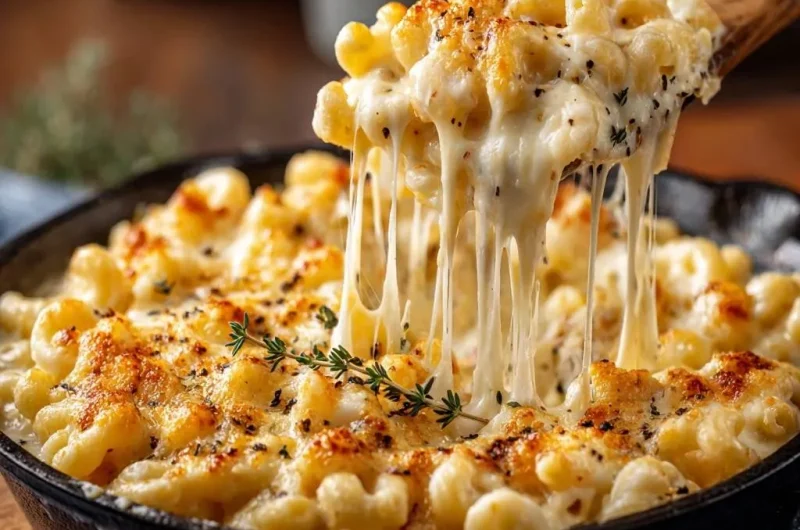
MinutesSick of mac and cheese sauce turning grainy or separating? This one-pan skillet version delivers ultra-creamy, stretchy cheese every time with our foolproof off-heat melting trick that locks in smooth texture hot or cold.
Ingredients
8 ounces elbow macaroni
2 tablespoons unsalted butter
2 tablespoons all-purpose flour
2 cups whole milk
3 cups shredded sharp cheddar cheese, divided
1 teaspoon Dijon mustard
1/2 teaspoon garlic powder
Salt and black pepper to taste
Fresh thyme sprigs for garnish
Directions
- Preheat oven to 400 degrees F. Cook macaroni in salted boiling water for 1 minute less than package directions for al dente. Drain and set aside.
- In the cast iron skillet over medium heat, melt butter. Whisk in flour and cook 1-2 minutes until bubbly but not browned, stirring constantly to form smooth roux base.
- Slowly whisk in milk, Dijon, garlic powder, salt, and pepper. Cook 4-5 minutes, whisking until thickened to coat a spoon. Remove from heat immediately.
- Here’s the grainy sauce killer: Add 2 cups shredded cheese gradually in handfuls to the hot sauce off heat, stirring vigorously after each addition until fully melted and silky smooth. The off-heat tempering prevents curdling for perfect creaminess.
- Stir cooked macaroni into sauce until fully coated. Sprinkle remaining 1 cup cheese on top.
- Bake 10-12 minutes until top is golden and bubbly. Garnish with fresh thyme. Serve hot for epic cheese pulls.
Notes
- The off-heat tempering trick prevents curdling for perfect creaminess. Use sharp cheddar for best flavor.