Why Cast Iron Elevates Creamy Mac and Cheese
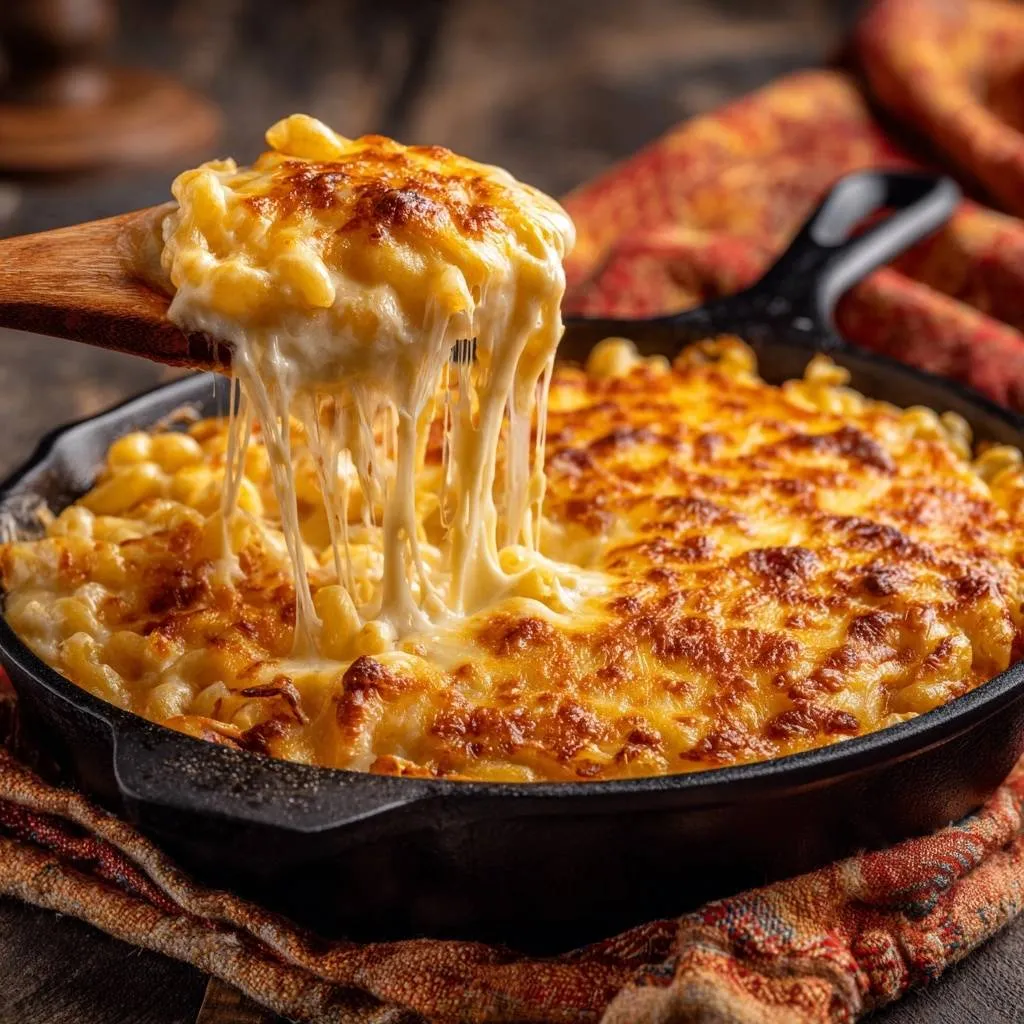
Homemade mac and cheese flops so often with that gritty, grainy sauce. You’ve stirred in the cheese, and suddenly it’s a clumpy mess instead of velvety bliss. This cast iron skillet version fixes it all in under an hour, delivering stretchy, pull-apart creaminess topped with a golden, crispy crust.
Cast iron’s magic comes from its unbeatable heat retention. It creates crispy edges while keeping the center gooey. Plus, you go straight from stovetop to oven to table, no extra dishes.
The real game-changer? A hot roux with cold milk, followed by off-heat cheese addition. That keeps proteins smooth and sauce glossy, no graininess ever. Oh man, the first bite pulls like pure cheese heaven.
Equipment Essentials for Skillet Mac and Cheese Success
Cast iron rules here because it heats evenly and holds temperature like a champ. Other pans warp or cool too fast, leading to uneven browning or soggy spots. A 10-inch skillet serves 4 perfectly, with room for that bubbly crust.
Preheat your oven to 400°F right away. That high heat crisps the top fast while the cast iron conducts it deep into the pasta. You’ll smell the nutty roux building flavor from the start.
Selecting Your Cast Iron Skillet
Grab a 10-inch size for 8 ounces of pasta; it’s not too heavy but retains heat for crisp edges. Pre-seasoned ones save time, but raw cast iron builds better seasoning over uses. Skip nonstick, they can’t take the oven blast without flaking.
Supporting Tools for Smooth Sauce
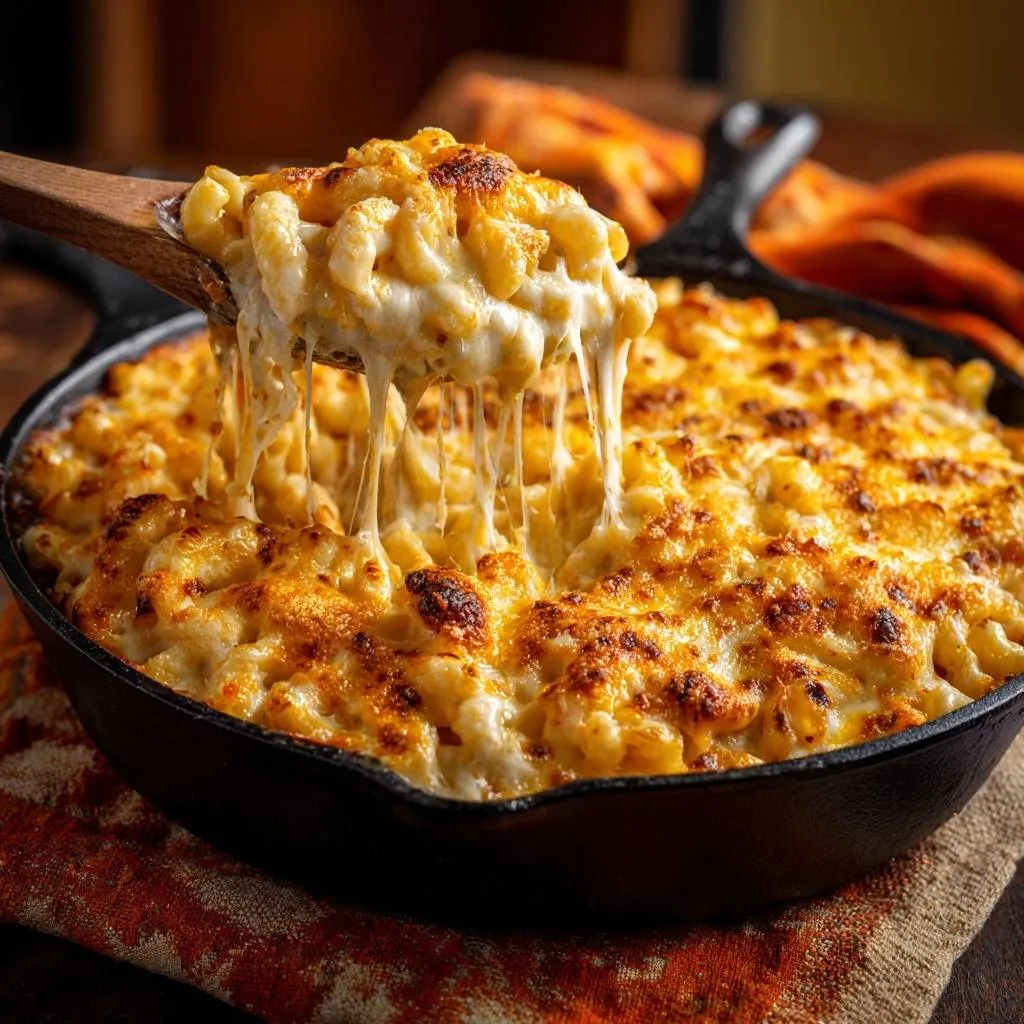
A sturdy whisk prevents roux lumps by scraping every bit. Shred cheese with a fine grater for max melt surface. Use measuring cups for exact milk pours, especially cold ones to temper the hot roux smoothly.
Key Ingredients for Grain-Free Cast Iron Skillet Mac and Cheese
Start with 8 ounces elbow macaroni, cooked al dente. You’ll need 3 tablespoons unsalted butter and 3 tablespoons all-purpose flour for the roux base. Then 2 cups cold whole milk, 8 ounces shredded sharp cheddar (divided), 4 ounces shredded mozzarella, 1/2 teaspoon mustard powder, 1/2 teaspoon salt, 1/4 teaspoon black pepper, and 1/4 teaspoon garlic powder.
Whole milk gives creamy thickness; skim won’t cut it. Unsalted butter lets you control salt in the roux. Freshly shredded cheese melts evenly, no pre-shredded with anti-caking junk that causes graininess.
In addition, mustard powder adds umami depth without tang. Therefore, the cheddar-mozzarella mix balances sharp bite with stretchy pull.
Cheese Selection for Ultra-Smooth Melt
Shred 8 ounces sharp cheddar and 4 ounces mozzarella yourself. Sharp cheddar snaps flavor, mozzarella stretches like crazy. Off-heat addition melts them glossy; heat shreds proteins into grit otherwise.
For more cheesy goodness, try this creamy cheesy chicken bake.
Dairy and Roux Building Blocks
Cold whole milk whisked slowly into hot roux thickens without breaking. Butter and flour cook to nutty gold in 2 minutes. Spices like garlic powder and mustard boost savoriness subtly, so salt to taste last.
Mastering the Roux: Foundation of Smooth Skillet Mac and Cheese
First, preheat oven to 400°F. Boil salted water and cook 8 ounces macaroni 1 minute less than package for al dente; drain and set aside. That undercooking lets it absorb sauce without mush.
In your 10-inch cast iron over medium heat, melt 3 tablespoons butter. Whisk in 3 tablespoons flour constantly for 2 minutes until golden and bubbling. You’re building a smooth roux here; constant stirring creates nutty depth via Maillard reaction, banishing raw flour taste and future graininess.
Watch for the aroma shift to toasty. If it darkens too fast, lower heat. This base holds everything together perfectly.
Building Creamy Sauce Off Heat in Cast Iron
Slowly whisk in 2 cups cold whole milk, 1/2 cup at a time. Vigorously mix until smooth after each pour, then cook 4-5 minutes stirring often till thickened like heavy cream. Remove from heat right away; boiling breaks the emulsion.
Stir in 1/2 teaspoon mustard powder, 1/2 teaspoon salt, 1/4 teaspoon pepper, 1/4 teaspoon garlic powder, all but 1/2 cup cheddar, and all mozzarella. Gently fold off heat until glossy and smooth. Residual warmth melts cheese without separating fats or proteins, locking in stretchy texture.
However, if you add cheese on heat, proteins tighten into grains. This method hits around 170°F max for perfection.
Assembling and Baking Cast Iron Skillet Mac and Cheese
Fold drained pasta into sauce until every noodle coats evenly. Sprinkle reserved 1/2 cup cheddar on top for that golden cap. Slide into 400°F oven for 10-12 minutes till bubbly with browned spots.
Broil 1-2 minutes for extra crisp if you crave it, watching closely to avoid burning. Let rest 5 minutes; the cast iron keeps it hot while structure sets for perfect cheesy pulls. Edges crisp up beautifully thanks to retained heat.
Pro tip: Bubbling edges mean it’s ready. No rest? It’ll be runny.
Science of Grain-Free Cheese Sauce in Skillet Mac
Roux works because butter fat cooks flour starch into a thickener. Cold milk tempers the shock, blending gradually without lumps. Off-heat cheese preserves casein proteins in emulsion form for creaminess.
Overheat to 180°F+, and fats separate, proteins curdle into grit. Mustard powder’s pH stabilizes it all. Shredded cheese’s surface area melts fast and even.
Therefore, stovetop versions fail without this control. Cast iron’s steady heat nails it every time.
Why Cold Milk Prevents Sauce Breakdown
Hot milk shocks roux into lumps; cold creates gentle gradient for smooth bonds. Add 1/2 cup at a time, whisk 30 seconds each. You’ll see it thicken velvety without breaking.
Off-Heat Cheese Melting Mechanism
Skillet’s residual heat (around 160°F) softens cheese gently. Shreds increase melt speed, fats emulsify before separating. Stir slow to avoid air bubbles that toughen it.
Avoiding Pitfalls in Cast Iron Skillet Mac and Cheese
Overcook pasta to mush? It soaks up sauce wrong in the oven. Hot milk lumps roux instantly. On-heat cheese guarantees grit.
Undercooked roux tastes floury; push to golden bubble. Prevent sticking by starting with hot dry pan. Fixes keep it foolproof.
Pasta Cooking Timing Fixes
Cook 1 minute under al dente; salt water like pasta water should taste ocean-y, 1 tablespoon per quart. Drain well so sauce clings.
Roux and Sauce Thickening Errors
Bubble test for roux doneness, pour milk slow, taste spices before cheese. Thickens to coat spoon back.
Flavor Twists on Cast Iron Skillet Mac and Cheese
Add cooked broccoli florets when folding pasta for green pop. Swap mozzarella for gouda for smoky depth. Dust smoked paprika in roux for heat.
For that distinct Southern baked mac and cheese flavor, explore this Southern baked mac and cheese strategy.
Boost with garlic powder double. For vegan, use plant milk and nut-based cheese, keeping roux ratios. Scale up skillet size for crowds.
However, stick to core method. Portions stay creamy regardless.
Make-Ahead and Storage for Skillet Mac and Cheese
Assemble fully, cover tight, fridge up to 2 days; bake fresh for best crust. Freeze unbaked in skillet up to 1 month, thaw overnight in fridge.
Reheat covered at 350°F with milk splash for moisture. Cast iron re-crisps edges like new. Portion into singles for quick meals.
Pro tip: Don’t freeze baked version; cheese sauce weeps upon thaw.
Perfect Pairings for Cast Iron Skillet Mac and Cheese
Roast Brussels sprouts for bitter crunch against creaminess. Toss a green salad with vinaigrette for freshness. Grilled chicken adds lean protein.
Complementary Dishes
To round out your meal with more cheesy goodness, consider these options.
- For a potato dish that echoes the creamy comfort of your mac and cheese, try these Bacon Cheddar Scalloped Potatoes, featuring a similar rich sauce.
- If you’re after another cheesy, baked item with great texture, these Cheesy Baked Cauliflower are a satisfying choice.
Iced tea cuts richness perfectly. In summer, pair with corn on the cob. Balance keeps it meal-worthy.
Troubleshooting Cast Iron Skillet Mac and Cheese Issues
How do I store leftovers and do they freeze well?
Store in airtight container in fridge up to 3 days. Reheat in skillet at 350°F with 1 tablespoon milk per serving, covered first then uncovered for crisp. Freeze unbaked assembly up to 1 month; thaw overnight, bake fresh. Baked freezes poorly as sauce separates.
Why is my sauce grainy?
You added cheese on heat, causing proteins to tighten. Always remove skillet from burner first, stir gently till glossy. Shred fresh; pre-shredded has starch blockers that clump too.
Can I substitute the cheeses or milk?
Swap mozzarella for gouda or fontina for stretch. Keep sharp cheddar for bite. Whole milk only; 2% thins it, skim fails. Plant milks work vegan-style but whisk extra vigorous.
Why is the top soggy?
Skip the broil or rest. Bake till golden, broil 1-2 minutes close watch, rest 5 minutes for set. Cast iron helps, but foil cover during reheat prevents it.
How do I fix bland flavor?
Up mustard powder to 1 teaspoon or add onion powder. Taste sauce pre-pasta; salt generously. Fresh spices punch more than old ones.
Can I scale this for a crowd?
Double for 12-inch skillet, 16 ounces pasta, 4 cups milk, etc. Keep roux ratios exact. Bake time adds 5 minutes; check bubbly edges.
Mac and Cheese
Course: Main CourseCuisine: AmericanDifficulty: easy4
servings15
minutes25
minutes550
kcal40
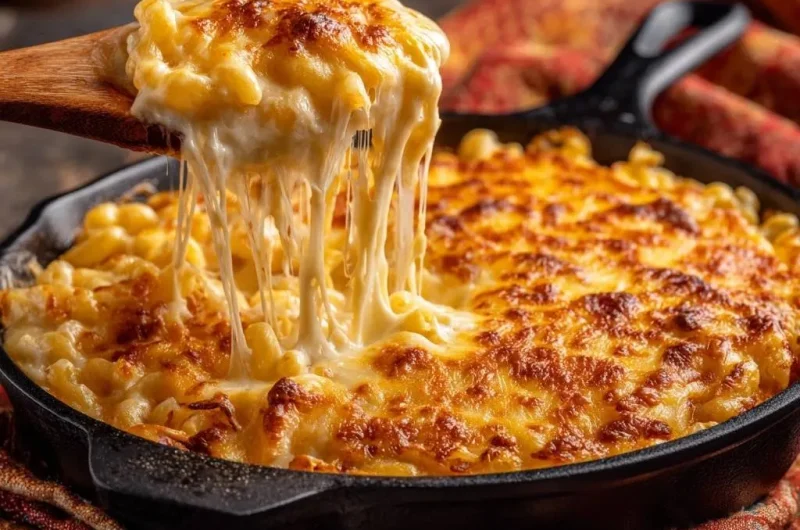
MinutesHomemade mac and cheese often turns grainy from overheated cheese. This foolproof method uses a hot roux with cold milk and off-heat cheese addition for ultra-smooth, stretchy sauce that stays creamy under the golden crust.
Ingredients
8 ounces elbow macaroni
3 tablespoons unsalted butter
3 tablespoons all-purpose flour
2 cups whole milk, cold
8 ounces sharp cheddar cheese, shredded (divided)
4 ounces mozzarella cheese, shredded
1/2 teaspoon mustard powder
1/2 teaspoon salt
1/4 teaspoon black pepper
1/4 teaspoon garlic powder
Directions
- Preheat oven to 400 degrees F. Bring a large pot of salted water to a boil. Cook macaroni 1 minute less than package directions for al dente. Drain and set aside.
- In a 10-inch cast iron skillet over medium heat, melt butter. Whisk in flour and cook 2 minutes until golden and bubbling, stirring constantly to form smooth roux. This base prevents graininess.
- Slowly whisk in cold milk 1/2 cup at a time, whisking vigorously until smooth after each addition. Cook 4-5 minutes until thickened, stirring often. Remove from heat immediately.
- Stir in mustard powder, salt, pepper, garlic powder, and all but 1/2 cup cheddar plus all mozzarella off heat. Shredded cheese melts evenly without clumping; stir gently until fully smooth and glossy. This off-heat step locks in creamy texture, solving graininess forever.
- Fold in cooked macaroni until coated. Sprinkle remaining cheddar on top.
- Bake 10-12 minutes until top is bubbly and golden. Broil 1-2 minutes for extra crisp if desired. Let rest 5 minutes for perfect pull. Serve hot.
Notes
- Shred cheese yourself for best melting. Use cold milk and add cheese off-heat to prevent graininess. Let rest 5 minutes before serving for perfect texture.