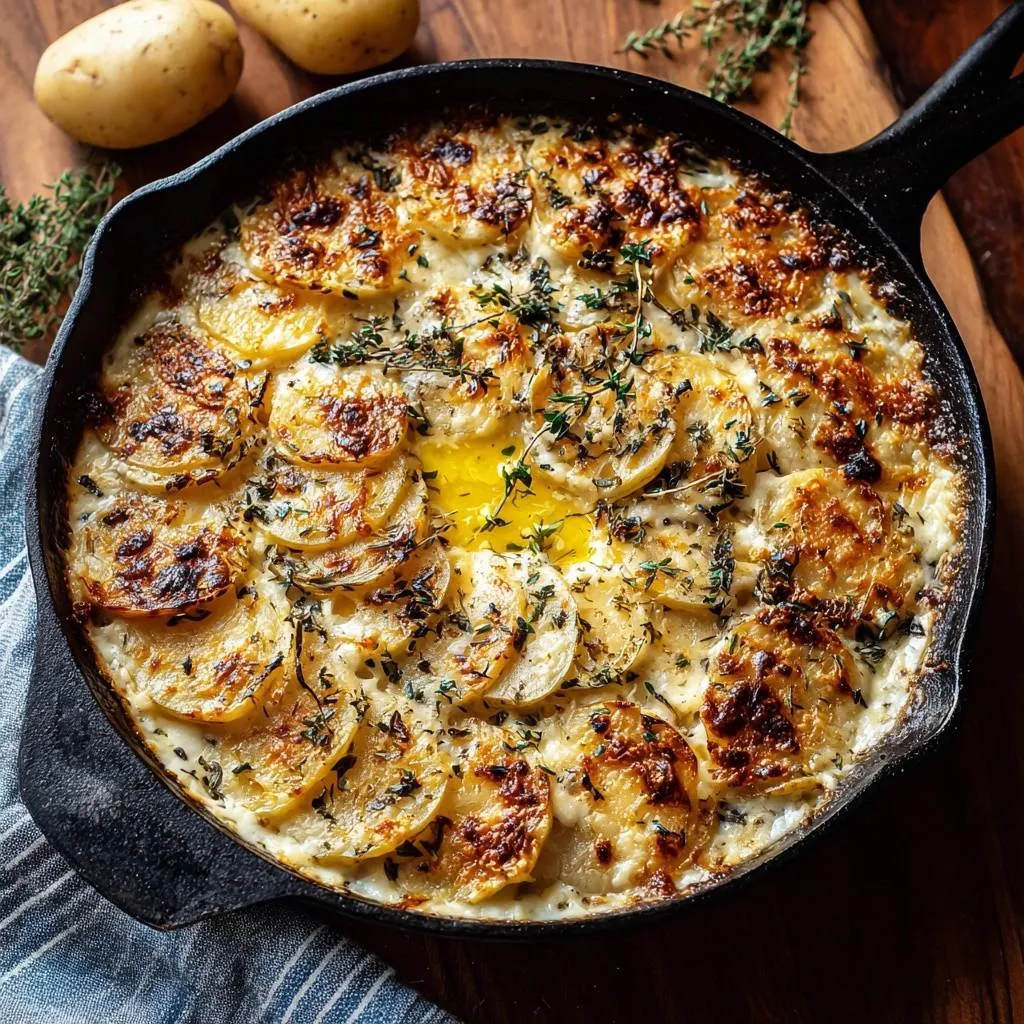
Why Cast Iron Transforms Potatoes Au Gratin
Picture this: that perfect bite where creamy potatoes melt against a shatteringly crisp top, all without a hint of sogginess. You’ve probably battled watery gratins before, where layers turn to mush because excess moisture ruins everything. This cast iron skillet version fixes it with one game-changing step.
Here’s why it works so well. Traditional gratins fail when potato starch releases water into the cream, creating a soupy mess. However, in addition, cast iron’s unbeatable heat retention ensures even cooking and superior browning that baking dishes just can’t match.
For perfectly creamy results, learn how to avoid curdling with this guide to creamy scalloped potatoes.
The secret lies in salting the slices first. It draws out moisture through osmosis, so when you rinse and dry them thoroughly, the potatoes stay firm and soak up cream perfectly. Oh man, the first time I nailed this, the edges crisped up like they were fried.
Overcoming Watery Layers Forever
Most gratins go wrong because raw potato slices release starch and water during baking. Therefore, they flood the cream and leave you with a puddle. This recipe’s 10-minute salting in a colander pulls that excess out via osmosis.
After salting, rinse under cold water to wash away bitterness and extra starch. Then pat dry obsessively. You’ll end up with potatoes that hold their shape and deliver that ideal creamy texture.
Signature Crispy Top in One Skillet
The final uncovered bake turns the top into a golden, bubbly crust. Butter drizzled on top fuels the browning, while cheese bubbles and crisps right in the skillet. It’s pure comfort with a satisfying crunch.
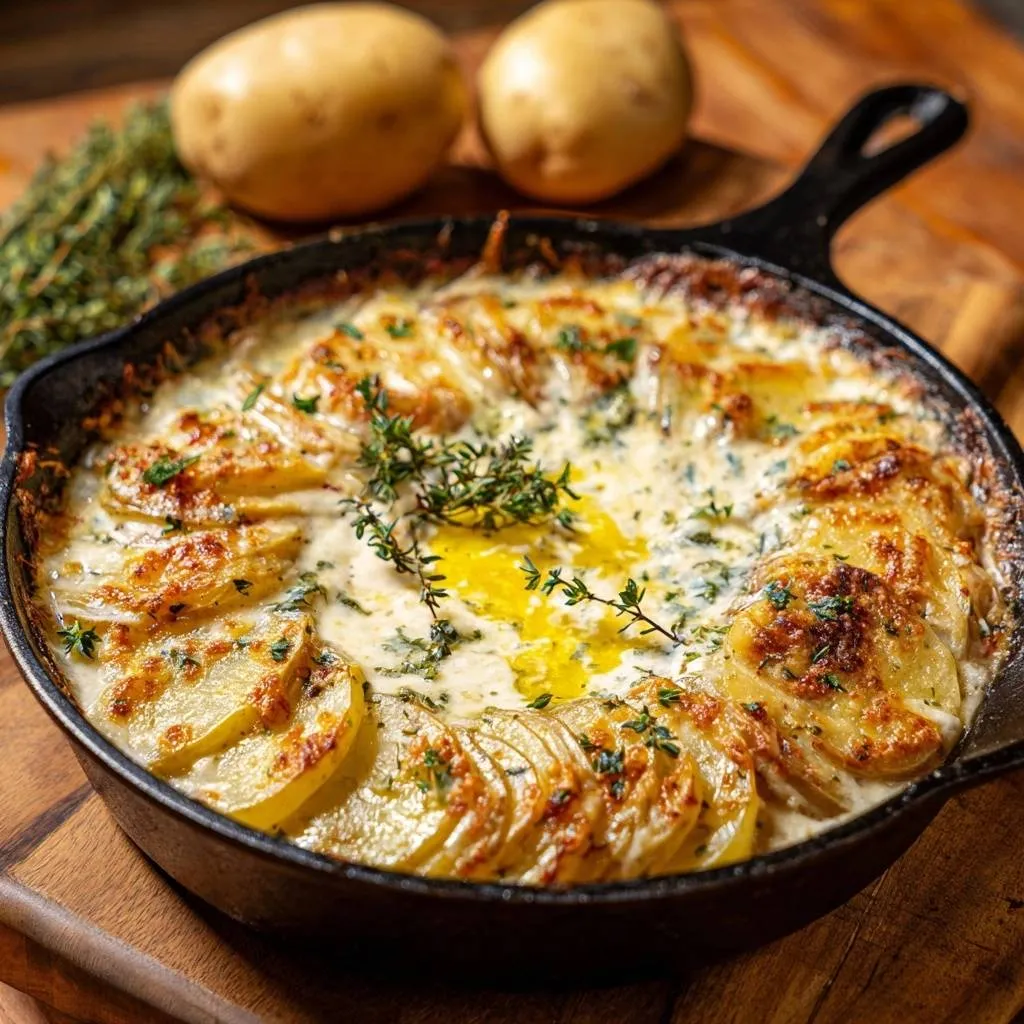
Cast iron holds heat so well that every edge gets that irresistible char. In addition, broiling for two minutes amps it up if you crave extra crispiness.
Essential Ingredients for Cast Iron Skillet Potatoes Au Gratin
Yukon gold potatoes shine here because their waxy texture stays firm in cream, unlike mealy russets. Slice 2 pounds into 1/8-inch pieces for even cooking. Heavy cream, 1 1/2 cups, brings richness that binds everything without curdling.
Gruyere cheese, 1 1/2 cups grated and divided, melts nutty and smooth, far better than cheddar’s sharpness. Fresh thyme leaves, 2 tablespoons, add earthy brightness. Finally, 4 tablespoons melted unsalted butter coats and crisps without greasiness.
Don’t skimp on quality Gruyere; pre-shredded won’t melt right. For subs, try fontina for milder nuttiness. Salt and pepper season simply, letting potatoes star.
Yukon Gold Slices at 1/8-Inch Precision
Yukon golds hold shape better than russets, preventing mush. Uniform 1/8-inch slices via mandoline ensure they cook evenly. Thicker ones stay raw in the center.
Gruyere and Cream Layering Ratios
Use 1/2 cup cheese per layer with 1/4 cup cream for binding. This divides 1 1/2 cups each perfectly. It melts evenly without clumping.
Thyme and Butter Flavor Anchors
Fresh thyme’s earthiness cuts cream’s richness. Melted butter, unsalted, crisps the top. Salt and pepper balance it all simply.
Equipment: Why Cast Iron Skillet Matters Most
Cast iron retains heat evenly, so your gratin bakes uniformly without hot spots. It browns better than glass or metal, creating that pro-level crust. Go for a well-seasoned 10-12 inch skillet.
A 10-inch size fits 2 pounds perfectly, allowing layers to stack without crowding. Season it lightly before use for nonstick ease. If needed, an enameled Dutch oven works as backup.
Pro tip: preheat the skillet on the stove with butter. This jump-starts searing the bottom layer for extra flavor.
Skillet Size for Layered Potato Stacks
A 10-inch skillet holds 2 pounds in neat overlapping circles. Larger risks thin layers. It fits standard oven racks too.
Mandoline and Colander Setup
Mandoline gives precise 1/8-inch slices fast. Use the guard for safety. Colander drains salt water easily.
Science of Crispy Cast Iron Skillet Potatoes Au Gratin
Starch gelatinizes at 375F, turning slices tender. Salting first causes osmosis, drawing out water and starch. Rinsing prevents bitterness, drying ensures cream absorption.
Maillard reaction during uncovered baking browns the top via sugars and proteins. Therefore, butter and cheese create that crisp crust. Covered phase steams insides soft first.
Dry potatoes won’t release water, so cream stays thick. This method guarantees no soupiness every time.
Salting Draws Out Excess Moisture
Toss slices with 1 teaspoon salt in colander for 10 minutes. Osmosis pulls out water and starch. Rinse cold to refresh.
Cream Infusion Without Soupy Results
Dry slices absorb cream fully. Covered bake steams tender. Uncovered evaporates excess for crisp.
For an even crispier texture, explore crispy skillet scalloped potatoes.
Layering Technique for Cast Iron Skillet Potatoes Au Gratin
Start with slicing 2 pounds Yukon golds to 1/8-inch. Toss in colander with salt, wait 10 minutes. Rinse cold, then pat extremely dry with towels. Skip this, and sogginess wins.
Drying transforms wet slices into absorbent ones. You’ll smell faint potato sweetness. Now they’re ready to layer without watering down cream.
Uniform Slicing and Drying Process
Mandoline to 1/8-inch evenly. Salt toss 10 minutes, rinse cold, pat dry thoroughly. This prevents starch release.
Skillet Assembly for Potatoes Au Gratin
Heat skillet medium, add 2 tablespoons melted butter, swirl to coat. Layer dried potatoes in overlapping circles. Sprinkle thyme, pepper, 1/2 cup cheese, drizzle 1/4 cup cream. Repeat, end with cheese.
Pour remaining cream over, drizzle last butter. Overlapping builds stability, like shingles. Layers infuse evenly.
Pro tip: press down gently after each layer. It settles cream in.
Overlapping Circles Build Stability
Arrange slices in tight circles, each overlapping half. Sprinkle evenly per layer. This stacks firm.
Baking Phases for Perfect Cast Iron Potatoes Au Gratin
Preheat to 375F. Cover tightly with foil, bake 45 minutes. This steams tender. Uncover, bake 25-30 more until golden and knife pierces easy.
Rest 10 minutes; it sets creamy. Broil 2 minutes if top needs more crisp. Garnish thyme sprigs.
Foil Cover Steams Layers Tender
Foil traps steam for fork-tender centers. No drying out. Exactly 45 minutes.
Uncovered Bake Browns Crispy Top
Evaporation crisps via Maillard. Butter helps. Broil boosts crunch.
Avoiding Common Mistakes in Potatoes Au Gratin
Skipping drying leads to mush; always pat extra dry. Thick slices mean raw centers, so mandoline strictly. Low oven or short time gives pale top; hit 375F full duration.
Rotate skillet halfway uncovered for even brown. Resting prevents steam cuts from sogginess. These fixes make it foolproof.
Fixing Soggy or Undercooked Centers
Dry slices religiously. Test center with knife; should slide easy. Extend covered bake if needed.
Ensuring Even Golden Browning
Rotate skillet midway. Broil end if pale. Rest 10 minutes sealed.
Make-Ahead and Storage for Skillet Potatoes Au Gratin
Assemble fully, cover, fridge up to 2 days. Bake fresh. Or freeze unbaked up to 1 month; thaw overnight first.
Reheat at 350F covered 20 minutes, uncovered 10. Slice wedges from skillet. Keeps crisp texture.
Pro tip: portion before freezing for easy meals.
Freezing Unbaked Potato Layers
Assemble, wrap tight in foil. Freeze 1 month. Thaw fridge overnight, bake normal.
Reheating Crispy Leftovers
Skillet stovetop medium 5 minutes, then oven 350F uncovered. Skip microwave; it sogs.
Flavor Variations for Cast Iron Skillet Potatoes Au Gratin
Swap Gruyere for sharp cheddar, smoky Gouda, or mild fontina. Rosemary instead of thyme adds piney twist. Vegan? Coconut cream and nutty vegan cheese work great.
Add thin sautéed onion or garlic layers for depth. Sauté first to avoid extra moisture. Keeps it crisp.
Cheese and Herb Swaps
Cheddar for tang, Gouda smoke, fontina mild, vegan shreds nutty. Rosemary or sage for thyme swap.
Adding Garlic or Onions
Sauté thin slices dry first. Layer sparingly. Boosts savoriness.
Round Out Your Meal
Consider these dishes that share ingredients or a similar comforting feel to your potatoes au gratin.
- For a light and fresh option that still features potatoes, try this Salmon Potato Asparagus Salad, perfect for a balanced meal.
- If you’re looking for another hearty potato dish with protein, consider this Roasted Sweet Potato & Chicken Power Bowl for a satisfying combination.
Pairing Sides with Cast Iron Skillet Potatoes Au Gratin
Rich cream loves lean proteins. Roasted chicken cuts through, juicy steak balances, baked salmon adds omega freshness. Grilled pork chops pair too.
Crisp veggies contrast: roasted broccoli bites back, green beans snap, Brussels sprouts char nicely.
Sparkling cranberry juice refreshes alongside.
Protein Matches for Creamy Layers
Chicken, steak, salmon, pork chops. All cut richness perfectly.
Crisp Vegetable Contrasts
Broccoli, green beans, Brussels. Balance the cream.
Cast Iron Skillet Potatoes Au Gratin FAQ
Can I Use Russet Potatoes Instead?
Yes, but russets are starchier, so they can get mealier. Extend salting to 15 minutes and dry extra well. Yukon golds hold shape better for creaminess.
How Thin for Potato Slices?
Exactly 1/8-inch thick. Thinner risks falling apart, thicker stays raw center. Mandoline ensures uniformity for even cooking.
Substitute Heavy Cream?
Half-and-half works but yields less rich sauce. Avoid straight milk; it won’t thicken. Stick close to heavy for best results.
Make It Dairy-Free?
Use full-fat coconut cream and vegan Gruyere-style shreds. It shifts nutty and slightly tropical. Follow same drying for crisp top.
Storage Time After Baking?
Fridge in airtight container up to 4 days. Reheat skillet at 350F covered then broil for crisp. Freezes poorly baked; grainy texture.
Potatoes Au Gratin
Course: Side DishCuisine: AmericanDifficulty: medium6
servings20
minutes1
hour15
minutes450
kcal95
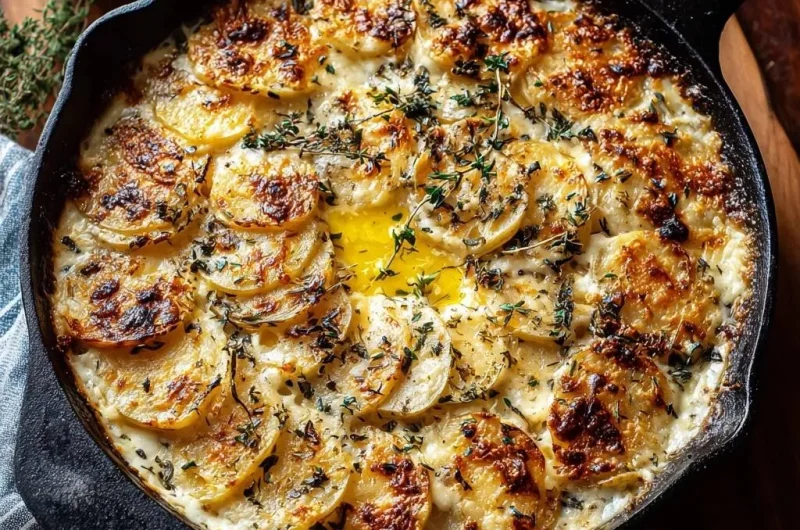
MinutesTired of watery, mushy potato gratins? This thyme-flecked cast iron skillet version uses a simple salting and drying step to lock in creamy texture and deliver crispy browned perfection on top.
Ingredients
2 pounds Yukon gold potatoes, peeled and sliced 1/8-inch thick
1 1/2 cups heavy cream
1 1/2 cups grated Gruyere cheese (divided)
4 tablespoons unsalted butter, melted (divided)
2 tablespoons fresh thyme leaves, plus sprigs for garnish
1 teaspoon salt
1/2 teaspoon black pepper
Directions
- Slice potatoes as thinly and evenly as possible using a knife or mandoline for uniform cooking. Place slices in a colander, toss with 1 teaspoon salt, and let sit for 10 minutes. This draws out excess moisture, the key trick that prevents soggy layers. Rinse under cold water to remove excess salt and starch, then pat slices extremely dry with clean kitchen towels or paper towels. Do not skip this drying step, it guarantees firm, creamy potatoes that absorb cream perfectly without releasing water.
- Preheat oven to 375 degrees F. Heat your cast iron skillet over medium heat, add 2 tablespoons melted butter, and swirl to coat bottom and sides evenly.
- Arrange one layer of dried potato slices in overlapping circles in the skillet. Sprinkle with thyme, pepper, and 1/2 cup cheese. Drizzle with 1/4 cup cream. Repeat layering with remaining potatoes, thyme, pepper, and cheese, ending with cheese on top. Pour remaining cream evenly over the top, then drizzle with remaining 2 tablespoons melted butter.
- Cover skillet tightly with foil and bake for 45 minutes. Remove foil and bake uncovered for 25 to 30 minutes more, until top is deeply golden and crispy, and potatoes are tender when pierced with a knife. If needed, broil for 2 minutes at the end for extra crisp.
- Let rest 10 minutes before serving. Garnish with fresh thyme sprigs. Slice into wedges straight from the skillet.
Notes
- Do not skip the salting, rinsing, and thorough drying of potato slices—this step is crucial for preventing soggy layers and ensuring perfect cream absorption.