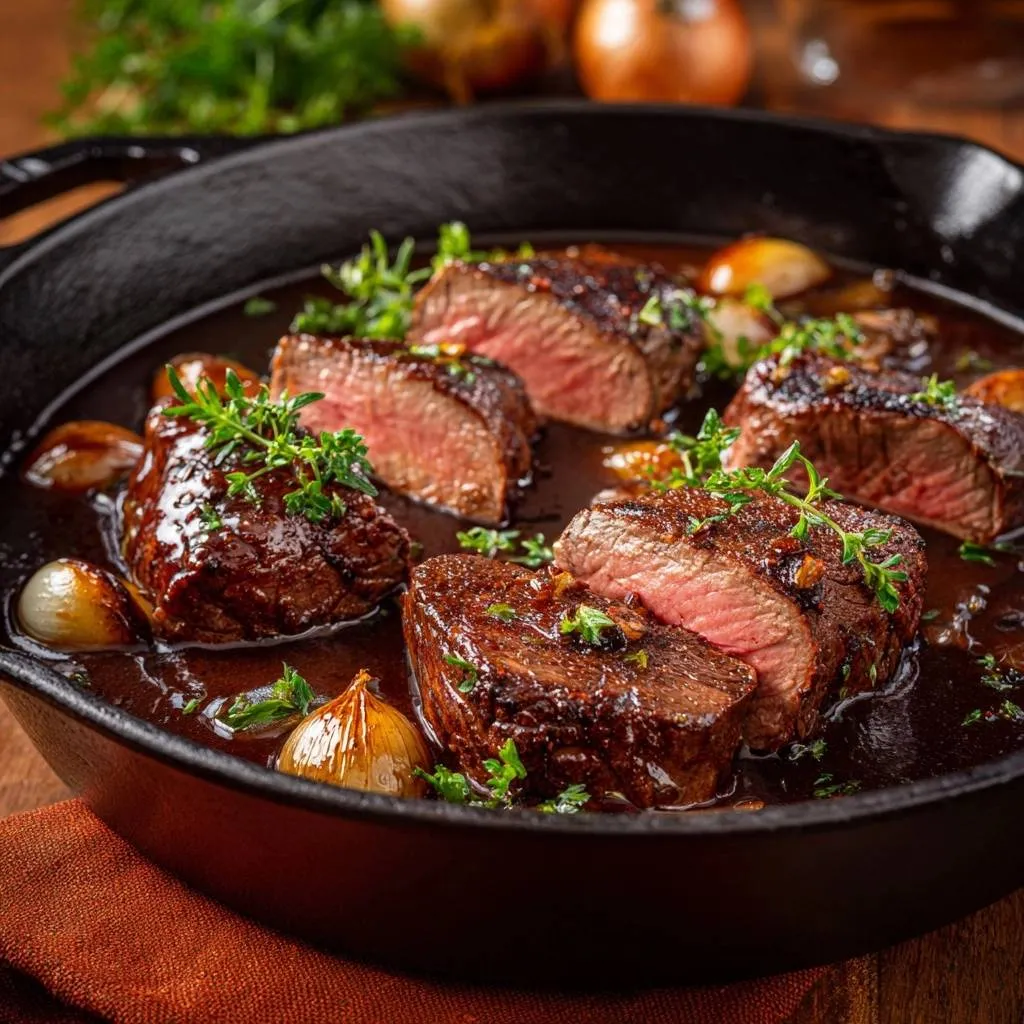
Ever bitten into a steak that’s tough and dry inside, despite your best efforts? You’re not alone. This cast iron steak with pearl onions and thyme fixes that frustration fast. You get a screaming-hot sear for that craveable crust, then a gentle simmer in sauce to lock in juices for tender, pink perfection every time.
Why does this method work so well? It combines the Maillard reaction’s flavor magic from high heat with a low braise that tenderizes without drying out the meat. Home cooks love it because cast iron holds heat like a champ, delivering restaurant results without fancy gear.
Here’s the expertise booster: pat those steaks bone-dry before seasoning. That moisture evaporates instantly on the hot pan, creating steam that lifts the meat for a flawless sear. No sticking, no tearing, just pure crusty goodness.
Why Cast Iron Delivers Perfect Steak Results
Cast iron shines for steak because it retains heat better than nonstick or stainless steel. Once screaming hot, it maintains that temperature, giving you a deep brown crust through the Maillard reaction. Nonstick pans can’t hit those highs without damage, and stainless often cools too fast, leading to steaming instead of searing.
A smoking-hot cast iron skillet prevents sticking naturally. The steak’s proteins bond briefly then release as the crust forms. Therefore, you avoid the common stainless steel failure where meat tears and dries out. This cast iron steak with pearl onions and thyme nails it every time.
Selecting Your Cast Iron Skillet Size
Grab a 10-12 inch cast iron skillet for four steaks. It fits them without crowding, so each gets full contact with the heat. In addition, well-seasoned cast iron acts non-stick, but wipe it lightly with oil after each use to maintain that patina.
Preheating Secrets for Even Heat
Start preheating your cast iron over high heat. After two minutes, it’s warming; by four, it’s smoking and ready at 450F or higher. Use an infrared thermometer if you have one, or test by flicking water drops, they should dance and vanish instantly.
Key Ingredients for Juicy Cast Iron Steak
Start with 1-inch thick sirloin or chuck steaks, 6-8 oz each. These cuts balance affordability and tenderness, and the thickness allows carryover cooking for a juicy center. Pat them dry and salt generously for a dry brine effect that draws out then reabsorbs moisture.
Pearl onions bring sweet, bite-sized pops that caramelize beautifully. Fresh thyme sprigs add earthy aroma as their oils release in the fat. In addition, beef broth deglazes the fond, and butter emulsifies the sauce for a glossy finish on your cast iron steak with pearl onions and thyme.
Don’t skip room-temp salting; it seasons deeper. Fresh thyme beats dried because volatile oils bloom in heat. Therefore, your steak sauce sings with balanced flavors.
Beef Cuts Ideal for This Method
Sirloin offers lean tenderness at a good price, while chuck brings more marbling for extra juiciness. Both work great at 1-inch thick to control doneness. Thinner cuts overcook fast, but this thickness gives you a gradient from crust to pink center.
Pearl Onions and Thyme Pairing Science
Pearl onions caramelize without overpowering beef due to their natural sugars and small size. Thyme’s oils infuse the sauce as it simmers. If needed, swap for shallots, peeled and halved, but pearl onions give that unique sweet pop.
Mastering the Reverse Sear Technique
This sear-then-simmer beats oven finishes because it locks juices via low braise after crust forms. Pat dry first; surface moisture must evaporate for browning, or you’ll steam the steak. Therefore, your cast iron steak with pearl onions and thyme stays moist inside.
The high sear creates flavor compounds, then gentle heat breaks down collagen. No more dry edges. It’s foolproof for home kitchens.
Phase 1: Dry Brine and Room Temperature Prep
Pat steaks dry with paper towels, then season both sides with 1 teaspoon salt and 1/2 teaspoon pepper total. Let sit 10 minutes at room temp. Osmosis pulls out moisture then draws it back seasoned, ensuring juiciness.
That towel-dry step is key; wet steaks steam. You’ll smell the seasoning blooming as they rest.
Phase 2: High-Heat Crust Formation
Add 2 tablespoons olive oil to smoking skillet, swirl, then lay in steaks single layer. Sear undisturbed 3 minutes per side. The oil’s smoke point handles the heat, forming a deep crust without crowding, which causes steaming.
Look for mahogany edges; don’t flip early or juices escape. Pro tip: high sides on cast iron contain splatters.
Building the Pearl Onion Thyme Sauce
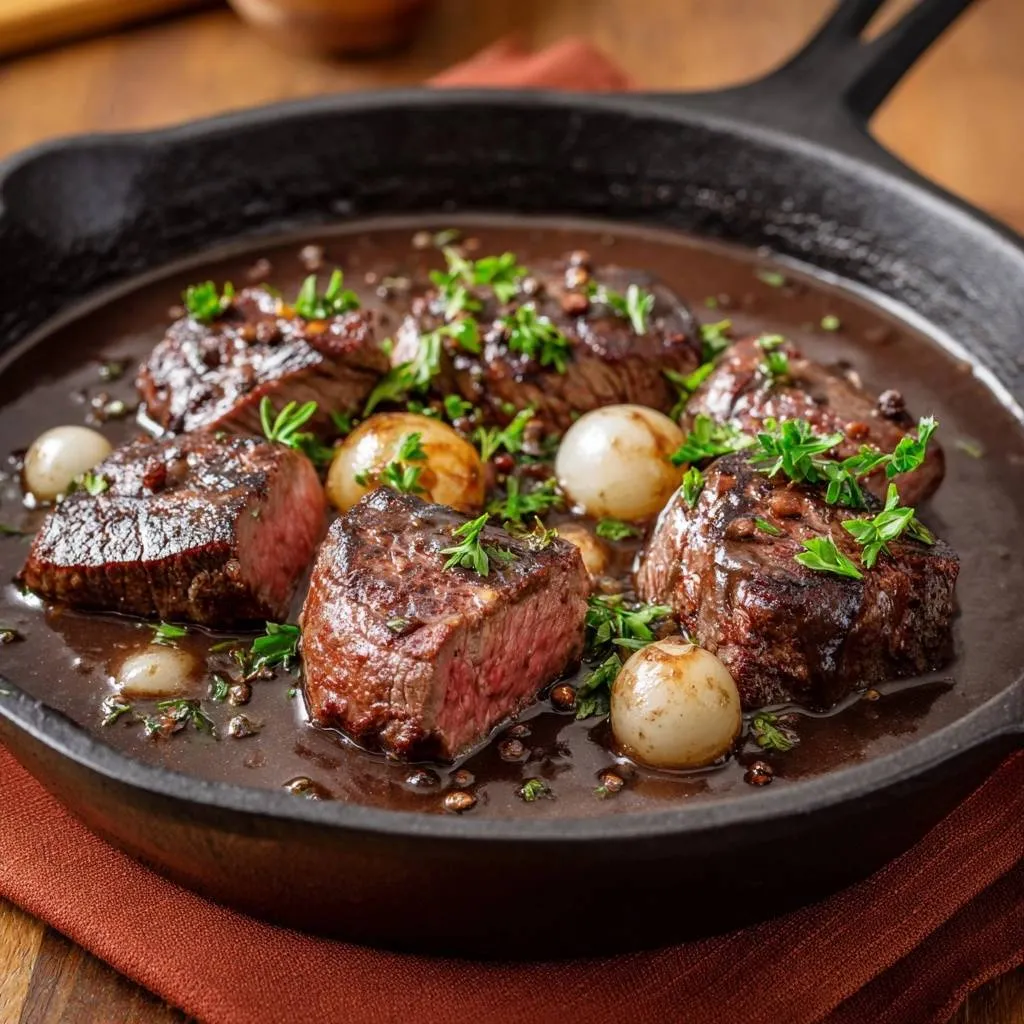
Lower to medium, add 12 ounces peeled pearl onions and 4 thyme sprigs. Cook 3 minutes till browning starts. Pour in 1 cup beef broth, scrape fond, simmer 5 minutes to reduce, then stir in 2 tablespoons butter for shine.
This deglazing extracts every flavor bit. The butter creates a stable emulsion, coating your cast iron steak with pearl onions and thyme perfectly. Syrupy sauce means it’s ready.
Onion Browning Without Burning
Shift to medium heat right after searing. Stir onions 3 minutes till golden; they’ll soften with sweet aroma but stay firm. Peel pearl onions by blanching first: boil 1 minute, ice bath, skins slip off easy.
Thyme Infusion and Broth Reduction
Submerge whole sprigs; leaves fall off too soon. Scrape bits vigorously with wooden spoon as broth bubbles. After 5 minutes, sauce thickens to coat a spoon, thyme fully infused.
Gentle Basting for Medium-Rare Perfection
Return steaks and juices to skillet. Spoon sauce over, simmer low 4-6 minutes, basting every 2. Hit 130F internal for medium-rare; carryover takes it to 135F. Rest 5 minutes off heat in sauce for redistribution.
Basting evens cooking and flavors. This cast iron steak with pearl onions and thyme delivers tender results. Slice against grain for max tenderness.
If you enjoy the rich flavor of beef, you might also enjoy classic Salisbury steak.
Internal Temperature Monitoring Guide
Probe thickest part with instant-read thermometer, avoiding bone or fat. Rare 125F, medium-rare 130F, medium 140F. Check once at end; flipping constantly drops temp.
Final Resting in Sauce Juices
Off heat 5 minutes lets juices settle. Plating immediately releases them. Slice thin against grain; sauce clings beautifully.
The Science of Tender Cast Iron Steak
Maillard reaction at high heat browns proteins for nutty flavors. Then low braise contracts proteins gently, breaking collagen without squeezing out moisture. This cast iron steak method beats pan-only grilling by keeping edges from overcooking.
Gradient temps tenderize enzymes. Juices stay locked, unlike direct high heat that tenses meat. Oh man, that first bite’s heaven.
Why Reverse Sear Beats Direct High Heat
Reverse builds crust first, then low heat prevents overdone outsides. Enzymes work below 140F for tenderness. You get juicy pink centers data proves superior.
Moisture Retention During Basting
Basting recaptures steam in the pan. Flavors migrate via fat. Cover loosely if needed for evenness.
Avoiding Dry Steak Pitfalls
Top mistakes: overcrowding steams meat, early flipping releases juices, skipping dry pat causes boiling, wrong preheat leads to pale crust, rushed rest spills moisture. Fix by batching if needed, waiting for release, patting twice, preheating fully, resting 5 minutes.
Visuals: crust pulls clean when ready. Science backs spacing for airflow. Your cast iron steak with pearl onions and thyme thrives.
Overcrowding and Steaming Fixes
Cook in batches for space. Open windows for ventilation. Steam means wet, pale meat; dry heat crisps.
Crust Failure Troubleshooting
No smoke? Preheat longer. Add oil drop by drop. Crust needs 450F+ surface.
Cast Iron Steak Pairing Suggestions
Balance richness with roasted greens or crisp salads. Mashed roots soak up sauce. Sparkling cranberry juice cuts through perfectly.
For a hearty side, try this chili stuffed skillet cornbread.
These complement the thyme and onions. Simple prep keeps focus on your cast iron steak.
What to Try Next
Round out your steak dinner with these complementary dishes.
- For an extra layer of savory crunch, consider making crispy fried onion strings, a wonderful topping for many dishes.
- Complement the richness of your steak with earthy roasted Brussels sprouts and mushrooms served over smooth mashed potatoes.
Vegetable Sides Enhancing Onions
Roast asparagus or carrots with thyme. Quick toss in oil, 15 minutes at 400F. Synergy pops.
Starch Complements for Balance
Herbed potatoes or grains lap up sauce. Boil then smash potatoes, mix with thyme.
Cast Iron Steak FAQ
Can I Use Frozen Steaks?
Thaw fully in fridge first. Frozen meat ices over, preventing sear and trapping raw centers. Pat extra dry after.
What If No Pearl Onions Available?
Swap cipollini or quartered shallots. Peel shallots easy; same sweet caramelization. Keep quantity same for balance.
How to Scale for Two Steaks?
Halve all ingredients, use 10-inch pan. Timing stays identical; don’t overcrowd. Sauce reduces faster, so watch closely.
Medium Doneness Adjustments?
Target 140F internal, add 2 minutes basting. Carryover hits 145F. Check thickest spot.
Storing Leftover Steak and Sauce?
Store in airtight container with sauce up to 3 days in fridge. Reheat gently in skillet over low, covered, to avoid drying. Don’t freeze; texture turns grainy.
Cast Iron Steak
Course: Main CourseCuisine: AmericanDifficulty: easy4
servings15
minutes20
minutes650
kcal35
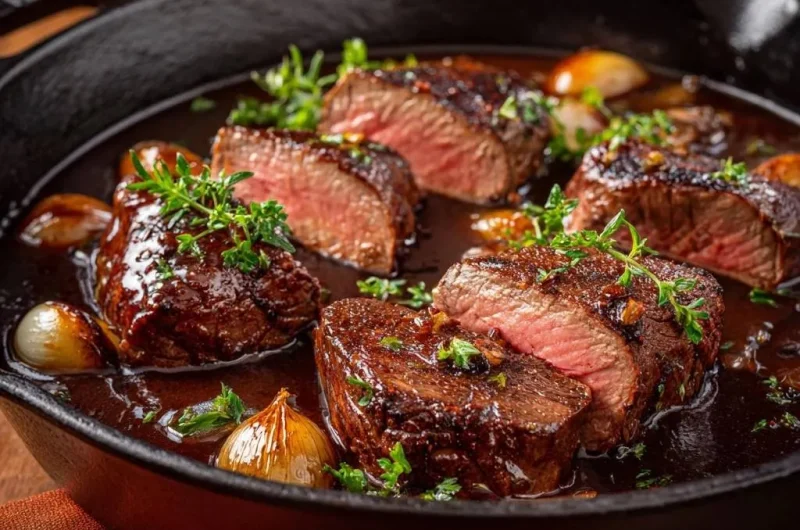
MinutesDry steak ruining your dinners? This foolproof method starts with a screaming-hot sear for crusty edges, then gently finishes the steaks in a flavorful sauce simmer to lock in juices for tender, pink-centered perfection every time.
Ingredients
4 beef steaks (sirloin or chuck, 6-8 oz each, 1-inch thick)
12 ounces pearl onions, peeled
4 sprigs fresh thyme
2 tablespoons olive oil
1 teaspoon salt
1/2 teaspoon black pepper
1 cup beef broth
2 tablespoons butter
Directions
- Pat steaks completely dry with paper towels. Season both sides generously with salt and pepper. Let sit at room temperature for 10 minutes. This ensures maximum sear and juiciness.
- Heat cast iron skillet over high heat until smoking hot, about 4 minutes. Add olive oil and swirl to coat. Add steaks in a single layer without crowding. Sear undisturbed for 3 minutes per side until deep brown crust forms. Do not move them early, or crust wont develop and juices escape. Remove steaks to a plate.
- Lower heat to medium. Add pearl onions and thyme sprigs to skillet. Cook 3 minutes until onions start to brown. Pour in beef broth, scraping up browned bits. Simmer 5 minutes to reduce slightly. Stir in butter for glossy shine.
- Return steaks and any resting juices to skillet. Spoon sauce over tops. Simmer gently on low heat, basting every 2 minutes, for 4-6 minutes until internal temp hits 130F for medium-rare. The low braise after searing keeps meat tender without drying out.
- Rest steaks in sauce 5 minutes off heat. Slice and serve with onions and thyme. Enjoy juicy steak that stays moist!
Notes
- Use sirloin or chuck steaks, 1-inch thick. Ensure skillet is smoking hot for perfect crust. Internal temp 130F for medium-rare. Rest in sauce for maximum juiciness.