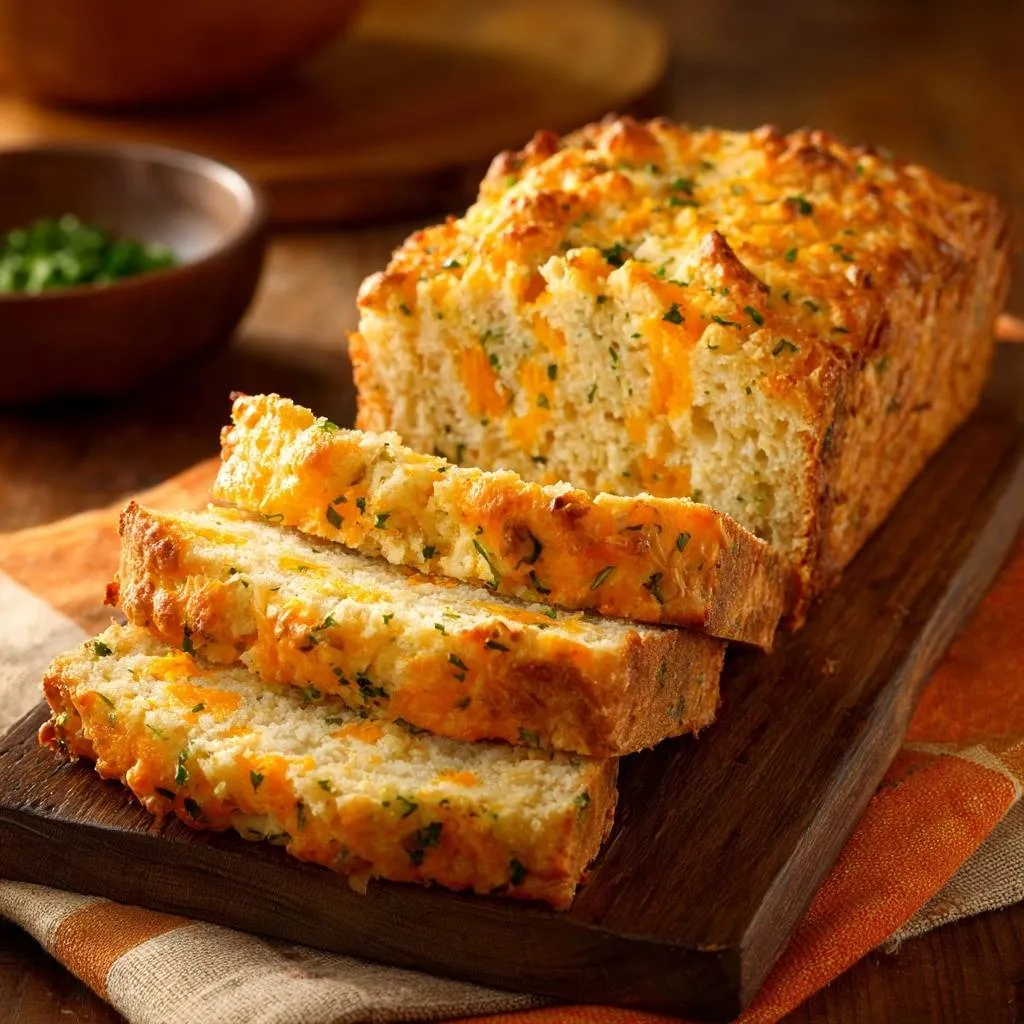
Picture this: you bite into a slice of Cheddar Chive Bread, and instead of a heavy cheese puddle at the bottom, you get fluffy crumb packed with suspended sharp cheddar bursts and fresh chive flecks. That gooey melt hits just right, every single time. No more sinking disasters that ruin homemade loaves.
Most quick breads fail because dense cheese drops through wet batter, thanks to gravity and poor adhesion. However, this Cheddar Chive Bread recipe flips the script with a simple flour-coating trick. It locks the cheese and chives in place for even distribution and a reliable rise.
Therefore, the secret lies in reserving a bit of that dry flour mix to toss with the shredded cheddar first. This creates a starch barrier that suspends everything perfectly. You’ll end up with a loaf that beats any store-bought version, hands down.
Why Cheddar Chive Bread Succeeds Every Time
Cheese sinks in homemade loaves because its weight pulls it down through moist batter. In addition, without proper adhesion, you get uneven melt and a dense bottom. This recipe’s flour-coating method builds a starch shield around each piece.
That coating repels excess moisture and binds the add-ins to the batter. As a result, the cheddar stays suspended mid-loaf, melting evenly as CO2 bubbles lift the whole thing. Failed recipes skip this, leaving you with lopsided results.
The Flour-Coating Trick Explained
Start by reserving 1/4 cup of your whisked dry flour mix. Then toss in 2 cups shredded sharp cheddar and 1/2 cup chopped fresh chives until every bit gets coated. Sharp cheddar works best because its firmer texture from aging resists sinking better than mild varieties.

Fresh chives release volatile oils for brighter flavor, unlike dried ones that can turn bitter. Therefore, coat thoroughly; you’ll see the cheese pieces dusted white, ready to float perfectly in your Cheddar Chive Bread.
Baking Powder vs. Soda Balance
Combine 1 tablespoon baking powder with 1 teaspoon baking soda to react with buttermilk’s acidity. This duo produces maximum CO2 bubbles for lift in Cheddar Chive Bread. Baking powder alone falls short without that acidic boost.
In addition, the balance prevents a soapy taste while ensuring tenderness. Your loaf rises tall and fluffy, never dense.
Key Ingredients for Perfect Cheddar Chive Bread
Begin with 2 cups all-purpose flour for sturdy structure that holds all that cheese. Then add 1 tablespoon baking powder, 1 teaspoon baking soda, and 1 teaspoon salt to drive the rise and flavor.
Melt 1/4 cup unsalted butter for rich tenderness without greasiness. Whisk it with 1 cup buttermilk and 1 egg; the buttermilk’s tang activates leaveners, while the egg binds everything smoothly. Room-temp ingredients blend faster, avoiding lumps.
Shred 2 cups sharp cheddar fresh, since pre-shredded has anti-caking agents that block melt. Chop 1/2 cup fresh chives for grassy pop. No buttermilk? Mix milk with a teaspoon of lemon juice as a quick sub.
Cheese Selection: Sharp Cheddar Essentials
Sharp cheddar’s aging gives intense flavor and firm texture that fights sinking. Shred an 8-ounce block yourself for 2 cups; it coats evenly and melts without oil pools. Mild cheese lacks that punch and grip.
Buttermilk’s Role in Rise
Buttermilk’s acidity tenderizes gluten and kickstarts leaveners for fluffy Cheddar Chive Bread. Milk alone leads to flat, tough loaves. For a sub, stir 1 tablespoon lemon juice into 1 cup milk and let sit 5 minutes.
Essential Tools for Cheddar Chive Bread
Grease a 9×5-inch loaf pan generously with butter or oil; non-stick spray often fails with cheesy batter. Use a wire rack for cooling to let steam escape and avoid sogginess. A box grater shreds cheese perfectly, and a digital scale ensures flour accuracy.
However, you don’t need fancy gear. A fork for mixing and a toothpick for testing work fine. Keep it simple for quick results.
Loaf Pan Sizing Precision
A 9×5 pan gives ideal batter depth for even baking in Cheddar Chive Bread. Larger pans spread it thin, causing flat rise. Metal conducts heat faster than glass for crispier crust.
Mastering the Mix: Step-by-Step Cheddar Chive Bread
Preheat your oven to 350°F and grease that 9×5 pan well. Whisk 2 cups flour, baking powder, baking soda, and salt in a large bowl until evenly mixed. In another bowl, blend melted butter, buttermilk, and egg until smooth, no lumps.
Reserve 1/4 cup dry mix, toss in cheese and chives to coat. Pour wet into dry, stir gently with a fork just 10 strokes until combined. Fold in coated add-ins quickly; the batter stays thick and lumpy for tenderness.
Scoop into the pan, smooth the top lightly. Bake 45 minutes until golden and a toothpick comes out clean. Cool 10 minutes in pan, then rack it fully. Slice warm for best melt.
Phase 1: Dry and Wet Prep
Whisk dry ingredients briskly; you’ll smell the baking powder faintly. For wets, use room-temp egg and buttermilk so butter doesn’t seize. Smooth mix looks glossy, ready to unite.
Phase 2: Cheese-Chive Coating and Fold
Toss add-ins in reserved flour until no bare cheese shows. Fold fast into batter to keep air pockets; overmixing toughens it. Lumps mean you’re doing it right for fluffy Cheddar Chive Bread.
Phase 3: Bake and Cool Perfectly
Fill pan evenly, bake till top cracks golden. Toothpick test pulls clean, or internal hits 200°F. Cooling sets structure; skip it and slices gum up.
For an even fluffier experience, check out these mile-high buttermilk biscuits.
The Science of No-Sink Cheddar Chive Bread
Flour dredging makes cheese hydrophobic, repelling batter moisture so it doesn’t sink. Starch anchors pieces mid-loaf as batter rises on CO2. At 350°F, even melt happens without pools.
Minimal gluten from quick mixing keeps it tender. Therefore, every slice delivers uniform bursts of cheddar and chive in Cheddar Chive Bread.
Why Cheese Sinks in Other Recipes
Wet batter hydrates dense cheese, causing it to drop fast. Overmixing deflates air, worsening the slide. No coating means no grip, just bottom puddles.
Avoiding Pitfalls in Cheddar Chive Bread
Overmix past 10 strokes, and tunnels form from tough gluten. Skip coating, cheese sinks. Underbake for gummy centers; always toothpick test.
Poor greasing sticks the loaf. Pro tip: tent foil after 30 minutes if crust darkens too fast. Use fresh leaveners to guarantee rise.
Overmixing and Gluten Traps
Stick to 10 fork strokes; batter stays shaggy. This preserves tenderness in Cheddar Chive Bread. Smooth batter spells dense crumb.
Baking Time Misjudgments
Oven temps vary, so check at 40 minutes. At high altitude, add 1-2 tablespoons flour. Golden top signals doneness.
Flavor Twists on Cheddar Chive Bread
Swap sharp cheddar for gouda or swiss for nutty depth. Try dill or scallions instead of chives. Add jalapeños or garlic for kick, always coat first.
For vegan, use plant-based cheddar and buttermilk sub. The no-sink method holds every time.
Herb and Cheese Variations
Rosemary pairs with cheddar for woodsy notes; use half the chives amount. Blue cheese and chive bring tang; reduce to 1.5 cups to avoid overpowering.
Pairing Cheddar Chive Bread Sides
Slice warm with tomato soup; the cheddar melts right in. Pair with broccoli cheddar soup or fresh salads. Roasted veggies and eggs love it too.
Pro tip: toast slices for breakfast. Keeps airtight 2 days or freeze for quick grabs.
Make-Ahead Cheddar Chive Bread Guide
Mix batter, fridge up to 24 hours, then bake with 5 extra minutes. Freeze baked slices wrapped in foil up to 3 months. Thaw and toast for fresh taste.
Pro tip: slice before freezing for easy portions. Reheats beautifully in a 350°F oven.
Cheddar Chive Bread Troubleshooting
Sunken Cheese Fixes
Always coat in reserved flour; uncoated cheese drops every time. Toss thoroughly for full coverage in Cheddar Chive Bread.
Crust Too Tough?
Tent with foil midway or brush butter on top pre-bake. High humidity? Bake 5 minutes less.
How do I store Cheddar Chive Bread leftovers?
Keep in an airtight container at room temp for 2 days. Fridge extends to 5 days; it freezes well wrapped tightly for 3 months. Thaw overnight and warm at 300°F to revive crispness without sogginess.
Why did my Cheddar Chive Bread loaf turn out dense?
Overmixing develops gluten, trapping air poorly. Stick to 10 gentle strokes for lumpy batter. Check leaveners too; expired ones kill rise. Test by mixing a teaspoon baking powder with hot water; it should fizz vigorously.
Can I substitute ingredients in Cheddar Chive Bread?
No buttermilk? Mix 1 cup milk with 1 tablespoon lemon juice or vinegar, let sit 5 minutes. Swap chives for green onions, but use fresh for best flavor. Avoid pre-shredded cheese; anti-caking starch ruins melt and coating.
Why does cheese sink in my quick breads?
Dense shreds fall through wet batter without adhesion. Reserve 1/4 cup dry flour mix, toss cheese and add-ins in it first. This starch barrier suspends them evenly during the rise in Cheddar Chive Bread.
How can I tell when Cheddar Chive Bread is fully baked?
Bake till golden, about 45 minutes, and toothpick pulls clean from center. Edges pull from pan sides. Internal temp hits 200°F if you have a thermometer; underbaking leaves gummy spots.

Cheddar Chive Bread
Course: Side DishCuisine: AmericanDifficulty: easy1
loaf (about 12 slices)15
minutes45
minutes250
kcal60
MinutesHomemade cheese breads often fail when the cheese sinks to the bottom, leaving a dense, uneven loaf. This recipe uses a foolproof flour-coating trick to suspend the cheddar perfectly throughout for a light, fluffy texture every time.
Ingredients
2 cups all-purpose flour
1 tablespoon baking powder
1 teaspoon baking soda
1 teaspoon salt
1/4 cup unsalted butter, melted
1 cup buttermilk
1 egg
2 cups shredded sharp cheddar cheese
1/2 cup chopped fresh chives
Directions
- Preheat oven to 350 degrees F. Grease a 9×5-inch loaf pan well.
- In a large bowl, whisk together flour, baking powder, baking soda, and salt.
- In a separate bowl, mix melted butter, buttermilk, and egg until smooth.
- Reserve 1/4 cup of the flour mixture. Toss the shredded cheddar cheese and chopped chives in this reserved flour until evenly coated. This key step prevents the cheese from sinking during baking, locking in even distribution and a fluffy rise.
- Pour wet ingredients into dry ingredients and stir gently with a fork just until combined, about 10 strokes. Fold in the flour-coated cheese and chives quickly without overmixing.
- Transfer batter to prepared pan, smoothing the top lightly. Bake for 45 minutes or until golden and a toothpick inserted in the center comes out clean.
- Cool in pan for 10 minutes, then transfer to a wire rack. Slice and serve warm.
Notes
- Reserve 1/4 cup of the flour mixture to toss the cheese and chives in—this key step prevents sinking and ensures even distribution.