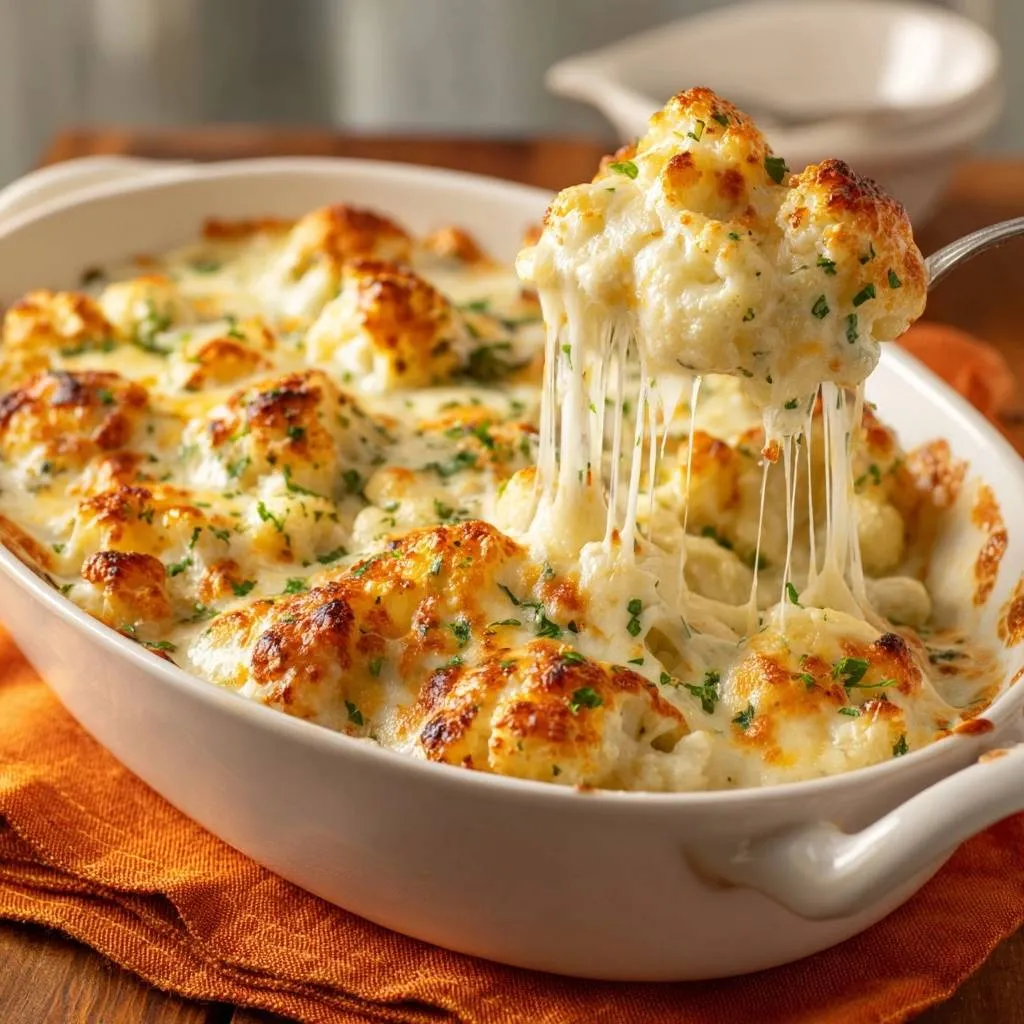
Ever pull cheesy baked cauliflower from the oven only to find it swimming in watery mush? You know the drill: florets that steam instead of crisp, turning your dream side dish into a soggy mess. This cheesy baked cauliflower fixes that fast with a simple dry-roast first.
Here’s why it works so well. Roasting at high heat drives out the cauliflower’s excess moisture before the cheese sauce hits. Therefore, you get golden, crispy edges wrapped in stretchy cheddar goodness that pulls just right.
The real secret lies in that initial 425-degree roast. It triggers the Maillard reaction for deep flavor and texture. No more boiled versions that leave you disappointed; this method delivers restaurant-quality cheesy baked cauliflower every time.
Why Dry-Roast Cheesy Baked Cauliflower First
Moisture Evaporation Science
Cauliflower packs about 92% water, so baking it straight leads to steam and sogginess. However, roasting at 425°F vaporizes that moisture quickly. In addition, it sparks the Maillard reaction, browning the edges for nutty depth.
Steaming or boiling traps water inside, ruining the texture. This dry-roast step changes everything. You’ll end up with roasted cheesy cauliflower that’s tender yet crisp, never watery.
Texture Transformation Breakdown
Start with pale florets, and after 25 minutes, they shrink slightly with caramelized tips. The interior stays tender while edges crisp up beautifully. Spread them single-layer to maximize air flow; stir halfway for even results.

Air fryers work too, but oven roasting gives more space. Look for golden spots and a sweet, roasted aroma as doneness cues. That’s your cue for perfect cheesy baked cauliflower texture.
Key Ingredients for Perfect Cheesy Baked Cauliflower
Cauliflower Florets Prep Essentials
Cut one large head into uniform bite-sized florets for even roasting. Fresh beats frozen because it roasts crisp without extra ice melt. Uniform size ensures no underdone or burnt pieces.
Therefore, your cheesy baked cauliflower cooks perfectly. Aim for 6-8 cups total for a 9×13 dish.
Cheese Sauce Building Blocks
Shred 3 cups sharp cheddar fresh; it melts smoother than pre-shredded with anti-caking agents. The roux uses equal butter and flour for silky thickness. Whole milk creates richer sauce than skim.
Why 3 cups cheese? Two melt into sauce, one tops for bubbly crust. Try gouda for milder creaminess if you want variety. This builds unbeatable cheesy baked cauliflower sauce.
Seasoning and Oil Choices
Olive oil’s high smoke point handles 425°F without burning. Toss it on before salt and pepper to draw out moisture evenly. Add salt post-toss to avoid drawing water too soon.
Fresh parsley at the end brightens the richness. It adds a pop of color and herbal freshness without overpowering.
Equipment Choices for Cheesy Baked Cauliflower Success
Baking Sheet and Oven Specs
Use a half-sheet pan for single-layer spread; overcrowding steams instead of roasts. Parchment prevents sticking better than foil. Convection ovens circulate heat evenly for superior crisping.
Saucepan and Whisk Must-Haves
Pick a medium non-stick saucepan for easy roux cleanup. A balloon whisk incorporates milk lump-free. Choose a 9×13 dish with 2-inch sides for sauce bubbling without overflow.
Phase 1: Roasting Cauliflower Florets Dry
Preheat and Toss Technique
Crank oven to 425°F. Drizzle 2 tablespoons olive oil over florets, then toss with 1 teaspoon salt and 1/2 teaspoon pepper. Spread single-layer; oil pools cause steaming, so shake off excess.
This setup promotes crisp roasted cheesy cauliflower. Roast promotes air circulation around each piece.
Golden Doneness Indicators
Roast 25-30 minutes, stirring at 15 for even gold. Florets shrink, edges brown, and moisture vanishes; you’ll smell sweet nuttiness. Drop oven to 375°F now to gently melt cheese later.
If you enjoy the crispy edges on this cauliflower, you’ll appreciate the similar texture achieved in loaded twice-baked potatoes.
Phase 2: Crafting Silky Cheese Sauce
Roux Formation Mastery
Melt 3 tablespoons butter over medium heat. Whisk in 3 tablespoons flour fast; cook 1 minute till bubbly but pale. This removes raw flour taste and builds sauce base.
Pro tip: Constant whisking prevents lumps. Your roux should smell toasty, not burnt.
Milk Incorporation and Thickening
Slowly pour in 2 cups milk while whisking vigorously. Simmer 3-4 minutes till it coats a spoon; bubbles gently signal readiness. Stir in 2 cups shredded cheddar until smooth and glossy.
Test by drawing a line on the spoon; if it holds, it’s thick enough for cheesy baked cauliflower.
Phase 3: Assembly and Final Bake
Coating Roasted Florets Evenly
Grease a 9×13 dish, add roasted cauliflower. Pour sauce over and fold gently to coat without smashing crisps. Sprinkle 1 cup cheese evenly for full coverage.
Baking to Bubbly Golden Finish
Bake at 375°F for 15 minutes till bubbly. Broil 1-2 minutes for crisp top, but watch closely to avoid burning. Garnish with 2 tablespoons parsley right before serving hot for epic cheese pull.
For another clever way to prepare a favorite starch, check out perfect twice-baked potatoes.
Avoiding Soggy Cheesy Baked Cauliflower Pitfalls
Overcrowding and Stir Failures
Overcrowded pans trap steam, leading to mush. Always single-layer and stir midway. Don’t cover or cool too long post-roast; moisture rebounds fast. Fix sogginess by re-roasting briefly.
Roux and Sauce Thickening Errors
Dumping cold milk shocks the roux into lumps. Add gradually and whisk nonstop. Overheating separates cheese; use low heat. Strain lumps if needed for smooth cheesy baked cauliflower.
Flavor Twists on Cheesy Baked Cauliflower
Cheese Blend Experiments
Mix cheddar with mozzarella for extra stretch. Add parmesan on top for nutty crust. These tweaks keep the crispy cheesy baked cauliflower core intact.
Spice and Herb Upgrades
Sprinkle garlic powder and paprika pre-roast for smokiness. Fresh thyme in sauce adds earthiness. For vegan, swap cashew-based cheese sauce.
Make-Ahead Strategies for Cheesy Baked Cauliflower
Roast-and-Sauce Storage Tips
Store assembled but unbaked dish in fridge up to 2 days. Baked leftovers keep airtight 3-4 days. Reheat at 375°F for 10-15 minutes to revive crisp; microwave sogs it up. Freeze roasted florets up to 1 month; thaw and sauce fresh.
Batch Cooking for Meals
Double for two 9×13 pans; roast in batches. Portion into singles for grab-and-go. Thaw overnight in fridge for best texture.
Pairing Sides with Cheesy Baked Cauliflower
Protein Complements
Grilled chicken cuts the richness with lean savoriness. Baked tofu adds plant power. Italian sausages bring spice balance.
Fresh Salad and Veggie Matches
Arugula salad with lemon vinaigrette cuts creaminess. Roasted broccoli adds varied crunch. Keep salads simple: greens, tomatoes, vinaigrette.
Cheesy Baked Cauliflower Troubleshooting
Sauce Separation Fixes
High heat breaks emulsions; whisk off heat with a splash of milk. Prevention: melt cheese low and slow. Immersion blender rescues grainy sauce.
Lack of Crisp Recovery
Broil 1 minute post-reheat. Diagnose under-roast: edges weren’t golden enough initially.
Cheese Not Melting Evenly
Always shred fresh; pre-shredded clumps. Stir gently, don’t overmix.
Baking Time Variations
Convection shortens by 3-5 minutes. High altitude: add 5 minutes, check often.
FAQ
How do I store leftovers of cheesy baked cauliflower?
Keep baked leftovers in an airtight container in the fridge for up to 4 days. For freezing, roast florets first, cool completely, then freeze in a single layer on a sheet before bagging up to 2 months. Thaw overnight in fridge, then reheat at 375°F for 12-15 minutes; avoid microwave to retain crisp edges. Assembled unbaked version freezes well too, bake from frozen adding 10 minutes.
Why is my cheesy baked cauliflower soggy and how do I fix it?
Sogginess comes from skipping the dry-roast or overcrowding the pan, trapping steam. Always roast single-layer at 425°F until golden and shrunken. If it happens, spread on a sheet and re-roast 10 minutes at 425°F. Next time, stir halfway and don’t sauce until fully dry for crispy cheesy baked cauliflower.
Can I substitute ingredients in cheesy baked cauliflower?
Swap cheddar for gouda or mozzarella for different melts, but keep total 3 cups. Use gluten-free flour in roux; it thickens similarly. Whole milk best, but 2% works; avoid skim for creaminess. No cauliflower? Broccoli roasts great same way. For dairy-free, coconut milk and vegan cheddar mimic texture well.
More Cauliflower Comfort
If you enjoyed this cheesy cauliflower, you might like these other satisfying dishes.
- For a seafood twist on baked cauliflower, try this Cheesy Skillet Crab Cauliflower Bake which uses similar creamy, cheesy flavors.
- To double down on cheesy goodness, consider making a Creamy Baked Mac and Cheese Recipe, another comforting baked pasta dish.
What’s the best way to reheat cheesy baked cauliflower?
Oven at 375°F on a sheet pan for 10-15 minutes restores crisp and melt. Broil last minute for extra bubble. Cover loosely if drying out. Never microwave; it steams and sogs the edges.
How do I know when the cheese sauce is thick enough?
It should coat the back of a spoon and hold a line drawn through it after 3-4 minutes simmering. If too thin, simmer longer; too thick, whisk in milk splash. Bubbles around edges confirm readiness before adding cheese.
Can I make cheesy baked cauliflower ahead for a party?
Yes, roast florets and make sauce separately; store fridge 2 days. Assemble and bake fresh, or bake fully and reheat at 350°F covered then uncovered. Scales easy: double for crowds, roasts in two pans.

Cheesy Baked Cauliflower
Course: Side DishCuisine: AmericanDifficulty: medium6
servings15
minutes45
minutes350
kcal60
MinutesTired of watery, mushy baked cauliflower? This recipe roasts the florets first to drive out excess moisture and crisp the edges, then bakes them into stretchy cheese perfection without a hint of sogginess.
Ingredients
1 large head cauliflower, cut into bite-sized florets
2 tablespoons olive oil
1 teaspoon salt
1/2 teaspoon black pepper
3 tablespoons butter
3 tablespoons all-purpose flour
2 cups milk
3 cups shredded cheddar cheese, divided
2 tablespoons chopped fresh parsley
Directions
- Preheat oven to 425 degrees F. Toss cauliflower florets with olive oil, salt, and pepper on a large baking sheet. Spread in a single layer. Roast for 25 to 30 minutes, stirring halfway through, until florets are golden, tender, and moisture has evaporated. This crucial dry-roast step eliminates wateriness for crispy-edged, never-soggy results. Remove from oven and reduce temperature to 375 degrees F.
- In a saucepan over medium heat, melt butter. Whisk in flour and cook 1 minute to form a smooth roux. Slowly whisk in milk until thickened, about 3 to 4 minutes. Stir in 2 cups shredded cheese until fully melted and smooth.
- Transfer roasted cauliflower to a greased 9×13-inch baking dish. Pour cheese sauce over top and gently mix to coat. Sprinkle remaining 1 cup cheese evenly on top.
- Bake 15 minutes until bubbly and golden. Broil 1 to 2 minutes for extra crisp if desired. Garnish with chopped parsley. Serve hot for maximum cheese pull.
Notes
- The crucial dry-roast step eliminates wateriness for crispy-edged, never-soggy results. Broil 1-2 minutes for extra crisp top if desired.