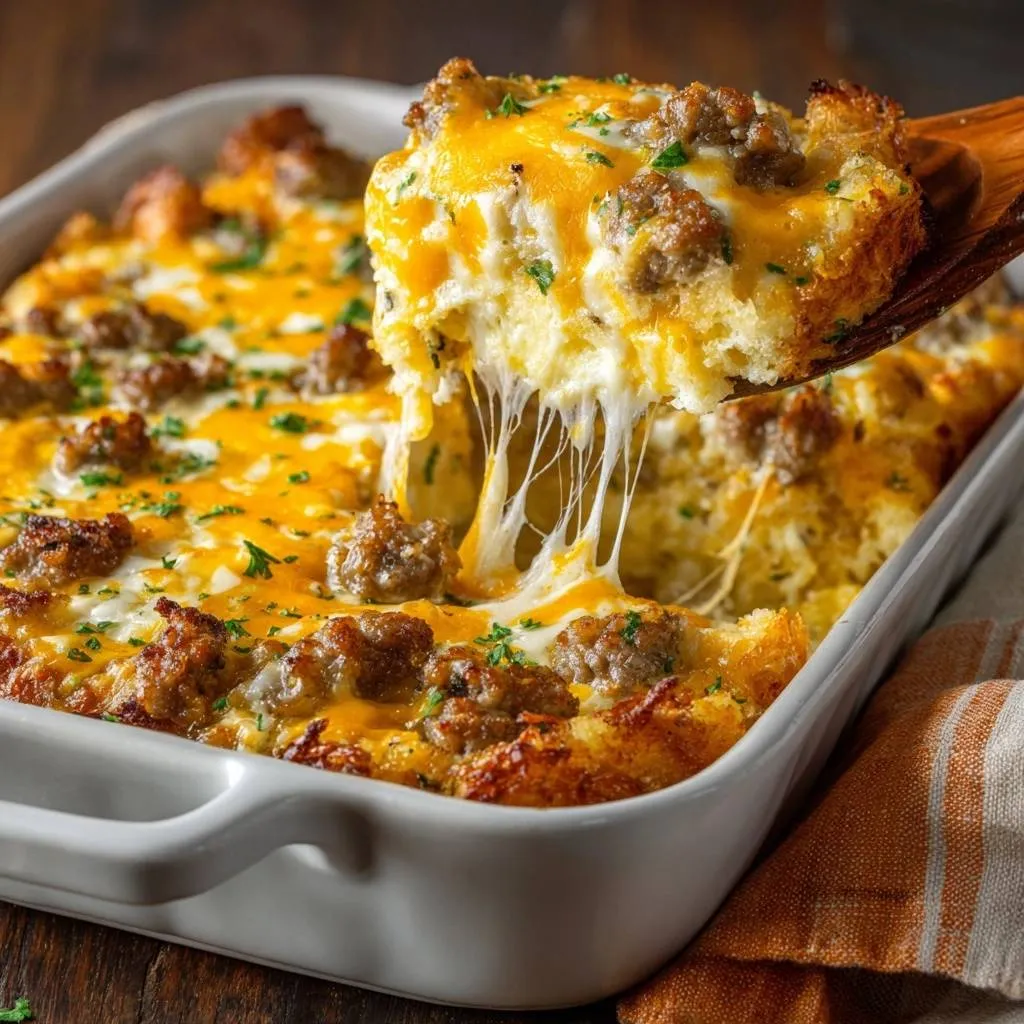
You know that disappointment when your breakfast casserole comes out with soggy, mushy bread? It ruins the whole thing. This cheesy sausage breakfast casserole fixes it completely by toasting the bread cubes first. You’ll get those irresistible crispy edges and a custardy center that pulls apart perfectly.
So why does this work so well? Most recipes skip the toast, and the bread’s extra moisture dilutes the egg custard into a watery mess. However, toasting evaporates that moisture upfront. In addition, it creates a sturdy base that soaks up the flavors evenly overnight.
Here’s the expertise kicker: toast at exactly 350 degrees for 10 minutes until lightly golden. That precise step triggers starch changes for the best texture in your cheesy sausage breakfast casserole. Trust me, it’s a game-changer for busy mornings or holiday brunches.
Why Toasting Transforms Cheesy Sausage Breakfast Casserole
The Soggy Bread Trap and Simple Fix
Untoasted bread holds too much moisture, which seeps into the custard during the overnight rest. This dilutes the eggs and milk, leaving you with a watery, mushy cheesy sausage breakfast casserole. Toasting solves it by evaporating that water first.
Science backs this up: heat gelatinizes the starch on the bread’s surface. Therefore, it creates a barrier that absorbs custard evenly without breaking down. You’ll notice crispy edges that contrast beautifully with the soft center.
Picture untoasted bread turning gummy versus toasted cubes staying firm. The difference is night and day. Plus, it prevents the top from sinking into a puddle.

Day-Old Bread vs. Fresh: Texture Science
Day-old bread works great because it’s already drier naturally. However, fresh bread needs toasting to match that state. Both lead to the Maillard reaction during baking for those golden, flavorful edges in cheesy sausage breakfast casserole.
French bread holds up best with its airy structure. White bread softens nicely too. In addition, toasting fresh loaves mimics stale ones perfectly.
I’ve seen the results: toasted fresh bread crisps better than day-old in some tests. It all comes down to that dry foundation.
Key Ingredients for Cheesy Sausage Breakfast Casserole Success
Selecting Breakfast Sausage for Bold Flavor
Fresh breakfast sausage brings juiciness from its higher fat content. Pre-cooked versions dry out fast. Cook it over medium heat to crumble evenly and drain excess fat after browning.
Choose mild for kids or spicy for heat lovers. Therefore, it infuses the whole cheesy sausage breakfast casserole with savory depth. Each bite packs protein too.
Don’t skip draining; too much fat makes it greasy. Pat it dry for clean layers.
Cheese Choices: Cheddar’s Melting Magic
Sharp cheddar cuts through the richness with its tang. Freshly shredded melts smoother than pre-shredded, thanks to no anti-caking agents. Use 3 cups total in your cheesy sausage breakfast casserole.
Layer it between bread and sausage for even distribution. The top layer bubbles golden under heat. In addition, it binds everything with stretchy goodness.
Mild cheddar works if you prefer subtler flavor. However, sharp elevates it.
Eggs, Milk, and Seasonings Breakdown
Twelve eggs to 2.5 cups milk gives the perfect custardy bind. Too much milk waters it down. Whisk them smooth for even soak in cheesy sausage breakfast casserole.
Salt and pepper season simply, while parsley adds fresh brightness. For lighter versions, swap some milk for almond milk. It holds up well.
Pro tip: room-temp eggs whisk lump-free. Taste the mix and adjust salt before layering.
Bread Cubes: French vs. White Bread Test
Cut into 1-inch cubes for ideal soak without falling apart. French bread’s crust adds chew in cheesy sausage breakfast casserole. White bread yields softer results.
Toast precisely at 350 for 10 minutes. Watch closely to avoid burning. Therefore, you get dry, golden bases every time.
Scale up the sheet for bigger batches. Cool fully before assembly.
Science of Custard Soak in Breakfast Casseroles
Moisture Migration During Overnight Rest
Toasted bread’s pores pull in custard via capillary action. This happens evenly overnight in the fridge. Flavors meld deeply in your cheesy sausage breakfast casserole.
Refrigeration slows bacteria while the rest sets the structure. Four hours minimum works, but 24 hours peaks flavor. In addition, keep it flat to avoid shifting.
Colder temps slow migration slightly. Therefore, plan your bake time accordingly.
Baking Phases: Covered vs. Uncovered Magic
Covered baking steams the center to set gently at 350 degrees for 30 minutes. Uncovering lets steam escape, crisping the top for 20 more minutes. Cheese bubbles as it melts.
Check for 165 degrees internal temp for safety. The edges pull away golden. However, don’t skip the rest; it firms the custard.
Pro tip: tent foil if browning too fast.
Layering Technique for Even Cheesy Sausage Breakfast Casserole
Prepping and Greasing the Baking Dish
A 9×13 dish fits perfectly for 12 servings. Butter or spray oil prevents sticking. Grease well for easy slicing later.
Layer evenly to avoid dry spots. Press gently after pouring eggs. This submerges everything without air pockets in cheesy sausage breakfast casserole.
First Layer: Bread, Sausage, Cheese Balance
Start with half the toasted bread, then sausage, then cheese. Distribute sausage fat evenly; it moistens bread. Therefore, no bland bites.
Keep it light for absorption.
Second Layer and Egg Pour Precision
Repeat layers, then pour custard slowly. Use a spatula to submerge. Refrigerate covered to set in cheesy sausage breakfast casserole.
Store flat overnight.
Step-by-Step Assembly and Baking Guide
Cooking Sausage to Crumble Perfection
Brown sausage over medium heat for 8 minutes, breaking clumps with a spoon. You’ll smell the savory aroma as it crisps. Drain fat immediately to avoid greasiness.
If you’re enjoying the savory sausage flavor here, be sure to try this cheesy sausage gravy biscuit bake next.
Cool slightly before layering. This prevents cooking the eggs early in cheesy sausage breakfast casserole. Medium heat ensures even browning without drying.
Pro tip: save a tablespoon of fat for extra flavor if you like.
Toasting Bread Cubes for Crisp Foundation
Spread 8 cups cubes on a sheet at 350 degrees for 10 minutes. They turn dry and golden, releasing a toasty scent. Cool 5 minutes to stop carryover cooking.
This step is non-negotiable for texture in cheesy sausage breakfast casserole. Stir halfway for evenness. Scale sheets for large batches.
Whisking Custard Mixture Smoothly
Beat eggs first until frothy, then add milk gradually. Whisk in salt, pepper, parsley, and 2 cups cheese last. Look for a smooth, pourable texture.
Avoid overmixing to prevent foam. Therefore, it soaks evenly. Taste for seasoning here.
Baking Timeline from Fridge to Table
Bake straight from fridge at 350 covered for 30 minutes. Uncover, add cheese, bake 20 more until set with minimal jiggle. Knife insert comes clean in center.
Rest 10 minutes for clean slices. Internal 165 degrees confirms doneness in cheesy sausage breakfast casserole. If frozen, thaw fully first.
Make-Ahead and Freezing for Cheesy Sausage Breakfast Casserole
Overnight Rest vs. Full Day Prep
Rest at least 4 hours, up to 24 for best flavor meld in cheesy sausage breakfast casserole. Cover tightly with foil. Bake straight from fridge next morning.
Longer than a day risks sogginess. Therefore, time it for holidays or busy days. It simplifies brunch hugely.
Freezing Assembled Casserole Steps
Assemble fully, wrap dish in two foil layers, label with date. Freeze up to 2 months. Thaw in fridge 24 hours before baking.
Bake as directed, adding 10 minutes if needed. Portion into singles for families. This makes cheesy sausage breakfast casserole ultra-convenient.
Reheating Leftovers Without Sogginess
Oven at 350 for 15-20 minutes beats microwave for crispness. Cover loosely to steam, then uncover. Airtight storage keeps it fresh.
Revive edges by broiling briefly. Therefore, it tastes freshly baked.
Avoiding Pitfalls in Cheesy Sausage Breakfast Casserole
Skipping Toast: Soggy Disaster Explained
Untoasted bread releases moisture overnight, diluting everything into mush. You’ve seen it: watery eggs and soft texture. Toasting prevents this entirely.
If forgotten, bake bread dry first next time. Side-by-side, toasted wins hands down in cheesy sausage breakfast casserole.
Overmixing Custard or Uneven Layers
Overwhisking foams eggs, trapping air that deflates. Uneven layers cause dry spots. Whisk just until smooth and layer by hand.
Visual check: even height across dish. Fixes flops fast.
Baking Time Tweaks by Oven Type
Convection? Reduce to 325 and check 10 minutes early. High altitude adds 5-10 minutes. Overbake shows cracked top or dry edges.
Pull at jiggle for perfection in cheesy sausage breakfast casserole.
Flavor Twists on Cheesy Sausage Breakfast Casserole
Spicy Sausage and Pepper Upgrades
Swap for spicy sausage and add diced bell peppers or jalapeños. Sauté veggies with sausage for softness. Spinach wilts in nicely too.
This amps heat and color in cheesy sausage breakfast casserole. Balances the cheese perfectly.
Cheese Blends and Herb Variations
Mix pepper jack with cheddar for kick. Sub chives or thyme for parsley’s freshness. Experiment in layers.
These tweaks keep it exciting without changing the base.
Perfect Pairings for Cheesy Sausage Breakfast Casserole
Fruit Sides to Balance Richness
Fresh berries or a citrus salad cuts the savory cheese. Yogurt parfaits add tang. Simple and refreshing contrast.
They brighten every bite.
Beverage Matches from Coffee to Juice
Bold coffee stands up to the cheese. Orange juice brightens sausage flavors. Sparkling cranberry juice fits brunch vibes.
Pick what suits your crowd.
Cheesy Sausage Breakfast Casserole FAQ
Can I Use Gluten-Free Bread?
Yes, gluten-free bread works great if toasted longer, about 12-15 minutes, for extra dryness. It holds custard well despite less structure. Cube tightly and layer evenly for best texture in cheesy sausage breakfast casserole. No other changes needed.
How Long Does It Last in Fridge?
Store airtight for 3-4 days. Reheat to 165 degrees for safety. Beyond that, freeze portions to avoid waste.
Vegetarian Version Without Sausage?
Swap sausage for sautéed mushrooms, peppers, or plant-based crumbles. Season boldly with smoked paprika for savoriness. Add extra cheese to compensate; it bakes up just as hearty in cheesy sausage breakfast casserole style.
Scaling for Smaller Crowds?
Halve everything for an 8×8 dish. Bake covered 25 minutes, uncovered 15-18. Same toast and rest steps apply perfectly.
Why Is My Casserole Watery?
Untoasted bread is the main culprit; it releases moisture into the custard. Always toast first, and don’t skip the overnight rest. If it happens, drain excess liquid before baking or extend uncovered time next round for evaporation.

Cheesy Sausage Casserole
Course: BreakfastCuisine: AmericanDifficulty: medium12
servings20
minutes1
hour450
kcal480
MinutesTired of breakfast casseroles with mushy, waterlogged bread? This foolproof recipe fixes it with one simple step: toasting the bread cubes first to remove moisture. The result is crispy edges, custardy center, and perfect pull-apart texture every time. Make ahead for holidays or busy mornings.
Ingredients
1 pound breakfast sausage
8 cups day-old or toasted bread cubes (such as French or white bread)
12 large eggs
2 1/2 cups milk
3 cups shredded cheddar cheese, divided
1 teaspoon salt
1/2 teaspoon black pepper
2 tablespoons chopped fresh parsley, plus more for garnish
Directions
- Cook the sausage in a large skillet over medium heat until browned and crumbled, about 8 minutes. Drain excess fat and set aside.
- To solve soggy bread forever: Spread bread cubes on a baking sheet and toast in a 350 degree F oven for 10 minutes until dry and lightly golden. This removes excess moisture so the custard soaks in evenly without turning mushy. Let cool slightly.
- In a large bowl, whisk eggs, milk, salt, pepper, parsley, and 2 cups cheese until smooth.
- In a greased 9×13-inch baking dish, layer half the toasted bread cubes, half the sausage, and half the remaining cheese. Repeat layers. Pour egg mixture evenly over top. Press down gently to submerge. Cover and refrigerate at least 4 hours or overnight.
- Preheat oven to 350 degrees F. Bake covered for 30 minutes. Uncover, top with remaining cheese, and bake 20 more minutes until golden, set, and cheese is bubbly. Let rest 10 minutes. Garnish with parsley. Serve warm for stretchy, cheesy perfection.
Notes
- Use day-old or toasted French or white bread cubes. Refrigerate overnight for best results. Let rest 10 minutes before serving for perfect texture.