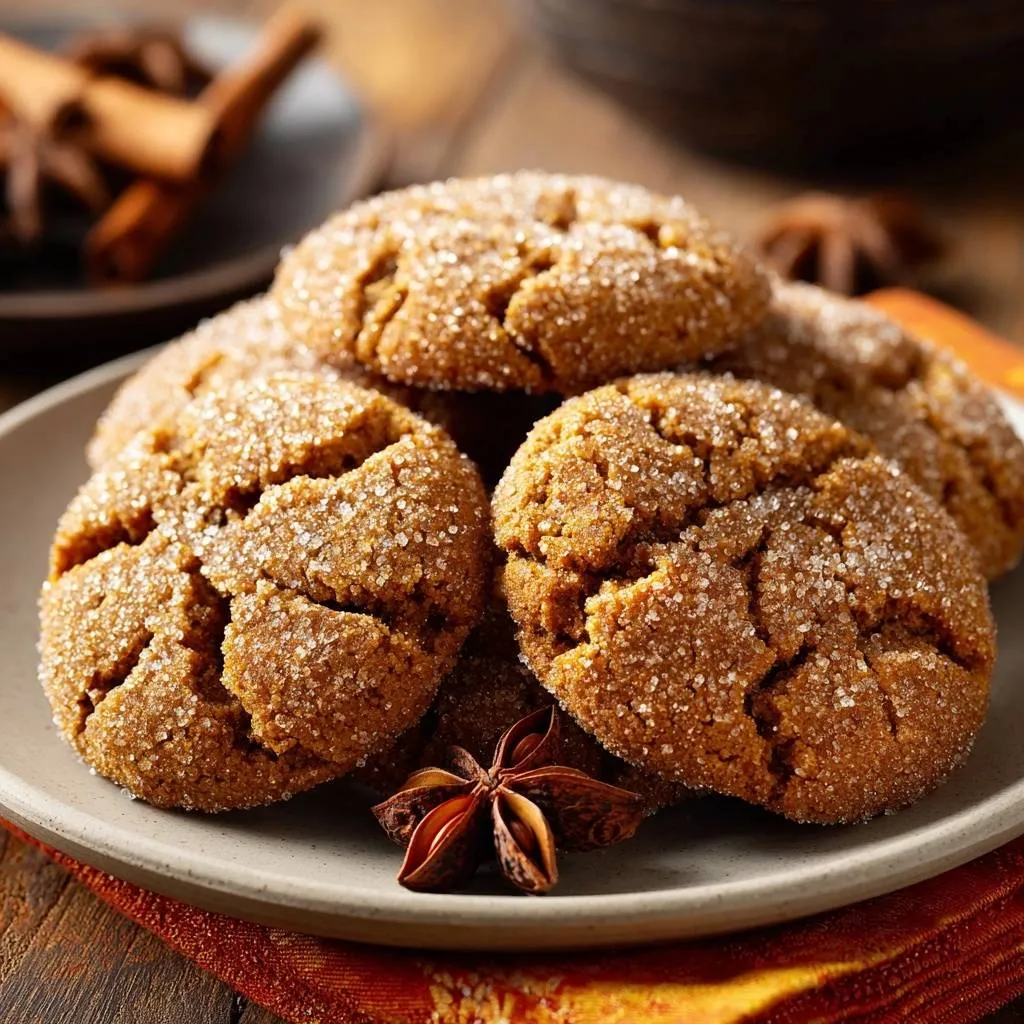
Ever bitten into gingersnaps that snap right back like hockey pucks? Those dry, crumbly ones ruin the holiday spirit. But these chewy gingersnaps change everything with a triple moisture boost: molasses hydrates deeply, brown sugar tenderizes, and a full hour chill locks it all in.
Therefore, you get that perfect crackly top over a soft, spicy center. No more disappointment. These chewy gingersnaps deliver bold ginger punch without toughness, ideal for cozy snacking anytime.
The secret lies in the sugar roll. Coat them thickly, and it melts then recrystallizes during baking, sealing moisture inside. That’s why most recipes fail: they skip this step, and dryness wins.
Spice Blend Unlocks Bold Chewy Gingersnaps Flavor
You start with 2 1/4 cups all-purpose flour for structure that holds the chew. Then, 2 teaspoons ground ginger lead the charge for that fiery kick. In addition, 1 teaspoon cinnamon, 1/2 teaspoon cloves, and 1/4 teaspoon star anise create warmth without bitterness.
Freshly ground spices beat pre-ground every time; they release oils for brighter aroma. However, unsalted butter, 3/4 cup softened, ensures even melt without excess salt overpowering the blend. Baking soda, 1 teaspoon, plus 1/4 teaspoon salt lift and balance it all.
These dry ingredients whisk together easily. They set the stage for chewy gingersnaps that smell like winter magic as they bake.
Why Molasses Defines Chewy Gingersnaps Texture
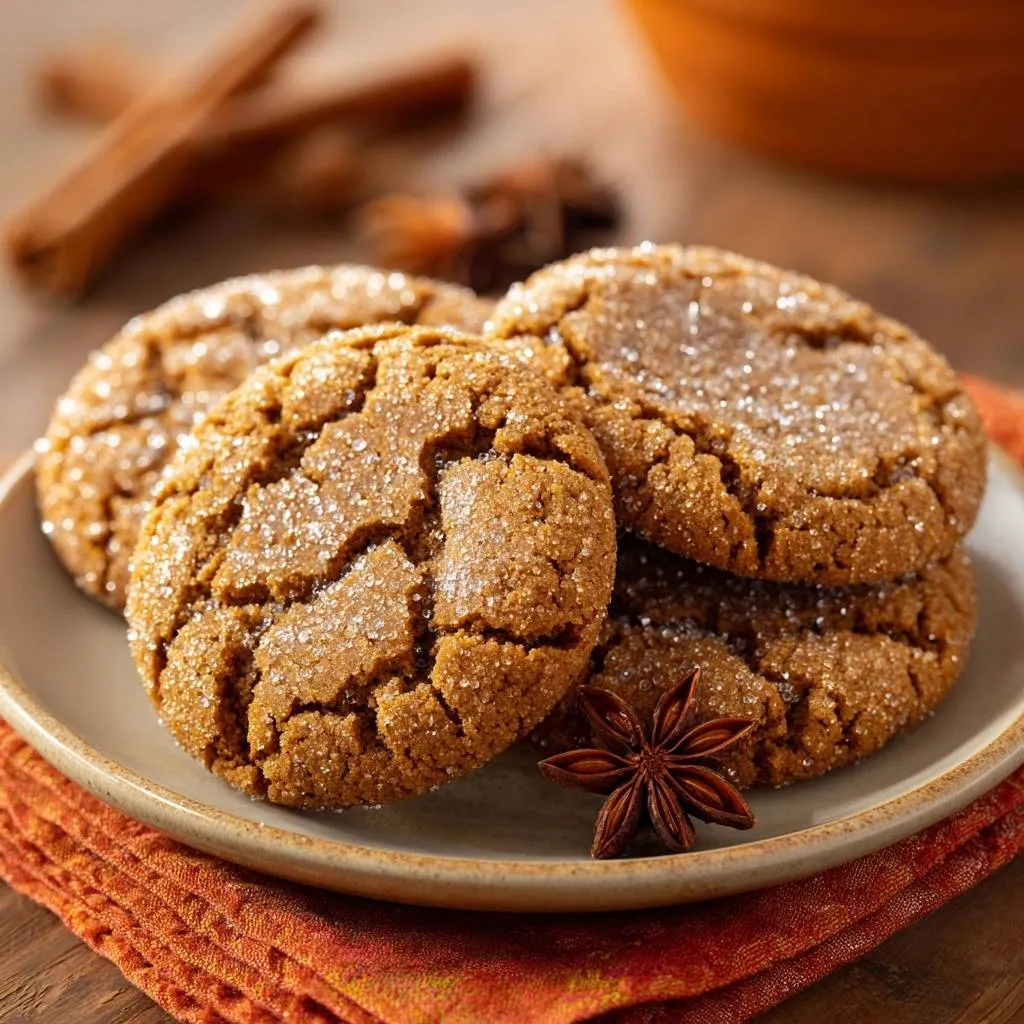
Molasses, just 1/4 cup, acts as the hydration hero. Its acidity tenderizes gluten, so cookies stay moist post-bake. White sugar recipes dry out fast; this doesn’t.
Therefore, choose mild molasses for subtle sweetness or blackstrap for deeper bite. It pulls double duty, boosting flavor and chew in your chewy gingersnaps.
Brown Sugar vs. Granulated in Gingersnaps
Pack 1 cup brown sugar tightly; its invert sugars trap moisture for unbeatable tenderness. Granulated sugar crisps up instead, leaving cookies tough.
In addition, brown sugar’s built-in molasses amps the spice synergy. Pack it firm in the cup, and you’ll see the difference in every chewy gingersnap bite.
Science of Chilling for Perfect Chewy Gingersnaps
Chill the dough for 1 hour, covered, in the fridge. This hydrates flour fully, letting molasses and brown sugar migrate inward. Steam stays trapped, so no dryness during baking.
Gluten relaxes too, preventing toughness. Skip it, and cookies spread thin. However, this step guarantees chewy gingersnaps with soft centers.
Pro tip: fridge at around 40°F works best. Your dough transforms from sticky to scoopable perfection.
Moisture Migration During Gingersnaps Chill
During the chill, sugars dissolve evenly, trapping humidity inside. Think of it like a time-lapse: dough firms up, moisture shifts to the core for that plush texture.
Therefore, after an hour, it’s ready. This makes chewy gingersnaps stay moist for days.
Step-by-Step: Mixing Wet Base for Chewy Gingersnaps
Soften 3/4 cup unsalted butter to room temp; it should dimple without tearing. Beat with 1 cup packed brown sugar for 2 minutes until light and fluffy, volume doubled. The mixture turns pale and creamy.
Add 1/4 cup molasses and 1 large egg; beat until smooth. Scrape the bowl sides to incorporate everything. Don’t overbeat, or it gets greasy.
You’ll smell the spices waking up already. This emulsion sets up the tender base for chewy gingersnaps.
Forming Dough Without Overmixing Gingersnaps
Gradually add the whisked dry ingredients to the wet. Stir until a shaggy dough forms; stop there. Overmixing builds gluten, making tough cookies.
The dough feels smooth but firm, not sticky. Cover and chill. This prevents chewy gingersnaps from turning chewy in the wrong way.
Shaping and Rolling Chewy Gingersnaps Technique
Preheat oven to 350°F. Line sheets with parchment. Scoop tablespoon-sized balls, about 1.5 inches across.
Roll each thickly in 1/3 cup granulated sugar. Place 2 inches apart. That thick coat creates the signature crackle while sealing moisture.
Pro tip: if dough warms up, rechill briefly. Even spacing stops merging during bake.
Sugar Shell Seals in Gingersnaps Moisture
The sugar melts in the oven, then recrystallizes into a crisp shell. Thick rolling beats light dusting; it forms a true moisture barrier for soft insides.
Therefore, your chewy gingersnaps get that glossy, crackly top everyone craves.
For a similar delight, check out these glazed spice cookies.
Baking Timing for Crackly Chewy Gingersnaps
Bake 9 to 10 minutes until edges set and cracks form, but centers stay soft and domed. Watch for oven hotspots; rotate sheets if needed.
Cool on the sheet 5 minutes; they firm up without drying. Transfer to a rack to finish. Carryover heat finishes the bake perfectly.
Overbake, and dryness sneaks in. Pull them early for true chewiness.
Spotting Doneness in Chewy Gingersnaps
Look for surface cracks without edge browning, plus a slight puff that settles. Centers feel soft to the touch. If you have a thermometer, aim for 190°F inside.
These cues nail chewy gingersnaps every time.
Avoiding Dry Gingersnaps: Key Troubleshooting
Skipping the chill causes spreading and dryness; always do it. Overbaking turns edges crisp, invading the center. Use warm butter? Dough gets greasy and flat.
Measure exactly. At high altitude over 3,000 feet, add 1-2 tablespoons flour. In dry climates, cover dough loosely to retain humidity.
These fixes keep your chewy gingersnaps foolproof.
Fixing Tough or Spread Gingersnaps
Dough too warm? Rechill 30 minutes. Too dry? Mix in 1 teaspoon milk. Taste the dough for spice balance; adjust next batch if needed.
However, stick to the chill, and problems vanish.
Storing Chewy Gingersnaps for Lasting Moisture
Store in an airtight container at room temp for up to 1 week; they stay moist. Fridge works for 2 weeks. Layer with parchment to prevent sticking.
Freeze baked cookies or dough balls up to 3 months; thaw overnight in fridge. Flavors meld by day 2, tasting even better.
Pro tip: don’t stack without paper, or moisture transfers.
Flavor Twists on Classic Chewy Gingersnaps
Add 1/4 teaspoon black pepper for heat. Chop in 1/4 cup candied ginger for bursts of chew. Vegan swap: use aquafaba for the egg and coconut oil for butter.
Dip cooled ones in melted white chocolate. These keep the chewy gingersnaps core intact.
Experiment, but chill remains key.
Pairing Chewy Gingersnaps with Beverages and Desserts
Black coffee cuts the spice with bold contrast. Hot tea warms the soul alongside. Make ice cream sandwiches with vanilla for gooey bliss.
On a cheese board, sharp cheddar balances the sweet. Sparkling cranberry juice refreshes between bites.
Gingersnaps Troubleshooting: Expert Fixes
How do I store chewy gingersnaps and do they freeze well?
Keep them in an airtight container at room temperature for up to one week; the moisture from molasses keeps them soft. Refrigerate for two weeks max, or freeze baked cookies or dough balls in a freezer bag for three months. Thaw overnight in the fridge, and they’ll taste freshly baked. Layer with parchment paper to avoid sticking, and avoid direct air exposure to prevent drying.
Why are my gingersnaps flat or spread out?
Warm dough is the usual culprit; it spreads too much before setting. Always chill for the full hour, and if your kitchen’s hot, rechill scooped balls before baking. Also, check butter softness; it should dimple but not tear. Overmixing develops gluten, worsening spread, so stop at shaggy dough.
Can I make gluten-free chewy gingersnaps?
Yes, swap the 2 1/4 cups all-purpose flour for a 1:1 gluten-free blend with xanthan gum included. Add an extra tablespoon of milk if the dough feels crumbly, as GF flours absorb differently. Chill longer, up to 90 minutes, for best shape and chew. The spices and molasses shine through perfectly.
Can I skip the chilling step for gingersnaps?
No, it leads to drier, flatter cookies because moisture doesn’t hydrate evenly and escapes as steam. The hour chill lets sugars migrate inward and relaxes gluten for tenderness. If rushed, you’ll lose the chewy texture that defines these gingersnaps. Plan ahead; it’s worth it.
What can I substitute for star anise in gingersnaps?
Use 1/4 teaspoon fennel seeds, ground finely, for a similar licorice warmth without overpowering. Or skip it and boost cinnamon to 1 1/4 teaspoons. Taste the dry mix first to adjust; star anise adds subtle depth, but these swaps keep the bold ginger forward in chewy gingersnaps.
How do I scale up the chewy gingersnaps recipe?
Double works fine, but chill the larger batch 90 minutes instead of 60 to ensure even hydration. Bake in batches to avoid overcrowding sheets, which affects heat flow. Scoop consistently with a tablespoon measure for uniform chewy gingersnaps across the bigger yield.
Gingersnaps
Course: DessertCuisine: AmericanDifficulty: easy36
cookies20
minutes10
minutes10
kcal60
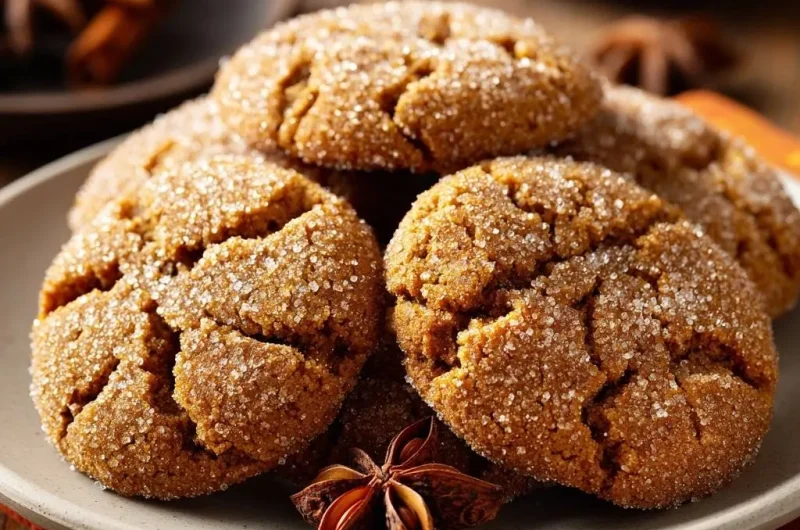
MinutesTired of dry gingersnaps? This recipe uses molasses for hydration, brown sugar for tenderness, and a full hour chill to lock in moisture. Roll in sugar for signature crackle without toughness.
Ingredients
2 1/4 cups all-purpose flour
2 teaspoons ground ginger
1 teaspoon ground cinnamon
1/2 teaspoon ground cloves
1/4 teaspoon ground star anise
1 teaspoon baking soda
1/4 teaspoon salt
3/4 cup unsalted butter, softened
1 cup brown sugar, packed
1/4 cup molasses
1 large egg
1/3 cup granulated sugar, for rolling
Directions
- In a medium bowl, whisk together flour, ginger, cinnamon, cloves, star anise, baking soda, and salt. Set aside.
- In a large bowl, beat butter and brown sugar until light and fluffy, about 2 minutes. Add molasses and egg, beating until smooth.
- Gradually mix dry ingredients into wet until a dough forms. Do not overmix.
- Cover dough and chill in refrigerator for 1 hour. This crucial chill step hydrates the dough fully, trapping moisture from molasses and brown sugar so cookies bake chewy, never dry.
- Preheat oven to 350 degrees F. Line baking sheets with parchment paper.
- Scoop tablespoon-sized dough balls, roll each in granulated sugar to coat thickly. This sugar shell melts then recrystallizes, sealing in moisture for crackly tops and soft centers.
- Place balls 2 inches apart on sheets. Bake 9 to 10 minutes until cracks form and edges set but centers are still soft. Do not overbake, or dryness creeps in.
- Cool on sheets 5 minutes, then transfer to wire rack. Store in airtight container; they stay moist for days.
Notes
- Chill dough for 1 hour to prevent dryness. Do not overbake—centers should remain soft. Store in airtight container for lasting moisture.