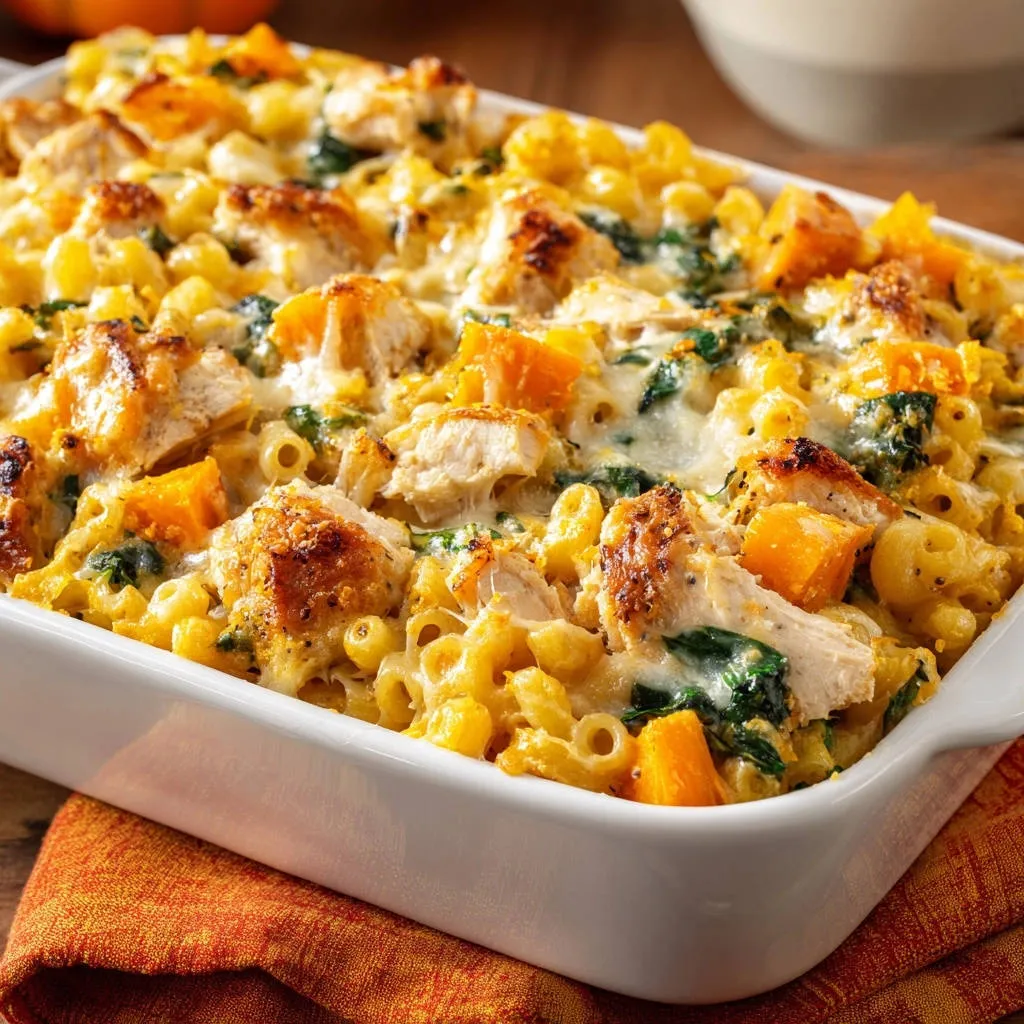
When it comes to a comforting dish like Chicken and Butternut Squash Baked Pasta, the difference between failure and success lies in rigorous moisture management.
I spent years perfecting the technique to avoid that universally dreaded dry, tight, and grainy result, which happens when the pasta aggressively absorbs the sauce during baking.
This recipe uses two critical, science-backed steps that guarantee a luxurious, creamy sauce that remains perfect and rich, even as leftovers.
The Secret to Creamy Baked Pasta: Why This Recipe Works
The biggest pitfall in baked pasta dishes is the tendency for the pasta to continue cooking and pull all available liquid from the cheese sauce while in the hot oven.
Our method addresses this through two techniques: precise undercooking of the pasta and stabilizing the béchamel with a reserved liquid buffer.
These steps ensure the sauce remains luscious and fully coating, delivering complex flavor without the sacrifice of texture.
The Moisture Lock Technique: Pasta Prep Explained
The secret lies in cooking the pasta exactly two minutes shy of the package recommendation, halting its starch development just before it reaches true al dente.
When this slightly undercooked pasta is mixed with the sauce, it has just enough capacity left to absorb moisture during the 20-minute bake time.
Immediate rinsing with cold water is crucial, as this shock prevents further residual cooking and washes away excess surface starch that could otherwise make the final dish sticky.
Stabilizing the Béchamel: Preventing Grainy Sauce
A properly prepared roux (butter and flour) forms the stabilized foundation of the béchamel, preventing the milk solids and fats from separating under high heat.
The truly innovative step is reserving a half-cup of the finished, uncheesed béchamel to drizzle over the top layer before baking.
This thin layer acts as a moisture shield, sacrificing itself to the heat while protecting the pasta and cheese underneath from direct oven heat, guaranteeing a creamy finish.
Gathering Your Pantry Staples: What You Need for the Dish
The Protein and Vegetable Base
Use boneless, skinless chicken breasts cut into uniform one-inch cubes to ensure even and quick searing.
The butternut squash should be peeled and diced into half-inch cubes; smaller pieces guarantee they tenderize completely and meld into the creamy sauce.
Mastering the Cream Sauce Essentials
We use minced shallots instead of onions; they offer a milder, sweeter aromatic base that doesn’t overpower the delicate cheese sauce.
A mix of whole milk and half-and-half is ideal for the béchamel, providing the necessary fat content to create a stable, rich, and velvety texture.
Selecting the Perfect Cheese Blend
We rely on sharp cheddar for its robust, tangy flavor that cuts through the sweetness of the squash.
Monterey Jack or whole-milk mozzarella provides the necessary stretch and superior meltability needed for a classic, smooth baked pasta.
Crucially, always shred the cheese fresh: pre-shredded varieties contain anti-caking agents that can cause a grainy or oily sauce.
The Importance of Flavor Boosters: Nutmeg and Spinach
A small pinch of nutmeg is transformative in a white sauce, enhancing the dairy notes and rounding out the savory profile without making the dish taste sweet.
Freshly chopped spinach adds essential color contrast, a touch of earthy flavor, and helps to lighten the overall richness of the Chicken and Butternut Squash Baked Pasta.
Essential Kitchen Tools for Seamless Baked Pasta Prep
Having the right tools ready makes the process of building a complex baked pasta dish efficient and stress-free.
9×13 Casserole Dish: The essential size for standard family portions and provides enough surface area for even baking.
Large Pot/Dutch Oven: Necessary for cooking the pasta and building the large volume of the cheese sauce.
Heavy-Duty Whisk: Crucial for ensuring the roux emulsifies completely with the milk, creating a foundation that is perfectly smooth and lump-free.
Large Skillet: For searing the chicken and caramelizing the squash, ensuring maximum flavor transfer before incorporation.
From Prep to Perfection: Step-by-Step Cooking Guide
Executing the “Al Dente Minus Two Minutes” Rule
This is the foundation of our creamy recipe. Bring a large pot of salted water to a boil, then cook the pasta for exactly two minutes less than the recommended time.
Drain the pasta immediately and rinse quickly with cold water. This crucial step halts the cooking process, locks in the pasta’s shape, and ensures it only absorbs the remaining sauce moisture during baking.
For a similar approach to achieving perfect pasta texture, check out these creamy sausage bow-ties.
Searing the Chicken and Tenderizing the Squash
Preheat your oven to 375°F. Sear the cubed chicken in olive oil until golden brown on all sides and mostly cooked through, ensuring deep, savory flavor development. Remove and set aside.
Add the diced butternut squash to the same skillet, utilizing the chicken fat and fond, and cook until tender and lightly caramelized (about eight minutes).
This cooking step maximizes the sweetness and ensures the squash is perfectly soft, preventing it from remaining firm in the final, baked dish.
Crafting the Stabilized Béchamel Base
In a large pot, melt the butter over medium heat, add the minced shallot, and cook until translucent (about two minutes).
Whisk in the flour and cook, stirring constantly, for exactly 60 seconds-this step is critical for eliminating the raw flour taste.
Gradually whisk in the whole milk and half-and-half mixture, ensuring no lumps form, then bring the sauce to a gentle simmer until it thickly coats the back of a spoon.
The Creaminess Fix: Reserving the Sauce Buffer
Stir in the salt, pepper, and nutmeg.
Before adding any cheese, measure out and reserve 1/2 cup of the warm béchamel sauce. Set this aside to be used as our protective moisture layer later.
Final Assembly and Flavor Incorporation
Remove the pot completely from the heat. Gradually stir the freshly shredded cheddar and Monterey Jack/mozzarella into the sauce until it is perfectly smooth and fully melted.
Fold in the roughly chopped fresh spinach until it is just wilted.
Add the undercooked pasta, the seared chicken cubes, and the tender butternut squash to the pot, stirring gently to ensure everything is evenly coated in the rich, creamy sauce.
For a similar, rich texture, explore creamy pesto chicken and gnocchi.
Baking and the Essential Rest Period
Pour the mixture into the prepared 9×13 inch casserole dish.
Evenly drizzle the reserved 1/2 cup of béchamel over the top of the casserole; this moisture layer is your insurance against a dry surface.
Bake at 375°F for 20 to 25 minutes, or until the top is bubbly and golden brown. Crucially, let the casserole rest for 10 minutes after removing it from the oven to allow the sauce to fully set, preventing a watery or loose result upon serving.
More Creamy Baked Dishes
If you enjoyed the creamy, baked pasta, consider these other comforting chicken recipes.
- For another satisfying chicken bake, explore this Cheesy Sausage & Spinach Breakfast Bake, which offers a similar comforting feel with a different flavor profile.
- If you appreciate well-seasoned chicken, you might like the Creamy Tuscan Chicken Meatballs, known for their rich flavors.
Chef’s Secrets: Elevating Your Baked Pasta Game
Apply these small, high-impact techniques to ensure your Chicken and Butternut Squash Baked Pasta achieves professional-level results every time.
Toast the Squash Deeper: While the recipe calls for tenderizing, aiming for slightly deeper caramelization on the butternut squash adds a necessary, complex sweetness that beautifully balances the savory cheese and prevents the dish from tasting flat.
Freshly Grated Cheese is Non-Negotiable: Pre-shredded cheese contains cellulose and potato starch (anti-caking agents) that seriously interfere with smooth melting, leading to a grainy or oily final texture in your Mornay sauce. Always shred your own.
Seasoning the Layers: Ensure you season the water for the pasta, season the chicken aggressively when searing, and taste the béchamel before adding the cheese.
Layered seasoning throughout the process guarantees deep, complex flavor in every bite, not just saltiness on the surface.
A Touch of Acid: Baked pasta is inherently rich. After the casserole is baked and rested, a light sprinkle of finely chopped fresh parsley or chives, or a small splash of lemon juice, can cut through the richness and brighten the final flavor profile considerably.
Troubleshooting, Swaps, and Variations for Your Baked Casserole
Common Problem: My Sauce Still Came Out Oily or Dry
If your sauce looks oily, it often means the cheese was added while the béchamel was still too hot, causing the fat to separate. Always remove the sauce from the heat before incorporating the shredded cheese.
If the final dish is dry, you likely baked it too long. Watch for the edges to set and the top to be bubbly, but do not wait for the center to become solid; remember, the 10-minute rest finishes the process.
Ingredient Swaps for Cheeses and Milk
For a sophisticated depth of flavor, replace sharp cheddar with Gruyère or smoked Gouda, which melt beautifully and offer excellent nuttiness.
Avoid using low-fat milk, skim milk, or non-dairy milks, as they lack the necessary fat content to create a stable emulsion, significantly increasing the risk of separation and graininess.
Protein and Vegetable Substitutions
You can substitute the chicken with pre-cooked turkey or even browned Italian beef sausage. If using pre-cooked protein, be sure to toss it lightly with spices and quickly brown it in the skillet to add depth before mixing it in.
Sweet potato or delicata squash can be swapped for butternut squash; prepare them in the skillet exactly the same way until tender.
If using vegetables like broccoli or asparagus, they should be lightly blanched first to ensure they are tender but still bright green before being folded into the sauce.
Serving Suggestions and Smart Make-Ahead Strategy
Ideal Side Dishes to Complement the Richness
Because this baked pasta is rich and hearty, it pairs best with a light, acidic side dish to cleanse the palate.
A simple arugula salad tossed with a sharp lemon vinaigrette is ideal, or try quickly roasted asparagus tossed with olive oil and flake salt.
Make-Ahead Instructions for Busy Weeknights
You can prepare this casserole completely up to Step 5 (assembly) and pour it into the baking dish.
Cover the assembled, unbaked Chicken and Butternut Squash Baked Pasta tightly with foil and refrigerate for up to 24 hours.
Before baking, let the dish sit at room temperature for 30 minutes, then drizzle with the reserved sauce (or a splash of extra milk if the mixture looks tight) and bake as directed, perhaps adding five minutes to the total time.
Storing and Reheating Leftovers
Store leftovers tightly covered in the refrigerator for three to four days.
To reheat, the oven is best at 350°F, covered with foil, until warmed through.
If microwaving individual portions, add a tablespoon of milk or chicken broth over the top before heating; this helps to revitalize the sauce and restore creaminess.
Frequently Asked Questions About Baked Pasta
Can I use pre-cooked chicken or rotisserie chicken?
While convenient, using pre-cooked chicken skips a crucial step in building flavor depth-the searing.
If you must use rotisserie chicken, toss it with a pinch of paprika, salt, and pepper, and quickly heat it in the skillet with a touch of oil to mimic the seared flavor.
Is it necessary to rinse the pasta with cold water?
Yes, rinsing the undercooked pasta is necessary for two reasons: it instantly stops the cooking process and removes excess surface starch.
This rinsing prevents the final dish from becoming too sticky or gummy, ensuring that the sauce binds only to the pasta’s surface.
Can I freeze this Chicken and Butternut Squash Baked Pasta?
This dish freezes best when assembled but unbaked. Wrap it tightly in several layers of plastic wrap and foil; it will keep for up to three months.
Thaw the casserole completely in the refrigerator overnight before baking and follow the usual instructions for letting it warm up before going into the oven.
What is the difference between béchamel and a cheese sauce?
Béchamel is the essential mother sauce made from a white roux (butter and flour) whisked into milk and seasoned with nutmeg.
A cheese sauce, often technically called a Mornay sauce, is simply a béchamel that has had cheese (like our cheddar and Jack blend) incorporated into the mixture.
This definitive recipe for Chicken and Butternut Squash Baked Pasta guarantees luxurious texture alongside warming fall flavors. Master the moisture lock technique and enjoy rich, creamy results every time.
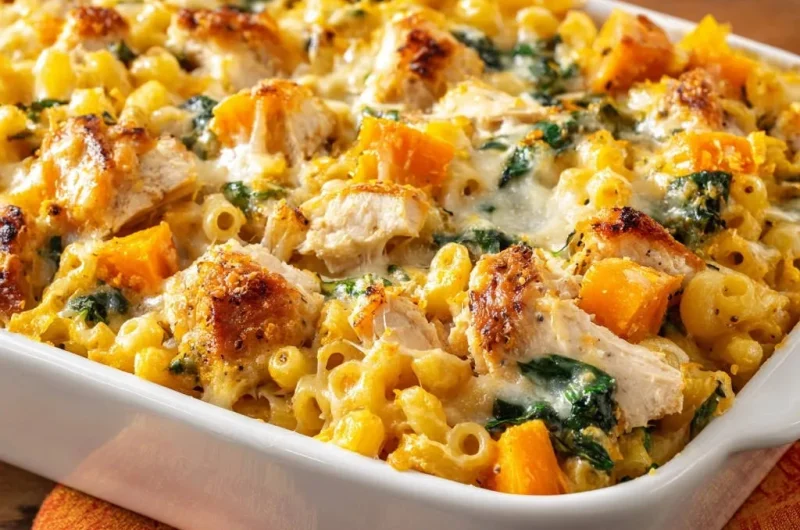
Chicken and Butternut Squash Pasta
Course: Main CourseCuisine: Italian-AmericanDifficulty: medium8
servings30
minutes45
minutes650
kcal75
minutesTired of dry baked pasta? This recipe features a crucial technique—reserving stabilizing béchamel—ensuring a perfectly creamy sauce every time. Loaded with tender chicken, sweet butternut squash, and fresh spinach, this luxurious baked mac and cheese is perfect for dinner or satisfying leftovers.
Ingredients
1 pound elbow macaroni or small tubular pasta
1 tablespoon olive oil
2 large chicken breasts, cut into 1-inch cubes
1 cup peeled and diced butternut squash (1/2 inch cubes)
1 tablespoon butter
1 medium shallot, minced
1/4 cup all-purpose flour
4 cups whole milk (or a blend of whole milk and half-and-half)
1/2 teaspoon salt
1/4 teaspoon black pepper
1/4 teaspoon nutmeg
8 ounces sharp cheddar cheese, shredded
4 ounces Monterey Jack or mozzarella cheese, shredded
3 ounces fresh spinach, roughly chopped
Directions
- Prepare the Pasta Al Dente Minus Two Minutes: Bring a large pot of salted water to a boil. Add the pasta and cook for exactly two minutes less than the package instructions recommend. This is the crucial step for moisture lock. Drain the pasta immediately and rinse quickly with cold water to stop the cooking process. Set aside.
- Cook Chicken and Squash: Preheat oven to 375 degrees F. In a skillet, heat olive oil over medium heat. Sear the cubed chicken until golden brown on all sides and mostly cooked through, about 5 to 7 minutes. Remove chicken and set aside. Add the diced butternut squash to the same skillet and cook until tender and slightly caramelized, about 8 minutes. Set aside.
- Create the Stabilized Béchamel: In a large pot or Dutch oven, melt the butter over medium heat. Add the minced shallot and cook until translucent, about 2 minutes. Whisk in the flour and cook, stirring constantly, for 1 minute (do not let it brown). Gradually whisk in the 4 cups of whole milk/half-and-half mixture, making sure no lumps form.
- Flavor and Reserve Liquid: Bring the sauce to a gentle simmer, whisking occasionally, until it thickens enough to coat the back of a spoon (about 5 minutes). This stabilization is key. Stir in the salt, pepper, and nutmeg. THE CREAMINESS FIX: Before adding cheese, reserve 1/2 cup of the sauce and set it aside. This reserved liquid acts as a buffer against dryness during baking.
- Assemble the Casserole: Remove the pot from the heat. Gradually stir the shredded cheddar and Monterey Jack/mozzarella into the sauce until smooth and fully melted. Stir in the chopped spinach until just wilted. Add the undercooked pasta, the cooked chicken cubes, and the butternut squash to the cheese sauce. Stir gently to ensure everything is evenly coated.
- Bake: Pour the mixture into a prepared 9×13 inch casserole dish. Drizzle the reserved 1/2 cup of béchamel evenly over the top of the casserole. This moisture layer ensures the top layer of pasta does not dry out. Bake at 375 degrees F for 20 to 25 minutes, or until the top is bubbly and golden brown and the edges are set. Let rest for 10 minutes before serving to allow the sauce to fully set.
Notes
- Ensure pasta is cooked exactly ‘al dente minus two minutes’ for best results in moisture retention.