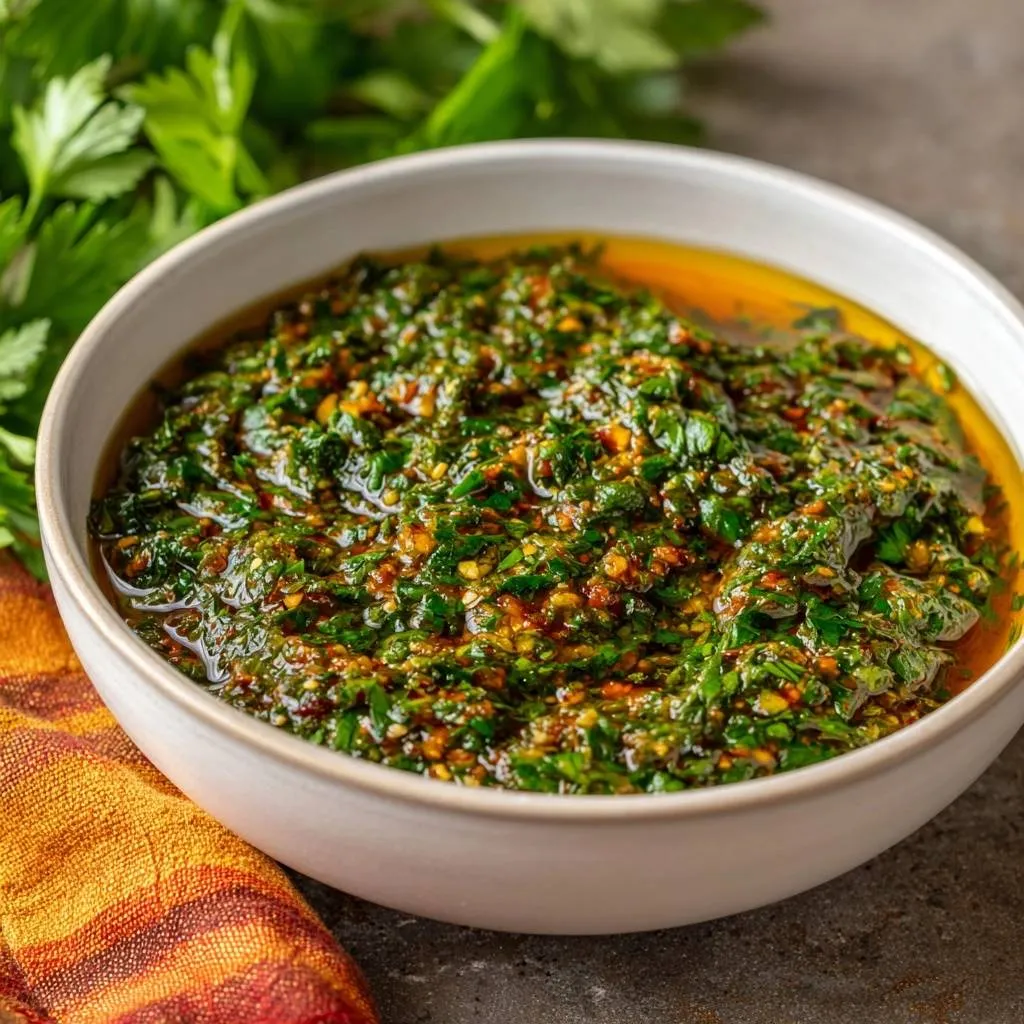
Ever made chimichurri only to watch the oil pool on top like it’s trying to escape? That separation ruins the vibe every time. This recipe fixes it for good with a simple salting and acidulating trick that pulls juices from the herbs themselves.
Here’s why it works so well. You start by tossing parsley, garlic, chili flakes, and salt together. Then vinegar hits, and during that 10-minute rest, osmosis kicks in. The herbs release their own liquid, creating a base that grabs the oil and holds tight.
The secret? That rest period. It breaks down cell walls just enough without a blender, so you get a vibrant green, chunky sauce with bold tang that stays emulsified even after a week in the fridge. Spoon it over grilled steak or veggies, and it transforms everything.
Chimichurri Sauce Core Ingredients Breakdown
Parsley leads the charge at 2 cups, finely chopped. It releases moisture through osmosis, forming the natural juice that binds everything. Fresh flat-leaf beats curly every time; it’s juicier and less bitter.
Garlic, 4 minced cloves, delivers punch without overwhelming. In addition, 1 teaspoon red chili flakes add balanced heat, so adjust down if you prefer mild. Salt, just 1/2 teaspoon, triggers the juice extraction.
Red wine vinegar, 1/4 cup, acidifies and stabilizes. Finally, 1/2 cup extra-virgin olive oil emulsifies smoothly. Use high-quality oil; it shines brighter and holds the emulsion. No cilantro or oregano here to keep the focus pure and stable.
Parsley and Garlic Foundation
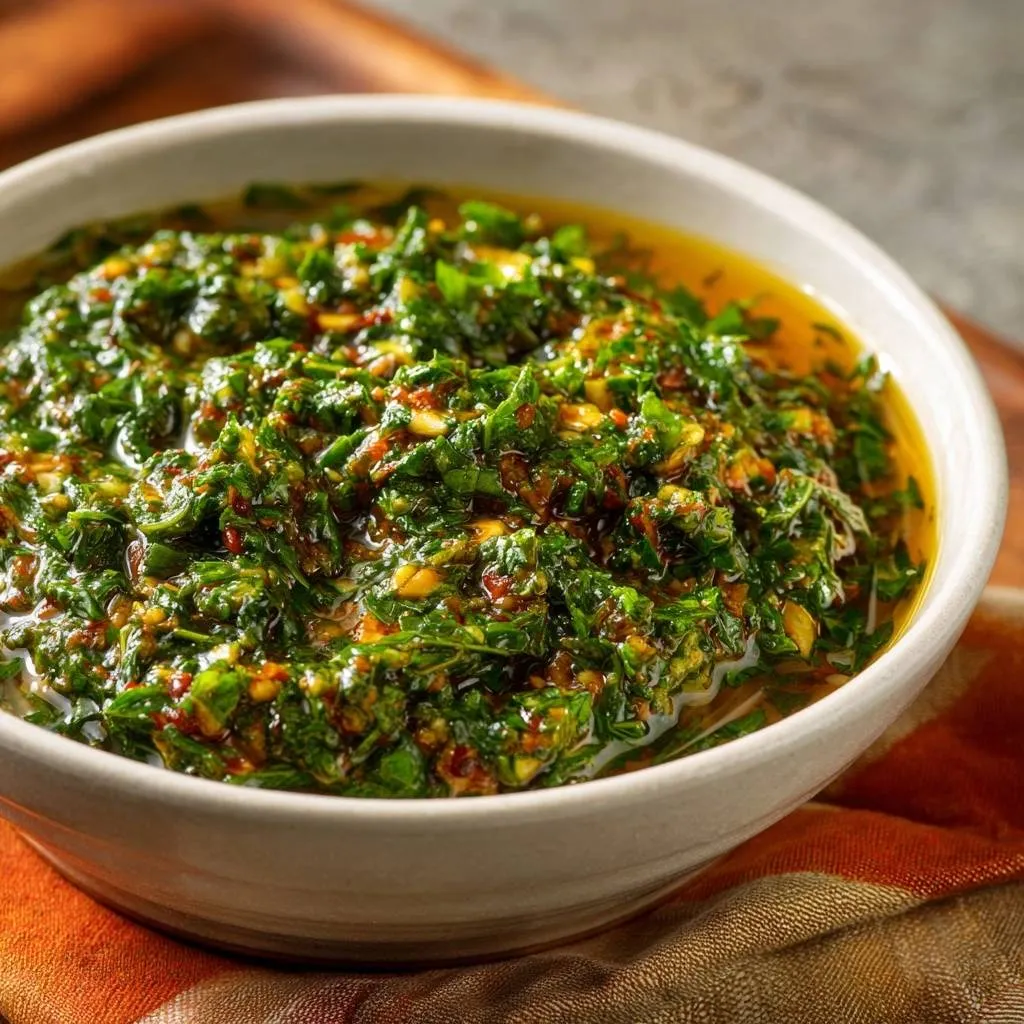
Chop parsley finely by hand for max juice release. Flat-leaf parsley wilts perfectly during the rest, unlike curly which stays tough. Mince garlic tiny to blend seamlessly; big chunks disrupt the emulsion.
Therefore, aim for uniform pieces. This foundation smells fresh and garlicky right away, promising bold flavor ahead.
Salt, Vinegar, and Oil Ratios
Stick to 1/2 teaspoon salt; too much over-draws moisture and turns it salty. Red wine vinegar’s sharpness cuts fat best, but white wine vinegar works in a pinch for milder tang.
Drizzle oil slowly while stirring. However, rush it and you risk splitting. These ratios ensure fridge stability.
History and Origins of Chimichurri Sauce
Chimichurri hails from Argentine gauchos in the Pampas, a rustic mix for asado grilled meats. They pounded herbs, garlic, and vinegar by hand, no fuss. Over time, it spread as the ultimate BBQ sauce.
Traditional versions separated fast since folks just shook oil in. In addition, modern tweaks like this salting method fix that for home cooks. The name? Maybe from “Jimmy Curry” or Basque “tximitxurri,” meaning mishmash.
Today, it’s global, from South American parillas to U.S. grills. However, stability innovations make it practical for everyday use.
From Pampas to Modern Kitchens
By the 19th century, it hit Buenos Aires tables. Regional twists vary vinegar or heat. In the U.S., we crave stable versions for meal prep.
Therefore, home cooks prioritize no-separation recipes now. It fits busy lives perfectly.
For a vibrant meal, try this roasted veggie flatbread next.
Science of Stable Chimichurri Sauce Emulsion
Salt draws water from parsley cells via osmosis, like how pickles brine. Vinegar lowers pH, softening walls more. This herb juice acts like mayo’s egg yolk, trapping oil droplets.
Shaking oil-and-vinegar alone fails because fat separates without a binder. Here, vigorous stirring during drizzle mechanically emulsifies it. Result? A week-stable sauce, even cold.
Think of it as homemade vinaigrette on steroids. The green juice prevents floating oil, keeping texture chunky and flavor punchy.
Osmosis and Herb Juice Extraction
Salt penetrates cells in minutes, releasing liquid. After 10 minutes, you see parsley soften and green pool form. Skip it, and no binder means split sauce.
Therefore, that rest transforms dry herbs into a juicy base. It’s simple science you can smell and see.
Acid-Oil Binding Mechanism
Vinegar charges oil droplets negatively, so they repel and stay suspended. Stirring breaks them small. Low pH fights separation too.
However, balance matters; too much acid bites. This method nails it every time.
Step-by-Step Chimichurri Sauce Preparation
Total time’s 20 minutes active plus 10 rest. No blender needed for that chunky bite. Raw garlic’s safe in acid, but mince fine.
Watch for parsley wilting and juice pooling. Taste at end for perfect balance. You’ll smell garlic and herbs blooming fast.
Phase 1: Herb-Salt Base Mixing
Finely chop 2 cups parsley by hand; processors bruise and muddy it. Mince 4 garlic cloves, add 1 teaspoon chili flakes and 1/2 teaspoon salt. Stir evenly so salt coats all.
This base looks dry at first but sets up the magic.
Phase 2: Vinegar Rest for Juices
Pour in 1/4 cup red wine vinegar and toss. Let sit 10 minutes. Parsley wilts slightly, green liquid forms; that’s your emulsion hero.
Don’t skip; it prevents total separation disaster.
Phase 3: Oil Drizzle and Emulsify
Drizzle 1/2 cup olive oil slowly while stirring hard with a fork. It thickens to glossy. Taste, tweak salt or vinegar.
Use right away or chill; stir before serving.
Avoiding Common Chimichurri Sauce Mistakes
Over-chop to mush and you lose texture. Skip the rest, oil splits. Pour oil fast, same problem. Wrong vinegar turns bitter.
Fix split sauce by adding vinegar and salt, then re-stir. Heat creeps up if flakes clump; distribute well. Store airtight to last.
Fixing Oil Separation Issues
Spot oil on top? More vinegar and salt draw fresh juices. Stir vigorously 2 minutes. Prevention’s better; always rest first.
This salvage works 90% of time.
Texture and Flavor Balance Pitfalls
Too oily? Add vinegar. Bland? More garlic or salt. Vinegary? Extra oil drizzle. Adjust in small bits, taste often.
Balance keeps it addictive.
Flavor Variations for Chimichurri Sauce
Build on this base for twists. Add 1 tablespoon oregano for classic Argentine vibe; it emulsifies fine. Cilantro swap makes Mexican fusion, 1:1 ratio.
Lemon juice for vinegar adds brightness. Roasted garlic mellows bite. Smoked paprika hints smoke without grill. All keep stability.
Scale up double for batches; ratios hold. Heat-free? Skip flakes entirely.
Classic Herb Adjustments
1 teaspoon dried oregano boosts tradition without overpowering. Fresh thyme, 1 tablespoon chopped, adds earthiness. Stir into base before rest.
Emulsion stays rock-solid.
Spice and Acid Twists
Fresh minced chilies replace flakes for brighter heat. Balsamic splash for sweet depth, 1 tablespoon max. Ginger-soy fusion? 1 teaspoon each, Asian flair.
Test small; acid keeps it bound.
Perfect Pairings for Chimichurri Sauce
Grilled skirt steak loves 1/4 cup per pound; spoon post-sear. Chicken thighs crisp up under broiler with it. Veggies like portobellos soak flavors.
As marinade, thin with oil and rest meat 30 minutes. Dips for bread or boiled eggs shine too. Endless versatility.
Grilled Proteins and Veggies
Sear steak hot, 3 minutes per side, then chimichurri. Zucchini halves grill 4 minutes; drizzle at end. Portobellos, 5 minutes flipped.
Freshness pops with heat.
Unexpected Uses Beyond Grilling
Spread on sandwiches for zing. Whisk into salad dressing. Top potatoes or grain bowls. Layer in burritos for punch.
Transforms basics instantly.
Chimichurri Sauce Storage and Make-Ahead
Fridge in jar up to 1 week; glass excludes air best. Stir before use; emulsion holds. Freezer ice cubes last 3 months.
Thaw in fridge overnight, no split. Scale for parties; double fits quart jar fine.
Freezing Portions Effectively
1-tablespoon cubes perfect for single uses. Label bags with date. Thaw in fridge; stir if needed. Quality stays vibrant up to 3 months.
Pro move for weeknight wins.
Chimichurri Sauce FAQ
Can Chimichurri Sauce Be Blended?
Yes, but pulse lightly for chunky texture; over-blend to puree and it bruises herbs, weakening juice release. Emulsion holds either way since science’s in the rest step. Hand-chop’s best for traditional bite, though.
How Long Does It Last Refrigerated?
Up to 1 week in an airtight jar. Low pH and salt preserve it; stir before use as cold thickens it. Spoilage signs? Dull color or off smell. Stable emulsion means no separation worries.
Best Substitutes for Red Wine Vinegar?
White wine vinegar matches acidity closest, 1:1 swap. Apple cider vinegar adds subtle sweet, but less for purists. Lemon juice works, same amount, for brighter tang. All maintain pH for emulsion stability.
Is This Chimichurri Sauce Vegan?
Absolutely, all plant-based: herbs, garlic, chili, salt, vinegar, oil. No animal products at all. Nut-free too, perfect for allergies. Pairs great in vegan grain bowls or roasted veggies.
Why Doesn’t This Chimichurri Separate?
Salt and vinegar trigger osmosis, releasing herb juices that bind oil like a natural emulsifier. 10-minute rest creates the base; stirring locks it in. Unlike shaken versions, it stays mixed for days, even chilled.
Chimichurri
Course: SauceCuisine: ArgentineDifficulty: easy1
cup15
minutes120
kcal25
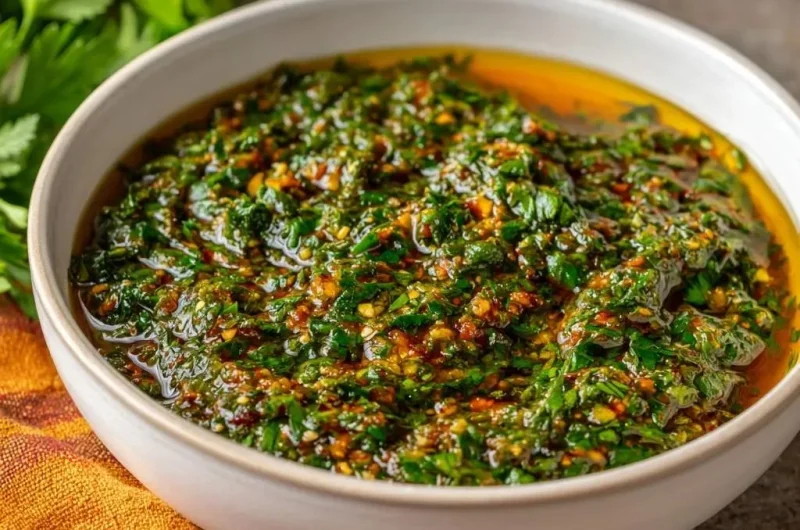
MinutesTired of chimichurri where the oil floats to the top? This method salts and acidulates the herbs first to release their natural juices, creating a stable emulsion that holds together perfectly, even in the fridge for days.
Ingredients
2 cups fresh parsley leaves, finely chopped
4 garlic cloves, minced
1 teaspoon red chili flakes (adjust for heat)
1/2 teaspoon salt
1/4 cup red wine vinegar
1/2 cup extra-virgin olive oil
Directions
- In a medium bowl, combine the finely chopped parsley, minced garlic, red chili flakes, and salt. Stir well to distribute the salt evenly.
- Pour in the red wine vinegar and toss everything together. Let it sit for 10 minutes. This key step draws out the herbs’ moisture through osmosis, breaking down cell walls slightly and creating a flavorful base liquid that prevents separation.
- Slowly drizzle in the olive oil while stirring vigorously with a spoon or fork. The herb juices bind with the oil for a perfect, stable emulsion that won’t split.
- Taste and adjust salt or vinegar if needed. Use immediately or store covered in the fridge up to 1 week. Stir before serving; it stays perfectly mixed!
Notes
- Adjust chili flakes for heat preference. Stores covered in fridge up to 1 week. Stir before serving; stays perfectly mixed!