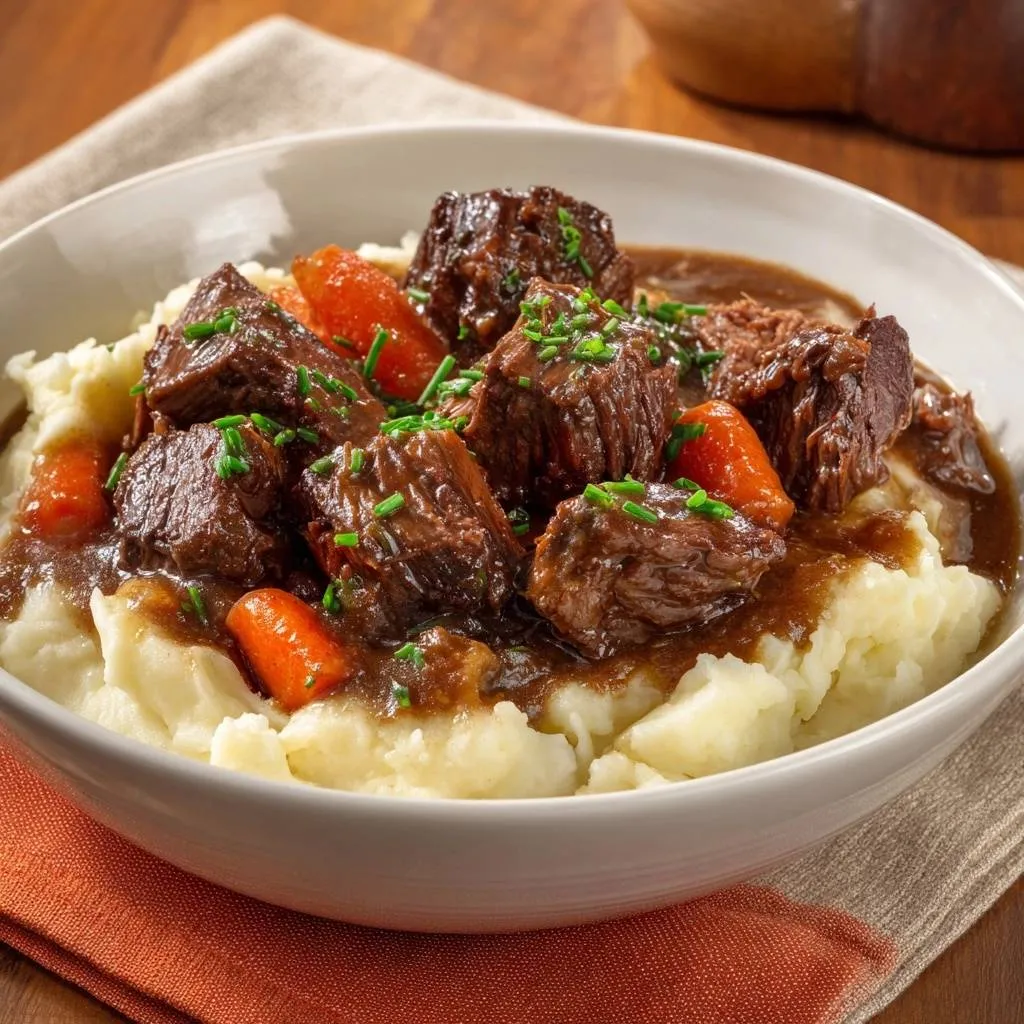
Why This Beef Stew Delivers Fork-Tender Results
Nothing ruins a beef stew faster than chewy, tough meat that fights your fork. You’ve simmered it for hours, yet it stays rubbery. This Classic Beef Stew with Carrots & Mashed Potatoes fixes that with a quick sear followed by a low oven braise. You’ll get melt-in-your-mouth beef every time.
Therefore, the real magic happens when you pat the beef dry and sear it hard. That crust seals in juices while the oven’s gentle heat turns tough collagen into silky gelatin. In addition, pairing it with creamy mashed potatoes soaked in rich gravy creates pure comfort.
Here’s the pro tip that sets this apart: always add carrots in the final 30 minutes. They stay firm and sweet instead of turning to mush. Oh man, that first bite of tender beef with velvety mash? It hits different.
Key Ingredients for Tender Beef Stew
Beef chuck forms the heart of this dish because its marbling and connective tissue shine in braises. Tomato paste adds deep umami that builds a flavorful gravy base. Meanwhile, butter in the mash creates that emulsified creaminess you crave.
Fresh chives bring a bright, oniony pop at the end, way better than dried herbs that taste dusty. Use quality beef broth too; low-sodium lets you control the salt while maximizing richness. These picks ensure balanced textures and bold flavors.
| Ingredient | Quantity | Sub Tip |
|---|---|---|
| Beef chuck | 2 lbs, 1.5-inch cubes | Stick to chuck; lean cuts dry out |
| Carrots | 4 large, 1-inch chunks | Parsnips for subtle sweetness |
| Potatoes | 4 medium, quartered | Yukon gold for extra creaminess |
| Beef broth | 4 cups | Vegetable broth in a pinch |
| Tomato paste | 3 tbsp | No sub; it tenderizes via acidity |
Beef Chuck: The Braising Star
Cut 2 pounds of chuck into 1.5-inch cubes for even cooking. That size lets connective tissue break down without the edges drying out. Unlike lean sirloin, chuck’s fat melts into juicy tenderness.
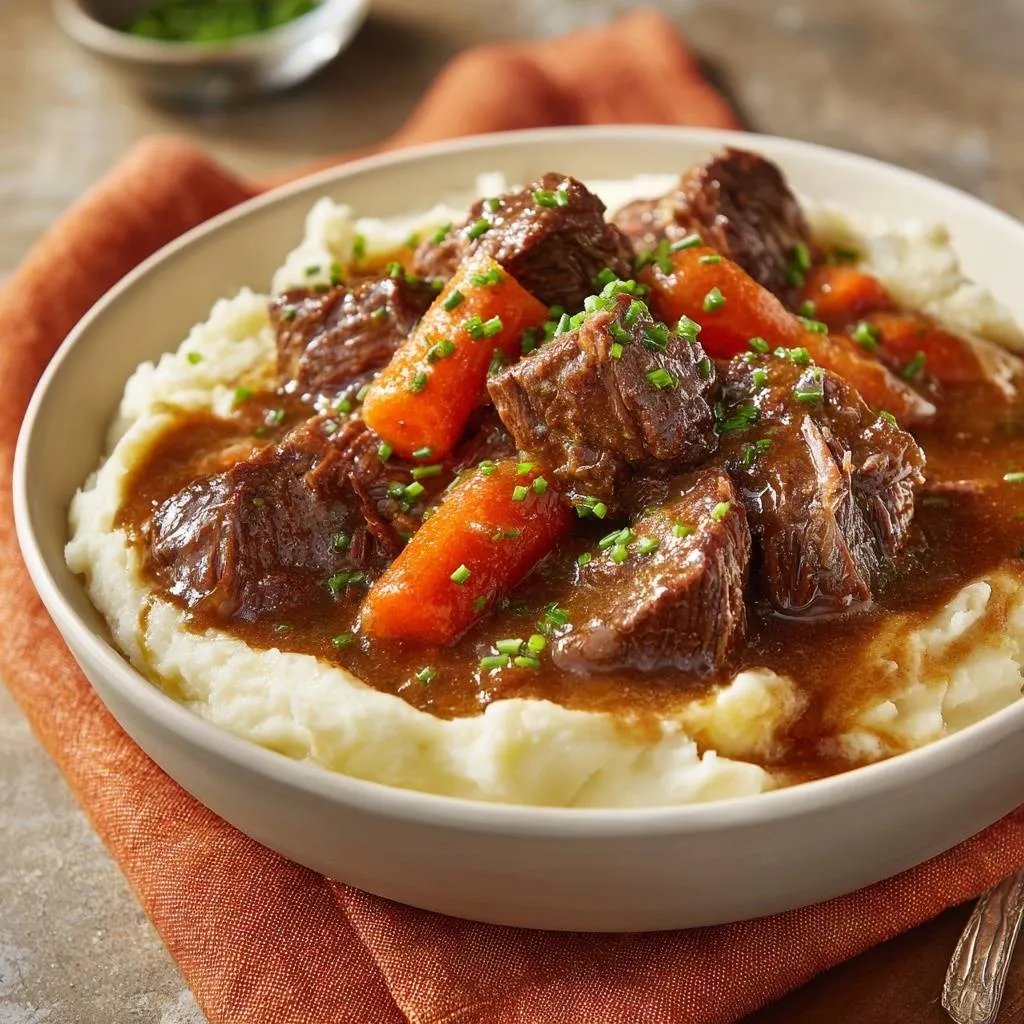
Therefore, season it generously before searing. The marbling bastes the meat from within during the braise.
Carrots and Potatoes: Texture Balance
Peel and chunk carrots into 1-inch pieces so they hold shape with a slight bite. Quarter potatoes evenly for uniform boiling; they mash up fluffier that way. Milk keeps the mash light yet creamy without overwhelming richness.
In addition, salt the potato water heavily. It seasons from the inside for perfect pairing with the stew’s gravy.
Science of Tenderizing Beef in Stew
Searing triggers the Maillard reaction on a dry surface, forming a crust that locks in juices. Then, the 2-hour braise at 325F converts collagen to gelatin, creating that fork-tender pull. However, stovetop often boils too hard and toughens meat; the oven simmers evenly.
Tomato paste lowers the pH slightly, speeding collagen breakdown. Those browned bits you scrape up? They’re flavor gold that dissolves proteins for silky gravy. You’ll smell the shift from raw to rich as it cooks.
Why Pat Beef Dry Before Searing
Moisture on the surface causes steaming, not browning. Pat dry with paper towels, and you get a deep crust that traps moisture inside. Wet beef steams gray; dry beef turns mahogany and tender.
Therefore, do this step twice if needed. It makes all the difference in juice retention.
Braising Temperature Precision
325F keeps it at a gentle simmer, avoiding stringy toughness from boiling. Deglaze those bits right away; they melt into the broth for depth. A tight lid traps steam to break down fibers evenly.
Equipment Choices for Stew Success
A Dutch oven’s cast iron retains heat perfectly and seals tight for braising. Enameled pots work too, but skip thin stockpots that lose heat. For mash, a potato masher gives rustic texture; a ricer makes it ultra-smooth.
Always use thick oven mitts for safe transfers. Here’s a quick pros/cons:
| Tool | Pros | Cons |
|---|---|---|
| Dutch oven | Even heat, tight lid | Heavy to lift |
| Potato masher | Quick, affordable | Lumpier results |
| Ricer | Silkier mash | Extra cleanup |
Phase 1: Mastering the Sear
Pat beef dry and season with salt and pepper. Heat 2 tbsp butter in the Dutch oven until it foams over medium-high. Add beef in a single layer; sear 3-4 minutes per side undisturbed for a deep crust.
Work in batches to avoid steaming. No stirring early, or you lose that juice-trapping sear. You’ll hear the sizzle intensify as it browns.
If overcrowded, the meat boils instead. Pro tip: rest seared beef on a plate to catch juices for later.
Phase 2: Building the Braising Base
Lower heat to medium, add diced onion, and cook 5 minutes until soft and fragrant. Stir in flour and tomato paste; cook 2 minutes to cook out the raw taste and form a roux. Pour in broth, scraping those browned bits.
Return beef and juices to the pot. Bring to a simmer, cover tightly, and slide into the 325F oven. That base smells hearty and promising now.
Phase 3: Oven Braise and Carrot Timing
Braise undisturbed for 2 hours. Test with a fork; it should shred easily. If not, add 15-30 more minutes.
For a deeper dive into slow-simmered perfection, explore our guide to creamy slow-simmered beef stew.
Then, toss in carrot chunks for the last 30 minutes. They soften to tender-crisp without mushiness. Simmer uncovered 10 minutes if gravy needs thickening. Use oven mitts for safe handling.
Phase 4: Creamy Mashed Potatoes
Boil quartered potatoes in salted water 15-20 minutes until fork-tender. Drain well, then return to the hot pot to evaporate moisture. Add 2 tbsp butter and warm milk; mash until smooth.
Season boldly to stand up to the stew. Avoid overmashing, or it turns gluey. The steam rising with buttery aroma signals perfection.
Pro tip: warm the milk first for better incorporation and fluffier results.
Avoiding Common Beef Stew Pitfalls
Skipping the dry pat leads to gray, steamed meat instead of crusty goodness. Over-stirring during sear prevents browning. A loose lid lets steam escape, drying everything out.
Therefore, add carrots late to keep bite. For batches, sear in shifts but braise all at once. These fixes turn disasters into wins.
Rescuing Undercooked Beef
If fork test fails after 2 hours, braise 15-30 more minutes covered. Tough spots mean more collagen; low heat finishes the job. Don’t rush with high heat, or it seizes up.
For even more tender results with beef, explore slow-braised beef short ribs.
Preventing Watery Gravy
The flour-tomato paste builds body early. If still thin, simmer uncovered to reduce. Cornstarch slurry works as backup: 1 tbsp mixed with water, stirred in off heat.
Make-Ahead and Freezing Beef Stew
Cool stew fully before storing in airtight containers. It lasts 3-4 days in the fridge; flavors deepen overnight. Freeze up to 3 months in portions; thaw overnight in fridge.
Reheat gently on stovetop with a splash of broth to revive gravy. Mash freezes separately; reheat with milk to fluff. Avoid microwaving beef straight from freezer, or it toughens.
Portion into meal-sized bags flat for quick thawing. Safety first: reheat to 165F.
Flavor Twists on Classic Beef Stew
Add thyme sprigs or bay leaves during braise for herbal depth. Mushrooms or pearl onions bring earthiness without overpowering. Parsnips swap for carrots with sweet nuttiness.
For spice, stir in paprika with the roux. These keep your Classic Beef Stew with Carrots & Mashed Potatoes fresh and exciting.
Perfect Pairings for Beef Stew
Crusty bread sopps up every gravy drop. A crisp green salad cuts the richness perfectly. Roasted root veggies echo the carrots’ sweetness.
Herbal tea warms you through. Chives as garnish lift the dish with fresh bite, tying mash to stew seamlessly.
Round Out Your Meal
Here are a few ideas to complement your classic beef stew.
- For a refreshing counterpoint to the hearty stew, consider a creamy herb and pea potato salad.
- If you’re looking for a different potato preparation, try these creamy garlic mashed potatoes, which offer a different texture and flavor profile.
Troubleshooting Classic Beef Stew Issues
How do I store leftovers of Classic Beef Stew with Carrots & Mashed Potatoes?
Cool the stew completely, then store in airtight containers in the fridge for 3-4 days. Freeze the stew (without mash) in freezer bags for up to 3 months; label with dates. Mash freezes separately for 1 month max, as potatoes can get watery. Thaw overnight in fridge and reheat stew on stovetop with extra broth to loosen gravy; steam mash with milk.
Why is my beef still tough in beef stew?
Tough beef usually means underbraising or skipping the sear. Collagen needs 2+ hours at 325F to turn to gelatin; test by shredding easily with a fork. If skipped dry pat or crowded the pan, it steamed instead of crusting. Fix by adding 15-30 minutes covered, or next time sear in batches undisturbed.
Can I substitute ingredients in this Classic Beef Stew with Carrots & Mashed Potatoes?
Swap beef broth for vegetable broth if needed, but beef gives richest flavor. No tomato paste? Ketchup works in pinch for acidity, but use less. For dairy-free mash, use coconut milk; it adds subtle sweetness. Avoid lean beef; chuck’s fat is key. Potatoes can be Yukon gold for creamier texture.
Why did my mashed potatoes turn out gluey?
Overworking after adding milk releases excess starch. Boil until just fork-tender, drain thoroughly, and mash lightly with butter first. Warm milk prevents clumping. If gluey, thin with hot milk and fold gently; don’t beat like batter.
How do I thicken watery stew gravy?
Simmer uncovered 10-15 minutes to reduce naturally. The initial flour roux helps, but if needed, mix 1 tbsp cornstarch with cold water into a slurry and stir off heat. Avoid dumping flour directly; it lumps. Taste as it thickens for perfect spoon-coating consistency.
Can I make this beef stew on the stovetop instead of oven?
Yes, but maintain a low simmer with tight lid for 2-2.5 hours, stirring occasionally. Oven wins for hands-off even heat without scorching. Check liquid level hourly on stove; add broth if low. Fork-test remains the same for tenderness.
Classic Beef Stew
Course: Main CourseCuisine: AmericanDifficulty: medium6
servings30
minutes2
hours550
kcal180
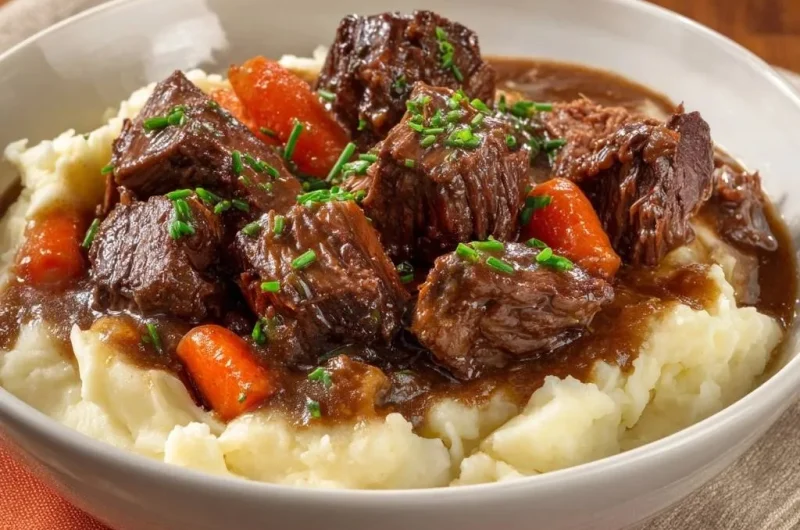
MinutesTired of chewy beef stew? This recipe delivers fork-tender beef chunks using a simple sear-and-braise trick. Served over creamy mashed potatoes with carrots and fresh chives for the ultimate comfort food.
Ingredients
2 lbs beef chuck, cut into 1.5-inch cubes
4 large carrots, peeled and cut into 1-inch chunks
4 medium potatoes, peeled and quartered
1 large onion, diced
4 cups beef broth
3 tbsp tomato paste
2 tbsp all-purpose flour
4 tbsp butter, divided
1 cup milk
Salt and black pepper to taste
2 tbsp chopped fresh chives
Directions
- Pat beef cubes completely dry with paper towels. This is crucial: dry meat sears properly without steaming, starting the tenderness process. Season generously with salt and pepper.
- Heat 2 tbsp butter in a large Dutch oven over medium-high heat until foaming. Add beef in a single layer (work in batches if needed). Sear undisturbed for 3-4 minutes per side until deep brown crust forms. Remove to a plate. No stirring early: crust traps juices for melt-in-mouth texture.
- Lower heat to medium. Add onion and cook 5 minutes until softened. Stir in flour and tomato paste; cook 2 minutes to build flavor base.
- Return beef and juices to pot. Pour in beef broth, scraping up browned bits (they dissolve toughness). Bring to simmer, cover tightly, and transfer to 325F oven. Braise 2 hours undisturbed: low slow heat converts collagen to gelatin for guaranteed tenderness.
- Check beef with fork; it should shred easily. If not, braise 15-30 more minutes. Add carrots last 30 minutes to keep them firm yet tender.
- Meanwhile, boil potatoes in salted water 15-20 minutes until fork-tender. Drain, return to pot, add 2 tbsp butter and milk. Mash smooth; season.
- Thicken stew if needed: simmer uncovered 10 minutes. Serve stew over mash, garnish with chives.
- Fork-tender beef, rich gravy, perfect every time!
Notes
- Pat beef completely dry before searing for the best crust. Braise undisturbed in the oven for guaranteed tenderness. Add carrots in the last 30 minutes to keep them firm.