Ever spooned into a bowl of borscht that runs off like watered-down juice? You know the frustration, that soupy mess that lacks any real bite. This classic borscht changes everything. Dinner hits the table in under an hour with a velvety thickness that clings to every hearty chunk.
Here’s why it works so well. Most recipes skip the key step that turns thin broth into spoonable perfection. Instead, they rely on fillers that fall flat. This version uses the beets themselves for natural body.
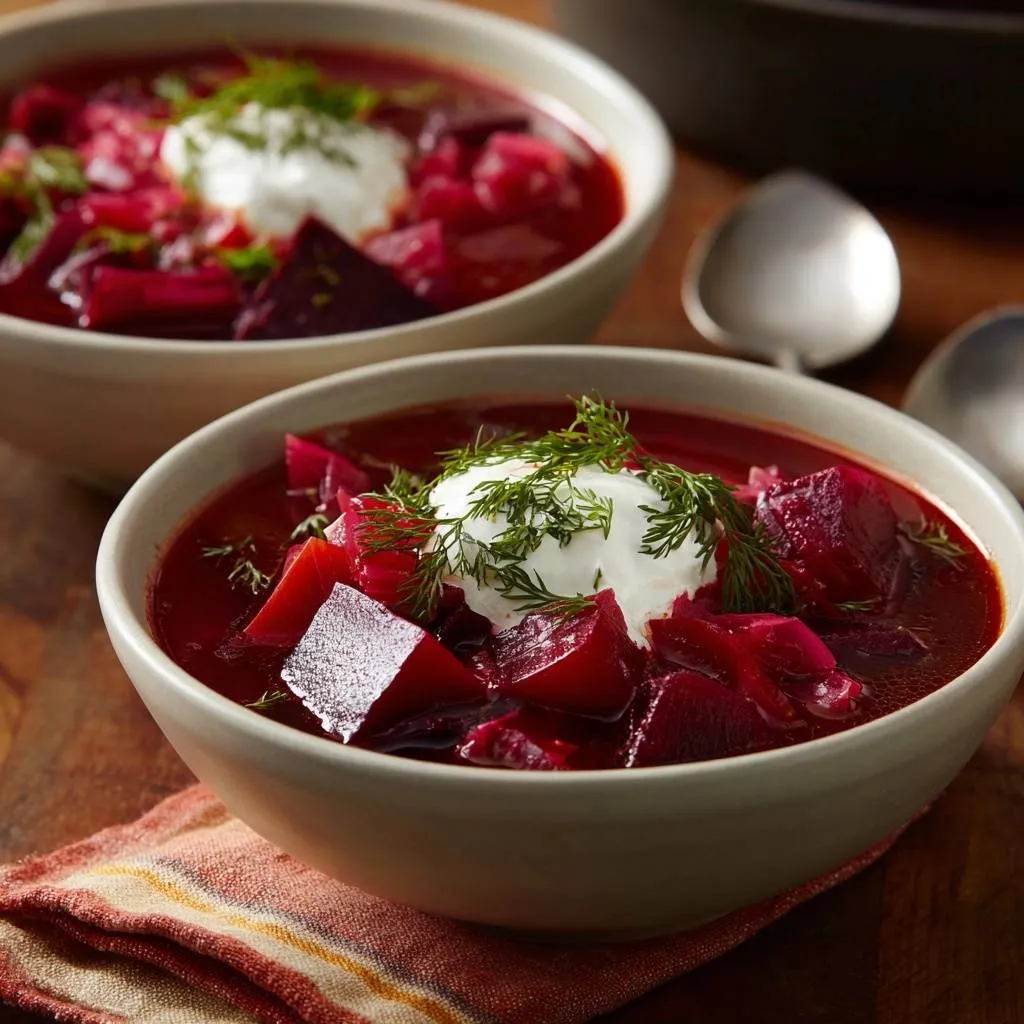
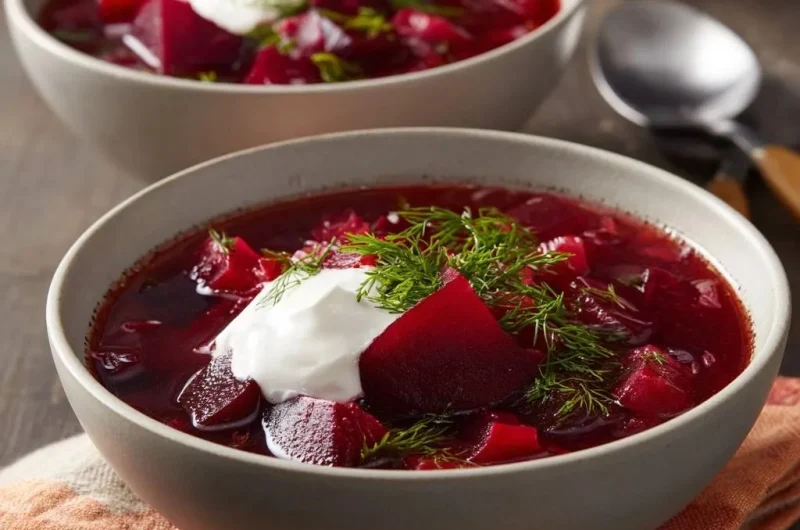
The secret lies in blending just a portion of the cooked beets and broth. It releases their starches for restaurant-level richness, no flour required. Prep time: 15 minutes. Cook time: 50 minutes. Serves 6. Each bowl packs about 150 calories, loaded with fiber and vitamins from beets and carrots. Picture that steaming earthy-red bowl, swirled with sour cream and flecked with fresh dill. Pure comfort.
Classic Borscht Roots in Eastern Europe
From Ukrainian Fields to Global Tables
Borscht started in the 14th century as a peasant soup from foraged beets in Ukraine. Farmers simmered whatever roots they had into something hearty for cold winters. Over time, Russian, Polish, and Jewish cooks added their twists, making it a staple across Eastern Europe.
Beets symbolized resilience in harsh climates. They store well and pack nutrition. You’ll find cold summer versions with kefir for refreshment. Hot winter ones, like this, warm you deep. Therefore, this recipe honors those roots with simple, bold flavors.
Why Beets Define Authentic Flavor
Red beets give classic borscht its vivid hue from betalains, those antioxidants that fight inflammation. Golden beets work too, with less staining and a milder taste. Soil and season matter, so spring beets taste sweeter, while fall ones lean earthier.
Freshness drives the flavor. Pick firm beets without blemishes. In addition, their natural sugars balance the tang, creating that addictive depth everyone craves.
Core Vegetables for Thick Classic Borscht
Beets: Choosing and Prepping Chunks
Grab 6 medium beets, about 2 pounds total. Cut them into 1-inch chunks to avoid mushiness later. Wear gloves while peeling; they stain everything ruby red.
Raw prep suits this method best. It keeps nutrients intact and lets flavors build slowly. Store extras in the fridge’s crisper for up to two weeks. However, use them soon for peak sweetness.
Pro tip: Scrub well before peeling. Dirt hides in the skin and muddies the taste.
Carrots: Slicing for Balanced Sweetness
Use 4 medium carrots, sliced into 1/4-inch rounds. They cook evenly and release natural sugars that counter the beets’ earthiness. Organic ones often taste sweeter with more beta-carotene.
Slice thin but not paper-like. That way, they soften without turning to puree. Therefore, your borscht gains layered sweetness.
Vegetable Broth and Vinegar Balance
Start with 6 cups low-sodium vegetable broth. Homemade shines here; simmer veggie scraps with herbs for depth. Apple cider vinegar, 2 tablespoons, brightens without sharpness.
Add salt and pepper late to keep flavors punchy. Top with 1/2 cup sour cream for creaminess and 1/4 cup chopped fresh dill for herby pop. In addition, these toppings make every bite sing.
Equipment Choices for Perfect Borscht
Pot Size and Material Impact
Pick a 5- to 6-quart Dutch oven. It holds everything and distributes heat evenly. Enameled cast iron prevents sticking better than stainless steel.
For a similarly satisfying soup experience, explore this classic chicken orzo soup.
For oil-free, use a non-stick pot with a splash of water. Therefore, sautéing builds flavor without grease.
Blender Power for Starch Release
A high-speed blender like a Vitamix purees hot soup smoothly. Immersion blenders work if you blend carefully. Always vent steam to avoid explosions.
This tool unlocks the beets’ magic. It shears starches free for instant thickness.
Step-by-Step: Building Hearty Classic Borscht
Phase 1: Sautéing Carrot Base
Heat a large pot over medium. Add 1 tablespoon oil or water. Toss in sliced carrots and cook 5 minutes until they soften and smell sweet. Don’t brown them; you’re building fond for depth.
Visual cue: Edges glisten, but no color change. This step sets a savory base. Next, add beets and stir 3 minutes to coat. They pick up that flavor.
Phase 2: Beet and Broth Simmer
Pour in 6 cups vegetable broth. Bring to a boil, then drop to a simmer. Cover and cook 40 to 45 minutes until beets pierce easily with a fork.
Stir now and then to prevent scorching on the bottom. At high altitude, add 5 to 10 extra minutes. The pot fills with an earthy aroma that promises goodness.
Phase 3: Blending for Natural Thickness
Remove from heat. Ladle about 3 cups, heavy on beets and broth, into your blender. Puree until velvety smooth. This releases pectin and starches from the beets, creating body without additives.
Pour it back and stir. You’ve transformed thin soup into something that spoons up thick. Avoid over-blending; keep some chunks for texture contrast. Oh man, this step alone fixes every watery borscht complaint.
Before: Broth swims around veggies. After: A hearty mix that coats your spoon. Science backs it; beet starches swell under blade shear and heat.
Phase 4: Seasoning and Final Meld
Stir in 2 tablespoons apple cider vinegar, plus salt and pepper to taste. Simmer uncovered 5 minutes. Flavors marry, and acidity stabilizes the thickness.
Taste as it evolves; the tang sharpens the earthiness. Let it rest 10 minutes off heat for even better depth.
Phase 5: Plating with Toppings
Ladle hot soup into bowls. Add a generous dollop of sour cream. Swirl gently, then sprinkle fresh dill.
Hot serving enhances the cream’s melt and beet vibrancy. That pink swirl and green flecks make it irresistible.
Beet Starch Science in Classic Borscht
How Blending Thickens Without Additives
Beets hold pectin and starch granules. Blending applies shear force and heat, bursting them open. They absorb liquid, swelling into a natural thickener.
Compare to roux, which can lump, or cornstarch, which breaks down. Vinegar’s pH locks it in. Watery soup turns hearty; no failures here.
Visualize: Puree looks like velvet paint. Stirred back, it clings to chunks perfectly.
Texture Science: Spoonable vs. Soupy
Partial blending hits ideal viscosity. It spoons up without dripping. Chunks add satisfying chew.
Your brain loves this mouthfeel; it signals richness and comfort. Therefore, every bowl satisfies deeply.
Avoiding Pitfalls in Borscht Making
Preventing Watery or Mushy Results
Stick to 1-inch beet chunks; smaller ones mush up. Don’t over-simmer or blend too much. If watery, rescue with an extra puree cup.
Pro tip: Taste thickness before seasoning. Adjust by blending more if needed.
Flavor Imbalance Troubleshooting
Add vinegar after blending; early addition dulls it. Counter excess salt with a potato chunk simmered in. For bitter beets, pick young ones and don’t overcook.
Flavor Twists on Classic Borscht
Potato or Cabbage Additions
Add 2 cubed potatoes with the beets for extra heartiness. Or shred 1/2 head cabbage in the last 10 minutes for volume. Both soak up broth beautifully.
Potatoes thicken further; cabbage adds crunch. Introduce them in phase 2 for perfect tenderness.
Spice Swaps and Herb Upgrades
Infuse with a bay leaf or pinch of cumin during simmer. Mix parsley with dill for freshness. For vegan, whip cashews into sour cream sub.
These tweaks keep it classic but exciting. Start small to taste the shift.
Make-Ahead Strategies for Borscht
Freezing Thick Batches
Portion cooled borscht into freezer bags, up to 3 months. Post-blend freezes best; starches hold texture. Thaw overnight in fridge.
Reheat gently on stove. No separation if you avoid microwaves.
Storage and Reheating Guide
Fridge lasts 5 days in airtight containers. Flavors peak on day two. Reheat low and slow, stirring often.
Pairing Sides with Classic Borscht
Bread and Salad Complements
Serve with rye or pumpernickel bread to sop up every drop. Pair a cucumber-dill salad for cool crunch contrast. Simple sides let borscht shine.
Protein Boosters
Stir in white beans or sautéed mushrooms near the end. They add vegan protein and earthiness that harmonizes perfectly.
Classic Borscht Troubleshooting
Why Is My Borscht Too Thin?
Often from skipping the blend or using low-starch beets. Fix by pureeing an extra cup. Simmer longer post-blend to concentrate.
Beets Not Softening Enough?
Old beets or uneven chunks cause this. Ensure full pot coverage. Try a pressure cooker for 20 minutes high pressure.
Color Faded or Bitter?
Overcooking or light exposure fades it. Use fresh beets and cover while cooking. Add lemon juice to revive brightness.
Toppings Separating?
Cold sour cream hits hot soup wrong. Temper it first in a ladleful of broth. Or stir a bit into the pot for foolproof creaminess.
FAQ
How do I store leftovers and does classic borscht freeze well?
Store in an airtight container in the fridge for up to 5 days. Flavors deepen beautifully by day two. It freezes excellently for 3 months in portioned freezer bags; thaw overnight and reheat gently on the stove to maintain that velvety texture without separation. Avoid repeated freeze-thaws to keep chunks intact.
Why is my borscht watery and how do I fix it?
The top issue is skipping or skimping on the blending step, which releases beet starches for natural thickness. Low-starch beets or too much broth can contribute too. Rescue it by blending another 1-2 cups smooth and simmering 10 minutes uncovered; this concentrates everything into spoonable perfection without additives.
Can I substitute ingredients in classic borscht?
Swap apple cider vinegar for white wine vinegar or lemon juice, same amount, for brightness. Use coconut or cashew yogurt instead of sour cream for vegan. No beets? Golden variety works, or add potatoes for bulk, but beets define the earthy core. Low-sodium broth is key; water dilutes flavor.
Why aren’t my beets softening during the simmer?
Large chunks, old beets, or insufficient liquid coverage slow it down. Cut to even 1-inch pieces and ensure the pot stays at a steady simmer. Test with a fork at 40 minutes; if tough, cook 10 more or use a pressure cooker for 20 minutes high pressure with natural release.
How do I prevent staining from beets?
Wear disposable gloves and work on a cutting board over newspaper. Peel under running water to rinse juices immediately. Scrub hands with salt and lemon afterward; it cuts the red right off. Enameled pots clean easily too.
Can I make this oil-free and does it change the taste?
Yes, sauté carrots in 1/4 cup broth or water instead of oil. It builds fond just as well with zero fat. Flavor stays deep since beets and vinegar carry the dish; many prefer this lighter version.
Borscht
Course: SoupCuisine: Eastern EuropeanDifficulty: medium6
servings20
minutes50
minutes180
kcal70
MinutesTired of borscht that pours like juice? This recipe fixes it by blending a portion of cooked beets and broth for natural thickness. Perfect velvety texture every time.
Ingredients
6 medium beets (about 2 lbs), peeled and cut into 1-inch chunks
4 medium carrots, peeled and sliced
6 cups vegetable broth
2 tablespoons apple cider vinegar
Salt and black pepper, to taste
1/2 cup sour cream, for topping
1/4 cup fresh dill, chopped, for topping
Directions
- In a large pot over medium heat, add 1 tablespoon oil (or water for oil-free). Toss in the carrots and cook 5 minutes until slightly softened. Add the beets and stir 3 minutes to coat.
- Pour in the vegetable broth. Bring to a boil, then reduce to a simmer. Cover and cook 40-45 minutes, until beets are fork-tender. Stir occasionally.
- Remove from heat. Ladle about 3 cups of the soup (mostly beets and broth) into a blender. Puree until smooth this is the key step that thickens the entire pot naturally by releasing the beets starches for body and richness, eliminating watery texture forever. Pour back into the pot and stir well.
- Stir in apple cider vinegar, salt, and pepper. Taste and adjust. Simmer 5 more minutes uncovered to meld flavors.
- Ladle into bowls. Top each with a dollop of sour cream and sprinkle of fresh dill. Serve hot.
- This blending trick delivers restaurant-thick borscht thats hearty, not soupy, solving the
Notes
- The blending step is key: puree about 3 cups of soup (mostly beets and broth) to release natural starches for thickness without flour or cornstarch.