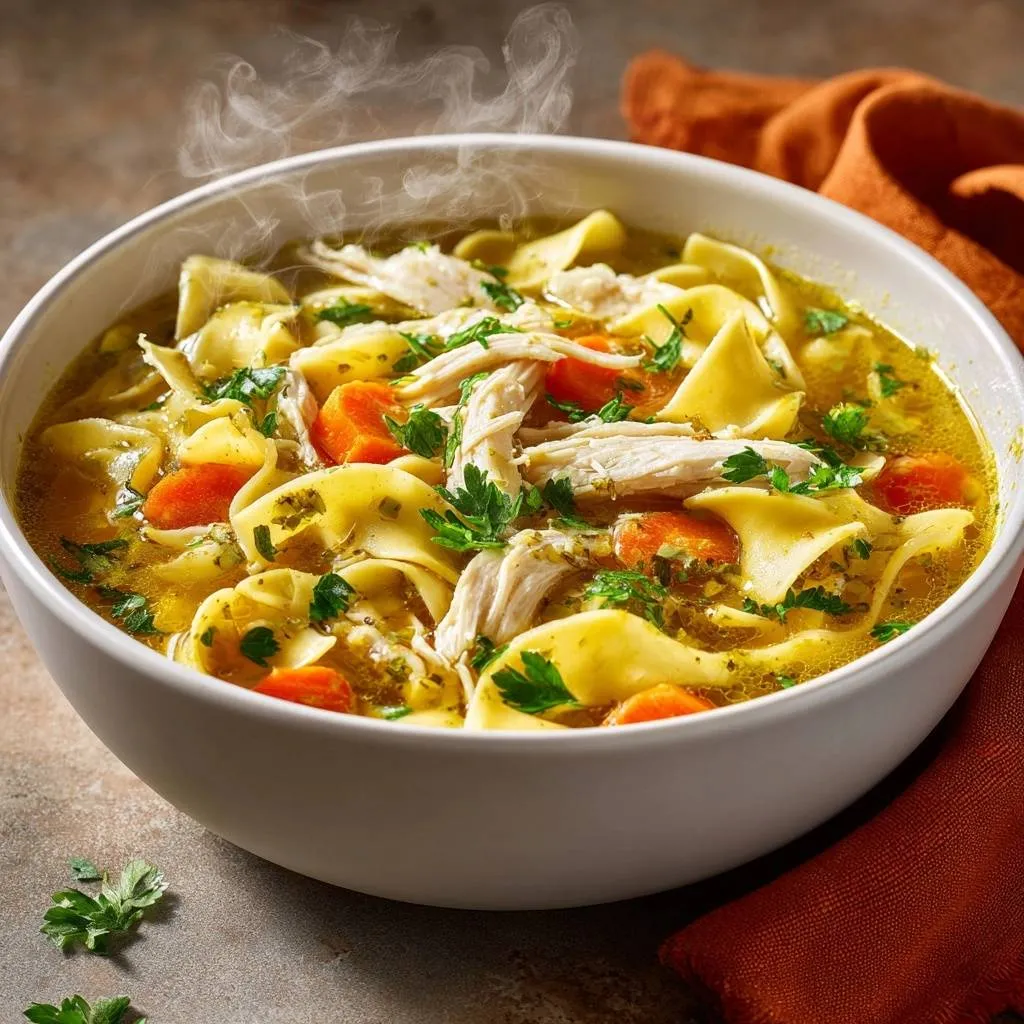
Nothing kills the vibe of classic chicken noodle soup like mushy, limp noodles that turn every leftover bowl into a soggy mess. You’ve been there, right? That pot of soup you slaved over, only to find the noodles disintegrate by day two. But here’s the fix that changes everything.
This recipe nails classic chicken noodle soup by cooking the noodles separately to al dente perfection, then stirring them in at the end. They stay chewy and firm, soaking up just enough broth for flavor without falling apart. You’ll get that comforting warmth every time, no matter when you eat it.
The real secret lies in the cold rinse after draining the noodles. It stops the cooking instantly, locking in texture so your classic chicken noodle soup delivers reliable bite. Trust me, this one trick makes all the difference.
Core Ingredients for Classic Chicken Noodle Soup
Chicken Broth Foundation
Start with 6 cups of chicken broth as the heart of your classic chicken noodle soup. Homemade gives deeper flavor from slow-simmered bones, but store-bought low-sodium works great too. It lets you control the salt, keeping the broth clear and pure.
Low-sodium prevents a too-salty finish, especially after simmering. For a vegetarian twist, swap in vegetable broth. It still builds that cozy base, just lighter on the richness.
Therefore, quality broth ensures every spoonful shines in classic chicken noodle soup. Don’t skimp here; it’s the canvas for all other flavors.
Carrots for Crisp Texture
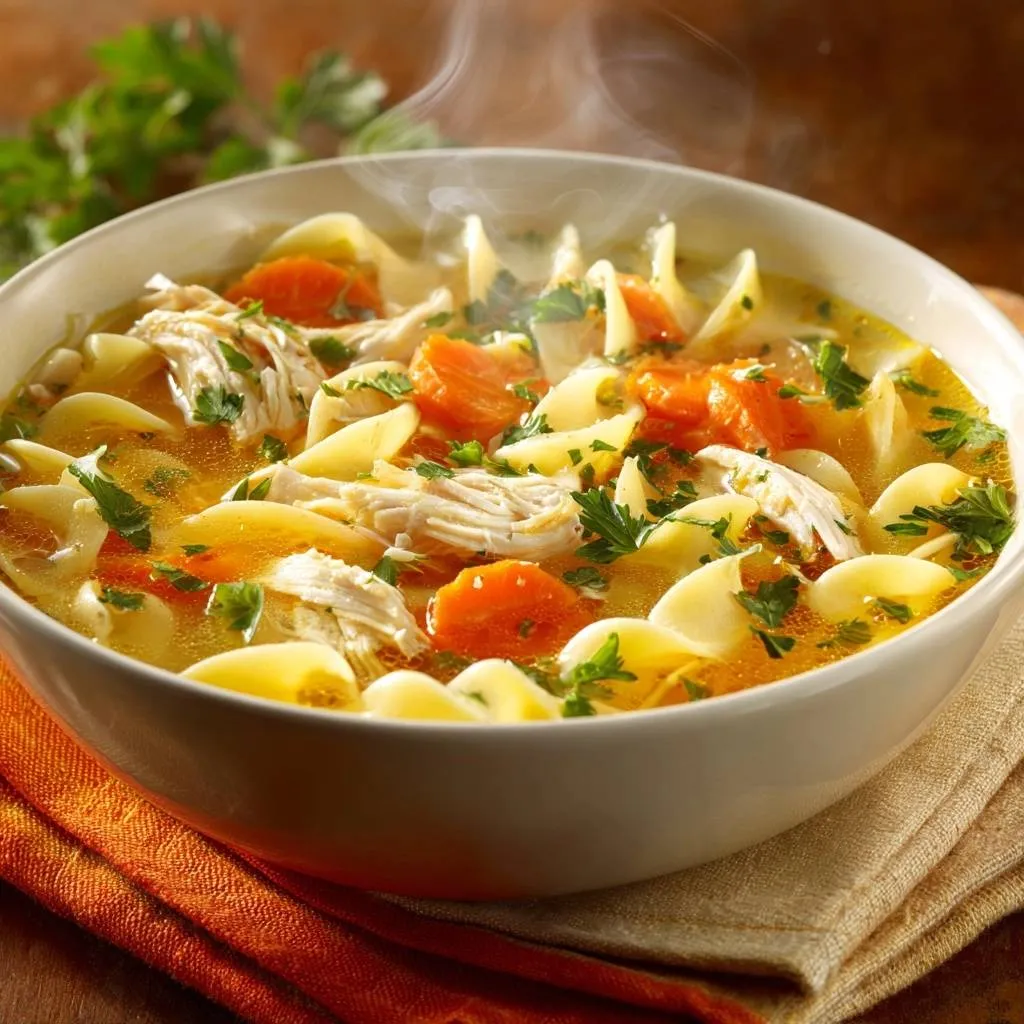
Slice 2 medium carrots thinly for your classic chicken noodle soup. Those even pieces cook to tender-crisp in just 10 minutes, adding sweet pops without mush.
Thin slices release beta-carotene, boosting immunity alongside the soup’s comfort. Use a sharp knife or mandoline for uniformity; it speeds cooking and keeps textures distinct.
In addition, carrots balance the savory broth perfectly. They bring color and crunch that elevates classic chicken noodle soup every time.
Shredded Chicken Role
Use 2 cups shredded cooked chicken in classic chicken noodle soup. Rotisserie chicken saves time and adds juicy flavor, while poached keeps it leaner.
Rotisserie brings smoky depth, but poached avoids extra fat. Either way, the gentle simmer infuses taste without drying it out. It’s about 20 grams of protein per serving too.
So, pick what fits your day. This keeps classic chicken noodle soup hearty and satisfying.
If you enjoyed this chicken noodle soup, you’ll also adore the creamy chicken noodle comfort.
Egg Noodles and the Al Dente Secret
Grab 8 ounces of egg noodles for classic chicken noodle soup; their yolk-rich dough gives superior chew over plain wheat. Cook to just al dente, about 6-7 minutes per package.
Package times often overcook, so test early. The egg content holds shape better, resisting broth breakdown. Rinse under cold water post-drain to halt starch release.
This step prevents gumminess in classic chicken noodle soup. You’ll notice the firm bite immediately.
Parsley and Seasoning Balance
Chop 1/4 cup fresh parsley finely for classic chicken noodle soup. It adds bright, herby lift that dried versions can’t match; stir in late to keep color vibrant.
Season with salt and pepper after tasting the simmered broth. This avoids over-salting as flavors concentrate. Dill works as a fresh swap for a subtle twist.
Therefore, these finishers make classic chicken noodle soup pop without overpowering the classics.
Science of Perfect Noodle Texture in Chicken Noodle Soup
Starch Gelatinization Explained
Boiling noodles in broth triggers starch gelatinization, where amylopectin swells and bursts, turning them mushy fast. That’s why classic chicken noodle soup often fails leftovers.
Separate cooking sidesteps this. Noodles stay intact, absorbing broth gently later. Simple kitchen science proves it: side-by-side tests show firm vs. soggy every time.
In addition, this method preserves clarity in your classic chicken noodle soup broth. No cloudy starch mess.
Residual Heat Warming Technique
Turn off the soup heat, then stir in noodles. Residual warmth around 160°F gently reheats them without recooking, keeping classic chicken noodle soup noodles firm.
Use a thermometer if you want precision; aim below simmering temps. This physics hack ensures even warming.
However, rushing with heat on overcooks them. Patience pays off here.
Why Cold Rinse Stops Cooking
Cold water rinse shocks the noodles post-drain, halting enzyme activity and carryover cooking. It rinses excess starch too, preventing gluey classic chicken noodle soup.
Do it briefly; too long washes away flavor. Leftovers stay chewy for days this way.
Therefore, this quick step transforms reliability in classic chicken noodle soup.
Step-by-Step: Building Classic Chicken Noodle Soup Broth
Boiling Broth with Carrots
Choose a large pot for 6 cups chicken broth in classic chicken noodle soup. Bring to medium-high boil, then add sliced carrots and simmer 10 minutes.
Test carrots with a fork; they should pierce easily but hold shape. Avoid vigorous boiling to keep broth clear and aromatic. You’ll smell the sweetness rising.
So, steady heat builds the perfect base for classic chicken noodle soup.
Infusing Chicken and Parsley
Stir in 2 cups shredded chicken and parsley. Drop to low heat for 5 minutes; flavors meld without toughening meat.
Taste midway and adjust salt, pepper. Gentle stirring every minute distributes evenly in classic chicken noodle soup.
This low simmer creates cozy depth. Don’t rush it.
Separate Noodle Cooking for Chicken Noodle Soup
Al Dente Package Timing
In a second pot, boil 8 ounces egg noodles 6-7 minutes till al dente. Drain right away to stop carryover cooking in classic chicken noodle soup.
They’ll feel firm with a slight give. This timing nails the chew.
However, going longer ruins texture fast.
Final Stir and Serving
Off heat, add drained noodles to soup pot. Stir gently to coat without breaking them in classic chicken noodle soup.
Ladle hot into bowls, top with parsley. Serve immediately for peak firmness.
Oh man, that first bite hits just right.
Avoiding Mushy Noodles in Chicken Noodle Soup
Overcooking Broth Pitfalls
Vigorous boils cloud broth and soften added noodles prematurely in classic chicken noodle soup. Watch for big bubbles; dial heat down quick.
Steady simmer keeps everything clear and intact. Signs of trouble? Foamy top means cool it.
Control prevents classic chicken noodle soup disasters.
Leftovers Storage Errors
Store broth and noodles separately in airtight containers. Noodles stay firm up to 4 days; reheat broth first, then add.
Mixing them dooms sogginess in classic chicken noodle soup. Fridge at 40°F max.
This pro tip saves every batch.
Ingredient Ratio Imbalances
Stick to 8 ounces noodles for 6 cups broth in classic chicken noodle soup. More drowns the liquid; measure precisely.
For families, scale evenly but use bigger pots. Balance ensures slurpy goodness.
Flavor Variations for Chicken Noodle Soup
Herb and Spice Swaps
Add thyme sprigs during carrot simmer for earthy depth in classic chicken noodle soup. Lemon zest at end brightens without souring.
These tweaks keep the profile cozy yet fresh. Start small to taste.
In addition, they personalize without straying far.
Vegetable Boost Options
Toss in diced celery with carrots for mirepoix base in classic chicken noodle soup. Spinach wilts in at the end for green pop.
Time additions to stay crisp. Zucchini noodles sub for low-carb chew.
However, don’t overload; balance rules.
Protein Alternatives
Swap turkey for chicken in classic chicken noodle soup; same simmer time. Tofu works for vegan, cubed and added last.
Use veggie broth to match. Essence stays comforting.
Easy adapts keep it versatile.
Make-Ahead Guide for Chicken Noodle Soup
Broth Prep and Freezing
Cook broth ahead; fridge 3 days or freeze 3 months in bags. Thaw overnight, reheat gently for classic chicken noodle soup clarity.
Batch big for weeknight ease. Label dates to track.
This saves time without sacrificing taste.
Noodle Storage Strategies
Keep cooked noodles dry in fridge up to 4 days, or portion uncooked. Assemble fresh for non-mushy classic chicken noodle soup.
Reheat noodles separately in boiling water briefly. Perfection every time.
Pairing Sides with Classic Chicken Noodle Soup
Crusty Bread Complements
Sourdough or baguette sopps up broth perfectly with classic chicken noodle soup. Bake fresh to sync timing; crisp crust contrasts soft soup.
Texture play makes meals memorable. Tear and dunk away.
Simple Salad Matches
Arugula with vinaigrette cuts richness in classic chicken noodle soup. Add seasonal apples for crunch.
Light greens refresh the hearty bowl. Quick toss wins.
Classic Chicken Noodle Soup Troubleshooting
Broth Too Thin Fixes
Simmer uncovered to reduce watery classic chicken noodle soup broth. Cornstarch slurry thickens without clouding; whisk 1 tsp into cold water first.
Taste as you go. Rescue works fast.
Noodles Still Soggy Solutions
Sogginess means over-rinse or hot addition. For revival, boil fresh noodles into reheated broth briefly in classic chicken noodle soup.
Diagnose heat issues next time. Fixes save the day.
Blah Flavor Boosters
Lemon juice or vinegar adds acid zip to flat classic chicken noodle soup. Mushroom powder amps umami.
Layer seasonings gradually. Builds bold taste quick.
Chicken Noodle Soup FAQ
Can I Use Rice Instead of Noodles?
Yes, swap rice for noodles in classic chicken noodle soup. Cook separately to al dente, rinse cold, and add at end like noodles. Jasmine holds chew well; expect softer texture but same firm results. Ratios stay 1:1 by volume.
How Long Does It Last in Fridge?
Store classic chicken noodle soup components separately up to 4 days in fridge. Broth and chicken together; noodles solo. Freezes 3 months—thaw broth slow, add fresh-cooked noodles. Reheat broth to simmer, stir in noodles last for firmness.
Gluten-Free Noodle Options?
Rice noodles or chickpea pasta work great in classic chicken noodle soup. Cook 1-2 minutes less for al dente, rinse cold. Brands like Banza hold up; test small batches. Texture mimics egg noodles closely with separate cooking.
Scaling for Larger Batches?
Double ingredients for 4-6 servings of classic chicken noodle soup, but use a 6-quart pot minimum. Keep ratios exact—1.5 oz noodles per cup broth. Simmer longer for flavor meld; stir more frequently to prevent sticking.
Why Separate Noodle Cooking?
Separate cooking prevents starch gelatinization in broth, avoiding mush in classic chicken noodle soup. Al dente boil plus cold rinse locks firmness; residual heat warms without overcooking. Side-by-side, it delivers chewy noodles every bowl and leftover.
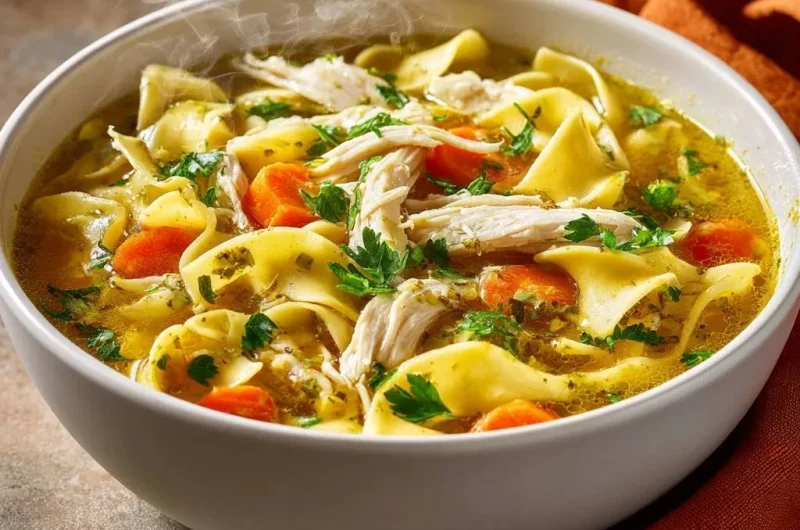
Chicken Noodle Soup
Course: Main CourseCuisine: AmericanDifficulty: easy4
servings15
minutes20
minutes350
kcal35
MinutesSick of limp, soggy noodles that ruin your chicken noodle soup? This recipe fixes it with one simple trick: cook the noodles separately al dente, then stir them into the hot soup right before serving. They stay perfectly chewy, even in leftovers!
Ingredients
6 cups chicken broth
2 medium carrots, sliced
2 cups cooked chicken, shredded
8 ounces egg noodles
1/4 cup fresh parsley, chopped
Salt and pepper to taste
Directions
- In a large pot, bring chicken broth to a boil over medium-high heat. Add sliced carrots and simmer for 10 minutes until tender but crisp.
- Stir in shredded chicken and chopped parsley. Season with salt and pepper. Reduce heat to low and let simmer gently for 5 minutes to infuse flavors. Do not boil vigorously.
- Meanwhile, in a separate pot, cook egg noodles according to package directions until just al dente (about 6-7 minutes). Drain immediately and rinse briefly under cold water to stop cooking. This is the key step that prevents mushy noodles: separate cooking keeps them firm and ready to absorb just the right amount of broth without breaking down.
- Turn off heat under the soup. Add drained noodles directly to the hot soup pot. Stir gently to combine and coat noodles. The residual heat warms them perfectly without overcooking.
- Ladle into bowls and garnish with extra parsley. Serve immediately for peak texture. Leftovers? Store noodles separately and add fresh each time. Enjoy comforting soup with noodles that hold up every bowl!
Notes
- Store leftovers with noodles separate to maintain perfect texture. Rinse cooked noodles briefly under cold water to stop cooking and prevent mushiness.