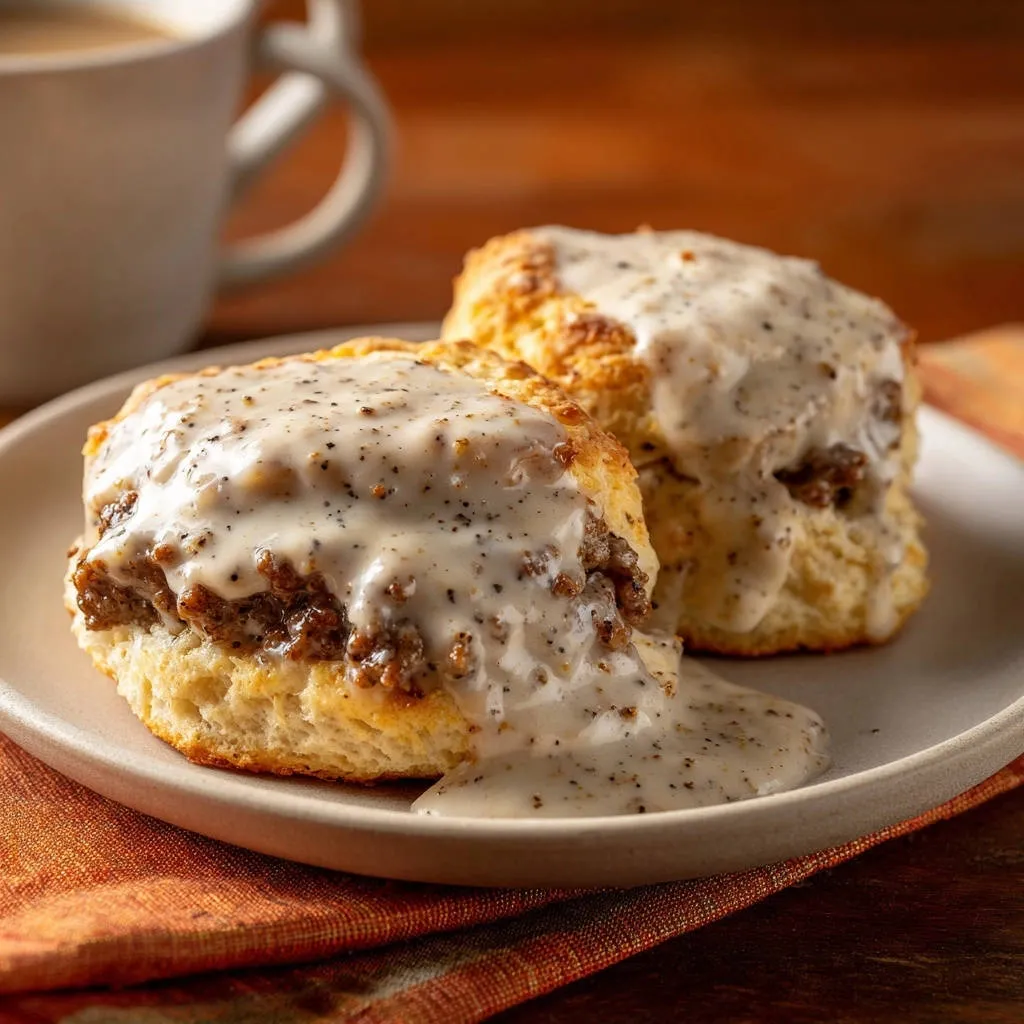
For years, my pursuit of the perfect, velvety sausage gravy was plagued by lumps and a thin, watery consistency that refused to cling to flaky biscuits. This recipe for Classic Sausage Gravy and Biscuits is the definitive solution, employing a precise roux and milk technique that guarantees a smooth, thick, and satisfying final result every time.
I am sharing the exact two-step secret I perfected to ensure this breakfast classic lives up to its comforting reputation, delivering deep savory flavor and a texture that stays silky smooth until the last bite.
Why This Recipe Solves Your Biggest Gravy Frustrations
Most gravy frustrations stem from inconsistent temperatures and poor starch incorporation. This method strictly controls both, ensuring the flour and fat bond correctly before the liquid is introduced.
For more on perfect texture, check out this recipe for fluffy biscuits and sausage gravy.
Our quick drop biscuits are the perfect accompaniment, offering maximum fluffiness with minimal effort, eliminating the stress of traditional biscuit kneading and rolling.
The “Never Lumpy” Guarantee: Our Two-Step Secret
The secret lies first in thoroughly cooking the roux (fat and flour mixture) until it’s nutty and fully absorbed. This eliminates raw starch flavor and conditions the flour to swell evenly.
The second critical step is tempering: introducing only a small amount of cold milk first, vigorously whisking to create a smooth, lump-free slurry before adding the remaining liquid.
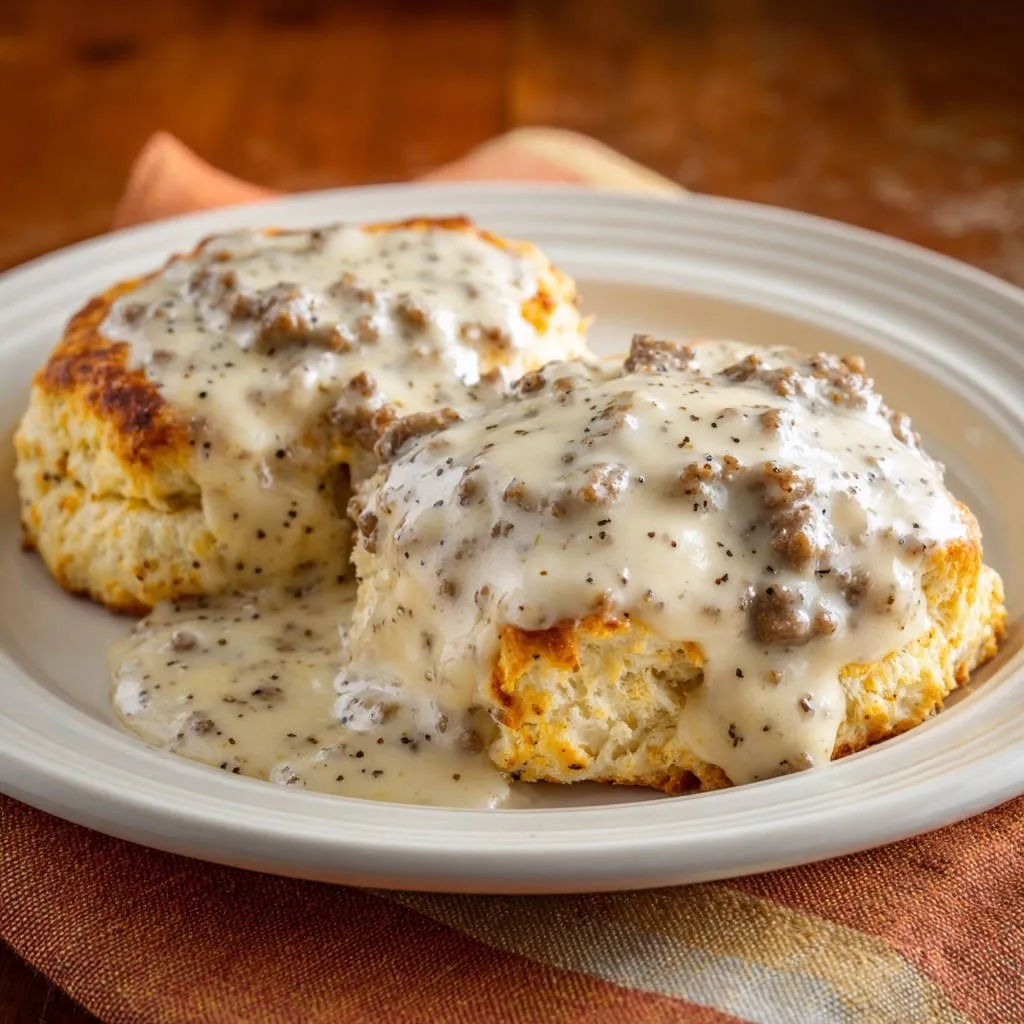
The Ease of Drop Biscuits (No Rolling Required)
Drop biscuits use a higher liquid-to-fat ratio and are intentionally kept shaggy and cold. This produces irregular, craggy edges perfect for catching the rich gravy, while saving significant prep time.
For more fluffy baking ideas, check out these sausage cheese muffins.
The high baking temperature triggers maximum lift from the chemical leaveners and the cold butter, resulting in wonderfully light and fluffy biscuits.
Deep, Savory Flavor Without Excess Fat
We rely on the natural rendered fat (drippings) from the breakfast sausage to form the roux, capturing all that meaty flavor directly in the gravy base.
However, we ensure the fat amount is precisely measured (1/4 cup). This ratio is essential for the flour to fully absorb the fat and build a strong foundation for the gravy, guaranteeing it won’t be greasy or thin.
The Essential Building Blocks: Ingredients for Perfect Texture and Flavor
For the Fluffy Drop Biscuit Shortcut
Using cold butter, cut into small cubes, ensures that the fat melts slowly in the oven, creating steam pockets that lift the biscuits.
Similarly, using cold milk minimizes gluten development when stirring, which is key to maintaining a tender crumb rather than a tough, chewy biscuit.
Tip: If you use salted butter, adjust the recipe salt down to 3/4 teaspoon.
The Gravy Foundation: Sausage, Fat, and Flour
Start with a high-quality, mild ground breakfast sausage. Its flavor profile is the bedrock of the entire dish.
All-purpose flour is ideal for this roux because it provides the necessary structure without making the gravy heavy or gummy.
Milk Selection and Temperature Control
Whole milk is non-negotiable here; its higher fat content contributes significantly to the final creamy mouthfeel and richness of the gravy.
The milk must be cold. Using cold liquid helps delay the thickening process, allowing you more time to whisk out any potential lumps and achieve a uniform slurry before thickening begins.
Equipment Check: Tools for Success
Heavy-Bottomed Skillet: Essential for even heat and preventing scorching during the simmer.
Sturdy Whisk: Crucial for vigorously dissolving the roux and managing the milk incorporation.
Baking Sheet: For the quick, high-heat baking of the drop biscuits.
From Skillet to Plate: Mastering the Silky Gravy Technique
Prepping the Quick Biscuits
Preheat your oven to 425°F. Whisk the flour, baking powder, and salt together vigorously to ensure the leaveners are evenly distributed.
Cut in the cold butter using a pastry blender or your fingers until the mixture resembles coarse, shaggy crumbs. Pour in the cold milk and stir quickly, mixing only until the dry ingredients are barely moistened; visible streaks of flour are acceptable to prevent tough biscuits.
Drop 6 to 8 large spoonfuls onto a baking sheet and bake for 12 to 15 minutes until they are golden brown and fully risen. Set them aside to cool slightly while you focus on the gravy.
Browning the Sausage and Balancing the Fat
In a large, heavy-bottomed skillet, crumble the sausage and cook it over medium heat for 8 to 10 minutes until it is completely browned and cooked through. Proper browning maximizes the savory flavor release into the pan.
Drain off all but 1/4 cup of the rendered drippings and fat. If your sausage was very lean and didn’t render enough fat, immediately add 1/4 cup of butter to the skillet now to ensure you have the precise fat amount required for a perfect roux.
The Lumps-Be-Gone Roux Technique (The Critical Two Minutes)
Reduce the heat to medium-low. Sprinkle the 1/4 cup of flour evenly over the sausage and fat. Stir constantly with a whisk or wooden spoon.
You must cook this mixture, the roux, for a full 2 minutes. This crucial cooking time removes the raw starch flavor and allows the flour granules to absorb the fat completely, creating a thick, nutty-smelling paste.
Tempering the Cold Milk in Stages
Ensure your 3 cups of whole milk are cold. Begin by pouring in only 1/2 cup of the cold milk. Whisk immediately and vigorously until the thick roux completely dissolves, forming a smooth, thick slurry.
This “tempering” step prevents the flour from clumping when exposed to the full volume of liquid and is the primary way we achieve our silky smooth texture.
Achieving the Perfect Simmer and Consistency
Slowly pour in the remaining 2 1/2 cups of cold milk, whisking constantly as you pour to ensure uniform mixing. Increase the heat to medium.
Continue to stir frequently, scraping the bottom of the pan to prevent the flour from settling and scorching. Bring the gravy up to a gentle simmer, where small bubbles just begin to break the surface.
Once simmering, reduce the heat to low and hold the simmer for 3 to 5 minutes. The gravy will thicken significantly now. Stir in the salt and the 1 teaspoon of freshly cracked black pepper. If the gravy is too thick, whisk in a tablespoon of milk at a time until the desired consistency is reached.
The Final Presentation
Split the warm, fluffy drop biscuits with a fork and top them generously with the hot, silky smooth sausage gravy.
Sweet Endings
Round out your meal with something sweet that complements the savory richness of the gravy.
- If you enjoy rich, chocolatey treats, consider making these frosted dark chocolate toffee cookies.
- For a warm, spiced pastry to enjoy with your coffee, try these glazed pecan cinnamon rolls.
Garnish the Classic Sausage Gravy and Biscuits with extra cracked black pepper for a fragrant, peppery finish.
Chef’s Secrets: How to Customize and Elevate Your Breakfast Masterpiece
Perfecting the Biscuit Crumb
The Temperature Test: Ensure your butter and milk are as cold as possible; warmth is the enemy of flaky drop biscuits. You want the fat to stay solid until it hits the hot oven.
The Don’t-Touch Rule: Overworking the drop biscuit dough develops gluten, leading to tough biscuits. Stir only until the dry ingredients are barely moistened-it should look messy.
Gravy Flavor Variations and Spice Options
Heat Integration: Add a pinch of cayenne pepper or a dash of your favorite hot sauce directly to the sausage while it browns for a spicy kick that permeates the gravy.
Herbaceous Notes: A small amount (1/2 teaspoon) of dried sage added with the salt and pepper enhances the traditional breakfast flavor profile and complements the mild sausage beautifully.
Umami Boost: Stir in a small teaspoon of chicken bouillon powder or better-than-bouillon base with the milk for an extra layer of savory depth.
Troubleshooting Your Classic Sausage Gravy and Biscuits: Fixing Common Texture Flaws
My Gravy is Watery or Too Thin
If the gravy won’t thicken after simmering for 5 minutes, you likely need a stronger starch component. Create a cornstarch slurry (1 tsp cornstarch mixed with 1 tsp cold water) and slowly whisk it into the simmering gravy until the desired thickness is achieved.
How to Fix Lumpy Gravy Instantly
Lumps usually occur when the flour (roux) was not fully incorporated before the milk was added. If the lumps are small, vigorous whisking can sometimes break them up.
For significant lumps, remove the gravy from the heat and push it through a fine-mesh sieve into a new pan, pressing the lumps through with a spoon. This is a quick and effective fix for a ruined texture.
The Gravy Tastes Too Much Like Raw Flour
This means the roux was not cooked for the full two minutes in Step 3, which is critical for neutralizing the raw starch flavor. If you catch this early, cook the gravy longer at a very low simmer to “cook out” the raw flour taste.
Preparation and Planning: Make-Ahead Tips and Reheating Solutions
Can I Prepare the Sausage Gravy Ahead of Time?
Yes, sausage gravy can be made up to two days in advance. Be aware that it will thicken considerably upon cooling because the starches continue to swell.
Store it in an airtight container in the refrigerator, ensuring it cools quickly to maintain safety and flavor.
Best Ways to Reheat Sausage Gravy
Reheat slowly over medium-low heat on the stovetop. As it reheats, it will undoubtedly be too thick; whisk in small splashes of cold milk (or half-and-half) until the original silky smooth consistency returns.
Do not microwave large quantities, as this can cause the fat and milk proteins to separate, leading to a grainy texture.
Storing and Refreshing Leftover Biscuits
Store leftover biscuits in an airtight container at room temperature for up to two days. Keep them separate from the gravy to prevent them from becoming soggy.
To refresh and regain that flaky texture, wrap the biscuits loosely in aluminum foil and reheat them in a 350°F oven for about 5-8 minutes until warm and tender throughout.
Ready to Serve? Start Your Perfect Weekend Morning
This method transforms the challenging task of making lump-free gravy into a foolproof process. You are now equipped with the essential techniques-the perfect roux and the cold milk method-to achieve the velvety, clinging texture that truly defines the best Classic Sausage Gravy and Biscuits.
Share your breakfast masterpiece with us and enjoy the warmth and comfort only this dish can provide!
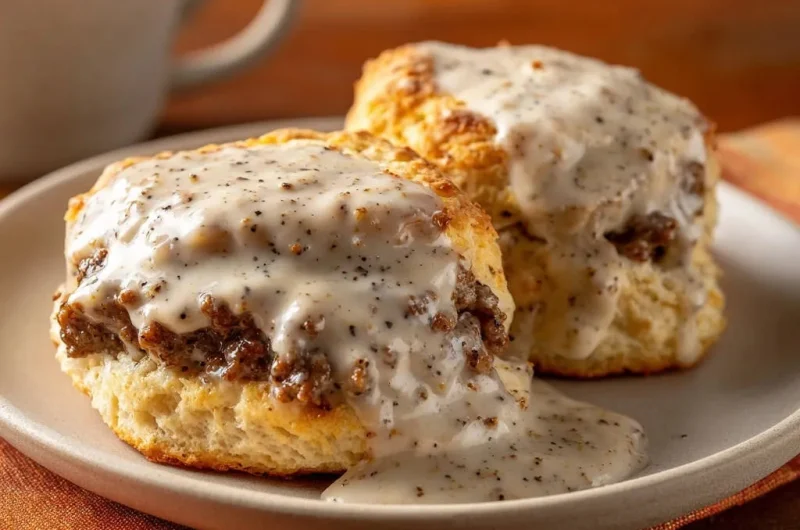
Sausage Gravy and Biscuits
Course: BreakfastCuisine: AmericanDifficulty: easy6
to 8 servings15
minutes20
minutes550
kcal30
minutesStop struggling with lumpy or thin gravy. This definitive recipe uses the critical cold-milk-slurry technique to ensure your sausage gravy is perfectly smooth and velvety every single time. Paired with quick drop biscuits, this classic dish is ready in under 30 minutes.
Ingredients
For the Biscuits (Shortcut Drop Biscuits):
2 cups all-purpose flour
1 tablespoon baking powder
1 teaspoon salt
1/2 cup cold unsalted butter, cubed
3/4 cup cold milk
For the Sausage Gravy:
1 pound mild ground breakfast sausage (no pork fat needed if using lean sausage, use the sausage’s own drippings)
1/4 cup all-purpose flour
3 cups cold whole milk
1 teaspoon salt
1 teaspoon freshly cracked black pepper (plus extra for serving)
Directions
- Prepare the Biscuits: Preheat the oven to 425 degrees F. In a large bowl, whisk the flour, baking powder, and salt. Cut in the cold butter until the mixture resembles coarse crumbs. Pour in the cold milk and stir just until combined (do not overmix). Drop 6 to 8 large spoonfuls onto a baking sheet and bake for 12 to 15 minutes, or until golden brown and risen. Set aside.
- Cook the Sausage: While the biscuits bake, begin the gravy. In a large, heavy-bottomed skillet, crumble the sausage and cook over medium heat until completely browned, about 8 to 10 minutes. Drain off all but 1/4 cup of the rendered sausage drippings/fat. If your sausage was very lean, add 1/4 cup of butter to the skillet now to meet the fat requirement.
- Create the Roux (The Silky Smooth Fix): Reduce the heat to medium-low. Sprinkle the 1/4 cup of flour evenly over the cooked sausage and fat. Stir constantly with a wooden spoon or whisk for 2 full minutes. This step is critical for eliminating lumps and ensuring depth of flavor. Cook the flour out thoroughly; it should smell nutty and have absorbed all the fat, creating a thick paste (the roux). Cook until no pink remains and it reaches 160°F (71°C).
- Incorporate the Milk: This is the second critical step for texture. Ensure the 3 cups of milk are cold. Begin by pouring in only 1/2 cup of the cold milk. Whisk immediately and vigorously until all the roux is dissolved and the mixture is smooth and completely liquid, like a thick slurry.
- Thicken Slowly: Slowly pour in the remaining 2 1/2 cups of cold milk, whisking constantly as you pour. Increase the heat slightly to medium. Continue to stir/whisk frequently, scraping the bottom of the pan to prevent scorching.
- Simmer and Finish: Bring the gravy up to a gentle simmer (small bubbles just breaking the surface). Once it begins to simmer, reduce the heat to low. The gravy will thicken significantly as it holds the simmer for about 3 to 5 minutes. Stir in the salt and the black pepper. If the gravy is too thick, whisk in a tablespoon of milk at a time until the desired consistency is reached.
- Serve: Split the warm biscuits and top generously with the hot, silky smooth sausage gravy. Garnish with extra cracked black pepper.
Notes
- The key to this silky smooth gravy is strictly adhering to the two-minute roux cook and incorporating only 1/2 cup of cold milk first.