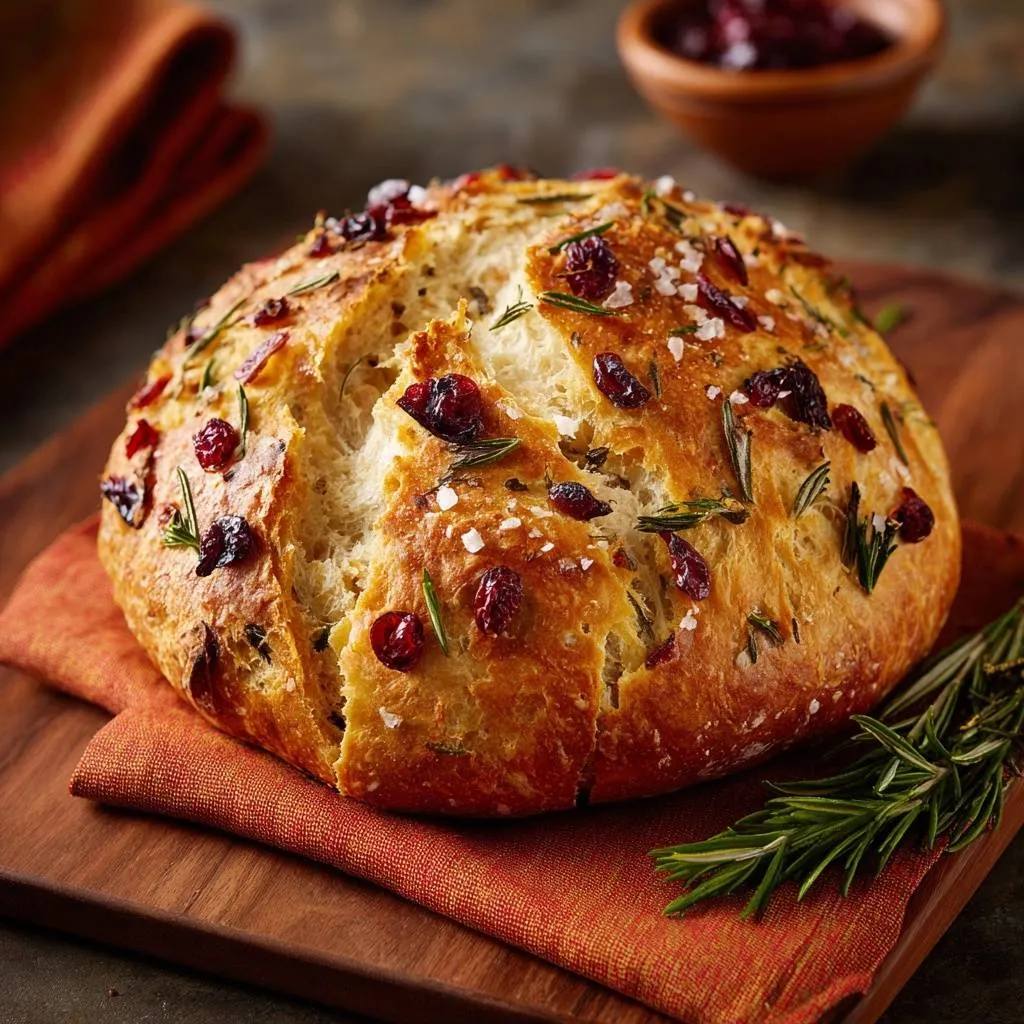
Picture this: you pull a loaf from the oven, steam hissing out, revealing a crackly crust studded with flaky sea salt crystals. Bite in, and tart cranberries burst against earthy rosemary, all wrapped in an airy, open crumb that no-knead bread usually only dreams of. Oh man, that first slice after perfecting this Cranberry Rosemary Sea Salt Bread hooked me forever, turning my dense brick failures into bakery-worthy triumphs.
So why does this Cranberry Rosemary Sea Salt Bread deliver every time? It ditches the knead for a smart long fermentation that builds structure naturally. No more heavy, fruit-sinking disasters. Instead, you get explosive oven spring and flavors that pop.
Here’s the game-changer: that 12-to-18-hour rise at room temp. Enzymes break down starches into sugars, yeast creates bubbly pockets, and gluten networks form without effort. Sprinkle in plumped cranberries and fresh rosemary via gentle folds, and you’ve locked in lightness. Trust me, this technique nails the Cranberry Rosemary Sea Salt Bread magic.
Why Long Fermentation Transforms No-Knead Dough
Gluten Development Without Kneading Effort
Instant yeast teams up with time to weave gluten strands effortlessly. In just 1/4 teaspoon, it kickstarts a slow process where enzymes convert starches to fermentable sugars. Therefore, your Cranberry Rosemary Sea Salt Bread gains an open, airy crumb instead of the dense bricks from rushed rises.
Picture the dough after 12-18 hours: doubled, bubbly, and jiggling slightly. That’s natural gluten at work. However, skip this wait, and you’ll fight flat loaves every time.
Flavor Building During Overnight Rest
Lactic acid bacteria wake up during that long rest, adding tangy depth that boosts the cranberries’ tartness and rosemary’s woodiness. In addition, it mimics sourdough flavor without daily feedings. So, your bread tastes complex and pairs perfectly with the fruit.
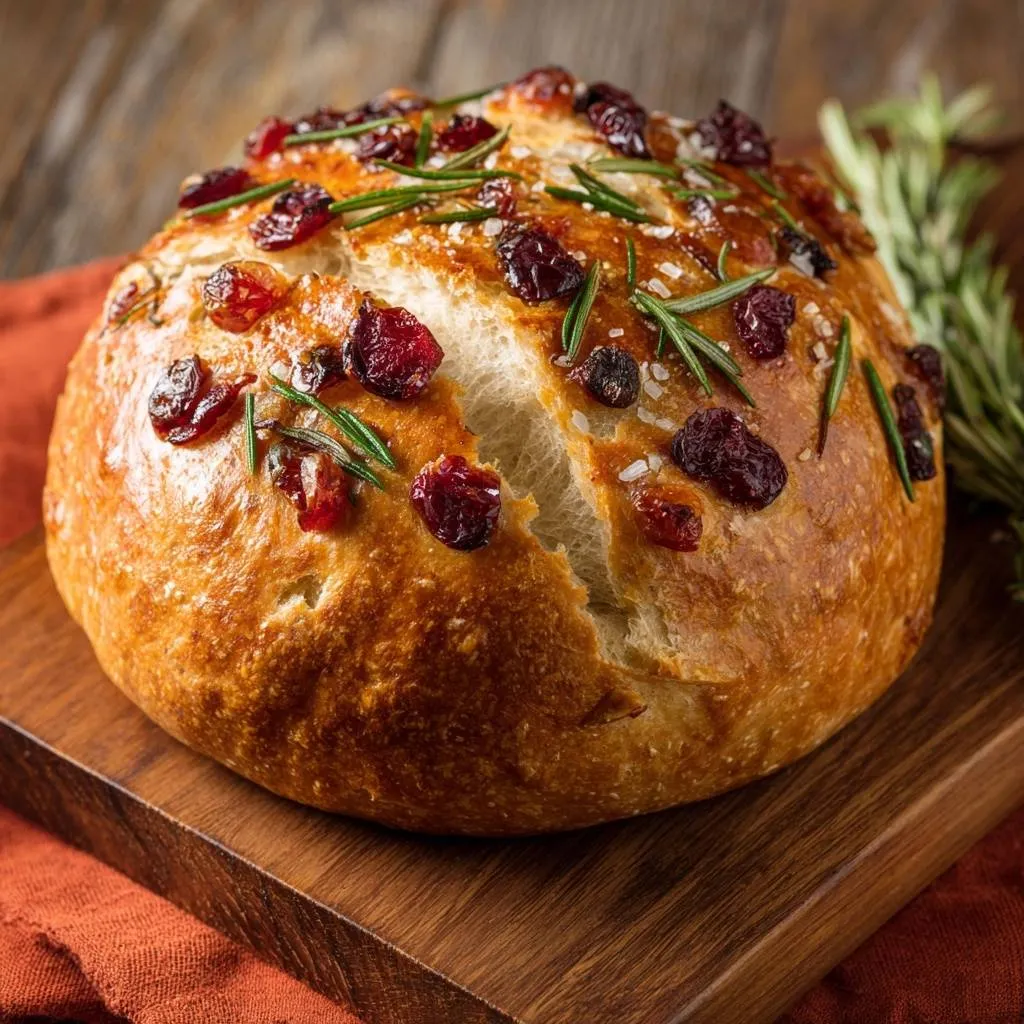
This process also strengthens the dough enough to hold add-ins aloft. No sinking cranberries here. Instead, even distribution means every slice delights.
Essential Ingredients for Cranberry Rosemary Sea Salt Bread
Flour and Yeast Foundation Choices
Three cups of all-purpose flour provide the perfect protein for structure in Cranberry Rosemary Sea Salt Bread. Instant yeast, at 1/4 teaspoon, activates fast without proofing hassles. Swap for bread flour if you crave extra chew, but add a tablespoon more water.
Avoid active dry yeast here. It demands dissolving first, messing with timing. Stick to instant for foolproof results.
Water Temperature Precision Matters
Hit 110F for 1 1/3 cups water exactly. Too hot kills yeast; too cold drags fermentation. Therefore, use a thermometer, and you’ll get that sticky 75% hydration dough perfect for steam pockets.
This ratio ensures the shaggy mix transforms into bubbly magic overnight. Measure right, and you’re set.
Incorporating Dried Cranberries Effectively
One cup dried cranberries bring tart-sweet pops without sogginess. Plump them in hot water for 10 minutes, then drain and pat dry. Fresh ones? Too watery, they’d sink and make dense spots.
If you enjoy the delightful berry notes here, you’ll also appreciate the bright flavors in a Raspberry Glaze Loaf.
Buy in bulk and store airtight in the pantry. They’ll stay ready for your next Cranberry Rosemary Sea Salt Bread bake.
Fresh Rosemary and Sea Salt Topping
Two tablespoons finely chopped fresh rosemary deliver potent, woody aroma. Dried works in a pinch, but use half as much, it’s less vibrant. Then, one teaspoon coarse sea salt crystals add crunch and balance sweetness.
Grab flaky Maldon if you like. Both shine on the crust. Source allergen-free if needed.
Science of Gentle Folding Technique
Preserving Air Pockets in Fruit Dough
After rising, sprinkle cranberries and rosemary on the shaggy dough. Fold gently 4-6 times, like a letter, rotating each time. This distributes add-ins evenly while surface tension keeps air pockets intact.
Overdo it, and you deflate; underdo, and fruit clumps. Visual cue: the dough stays loose and bubbly. Perfect for light Cranberry Rosemary Sea Salt Bread.
Oven Spring from Dutch Oven Steam
A 450F Dutch oven preheat traps steam for massive lift. Lid on for 30 minutes triggers the Maillard reaction, browning the crust deeply. Hit 210F internal, and it’s done.
Open baking? Flat failure. The pot’s seal mimics pro steam ovens. Boom, height guaranteed.
Step-by-Step: Building Cranberry Rosemary Sea Salt Bread
Mixing Shaggy Dough Base
Whisk flour, yeast, and salt in a big bowl. Stir in warm water until no dry bits linger, it’s sticky on purpose. Cover tight with plastic and forget it for 12-18 hours at room temp.
Look for doubled volume, bubble-dotted surface, and sweet yeasty smell. Don’t overmix early, or gluten toughens.
Prepping and Folding in Add-Ins
Plump cranberries in hot water 10 minutes, drain, pat dry. Chop rosemary fine. On floured surface, fold dough over fillings 4-6 times gently.
Tuck into a tight ball, seam up on parchment in a bowl. Cover, rest 1-2 hours till puffy. Pro tip: if humid, check at 1 hour.
Preheating and Initial Covered Bake
Crank oven to 450F with 4-6 quart Dutch oven inside for 45 minutes. Lift dough on parchment into hot pot, score if you want, sprinkle sea salt.
Cover and bake 30 minutes. Use thick mitts, pot’s scorching. Steam builds rise here.
Uncovering for Final Crust Formation
Uncover, bake 15 more minutes to deep gold. Internal hits 210F. Cool on rack 1 hour, steam escapes to avoid gumminess.
Slice when crust crackles under knife. Irresistible.
Dutch Oven: Key to Perfect Crust
Why Cast Iron Traps Steam Best
Cast iron holds heat like a champ and seals steam tight. Go for 4-6 quart to fit the dough ball snugly. Enameled cleans easy; bare needs seasoning.
No Dutch oven? Try a combo cooker. It mimics the pros perfectly for Cranberry Rosemary Sea Salt Bread.
Preheating Timeline and Safety
Preheat 45 minutes at 450F. Grab with oven mitts, drop parchment sling in quick. Light spray if paranoid about sticking.
Clean while warm with salt scrub. Safety first, always.
Avoiding Common No-Knead Bread Pitfalls
Preventing Dense Cranberry Sinking
Gentle folds prevent deflation, rest lets structure set. In dry climates, mist dough lightly. Underfold, and you’ll spot fruit clumps.
Humidity tweaks keep it light. Nail this, no dense Cranberry Rosemary Sea Salt Bread.
Fixing Pale or Flat Oven Spring
Preheat fully, seal lid tight, use warm water. Check dough at room temp. High altitude? Cut water by a tablespoon.
Probe to 210F always. Fixes flat loaves fast.
Flavor Variations for Cranberry Rosemary Sea Salt Bread
Nutty Additions and Herb Swaps
Toss in 1/2 cup chopped walnuts or pecans for crunch. Swap rosemary for thyme or sage. Add orange zest for citrus lift.
It’s vegan as is. Experiment confidently.
Sweet or Savory Twists
Mix white chocolate chunks for sweet, or pumpkin seeds for savory. Scale down for mini loaves, halve time.
Feta crumbles work too. Endless fun.
Pairing Cranberry Rosemary Sea Salt Bread
Cheese Boards and Charcuterie Matches
Tart cranberries cut rich brie or sharp cheddar perfectly. Pair with sparkling cranberry juice. Builds epic boards.
Skip meats, focus cheese contrast.
Soup and Salad Companions
Dip into butternut squash soup, or crumble over kale salad. Toast slices for croutons. Breakfast with butter shines too.
Versatile every meal.
Storage and Make-Ahead Strategies
Room Temp and Freezer Longevity
Wrap tight at room temp up to 3 days. Slice, bag, freeze up to 3 months. Thaw overnight, refresh at 350F 10 minutes.
Crust softens slightly, but flavor holds.
Scaling for Batch Baking
Double ingredients, use bigger bowl. Bake two pots. Gift wrapped in parchment.
Ferment 18 hours max for big batches.
Frequently Asked Questions About Cranberry Rosemary Sea Salt Bread
Can I Use Bread Flour Instead?
Yes, bread flour gives chewier crumb thanks to higher protein (12-14%). Add 1-2 tablespoons extra water for same hydration. It strengthens gluten further, ideal if you love hearty texture in Cranberry Rosemary Sea Salt Bread. Results stay airy with the long rise.
How to Tell If Dough Risen Enough?
Look for doubled size, bubbly surface like wet pizza dough, and a slight jiggle when shaken. Poke test: finger dent springs back slowly. Time’s a guide (12-18 hours), but visuals rule. If flat or yeasty-smelling weak, extend rise in warm spot.
Bread Dense—What Went Wrong?
Short fermentation, overfolding add-ins, or cool water often cause density. Yeast might be old too. Next time, ferment fully till bubbly, fold gently 4-6 times max, and verify 110F water. Check internal 210F. Fixes transform bricks to airy loaves.
Gluten-Free Cranberry Rosemary Adaptation?
Use a 1:1 gluten-free blend like King Arthur’s measure-for-measure. Add 1 tablespoon psyllium husk for binding and chew. Expect slightly denser crumb, but long rise helps. Hydration might need tweak up by 2 tablespoons. Still deliciously fruity.
Reduce Salt on Topping?
Drop to 1/2 teaspoon for milder crunch. Coarse sea salt bursts flavor; switch to flaky like Maldon for delicacy. It balances cranberry sweetness without overpowering. Taste dough first if sensitive.
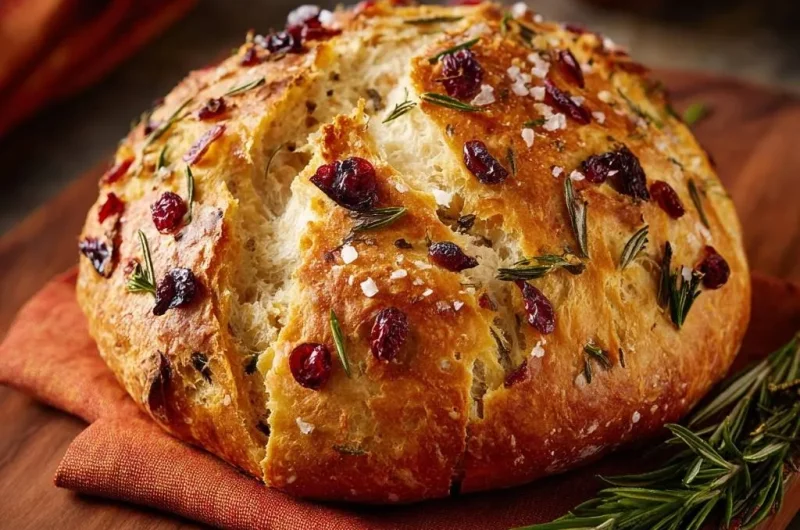
Cranberry Rosemary Bread
Course: BreadCuisine: AmericanDifficulty: medium1
loaf20
minutes45
minutes750
kcal1080
MinutesSay goodbye to heavy, brick-like homemade loaves. This foolproof no-knead recipe uses a long fermentation and gentle folding technique to build airy crumb structure, plus a steaming Dutch oven bake for explosive oven spring that lifts fruit-packed dough every single time. Tart dried cranberries and woody rosemary shine without weighing it down.
Ingredients
3 cups all-purpose flour
1/4 teaspoon instant yeast
1 1/3 teaspoons salt
1 1/3 cups warm water (about 110F)
1 cup dried cranberries
2 tablespoons finely chopped fresh rosemary
1 teaspoon coarse sea salt, for topping
Directions
- In a large bowl, whisk together flour, yeast, and salt. Add warm water and stir with a wooden spoon until a shaggy, sticky dough forms no dry flour remains. Cover tightly with plastic wrap and let rise at room temperature for 12 to 18 hours until doubled, bubbly, and surface is dotted with bubbles. This long fermentation develops gluten naturally for airy crumb, solving the
Notes
- Long fermentation (12-18 hours) develops gluten naturally for airy crumb. Use instant yeast. Plump very dry cranberries in hot water for 10 minutes, drain and pat dry. Internal temperature should reach 210°F when done. Cool 1 hour before slicing.