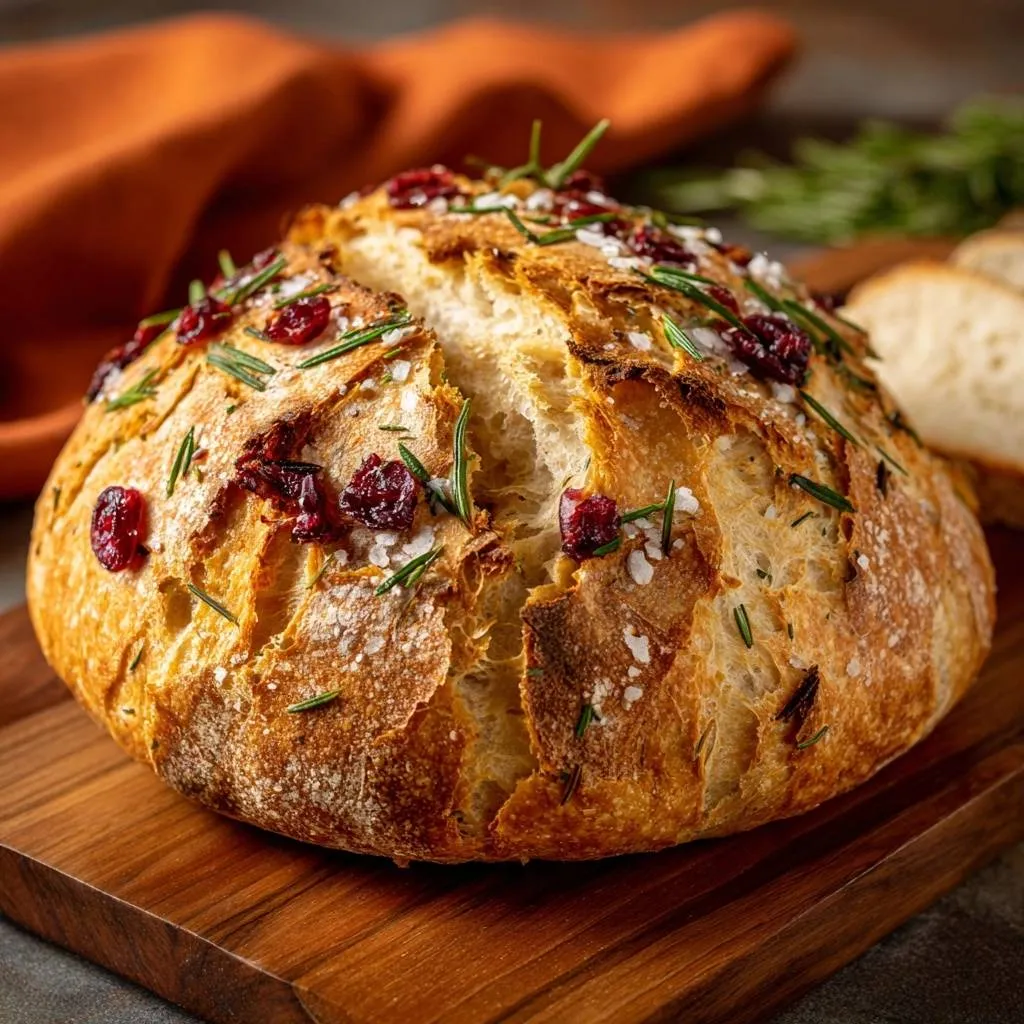
Why This No-Knead Cranberry Rosemary Sea Salt Bread Succeeds
Sick of pulling dense, hockey puck loaves from your oven? This cranberry rosemary sea salt bread flips the script with a no-knead method that delivers an open, airy crumb every time. You mix a shaggy dough, let it ferment overnight, and bake in a Dutch oven for that crackly crust loaded with tart cranberries, piney rosemary, and crunchy sea salt.
Here’s why it works so well. High hydration at 75% creates steam pockets for lightness, while cold fermentation builds gluten naturally. No muscle required, just patience. Suddenly, you’re churning out bakery-quality cranberry rosemary sea salt bread that wows at the table.
For similar flavor notes, explore this rosemary cranberry artisan bread made with similar techniques.
The real secret? That 16-hour fridge rest. Enzymes break down proteins slowly, strengthening gluten strands without kneading. I’ve seen it transform stubborn dough into lofty slices, and you’ll taste the difference in every chewy, flavorful bite.
Key Ingredients for Cranberry Rosemary Sea Salt Bread
Bread flour forms the backbone here. Its higher protein content builds superior gluten structure in this high-hydration dough. All-purpose flour works in a pinch, but expect a tighter crumb.
Warm water at 110F hits 75% hydration, generating steam for those big air pockets. Instant yeast kicks off the rise reliably, and fine sea salt balances flavors without inhibiting fermentation.
Dried cranberries bring tart chew that bursts against the soft crumb. Fresh rosemary delivers a piney aroma that infuses deeply, unlike dried which lacks punch. Coarse sea salt on top adds crunch and seasons each slice perfectly.
For more ideas on incorporating those flavors, explore the cranberry rosemary sea salt bread recipe.
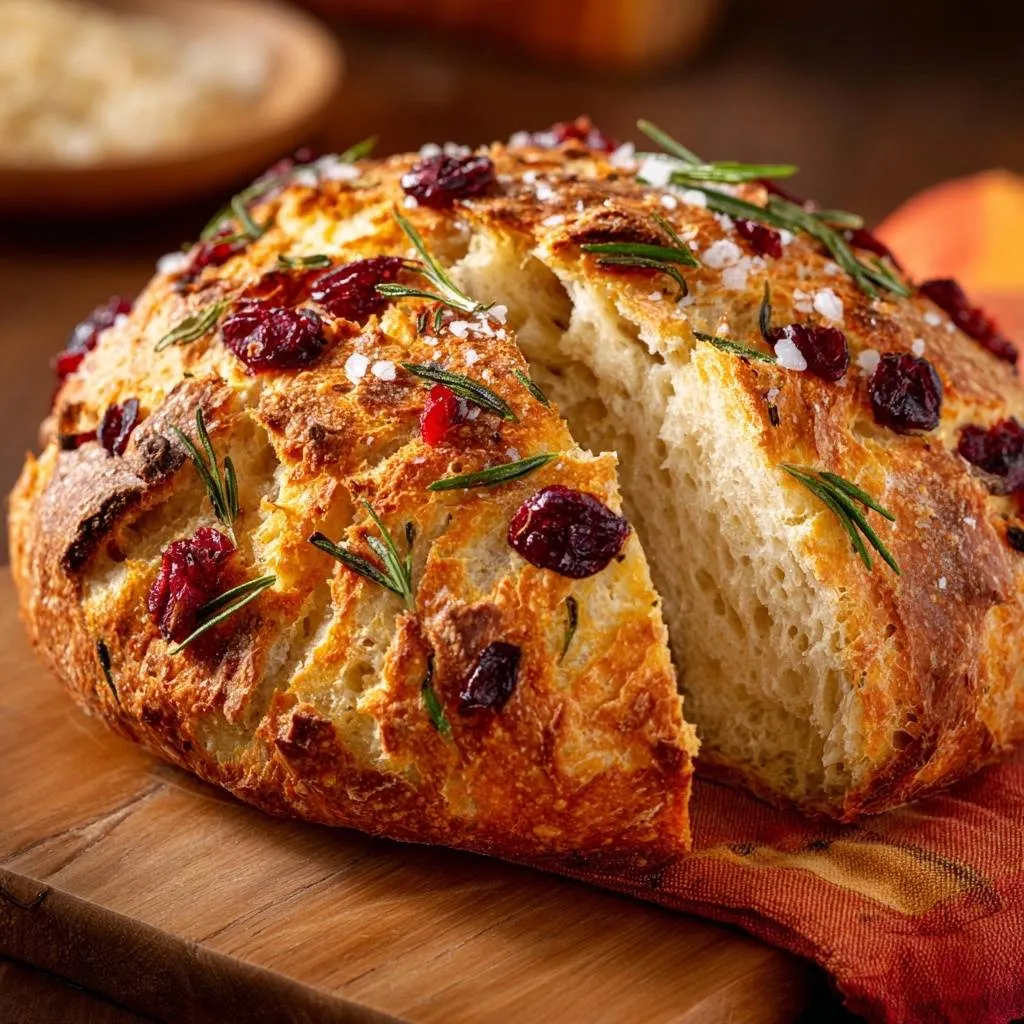
Bread Flour vs All-Purpose in High-Hydration Doughs
Bread flour’s 12-14% protein creates stronger gluten networks in cranberry rosemary sea salt bread. All-purpose at 10-11% leads to denser results, as I noticed in side-by-side tests. Therefore, stick with bread flour for that signature open crumb.
Hydration Science: 75% Water Ratio Explained
Precise 110F water activates yeast without killing it, while 75% hydration ensures extensibility for CO2 trapping. Too cool, and fermentation stalls; too hot, yeast dies. This ratio prevents hockey puck loaves in your sea salt bread every time.
Science of Open Crumb in Cranberry Rosemary Sea Salt Bread
Gluten develops through autolyse in the initial mix, bulk fermentation at room temp, and cold retard overnight. Bubbles form as yeast produces CO2, which strong gluten walls trap into air pockets. No-knead beats traditional methods by avoiding overworking.
During the 2-hour rise, dough doubles with a bubbly surface smelling faintly sweet. Folding in cranberries and rosemary distributes flavors evenly. Then, refrigeration slows yeast, letting enzymes fortify gluten for maximum lift.
In contrast, kneaded doughs tighten up fast. This method’s gentle handling keeps gases intact, yielding the open crumb in cranberry rosemary sea salt bread that makes slicing irresistible. You’ll see those holes and crave tearing off a piece.
Overnight Fermentation Builds Natural Gluten Strength
Protease enzymes activate in the fridge over 16 hours, clipping gluten proteins to make them elastic yet strong. This solves dense cranberry rosemary sea salt bread issues forever. Warmer rooms speed it up, but lose complexity.
Steam Power from Dutch Oven for Crackly Crust
The covered Dutch oven traps initial steam, boosting oven spring for height and a mahogany crust on your sea salt topped loaf. Uncover to crisp it further. Physics at work: steam gelatinizes starches for shine and snap.
Phase 1: Mixing Shaggy Dough for Cranberry Rosemary Sea Salt Bread
Whisk flour, yeast, and fine sea salt in a large bowl. Pour in warm water and stir with a wooden spoon for about 1 minute until shaggy and sticky. Don’t knead; this high-hydration stage starts gluten quietly.
Look for a rough, wet texture that clings to the spoon. If it’s too dry, add water by the tablespoon. Common pitfall: overmixing early toughens it, so stop at shaggy for easy success.
Phase 2: Room Temperature Bulk Rise and Fold-Ins
Cover and let rise 2 hours until doubled and bubbly. The surface dimples easily, releasing yeasty aromas. This bulk fermentation builds initial strength.
Using a wet spatula, gently fold in cranberries and chopped rosemary. Turn the dough over itself a few times to distribute without deflating. Even pockets ensure tart bursts and herby notes in every bite.
Phase 3: Cold Fermentation and Shaping the Loaf
Cover and refrigerate 16 hours. Cold slows yeast, enhancing flavor and gluten via enzymes. Dough firms up, easy to handle.
Turn onto a floured surface, fold edges under into a tight ball. Place seam-side up on parchment in a bowl, cover, and rest 1 hour. It proofs gently, ready for baking with tension for lift.
Phase 4: Dutch Oven Baking for Perfect Crust
Preheat oven to 450F with Dutch oven inside for 45 minutes. Heat scorches the pot for max steam. Carefully lower dough on parchment, sprinkle rosemary sprigs and coarse sea salt.
Cover and bake 30 minutes; dough leaps up with crackles forming. Uncover for 15 minutes to golden and crisp. Cool on a rack 1 hour, so steam escapes and crumb sets perfectly.
Dutch Oven: Essential for Cranberry Rosemary Sea Salt Bread
A 4-6 quart cast iron Dutch oven creates a steamy microclimate for artisan results in cranberry rosemary sea salt bread. It mimics professional ovens. Combo cookers work similarly, but cheap pots fail on heat retention.
No Dutch oven? Try a covered baking dish, but expect less rise and crust. Maintenance: dry thoroughly after washing to prevent rust. Pro tip: preheat longer for bolder oven spring.
Avoiding Dense Crumb in Cranberry Rosemary Sea Salt Bread
Under-proofed dough springs back fast on poke test; give it more time. Over-handling deflates bubbles, so fold gently. Inaccurate water temp kills yeast: test at 110F precisely.
Weigh flour for accuracy; volume scoops pack too much, drying dough. Check yeast viability by blooming in water first. If dough resists shaping, recover with extra fridge time.
Room temp matters too. Cooler spots slow rise, so adjust timelines. These fixes guarantee airy cranberry rosemary sea salt bread slices.
Proofing Timeline Mistakes and Fixes
Cold rooms stretch 2-hour rise to 3; warm ones shorten to 90 minutes. Master the poke test: dough springs back slowly when ready. For final proof, indent holds for sea salt bread perfection.
Flavor Variations for Cranberry Rosemary Sea Salt Bread
Swap cranberries for dried cherries or blueberries; reduce hydration slightly as they release less moisture. Thyme replaces rosemary for earthier notes. Add parmesan flakes post-fold for savory umami.
Orange zest brightens a sweet version; walnuts boost crunch in savory. Keep 75% hydration base, but test small batches. Each tweak shines in this forgiving no-knead frame.
Make-Ahead and Storage for Cranberry Rosemary Sea Salt Bread
Extend cold fermentation to 24 hours for deeper flavor. Freeze shaped dough balls up to a month; thaw overnight before baking. Baked loaves freeze sliced for 3 months.
Store at room temp in a paper bag up to 3 days. Revive day-olds by sprinkling water and crisping at 350F. Toast slices for breakfast; they regain snap instantly.
Perfect Pairings for Cranberry Rosemary Sea Salt Bread
Pair with brie or goat cheese on boards; the tart cranberries cut richness. Ladle over butternut squash soup for cozy dips. Toss into salads for chewy contrast.
Complementary Recipes
Enjoy your Cranberry Rosemary Sea Salt Bread with these other ideas.
- For a festive appetizer that shares the cranberry flavor, consider these cranberry herb stuffing balls, offering a delightful contrast in texture.
- If you’re looking for a main course that also features cranberries, try cranberry and spinach stuffed chicken breasts for a complete meal.
Holiday tables love it sliced thin. Breakfast? Top toast with ricotta and honey. Herbal tea complements the rosemary beautifully.
Cranberry Rosemary Sea Salt Bread FAQ
Can I Use Active Dry Yeast Instead?
Yes, but proof it first in the warm water with a pinch of sugar for 10 minutes until foamy. Add to flour mix as directed; rise times stay the same since hydration drives this recipe.
Why Is My Bread Still Dense?
Top causes: under-proofing (use poke test), too much flour (weigh it), or cold water killing yeast. Fix by extending fermentation and measuring precisely for open crumb next time.
How Long Does Fermentation Take Exactly?
The 16-hour cold phase works at 38-40F fridge temp; warmer fridges may need 12-14 hours. Check for doubled volume and bubbly edges before shaping your sea salt bread.
Gluten-Free Cranberry Rosemary Sea Salt Bread Possible?
Challenging due to hydration, but try a 1:1 gluten-free blend like King Arthur’s with added xanthan gum. Reduce water to 65% and expect denser texture; psyllium helps mimic gluten.
Scaling Recipe for Smaller Loaves?
Halve everything for one mini loaf: 1.5 cups flour, etc. Bake covered 25 minutes, uncovered 12. Preheat times same; yields perfect personal cranberry rosemary sea salt bread.
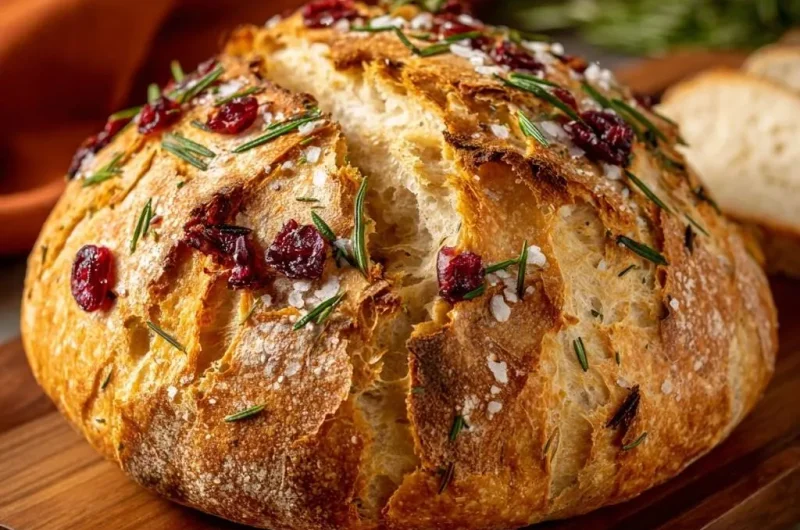
Cranberry Rosemary Bread
Course: BreadCuisine: AmericanDifficulty: medium1
loaf20
minutes45
minutes2400
kcal1140
MinutesSick of homemade bread loaves turning out like hockey pucks? This foolproof no-knead method uses high hydration and overnight fermentation to build strong gluten naturally, delivering that holy grail open, airy crumb without fancy equipment or muscle.
Ingredients
3 cups bread flour
1 1/4 cups warm water (about 110F)
1 teaspoon instant yeast
1 teaspoon fine sea salt
1 cup dried cranberries
2 tablespoons fresh rosemary, finely chopped
Extra flour for dusting
Coarse sea salt for topping
Directions
- In a large bowl, whisk together flour, yeast, and fine sea salt. Add warm water and stir with a wooden spoon until a shaggy, sticky dough forms, about 1 minute. No kneading needed, this high-hydration mix (75 percent) is the key to avoiding density.
- Cover bowl with plastic wrap and let rise at room temperature for 2 hours until doubled and bubbly.
- Fold in cranberries and chopped rosemary with a wet spatula, turning dough gently to distribute without deflating.
- Cover and refrigerate for 16 hours. This slow cold fermentation develops gluten strands for maximum air pockets, solving dense crumb forever.
- Remove dough from fridge, turn onto well-floured surface, and shape into a tight ball by folding edges under. Place seam-side up on parchment paper in a bowl, cover with a towel, and let rest 1 hour.
- Preheat oven to 450F with a 4-6 quart Dutch oven inside for 45 minutes.
- Carefully place dough (on parchment) into hot Dutch oven, sprinkle top with rosemary sprigs and coarse sea salt. Cover and bake 30 minutes.
- Uncover and bake 15 more minutes until deep golden with crackly crust. Cool on wire rack 1 hour before slicing to set the perfect open crumb. Store at room temp up to 3 days.
Notes
- Requires 16-hour refrigeration and 2-hour initial rise. Use a 4-6 quart Dutch oven for baking. Cool 1 hour before slicing to set the crumb.