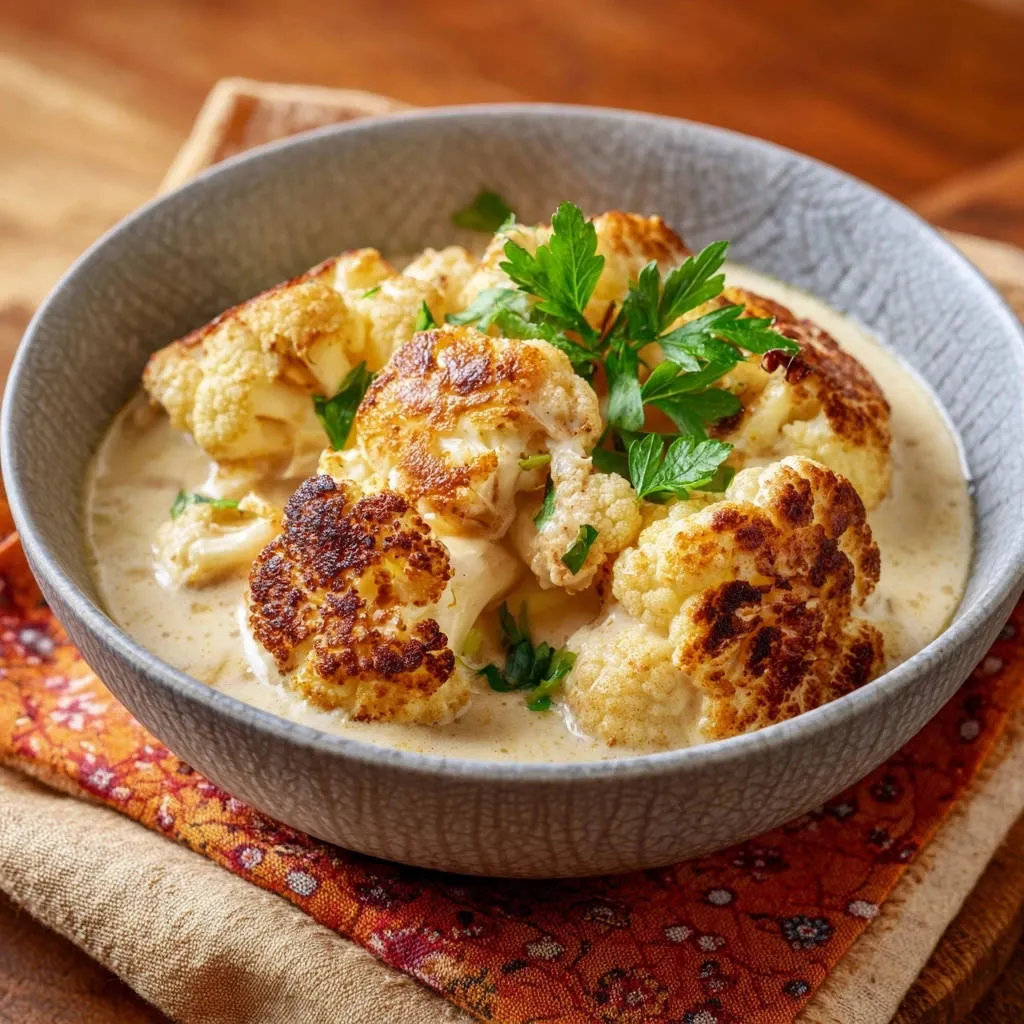
I spent years battling sad, watery cauliflower sides until I perfected the pre-searing technique, which completely transforms the texture of this versatile vegetable.
This recipe for Creamy Browned Cauliflower solves the notorious “soggy side dish” dilemma by locking in structure and introducing deep, nutty flavors that a simple simmer can never replicate.
It’s rich, satisfying, quick, and guaranteed to become your new favorite way to prepare cauliflower, offering a reliable path to deeply flavorful, perfectly firm florets.
Why This Creamy Browned Cauliflower Is a Game Changer
This method focuses on maximizing flavor and texture by introducing an essential searing step before the sauce is even built. This small change makes an enormous difference to the final quality of the dish.
Ending the Soggy Vegetable Dilemma
Traditional methods often cause cauliflower to absorb too much moisture, leading to a mushy, watery texture when sauced.
Our technique utilizes high-heat searing to caramelize the exterior and firm up the cellular walls of the florets, creating a protective brown crust.
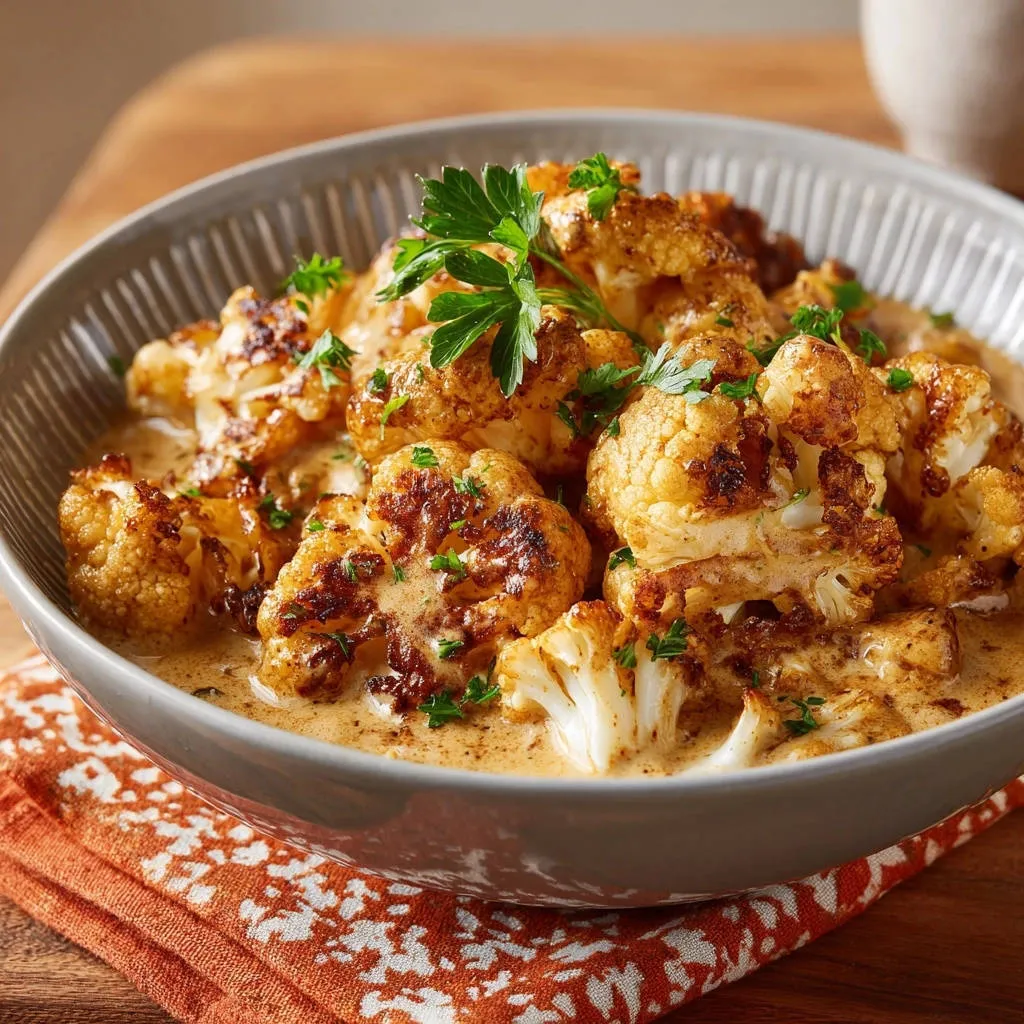
This barrier prevents the cauliflower from becoming waterlogged or overcooked during its brief toss in the rich cream sauce.
The Depth of Nutty, Roasted Flavor
The browning process triggers the Maillard reaction, which is essential for creating complex, savory flavors in the cauliflower.
Simple steaming or boiling yields a flat flavor, but high-heat searing develops deep, nutty, and slightly sweet roasted notes.
This foundational flavor profile elevates the entire side dish, ensuring it is just as exciting as any main course.
Ready in Under 30 Minutes (A Weeknight Win)
Because the cauliflower is fully pre-cooked and the sauce is built quickly in the same pan, the final assembly is extremely fast.
This streamlined process makes the Creamy Browned Cauliflower recipe an ideal and elegant weeknight solution that requires less than 30 minutes from prep to table.
For a truly crispy bite, explore this method for crispy garlic parmesan cauliflower.
Securing the Building Blocks: Ingredients for Success
Quality ingredients and precise preparation are key to achieving the superior flavor and structure of this browned cauliflower dish.
The Cauliflower Prep: Selecting the Best Head
Look for a head of cauliflower that is firm, tightly packed, and bright white without any soft spots or blemishes.
Cutting the florets into uniform, medium sizes ensures that every piece cooks evenly during the crucial initial searing stage.
It is absolutely vital to wash and then meticulously dry the florets before they hit the hot pan. Any residual moisture will instantly lower the pan temperature, causing the vegetable to steam rather than sear.
Choosing the Right Fat for the Sear
We rely on vegetable oil, or another high-smoke-point oil like canola or avocado, for the intense searing stage.
Since high heat is required to initiate the Maillard reaction, butter is avoided initially because it would quickly burn and turn bitter.
We reserve the butter for the lower-heat sauté step, where its flavor can melt beautifully into the aromatics to build a rich, glossy sauce base.
The Classic Aromatics: Garlic, Onion, and Herbs
Finely minced yellow onion provides the foundational sweetness and texture for the sauce base.
The minced garlic adds essential pungent depth and warmth to the background flavors, rounding out the richness of the dairy.
Fresh parsley is the perfect bright, herbaceous finisher that provides a visual pop and cuts through the richness of the heavy cream sauce.
Building the Cream Sauce: Stock and Dairy Choices
Vegetable stock is primarily used to deglaze the pan, capturing all the flavorful browned bits (the fond) left from the cauliflower sear.
Heavy cream provides a luxuriously thick, rich texture, while half-and-half offers a slightly lighter, lower-fat option if desired.
If substituting dairy, ensure you taste and adjust the salt levels carefully, especially if using a highly salted stock or savory cheeses.
Gear Up: Essential Equipment for Perfect Browning
The right equipment ensures that you achieve that deeply satisfying brown crust on your cauliflower every time.
The Ideal Skillet for Maximizing the Sear
A large, wide skillet with maximum surface area is essential for proper browning.
This prevents overcrowding and ensures the internal heat of the pan stays high, promoting searing rather than steaming.
Cast iron or heavy-bottomed stainless steel are the best materials, as they retain and distribute heat consistently for an even, delicious crust.
Prep Tools and Efficiency
Ensure you have a sharp chef’s knife for consistent floret sizing and a sturdy cutting board.
A heat-resistant spatula or wooden spoon is necessary not only for tossing but also for scraping up the flavorful fond during the deglazing step.
Step-by-Step: Crafting Your Creamy Browned Cauliflower
- Stage 1: The Critical Browning Sear
Heat the vegetable oil in the large skillet until shimmering over medium-high heat, then add the thoroughly dried florets in a single, non-crowded layer.
Leave the cauliflower completely undisturbed for the first 3 to 4 minutes; this forms the crucial deep golden crust on the contact side, protecting the interior structure.
Toss the cauliflower, reduce the heat slightly, and continue cooking until multiple sides are browned and the florets emit a deeply nutty, roasted aroma. They should be firm-tender internally before removing them immediately and setting them aside.
- Stage 2: Building the Aromatic Sauce Base
Reduce the heat to medium and add the butter to the residual oil in the pan. Once melted, sauté the minced onion until it softens and becomes translucent (about 3-4 minutes).
Add the minced garlic, the measured salt, and pepper, stirring constantly for exactly 60 seconds until fragrant.
It is vital to watch the garlic closely to ensure it doesn’t burn, as scorched garlic will instantly make the entire cream sauce bitter.
- Stage 3: Deglazing and Reducing the Stock
Pour in the vegetable stock and immediately scrape the bottom of the pan to lift all the sticky, flavor-packed browned bits known as the fond.
This deglazing process is essential for incorporating the concentrated savory flavor from the sear into the sauce base.
Bring the stock to a low simmer and cook for about 2 minutes to reduce the liquid slightly, intensifying the base flavor before the dairy is added.
- Stage 4: The Gentle Finishing Touch
Reduce the heat to the lowest setting and stir in the heavy cream until the sauce is uniform and smooth; do not allow the cream to boil vigorously.
Return the pre-browned cauliflower to the warm sauce base and gently toss for only 1 to 2 minutes-just long enough to heat them through.
The goal is to warm the florets without allowing them to simmer down and compromise their preserved structural integrity. Taste the sauce and adjust the salt or pepper as needed, then serve immediately garnished with fresh parsley.
Chef Secrets: Troubleshooting and Elevating Your Cauliflower
Even expert cooks need a few tips. Use these insights to troubleshoot common issues and boost the flavor of your side dish.
Troubleshooting: Why Didn’t My Cauliflower Brown?
The most common culprit is overcrowding the skillet, which traps steam and dramatically lowers the pan temperature, effectively steaming the vegetable.
Always cook in batches if necessary, ensuring a single layer of florets touches the hot surface for maximized searing.
The second major issue is residual moisture; if the florets were not meticulously dried after washing, the resulting water prevents the high-heat sear necessary for browning.
Maximizing the Maillard Reaction for Deeper Flavor
Ensure your oil is shimmering and visibly ready before adding the cauliflower; patience at this stage is critical for maximizing flavor.
Use a high-smoke-point oil to maintain heat stability, and do not be afraid to keep the heat at a steady medium-high for the first few minutes.
Resist the urge to stir the cauliflower immediately; let it sit undisturbed to develop a solid, flavorful crust before you begin tossing.
Quick Flavor Boosts and Variations
Adding a Touch of Heat: Stir in a pinch of red pepper flakes with the garlic and onions to give the rich sauce a subtle, lingering warmth.
A Cheesy Finish: For extra depth and savoriness, stir 2-3 tablespoons of finely grated Parmesan cheese into the sauce just before returning the cauliflower to the pan.
Herb Swap: Substitute fresh sage or thyme for the parsley for an earthier, more autumnal flavor profile that pairs beautifully with the charred cauliflower.
What to Serve with Creamy Browned Cauliflower
This decadent side dish deserves main courses that complement its richness without overpowering its savory depth.
For an equally rich texture, explore creamy morel mushrooms.
Ideal Main Dish Pairings
The richness of this side dish pairs perfectly with lean proteins that have been simply seasoned, such as pan-seared chicken breast or grilled beef tenderloin.
The creamy texture also makes it a wonderful counterpoint to more robust mains, like crispy baked salmon or deeply seasoned roast beef.
Balancing the Plate
Because the cream sauce is rich and dairy-heavy, the meal benefits significantly from a fresh, acidic counterpoint on the plate.
Serve alongside a simple mixed greens salad dressed lightly with a bright lemon vinaigrette to cut through the creaminess and refresh the palate.
Your Top Questions About Creamy Browned Cauliflower, Answered
Can I use frozen cauliflower?
We strongly discourage using frozen cauliflower for this specific method, as it contains too much residual moisture and will immediately steam instead of searing.
Searing requires a thoroughly dry surface, making fresh cauliflower essential to achieving the crucial browned crust.
How do I make this dish vegan?
Substitute the butter with vegan butter or use extra high-heat cooking oil for the sauce base.
For the heavy cream, use full-fat coconut cream (scooping only the thick solid cream from the top of the can) or a quality homemade cashew cream for maximum richness and thickness.
How long does the finished dish keep?
This dish stores beautifully in an airtight container in the refrigerator for 3 to 4 days.
Be aware that the structural integrity of the cauliflower will soften slightly upon cooling and reheating, though the deeply savory flavor remains excellent.
What is the best way to reheat Creamy Browned Cauliflower?
The best method is to reheat the dish gently on the stovetop over low heat until warmed through, stirring frequently.
If the sauce has thickened too much, add a small splash of vegetable stock or milk (or dairy substitute) to restore the desired creamy consistency.
Ready to Impress? Share Your Creamy Cauliflower Creation!
This browning technique is genuinely transformative, elevating simple cauliflower from a standard side dish to a creamy, savory star.
If you are tired of sad, soggy vegetables, this is the simple, expert technique you need to master.
Round Out Your Meal
Here are a couple of ideas to go with your creamy cauliflower.
- If you’re in the mood for a comforting soup, consider this Creamy Roasted Cauliflower Soup, which uses a similar star ingredient.
- For a heartier option, pair your cauliflower with this Rich Beef & Onion Stew, where the cheesy gratin offers a nice contrast.
Try the Creamy Browned Cauliflower tonight, embrace the power of the sear, and come back to share your feedback and photos of the never-soggy, deeply flavored results!
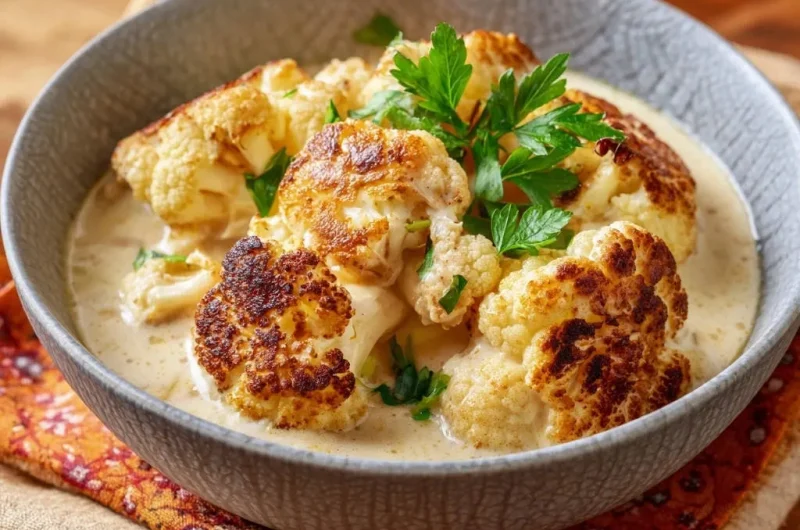
Browned Cauliflower
Course: Side DishCuisine: InternationalDifficulty: easy4
servings15
minutes20
minutes240
kcal35
minutesThis recipe uses a simple searing hack to prevent cauliflower from becoming watery and soggy. Browning the florets first locks in flavor and structure, ensuring a beautifully firm texture. Finished in a rich, creamy sauce, this side dish is guaranteed to impress.
Ingredients
1 large head cauliflower, cut into medium florets
2 tablespoons vegetable oil (or high-heat cooking oil)
2 tablespoons butter
1/2 yellow onion, finely minced
2 cloves garlic, minced
1/2 teaspoon salt, plus more for seasoning
1/4 teaspoon black pepper
1 cup vegetable stock
1/2 cup heavy cream (or half and half)
2 tablespoons fresh parsley, chopped (for garnish)
Directions
- Prepare the Cauliflower Structure: Wash and thoroughly dry the cauliflower florets. This is critical for browning. In a large skillet, heat the vegetable oil over medium-high heat until shimmering. Add the cauliflower florets in a single layer, making sure not to overcrowd the pan. Cook undisturbed for 3 to 4 minutes until a deep golden brown crust forms on the contact side. Toss and continue cooking, reducing the heat slightly, until the florets are browned on multiple sides and have developed a deeply nutty aroma. They should still be firm on the inside. Remove the browned cauliflower from the pan and set aside.
- Build the Sauce Base: Reduce the heat to medium. Add the butter to the same skillet. Once melted, add the minced onion and cook for 3 to 4 minutes until translucent. Add the minced garlic and cook for 60 seconds until fragrant (do not let the garlic burn). Stir in the 1/2 teaspoon of salt and 1/4 teaspoon of pepper.
- Deglaze and Simmer: Pour in the vegetable stock and scrape up any browned bits from the bottom of the pan. Bring the stock to a low simmer and cook for 2 minutes to reduce slightly.
- Finish the Texture: Reduce the heat to low. Stir in the heavy cream until the sauce is smooth and creamy. Return the pre-browned cauliflower florets to the skillet. Gently toss them in the warm sauce for no more than 1 to 2 minutes, just long enough to heat them through without allowing them to simmer down or overcook. The initial searing protects their structure, ensuring they remain firm even when sauced.
- Serve and Garnish: Taste the sauce and adjust seasonings if necessary. Serve immediately, garnished with fresh chopped parsley.
Notes
- Ensure your cauliflower is completely dry before browning for the best crispy edges. Don’t overcrowd the pan when roasting the cauliflower; cook in batches if needed to achieve a beautiful golden-brown color.