
Ever ended up with butternut squash soup that’s more like a watery broth than the thick, comforting bowl you crave? You’re not alone. Most recipes boil the squash, which traps all that excess moisture and dilutes the flavor.
However, roasting changes everything. It evaporates the water naturally, concentrates the natural sugars, and delivers that velvety texture without any thickeners. In addition, the caramelization builds deep, sweet notes that make every spoonful addictive, especially on chilly fall evenings.
The secret lies in tossing the cubes with just a touch of oil and roasting at 400F until they’re caramelized and fork-tender. That step alone prevents the common pitfalls and guarantees creaminess.
For more on roasting squash to achieve that velvety thickness, check out creamy roasted butternut squash soup.
Core Ingredients for Thick Creamy Butternut Squash Soup
Start with one large butternut squash, about 3 pounds, peeled, seeded, and cubed. It forms the base, and roasting it first evaporates its 85% moisture content for natural thickness. Fresh squash beats pre-cubed because it roasts evenly without extra water.
Chopped onion and minced garlic add aromatic depth. They build a savory foundation without overpowering the squash’s sweetness. Meanwhile, 4 cups vegetable stock keeps things pure and light, unlike richer stocks that muddy the flavor.
Butter sautees the aromatics for a nutty base, while heavy cream stirred in at the end creates silkiness without curdling. For vegan swaps, coconut cream works perfectly and retains the thickness. Finally, salt, pepper, and Parmesan top it off with balance.
Butternut Squash Selection and Prep
Pick a firm, heavy butternut squash with smooth skin. It yields about 6 cups cubed, perfect for 4-6 servings. Peel thickly, remove seeds, and cut into 1-inch cubes for even roasting.
Therefore, uniform pieces ensure they caramelize together. A 3-pound squash gives the ideal volume without overwhelming your pot.
Supporting Aromatics and Dairy Elements
One onion and two garlic cloves provide just-right balance. Saute them in 2 tablespoons butter over medium heat. Butter wins over oil here because it browns gently and adds richness.
Heavy cream goes in post-blending. Stir it gently over low heat to emulsify smoothly and avoid separation.
Crouton and Topping Components
Cube 4 slices of sturdy bread like sourdough for croutons. Toss with 2 tablespoons olive oil, salt, and pepper. It crisps up without sogginess.
Freshly grate 1/2 cup Parmesan. It melts beautifully over hot soup, unlike pre-grated which clumps.
Roasting Technique Unlocks Creamy Butternut Squash Soup
Preheat your oven to 400F. Toss the squash cubes with 1 tablespoon olive oil, salt, and pepper on a baking sheet. Roast for 25-30 minutes, flipping halfway, until edges caramelize and it’s very soft.
This dry heat triggers the Maillard reaction, intensifying sweetness and evaporating water. You’ll smell toasty sweetness filling your kitchen. Boiling skips this, leaving soup thin, so don’t shortcut here.
For a similar rich texture, learn how to make creamy roasted tomato soup.
Handle hot trays with mitts. The squash should mash easily with a fork when done.
Sautéing Aromatics Builds Soup Foundation
Melt 2 tablespoons butter in a large pot over medium heat. Add chopped onion and minced garlic. Saute for 5 minutes until softened and fragrant, but not browned.
Scrape any browned bits from the pan. They boost flavor. Use a 4-6 quart pot to avoid overflow later.
Simmering and Blending for Smooth Texture
Add roasted squash and 4 cups vegetable stock to the pot. Bring to a simmer for 10 minutes. Flavors meld as starches release, thickening naturally.
Blend in batches or use an immersion blender until ultra-smooth. Return to the pot, stir in 1/2 cup heavy cream, and heat gently. Test thickness by coating the back of a spoon.
Don’t boil the cream, or it separates. Season with salt and pepper now.
Perfecting Crispy Croutons and Assembly
Toss bread cubes with remaining olive oil, salt, and pepper. Spread on a baking sheet and bake at 400F for 10 minutes until golden. Shake the pan halfway for even crispness.
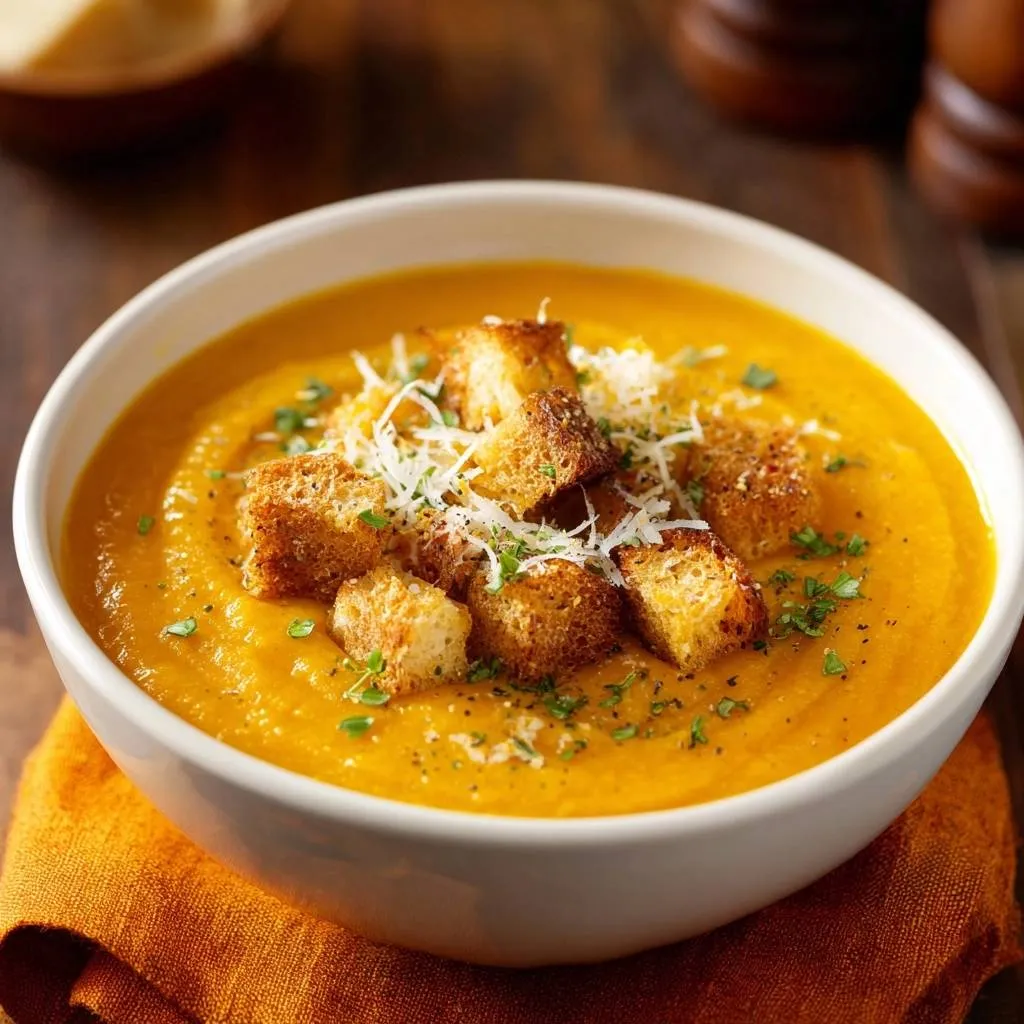
Ladle hot soup into bowls. Top with croutons and grated Parmesan. The crunch contrasts the creaminess perfectly.
Complementary Dishes
Round out your meal with these satisfying options.
- For a hearty addition, try Slow Braised Beef Tips and Creamy Polenta, offering a savory contrast to the sweet squash.
- If you’re leaning towards a lighter, yet still rich, experience, consider the Creamy Tomato Basil Farfalle, which shares a similar comforting texture.
Science of Roasting in Creamy Butternut Squash Soup
Butternut squash holds 85% water. Roasting at 400F drives off moisture, reducing weight by 20-30% and concentrating pectin for natural thickness. No need for flour or cornstarch.
Caramelization breaks down sugars, boosting sweetness. Starches gelatinize for velvety mouthfeel. Steaming or boiling keeps water in, leading to thin soup post-blend.
Compared to acorn squash, butternut’s lower water content shines with this method. It stays thick even after freezing.
Moisture Control Through Dry Heat
Expect 1-1.5 pounds weight loss post-roast. Aim for 200F internal temp for softness without mushiness. Pat dry if needed before blending.
Flavor Compounds from High-Heat Roasting
Maillard reaction creates hundreds of flavor compounds, unlike enzymatic browning in boiling. Aromas develop as sugars react with proteins.
Flavor Variations for Creamy Butternut Squash Soup
Add 1 teaspoon grated ginger with aromatics for warmth. Nutmeg or curry powder, 1/2 teaspoon each, enhance without overpowering. They retain thickness perfectly.
Swap onion for diced apple during saute. It adds subtle tartness. Post-blend, stir in maple syrup for extra sweetness.
For vegan, use coconut milk instead of cream. Sage leaves fried in oil sprinkle on top for earthiness.
Spice and Herb Enhancements
Start with 1/4 teaspoon cinnamon or fresh thyme. Dried herbs are more potent, so use half. Taste after simmering.
Dairy-Free and Sweet Additions
Blend 1/2 cup soaked cashews with water for cream. Roast pears alongside squash for natural sweetness that thickens further.
Make-Ahead and Freezing Creamy Butternut Squash Soup
Cool soup completely before storing. Portion into freezer bags, flattening for space. It freezes up to 3 months without separation thanks to roasting.
Croutons store separately in airtight containers for a week. Scale roasting by using multiple sheets for batches.
Thaw overnight in fridge. Reheat on stovetop gently.
Portioning and Storage Best Practices
Fridge lasts 4 days in airtight containers. Label with date. Stir before reheating.
Reheating Without Texture Loss
Simmer on stovetop over low heat. Blend again if needed for smoothness. Avoid microwave to prevent curdling.
Avoiding Pitfalls in Creamy Butternut Squash Soup
Under-roasting leaves soup watery, so check for caramelization. Over-blending creates foam; pulse instead. Boiling cream curdles it, so heat gently.
Undercooked aromatics taste raw. Saute fully first. Fixes include extra simmer or straining lumps.
Texture Troubleshooting Guide
Watery? Simmer longer uncovered or roast more. Grainy? Strain through a sieve after blending.
Flavor Balance Adjustments
Salt after blending to taste accurately. Add a lemon squeeze if flat for brightness.
Pairing Sides with Creamy Butternut Squash Soup
Crusty bread soaks up the creaminess. Pair with kale chips for extra crunch. Grilled cheese adds gooey contrast.
Sparkling cranberry juice complements the sweetness. For nutrition, add quinoa salad or tofu cubes for protein balance.
Crunchy Complements and Breads
Toasted nuts or seeds beyond croutons amp texture. Sourdough slices dipped in soup shine.
Light Salads and Proteins
Arugula salad with vinaigrette cuts richness. Baked tofu cubes add heartiness without heaviness.
Nutrition in Every Spoonful of Creamy Butternut Squash Soup
One serving packs over 200% daily vitamin A for eye health, plus fiber for fullness. Antioxidants fight inflammation. About 300 calories, low-carb friendly.
Keto? Skip croutons. Paleo uses coconut cream. Customize for balance.
Frequently Asked Questions About Creamy Butternut Squash Soup
Can I Use Pre-Cubed Squash?
Yes, but roast 5-10 minutes longer since it’s often wetter. Check for caramelization and pat dry first. It works but fresh yields better flavor.
Immersion Blender vs. Stand Mixer?
Immersion is safer, no hot liquid transfers, and gets ultra-smooth in the pot. Stand blenders need venting to avoid explosions. Both achieve creaminess if blended fully.
How to Make It Vegan?
Swap butter for olive oil, heavy cream for coconut cream, and skip Parmesan or use nutritional yeast. Roasting keeps thickness; taste holds up beautifully.
Freezer Life and Thawing?
Freezes 3 months in portions. Thaw in fridge overnight, reheat stovetop low. No separation due to low water from roasting.
Scaling for Larger Batches?
Double ingredients, use two sheets for roasting. Need 6-8 quart pot. Roast time stays same; blend in bigger batches.

Butternut Squash Soup
Course: SoupCuisine: AmericanDifficulty: medium4
servings20
minutes45
minutes350
kcal65
MinutesTired of butternut squash soup that turns out thin and flavorless? This foolproof method roasts the squash first to evaporate excess moisture and intensify sweetness, locking in thick, velvety creaminess every time without extra thickeners.
Ingredients
1 large butternut squash (about 3 lbs), peeled, seeded, and cubed
1 onion, chopped
2 garlic cloves, minced
4 cups vegetable stock
1/2 cup heavy cream
2 tbsp butter
Salt and pepper to taste
For croutons: 4 slices bread, cubed
2 tbsp olive oil
1/2 cup grated Parmesan cheese
Directions
- Preheat oven to 400F. Toss squash cubes with 1 tbsp olive oil, salt, and pepper on a baking sheet. Roast for 25-30 minutes until caramelized and very soft. This key step removes natural water content from the squash, preventing watery soup and building deep flavor.
- In a large pot, melt butter over medium heat. Add onion and garlic, saute 5 minutes until softened.
- Add roasted squash and vegetable stock. Simmer 10 minutes to meld flavors.
- Blend in batches until ultra-smooth (use immersion blender for safety). Return to pot, stir in cream, and heat gently. Season to taste. The roasting ensures it stays thick even after blending.
- For croutons: Toss bread cubes with remaining olive oil, salt, and pepper. Bake at 400F for 10 minutes until golden and crisp.
- Ladle soup into bowls, top with croutons and grated Parmesan. Serve hot for perfect contrast.
Notes
- Roasting the squash is the key step to remove natural water content, ensuring a thick, flavorful soup. Use an immersion blender for safe blending.