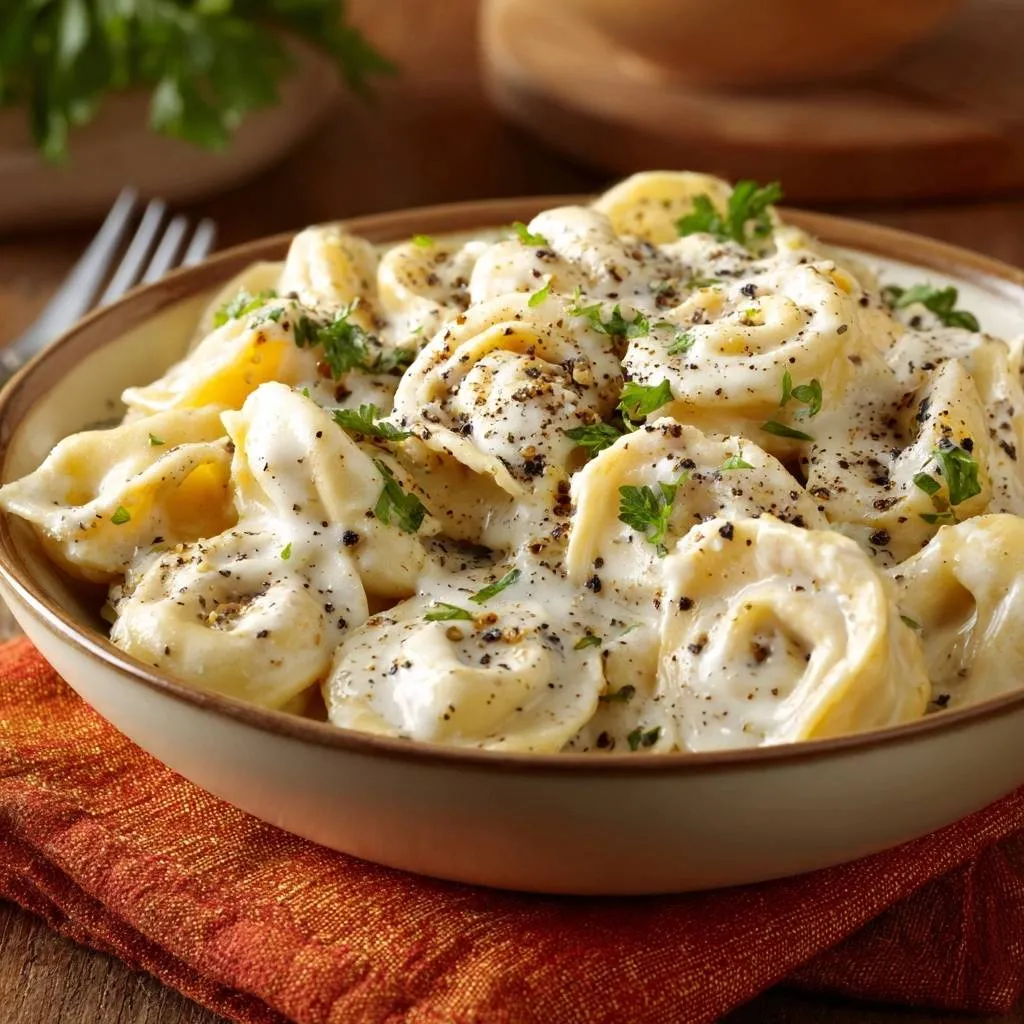
Picture this: ravioli swimming in a watery cream sauce that just won’t cling. You’ve been there, right? But this creamy cheese ravioli changes everything. You’ll have dinner on the table in under 20 minutes, beating takeout every time with a sauce so thick and glossy it coats every ridge perfectly.
Why does it work? Most recipes dump cold cream straight over hot pasta, and it thins out fast. Here, however, we reduce the cream first. That concentrates the flavors into a luxurious base that emulsifies beautifully. In addition, a touch of pasta water binds it all without diluting.
For a similar experience, see how this cream sauce technique also works for creamy garlic orzo.
The real secret? Add the Parmesan off the heat. It melts smoothly into the reduced cream, creating that restaurant-worthy cling. You’ll taste the sharp pepper bite and fresh parsley lift against the creamy richness. Oh man, it’s pure comfort in a bowl.
You can achieve a similar luscious sauce consistency with pan-seared gnocchi.
Why Reduction Transforms Creamy Cheese Ravioli
Reducing cream evaporates its water content first. Therefore, you’re left with concentrated fats and proteins that form a stable, thick base. No more soupy disasters with your creamy cheese ravioli.
Common mistakes happen when folks skip this and pour cold cream over steaming pasta. The sudden heat shocks it, leading to separation. However, simmering gently for 4 to 5 minutes builds body, much like turning stock into a glace.
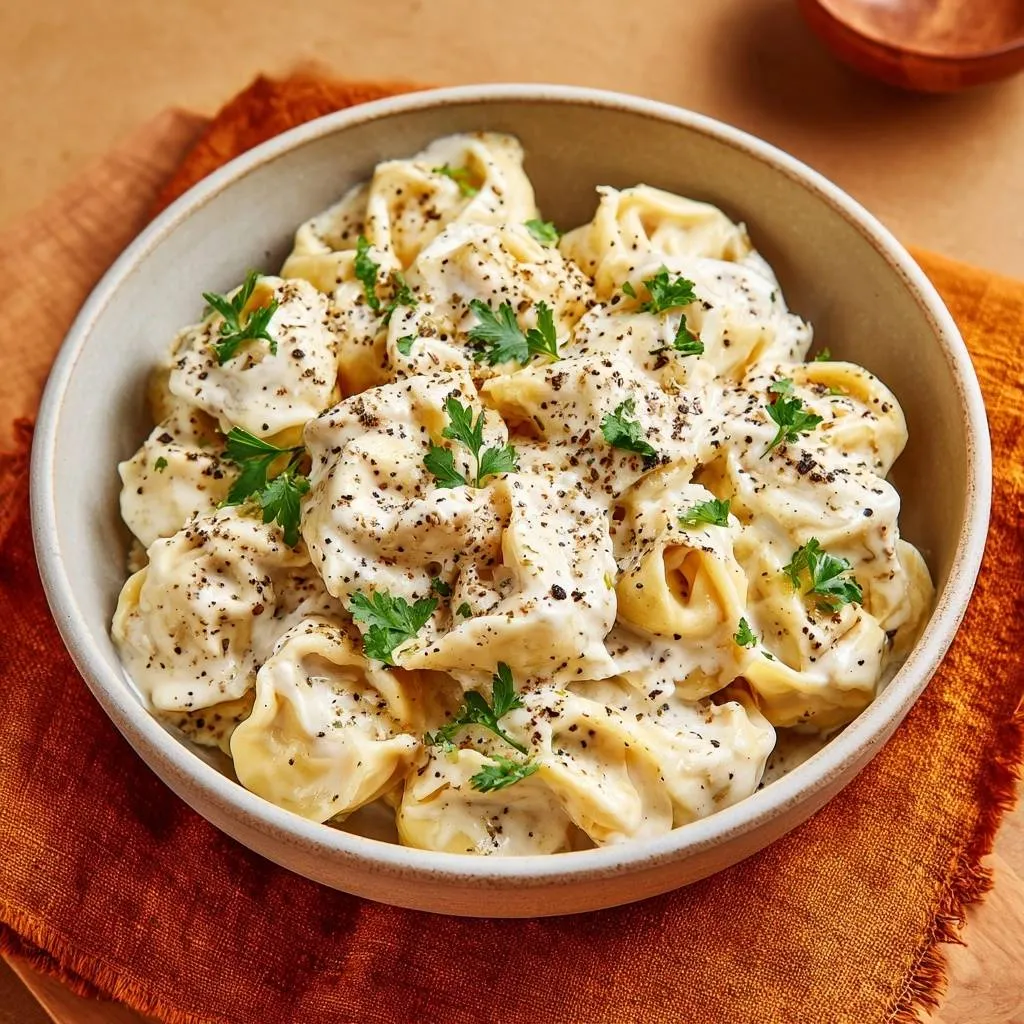
Then comes emulsification. Pasta water’s starch acts like glue, binding the sauce. This technique delivers perfect creamy cheese ravioli every time, with a texture that hugs the pasta instead of pooling below.
Heavy Cream’s Role in Sauce Stability
Heavy cream packs 36 to 40% fat, so it withstands reduction without breaking. Lighter options like half-and-half split easily under heat. Stick with heavy for your creamy cheese ravioli.
Test it yourself: reduce half-and-half and compare. You’ll see why heavy cream wins for that silky hold. In addition, it absorbs pepper flavors deeply during simmering.
Pasta Water’s Emulsifying Power
Starch molecules from boiling pasta give reserved water its magic. They bind cream and cheese into a glossy emulsion. Use just 1 to 2 tablespoons, or it thins out.
Italian pros use this for all pasta sauces. Adapted here, it ensures your creamy cheese ravioli gets even coverage. Too much water? Sauce separates, so measure precisely.
Key Ingredients for Thick Creamy Cheese Ravioli
Start with 9 ounces cheese ravioli, fresh or frozen. It provides the perfect pillow for sauce. Heavy cream, 1 cup, builds the base; its high fat keeps everything stable.
Grated Parmesan, half a cup, delivers umami and melts seamlessly. Freshly ground black pepper, 1 teaspoon, adds bite without overpowering. Chopped parsley, 2 tablespoons, brings freshness at the end.
Salt goes in the pasta water only, to avoid curdling the cream. Grate real Parmigiano-Reggiano for best melt; pre-shredded has starch that clumps. For variation, swap in ricotta salata for tangier creamy cheese ravioli.
Fresh vs Frozen Ravioli Choices
Fresh ravioli cooks in 3 to 5 minutes to al dente, staying firm for sauce grip. Frozen takes 6 to 8 minutes; don’t thaw first. Both work great for creamy cheese ravioli.
Al dente prevents mushiness, so sauce clings better. Brands like Rana hold shape well. Test doneness by biting one; it should resist slightly.
Parmesan Melting Science
Freshly grated Parmesan melts evenly because it lacks anti-caking agents. Add it off heat to prevent clumping in your creamy cheese ravioli. Older cheese sharpens the flavor profile.
Stir until smooth; heat too high toughens proteins. This step ensures velvety texture every time.
Step-by-Step: Building Never-Watery Sauce
You’re 20 minutes from bliss. Use a large pot for boiling to avoid sticking, and a wide skillet for even cream reduction. Let’s dive in; the reduction step is your game-changer.
Pro tip: time everything. Boil water first while prepping cheese. This keeps your creamy cheese ravioli flowing smoothly.
Boil Ravioli to Al Dente Perfection
Bring a large pot of salted water to a rolling boil; use 1 tablespoon salt per quart. Add 9 ounces ravioli. Cook fresh 3 to 5 minutes, frozen 6 to 8, until al dente.
Drain, but reserve exactly 2 tablespoons pasta water. Shake off excess gently; too much moisture ruins creamy cheese ravioli sauce cling. Set aside.
Reduce Cream for Concentrated Base
Pour 1 cup heavy cream into a skillet over medium heat. Add 1 teaspoon black pepper. Simmer 4 to 5 minutes, stirring occasionally, until reduced by half.
Look for thick bubbles and a napé consistency; it coats the spoon. Pepper infuses now without burning. This builds the never-watery base for creamy cheese ravioli.
Emulsify and Coat Ravioli Evenly
Remove skillet from heat. Stir in 1/2 cup grated Parmesan until melted smooth. Add ravioli and 1 to 2 tablespoons pasta water; toss gently.
The sauce emulsifies into a glossy coat. Serve immediately into bowls; garnish with pepper and parsley. Peak creaminess hits right away.
Avoiding Common Creamy Cheese Ravioli Pitfalls
Overcook ravioli, and it turns mushy, shedding sauce. Skip reduction, and cream stays thin. High heat on cheese causes clumps.
Excess pasta water dilutes everything; measure it. Reheating? Sauce breaks. Fixes: al dente timing, reduce first, off-heat cheese, precise water, low oven reheat.
Checklist: salt water generously, stir cream often, toss gently. Follow this for flawless creamy cheese ravioli.
Preventing Sauce Separation
Curdling comes from high heat or acid shocking dairy. Control temperature; reduce on medium, add cheese off heat. Quality cream resists better.
Low-fat dairy splits easier in creamy cheese ravioli. Stick to heavy cream and gentle handling for stability.
Flavor Variations for Creamy Cheese Ravioli
Brighten with lemon zest stirred in post-reduction. Add peas or mushrooms during the last simmer minute; they don’t thin sauce.
Try browned butter drizzle or herb mixes like thyme. For nuts, toast walnuts and sprinkle on top. All keep creamy cheese ravioli thick.
Low-fat tweak: mix heavy cream with a touch milk, but reduce longer. Truffle oil finish elevates without water.
Vegetarian Boosts and Add-Ins
Wilt spinach into reduced cream; it releases minimal water. Roasted veggies like zucchini add heartiness without diluting creamy cheese ravioli sauce.
Nutty finishes, like crushed pistachios, provide crunch. Keep add-ins brief to preserve cling.
Perfect Pairings for Creamy Cheese Ravioli
Crisp whites like sparkling grape juice cut the richness. Pair with arugula salad tossed in balsamic for peppery bite.
Garlic-free focaccia soaks up sauce perfectly. Add grilled chicken on the side for protein balance. Simple plating: bowl with extra pepper swirl.
What else to make?
Round out your meal with these complementary dishes.
- For a fresh vegetable option that cooks to a great crisp, try this crispy parmesan roasted zucchini.
- If you enjoy pasta salads, this Caprese fusilli salad offers bright, fresh flavors that pair well with creamy dishes.
Make-Ahead Creamy Cheese Ravioli Guide
Reduce sauce a day ahead; store airtight in fridge up to 3 days. Boil fresh ravioli day-of for best texture.
Reheat sauce gently in skillet with splash milk; low oven at 300°F for assembled dish avoids separation. Freeze ravioli and sauce separately up to 1 month.
Thaw overnight; reheat slowly for fresh-tasting creamy cheese ravioli. Don’t microwave; it breaks emulsion.
Troubleshooting Creamy Cheese Ravioli Issues
FAQ
How do I store leftovers and can I freeze creamy cheese ravioli?
Store in an airtight container in the fridge for up to 3 days. Reheat gently in a skillet over low heat with a splash of milk to revive creaminess; avoid microwave as it causes separation. Freeze cooked ravioli and sauce separately in freezer bags for up to 1 month; thaw overnight in fridge, then reheat slowly. Sauce freezes well but ravioli texture softens slightly after freezing, so best fresh.
Why did my sauce turn watery?
This happens from skipping reduction or adding too much pasta water. Always simmer cream by half first to concentrate it, and use only 1 to 2 tablespoons water max. If over-thinned, simmer briefly off pasta to thicken, stirring constantly. High-quality heavy cream prevents this too.
Can I substitute ingredients in creamy cheese ravioli?
Swap frozen for fresh ravioli, adjusting cook time. No Parmesan? Use Pecorino Romano for similar melt and sharpness. Half-and-half works but reduce longer and add more cheese for thickness; it has less fat. Avoid low-fat milk entirely as it won’t emulsify properly.
Why did my sauce separate or curdle?
High heat or direct acid shocks dairy proteins. Add cheese off heat after reduction, and use fresh heavy cream. If it starts breaking, whisk vigorously off heat or blend briefly. Temperature control is key for stable creamy cheese ravioli sauce.
How do I scale this for more servings?
Double everything evenly: 18 ounces ravioli, 2 cups cream, 1 cup Parmesan. Use a larger pot and skillet to avoid crowding. Reduction time stays 4 to 5 minutes; pasta water scales to 3 to 4 tablespoons. Tastes just as good for 4 people.
Sauce too thick, what now?
Add reserved pasta water 1 teaspoon at a time while tossing over low heat. Warm cream splash works too. It should coat ravioli lightly without pooling; glossy is the goal for creamy cheese ravioli.
Cheese Ravioli
Course: Main CourseCuisine: ItalianDifficulty: easy2
servings5
minutes15
minutes650
kcal20
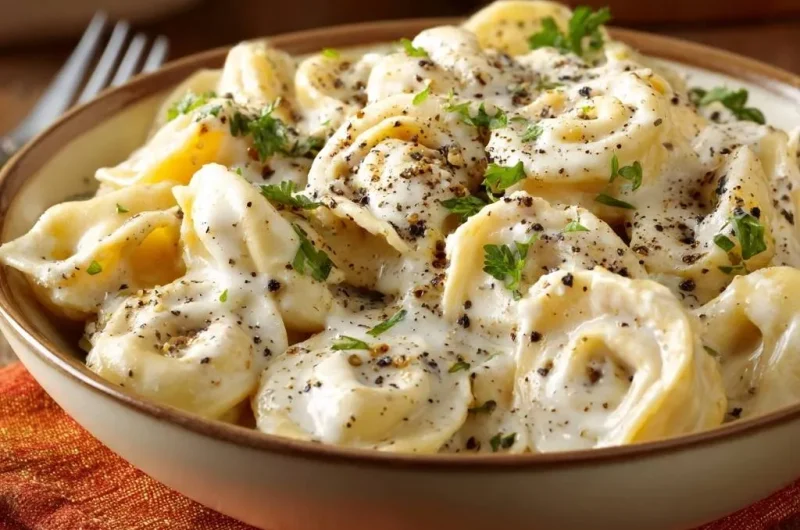
MinutesTired of cream sauces turning thin and soupy over your ravioli? This recipe fixes it with one key technique: reducing the cream first and emulsifying with minimal pasta water for a thick, clinging sauce that stays perfect.
Ingredients
9 ounces cheese ravioli (fresh or frozen)
1 cup heavy cream
1/2 cup grated Parmesan cheese
1 teaspoon freshly ground black pepper, plus more for garnish
2 tablespoons chopped fresh parsley
Salt to taste
Directions
- Bring a large pot of salted water to a boil. Add ravioli and cook according to package directions until al dente, about 3 to 5 minutes for fresh or 6 to 8 for frozen. Drain, reserving 2 tablespoons pasta water. Set ravioli aside.
- In a large skillet over medium heat, pour in heavy cream and add black pepper. Bring to a simmer and reduce by half, stirring occasionally, for 4 to 5 minutes. This is the game-changer for never watery sauce: the reduction concentrates the cream into a thick base that wont dilute.
- Remove skillet from heat. Stir in grated Parmesan until fully melted and smooth. Add drained ravioli to the skillet along with 1 to 2 tablespoons reserved pasta water. Gently toss to coat evenly, letting the sauce emulsify and cling without thinning out.
- Divide into bowls, garnish with extra black pepper and chopped parsley. Serve immediately for peak creaminess.
Notes
- Use fresh or frozen cheese ravioli. The key to non-watery sauce is reducing the cream by half before adding cheese and pasta.