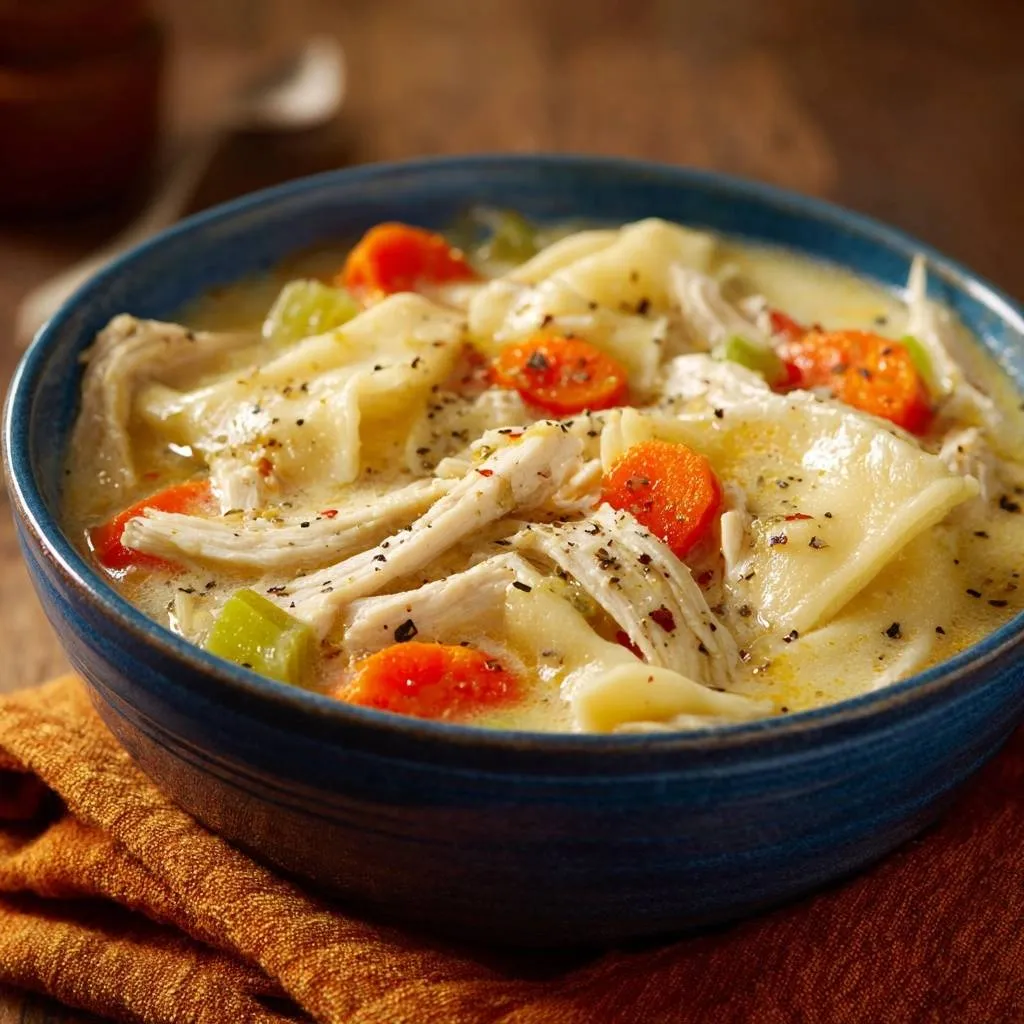
Nothing ruins creamy chicken noodle soup faster than mushy noodles the next day. You’ve got that perfect pot simmering, but leftovers turn into a gummy mess. This recipe changes everything with one smart move: cook the noodles separately to al dente, then add them at the end.
Here’s why it works so well. Noodles soak up broth overnight, releasing starch that thickens things but wrecks texture. However, by boiling them solo and rinsing cold, they stay firm and slurp-worthy every time. You’ll get that restaurant-quality creamy chicken noodle soup without the disappointment.
For a similar smooth texture, try this classic chicken noodle soup when you’re craving comfort.
The real secret? That quick cold rinse after draining stops the cooking instantly. It locks in the noodle’s structure, so even after a fridge stint, they hold up. Trust me, this trick has saved countless batches from the trash.
Why Creamy Chicken Noodle Soup Demands Separate Noodle Cooking
Broth Absorption: The Mushy Noodle Culprit
Noodles release amylopectin, a starch that swells in liquid. When cooked in soup, it thickens the broth beautifully at first. However, overnight, that same starch turns gummy as it keeps absorbing.
This recipe sidesteps it completely. Cook noodles al dente separately, and they preserve their structure. In addition, the cold rinse halts gelatinization, keeping your creamy chicken noodle soup textured right.
Simple kitchen chemistry proves it: less starch migration means firmer bites. No more soggy disasters.
Texture Contrast in Every Bite
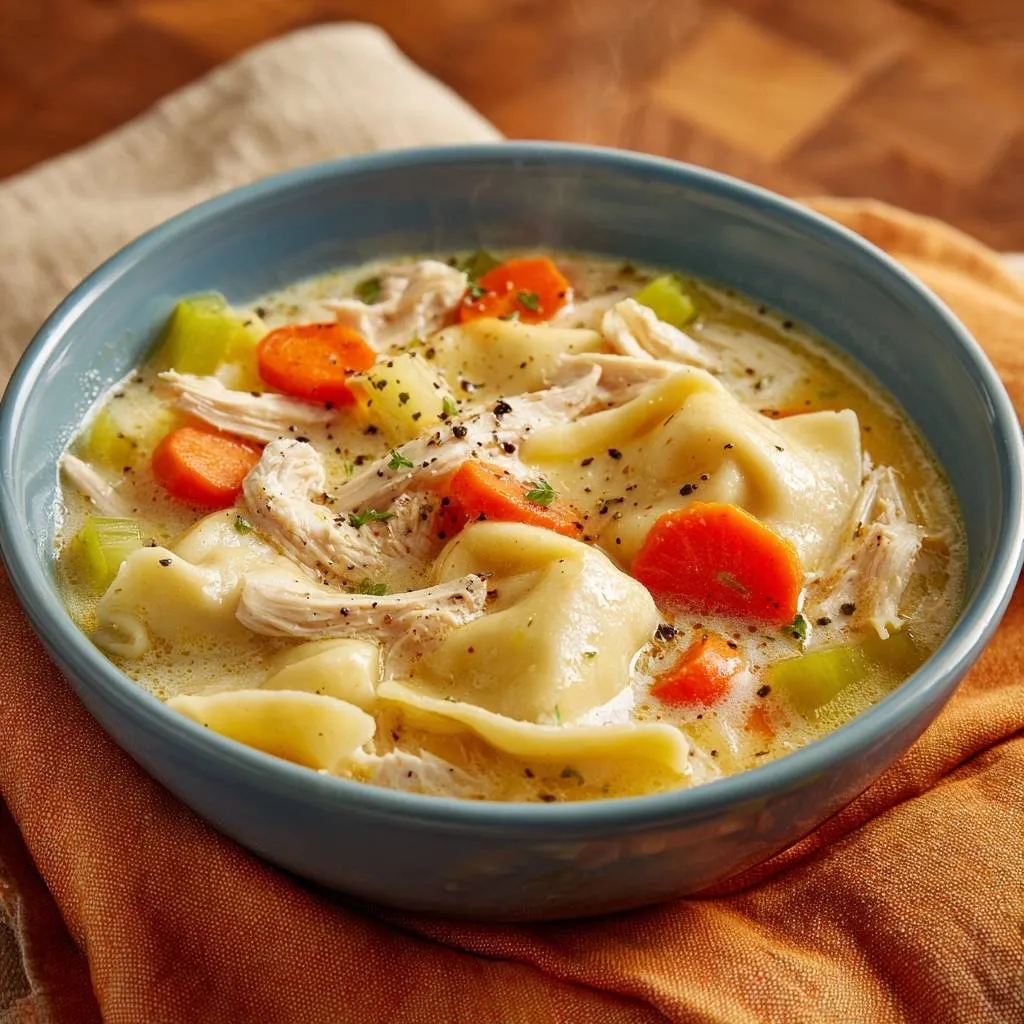
Picture firm noodles slurping against velvety, creamy chicken noodle soup texture. That contrast makes every spoonful craveable. Restaurant versions nail this, and now you can too.
The cold rinse step is key here. It shocks the noodles, preventing further softening. Therefore, you get that satisfying chew amid the smooth broth.
It’s pure comfort with bite.
Key Ingredients for Flawless Creamy Chicken Noodle Soup
Shredded Chicken Breast Choices
Go for shredded cooked chicken breast because it’s low-fat and lets the cream shine without grease. Rotisserie works great for convenience, or use poached for control. You’ll need about 2 cups, roughly one large breast.
This adds 30g protein per serving. In addition, it heats quickly without drying out. Perfect for weeknight creamy chicken noodle soup.
Vegetable Base: Carrots and Celery Precision
Slice carrots and celery to 1/4-inch for even cooking in your creamy chicken soup vegetables. They bring crunch that balances the cream. Fresh beats frozen for brighter flavor and firmer texture.
Simmer them just right, and you get sweet earthiness without mush. However, cut uniform so nothing overcooks.
Dairy and Broth Balance
Whole milk gives rich creaminess without half-and-half’s heaviness. Pair it with low-sodium chicken broth to control salt. Red pepper flakes add subtle heat that black pepper alone can’t match.
Salt late in the game; it sharpens flavors without dulling them. Therefore, your broth stays balanced and inviting.
Wide Egg Noodles: The Ideal Pasta Pick
Wide egg noodles cling to sauce better than spaghetti thanks to more surface area. Cook to al dente in 6-7 minutes. For gluten-free, swap rice noodles but watch timing.
They hold up perfectly in this method. In addition, their chew elevates the whole dish.
Equipment Essentials for Creamy Chicken Noodle Soup Success
Two-Pot Method: Why It Prevents Disaster
Use a large Dutch oven for the soup base; it distributes heat evenly for gentle simmers. A separate pot for noodles gives total control over doneness. Lids trap steam without boiling over.
This setup avoids mush entirely. However, if you like it chunkier, skip the immersion blender.
Pro tip: two pots mean no compromises on texture.
Prep Tools for Speed and Precision
A mandoline ensures uniform veggie slices for quick, even cooking. Keep milk under 180°F with an instant-read thermometer to prevent curdling. Set up a colander with cold water ready for noodle rinse.
These tools cut prep time in half. Therefore, dinner’s ready fast.
Mastering the Creamy Chicken Noodle Soup Build
Phase 1: Vegetable Broth Foundation
Bring 4 cups chicken broth to a boil in a large pot over medium-high. Add 1 cup sliced carrots and 1 cup celery. Reduce to medium, simmer 10 minutes until tender-crisp.
Look for fork-pierce ease but no mush; you’ll smell sweet veggies releasing aroma. This builds your flavorful base. However, don’t rush; timing keeps crunch.
Pro tip: taste broth here for seasoning foundation.
Phase 2: Introducing Chicken and Cream
Stir in 2 cups shredded chicken, 2 cups milk, 1 teaspoon black pepper, 1/2 teaspoon red pepper flakes, and salt. Simmer gently on medium-low for 5 minutes. Avoid boiling to keep milk proteins stable.
The cream thickens as flavors meld, creating that velvety feel. In addition, slow heat emulsifies everything smoothly. Watch for steam, not bubbles.
Phase 3: Al Dente Noodle Perfection
In a separate pot, boil wide egg noodles in salted water (1 tbsp salt per 4 quarts) for 6-7 minutes. They should have bite resistance. Drain, then rinse briefly under cold water.
This stops cooking and rinses excess starch, preventing gumminess. Therefore, noodles stay firm even in leftovers. Shake dry before adding.
It’s the game-changer for creamy chicken noodle soup.
Final Assembly and Seasoning Tweaks
Stir drained noodles into the soup just before serving for even distribution. Taste; the noodles absorb a bit of flavor instantly. Adjust salt and pepper.
Serve hot at 160°F internal for safety and comfort. Fresh herbs or lemon zest brighten it up. Perfect bowl every time.
The Science of Non-Curdling Creamy Broth
Milk Protein Stability Under Heat
Milk’s casein proteins denature at boiling temps, causing curds. Veggies can add slight acidity, worsening it. However, gentle simmering below 180°F keeps them stable and emulsified.
This beats roux-based soups that need extra fat. In addition, slow heat builds creaminess naturally. No lumps, just silkiness.
Pro tip: if worried, warm milk first separately.
Spice Integration for Depth
Pepper dissolves better in the milk’s fat than plain water. Bloom red pepper flakes early for even heat. Salt enhances everything by boosting flavor perception.
Add spices with the milk for full infusion. Therefore, depth hits every bite.
Avoiding Creamy Chicken Noodle Soup Pitfalls
Overcooking Noodles: Spot the Signs
Test al dente by biting for slight resistance. If soft, they’ve gone too far. For leftovers, rinse again before reheating.
Prevention is separate cooking. However, revival works in a pinch.
Curdled Cream Fixes
Blender plus cornstarch slurry rescues curds by re-emulsifying. Prevent with temp checks under 180°F and gradual milk addition. Slow wins here.
No boil, no problem.
Flavor Imbalance Corrections
Bland? Add umami like mushroom powder. Too spicy? Dilute with more milk. Taste iteratively.
Balance comes easy with tweaks.
Flavor Variations for Creamy Chicken Noodle Soup
Herb-Infused Twists
Stir in thyme or dill during simmer for herbed creamy chicken noodle soup vibes. Lemon zest at the end adds brightness. These lift the comfort level.
Fresh herbs keep it lively. In addition, they pair perfectly with cream.
Protein and Veggie Swaps
Swap chicken for turkey or tofu. Add mushrooms or spinach for earthiness. Always keep noodles separate.
These changes refresh the dish. However, texture stays flawless.
Spice Level Adjustments
Mild? Skip flakes. Fiery? Add cumin or paprika. Adjust to your heat love.
Easy personalization.
Make-Ahead and Storage for Creamy Chicken Noodle Soup
Component Separation Strategy
Store soup base in fridge up to 4 days airtight. Keep cooked noodles separate up to 3 days. Reheat base gently, then stir in rinsed noodles.
This preserves firmness. In addition, it makes weeknight meals snap.
Freezing Guidelines
Freeze soup base in portions up to 3 months; skip noodles. Thaw overnight, simmer to heat. Add fresh-cooked noodles.
No texture loss this way.
Perfect Pairings for Creamy Chicken Noodle Soup
Crusty Bread Companions
Sourdough’s tang sopps up broth best. Baguette adds crisp shatter. Warm it for max comfort.
Essential dunking partner.
Salad and Veggie Sides
Crisp greens cut the richness. Pickles bring tang contrast. Light and balancing.
Perfect foil to cream.
Troubleshooting Creamy Chicken Noodle Soup Issues
Soup Too Thin? Thickening Hacks
Reduce on low or whisk in cornstarch slurry. Noodle starch helps too. Simmer 5 more minutes.
Noodles Still Softening? Revival Steps
Store separate, rinse before reheating. Quick boil revives bite. Works overnight.
Broth Lacking Depth? Fixes
Upgrade to bone broth. Boost with aromatics like garlic. Simmer longer.
Vegetables Overcooked? Prevention
Uniform 1/4-inch slices, 10-minute max simmer. Test tenderness early.
FAQ
How do I store leftovers of Creamy Chicken Noodle Soup?
Keep the soup base and noodles separate in airtight containers. The base lasts 4 days in the fridge; noodles up to 3 days. Reheat base gently on stovetop to 165°F, rinse noodles under cold water, then stir in. This keeps noodles firm. Freezing works for base only in portions up to 3 months; thaw overnight and avoid refreezing noodles as they get mushy.
Why did my noodles turn mushy anyway?
The top mistake is cooking them in the soup from the start. They absorb broth and starch releases overnight, turning gummy. Fix it by always boiling separately to al dente (6-7 minutes), draining, and cold-rinsing immediately. For already mushy ones, revival rinse helps but prevention is key. Test doneness by firm bite before draining.
Can I substitute ingredients in Creamy Chicken Noodle Soup?
No chicken? Use turkey, tofu, or chickpeas for protein. Swap whole milk for 2% or plant-based like oat milk, but warm it first to avoid curdling. Gluten-free? Rice or chickpea noodles work; adjust cook time to 5-6 minutes al dente. Veggies flexible too: add spinach or zucchini, but keep slices uniform for even cooking.
Why did my cream curdle in the soup?
Boiling shocks milk proteins into clumps, especially with acidic veggies. Prevent by simmering gently under 180°F after adding milk, and stir in warmed milk gradually. If it happens, blend smooth with a cornstarch slurry (1 tsp cornstarch in 1 tbsp water). Slow heat emulsifies perfectly every time.
How do I make Creamy Chicken Noodle Soup thicker?
Simmer uncovered to reduce, or stir in a slurry of 1 tbsp cornstarch mixed with 2 tbsp cold milk. Noodles release some starch too when added last. Avoid flour balls by always mixing slurry cold first. For creamier, use half-and-half but watch heat.
Can I make Creamy Chicken Noodle Soup in advance for a crowd?
Yes, prep base up to 2 days ahead and fridge. Cook noodles fresh or store separate. Scale up broth and ingredients proportionally; use bigger pots for even heat. Reheat in batches to maintain creaminess and noodle texture. Freezes great for base, so plan portions.
Chicken Noodle Soup
Course: Main CourseCuisine: AmericanDifficulty: easy4
servings15
minutes25
minutes350
kcal40
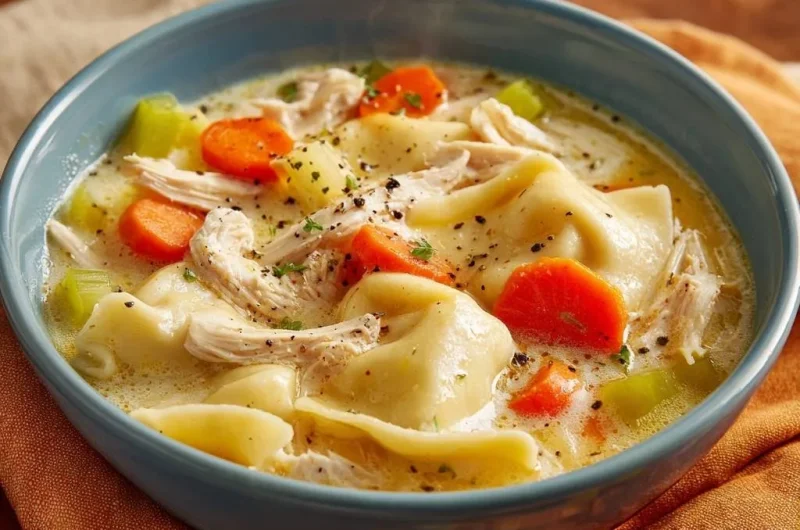
MinutesTired of chicken noodle soup where the noodles turn to mush after one day in the fridge? This recipe fixes that forever with one simple trick: cook the noodles separately to al dente perfection, then stir them in at the very end. They stay firm and slurp-worthy every time, even for leftovers.
Ingredients
2 cups shredded cooked chicken breast
2 cups wide egg noodles
1 cup sliced carrots
1 cup sliced celery
4 cups chicken broth
2 cups milk
1 teaspoon black pepper
1/2 teaspoon red pepper flakes
Salt to taste
Directions
- In a large pot, bring chicken broth to a boil over medium-high heat. Add sliced carrots and celery. Reduce heat to medium and simmer for 10 minutes until vegetables are tender but still crisp.
- Stir in shredded chicken, milk, black pepper, red pepper flakes, and salt. Simmer gently for 5 minutes to heat through and build creamy flavor. Do not boil to avoid curdling.
- Meanwhile, in a separate pot, cook egg noodles in boiling salted water for 6-7 minutes until al dente (just tender, not soft). Drain immediately and rinse briefly under cold water to stop cooking. This is the key step that locks in perfect noodle texture, preventing them from absorbing broth and getting mushy.
- Stir the drained noodles into the soup right before serving. Taste and adjust seasoning. Serve hot for the ultimate comforting bowl with noodles that hold up beautifully.
Notes
- Do not boil the soup after adding milk to avoid curdling. Rinse noodles under cold water after draining to stop cooking and prevent mushiness.