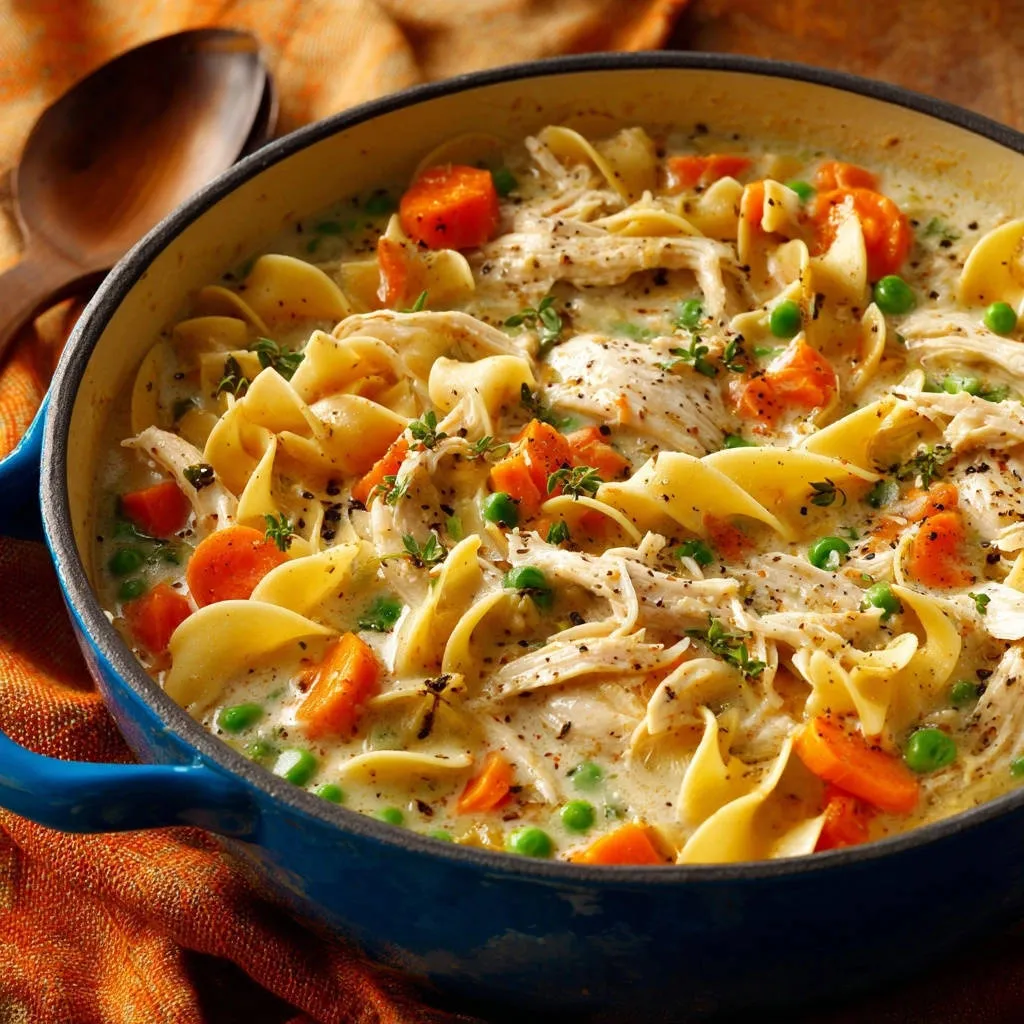
Finding the perfect texture in a classic Creamy Chicken Noodle Stew is often a frustrating balancing act; one moment the sauce is creamy, and the next, the noodles have absorbed everything into a starchy glue.
As a recipe expert, I developed a simple but powerful technique-the “texture lock”-that guarantees beautifully firm, tender noodles and a perfectly consistent, rich broth, every single time.
This hearty stew is the ultimate comfort food, providing maximum flavor and velvety results without the common pitfalls.
Solving the Noodle Nightmare: Why This Stew Stays Perfect
The Crucial “Texture Lock” Technique Explained
The secret lies in par-cooking the wide egg noodles separately to about 75% doneness before introducing them to the final stew.
By removing the noodles from the boiling water early, we prevent the major release of starches into the sauce, which is the primary cause of gluey consistency and over-thickening.
The residual heat of the finished stew base gently cooks the noodles the rest of the way, locking in their ideal texture while preventing starch breakdown.
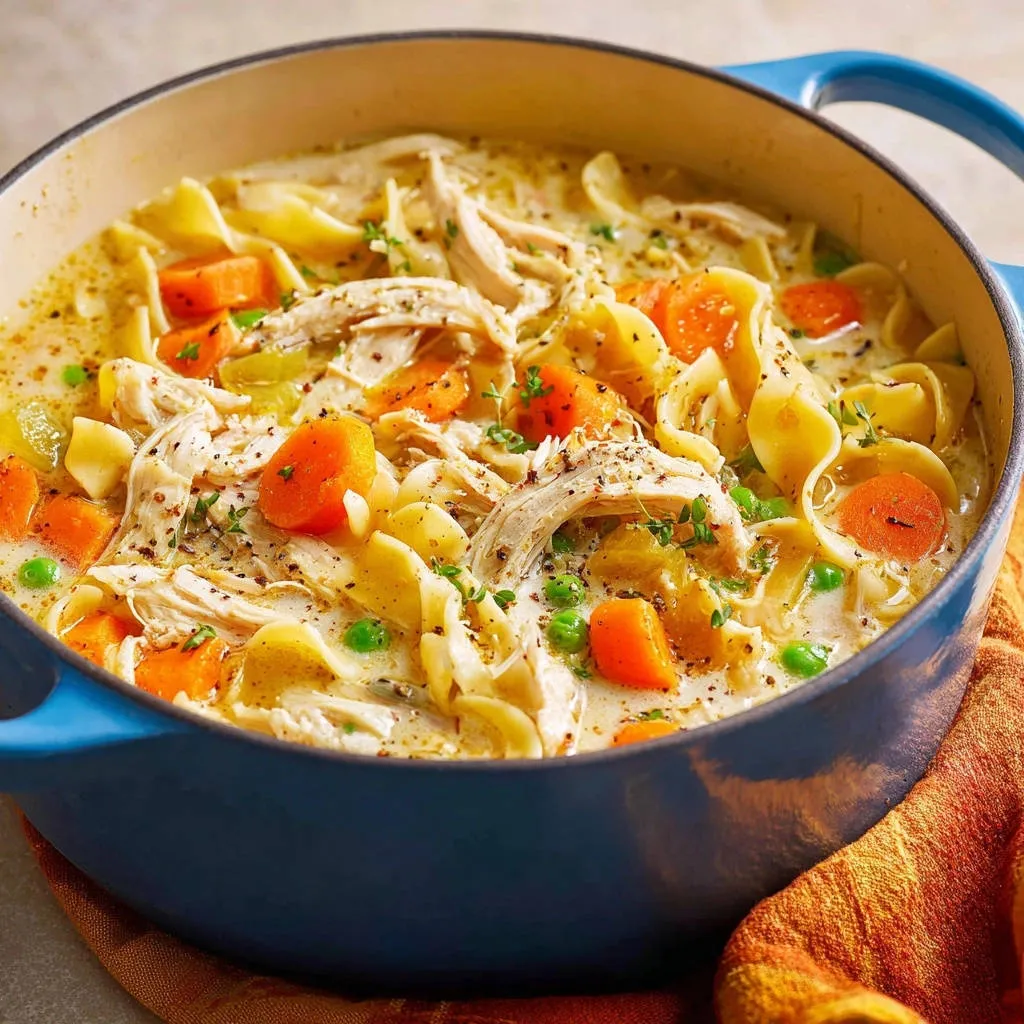
Speed and Simplicity: Leveraging Rotisserie Chicken
Utilizing pre-shredded rotisserie chicken transforms this recipe into a highly efficient weeknight staple meal.
There is no need to poach or bake chicken separately, cutting the active cooking time down significantly while still adding robust flavor to the Creamy Chicken Noodle Stew.
A Broth Base That’s Rich, Not Heavy
The foundation relies on low-sodium chicken broth, which provides deep savory notes without the overwhelming density of pure cream.
We finish the broth with half-and-half, achieving that perfect velvety texture and optimal richness that satisfies without feeling greasy or overly dense.
The Foundation of Flavor: Essential Ingredients Breakdown
Securing the Sauce Base: Mastering the Roux
The simple two-tablespoon combination of butter and all-purpose flour forms the roux, which acts as the essential stabilizing and thickening agent for our stew base.
For that same velvety sauce magic, check out this creamy chicken noodle casserole.
Whisking the roux for exactly one minute ensures the starches are fully cooked out, preventing a raw flour taste while maintaining a light, pale color.
Choosing the Right Dairy: Half-and-Half vs. Whole Milk
Half-and-half provides a beautiful balance of richness; it gives a satisfying mouthfeel without making the broth excessively heavy like full heavy cream might.
Crucially, once the dairy is incorporated, the stew must only simmer gently and must never reach a rolling boil, as high heat can cause the fat and proteins to separate or curdle.
The Pasta Profile: Wide Egg Noodles Only
Wide egg noodles are the classic, preferred choice for this Creamy Chicken Noodle Stew due to their robust structure and ability to absorb the sauce without disintegrating.
Their broad surface area ensures they cook evenly during the crucial par-boiling stage and integrate perfectly into the final thickened broth.
The Par-Cooking Secret: Step-by-Step Stew Perfection
Preparing the “Noodle Insurance” (Step 1)
Bring a large pot of heavily salted water to a vigorous boil. Add the 12 ounces of wide egg noodles and set a timer immediately.
Cook the noodles for precisely 4 minutes-they must be significantly firm and chewy (about 75% cooked) when the timer sounds.
Drain the noodles immediately and set them aside. This rapid draining is critical for stopping the cooking process and preventing excess starch release.
Building the Flavor Base and Softening Carrots (Step 2)
Heat the olive oil in a large Dutch oven or heavy pot over medium heat, ensuring the pot is fully warmed before adding the vegetables.
Add the chopped carrots and sauté for 5 to 7 minutes; you are looking for them to just begin softening but still retain a slight bite in the center.
Mastering the Flavor Building Roux (Step 3 & 4)
Reduce the heat to medium-low, add the butter, and once melted, sprinkle the flour over the butter and whisk constantly.
Continue whisking for 60 seconds to cook out the raw starch flavor, creating a pale roux base for the creamy broth.
Slowly pour in the chicken broth while vigorously whisking to ensure the roux dissolves fully and prevents any lumps from forming in the sauce.
Increase the heat to bring the sauce to a low simmer, stirring frequently, and cook for about 5 minutes until the broth begins to visibly thicken slightly.
Integrating the Cream, Chicken, and Seasoning Gently (Step 5)
Reduce the heat to the lowest setting possible. Stir in the half-and-half, shredded cooked chicken, dried thyme, salt, and pepper.
Allow the stew to simmer gently for exactly 3 minutes, which is just enough time for the flavors to fully marry and the chicken to heat through.
Monitor the pot closely; it is critical that the mixture does not come to a full, rolling boil after the dairy has been introduced, as this guarantees a smooth texture.
The Final Texture Lock Integration (Step 6 & 7)
Once the sauce is velvety and the carrots are tender, turn the heat completely off-this is the final critical maneuver.
Gently fold the par-cooked, drained egg noodles and the frozen peas into the hot stew base, ensuring they are evenly distributed throughout the dish.
The contained residual heat will fully finish cooking the par-cooked noodles to perfection and warm the peas without breaking down the noodle structure or over-starched the sauce.
Serve the Creamy Chicken Noodle Stew immediately, garnished with fresh thyme and a generous crack of black pepper.
Beyond the Recipe Card: Pro Tips and Flavor Twists
Preventing a Broken or Curdled Sauce
Always ensure your dairy (half-and-half) is at room temperature before adding it to the hot broth to prevent temperature shock, which leads to separation.
If the sauce looks like it’s splitting, vigorously whisk in a tablespoon of cold water mixed with one teaspoon of cornstarch (a slurry) off the heat to emulsify it quickly.
Vegetable Variations and Upgrades
For deeper aromatics, sauté finely chopped celery alongside the carrots for the initial 5-7 minutes.
Try adding sliced cremini mushrooms during the sauté step for an earthy flavor, or wilt in fresh baby spinach leaves just before the final serving for a nutritional boost.
Aromatic Enhancement: Fresh Herbs vs. Dried
Dried thyme works perfectly for cooking down into the broth, but for a brighter flavor, swap it for fresh rosemary or parsley.
If using fresh herbs, chop them finely and stir them in only at the very end of cooking or use them as a beautiful final garnish.
Make It Thicker (or Thinner)
If you prefer a thicker stew, mix 1 teaspoon of cornstarch with 2 teaspoons of cold water, stir it into the simmering broth before adding the dairy, and cook until it visibly thickens.
If the stew is too thick, simply whisk in a splash more low-sodium chicken broth until the desired fluid consistency is achieved.
Essential Equipment for the Best Results
A heavy-bottomed Dutch oven is highly recommended for this recipe because it distributes heat evenly and retains residual heat efficiently.
This steady, contained heat is crucial for finishing the par-cooked noodles without requiring additional stove heat that could compromise the delicate dairy sauce.
Troubleshooting and Making Creamy Chicken Noodle Stew Ahead
Why Did My Stew Turn Into Sludge Overnight? (Storage and Starch)
Even par-cooked noodles will inevitably continue to absorb liquid as the stew cools down in the refrigerator, leading to a much thicker, sludgier texture the next day.
For superior leftovers, always store the cooked noodles separately from the creamy stew base, combining them only when ready to reheat and serve.
Storage, Freezing, and Reheating Best Practices
Store leftovers in an airtight container in the refrigerator for up to 3 days. Freezing is not generally recommended for dairy-based stews, as the sauce may separate or become grainy upon thawing.
To reheat, do so low and slow on the stovetop or in the microwave, ensuring you stir in 1/2 cup to 1 cup of fresh chicken broth or water to restore the proper consistency.
Frequently Asked Questions About Creamy Chicken Noodle Stew
Can I Use Different Noodles?
While wide egg noodles provide the best texture, you can substitute smaller pasta shapes like rotini, small shells, or ditalini if necessary.
Regardless of the shape chosen, you must still adhere to the critical step of par-cooking them separately to prevent starch overload in the broth.
Is There a Gluten-Free Option for the Roux?
Absolutely. You can easily replace the all-purpose flour in the roux with an equal amount of high-quality cup-for-cup gluten-free flour blend.
Alternatively, thicken the stew at the end by stirring in a cornstarch and water slurry instead of relying on the traditional wheat flour roux.
How to Make This Recipe Vegetarian?
Swap the chicken broth for robust vegetable broth or a rich mushroom stock to maintain depth of flavor.
Replace the shredded chicken with hearty cooked chickpeas, great northern beans, or a mix of roasted mushrooms and cauliflower florets.
Warm Hugs in a Bowl: Serving Your Creamy Chicken Noodle Stew
Perfect Pairings: What to Serve Alongside Your Stew
The rich, savory nature of this stew pairs beautifully with simple, textural accompaniments that offer a light counterpoint.
Always serve alongside thick slices of crusty sourdough or French bread for dipping, or lighten the meal with a crisp side salad dressed simply with vinaigrette.
Say goodbye to disappointing, gluey dinners and enjoy this foolproof method for creating the definitive Creamy Chicken Noodle Stew.
Try this recipe tonight and experience the velvety perfection that only the “texture lock” technique can deliver!
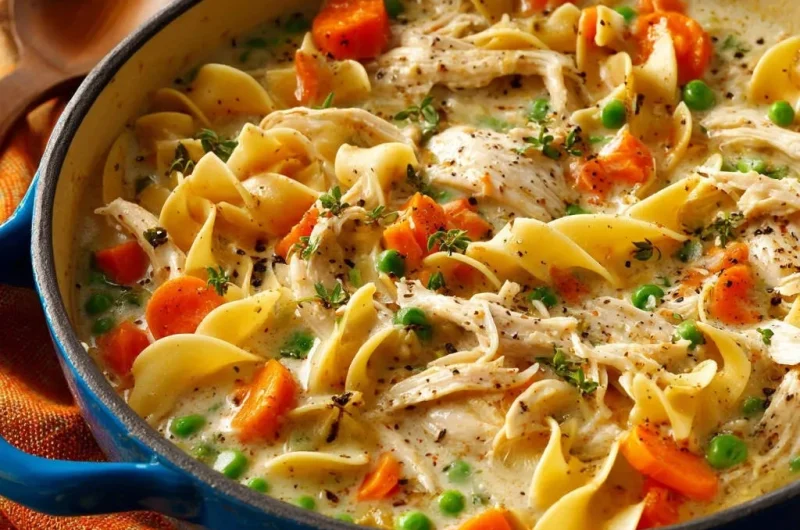
Chicken Noodle Stew
Course: Soups-StewsCuisine: AmericanDifficulty: easy4
servings15
minutes20
minutes650
kcal35
minutesSay goodbye to gluey, over-starched noodles! This classic Creamy Chicken Noodle Stew uses a simple technique—par-cooking the noodles separately—to ensure a creamy sauce and perfectly textured noodles every time. This is comfort food redefined.
Ingredients
1 tablespoon olive oil
1 cup chopped carrots
1 cup frozen peas
2 tablespoons butter
2 tablespoons all-purpose flour
4 cups chicken broth, low sodium
1 cup half-and-half (or whole milk)
2 cups shredded cooked chicken (rotisserie is perfect)
1 teaspoon dried thyme
1 teaspoon kosher salt
1/2 teaspoon black pepper, plus more for garnish
12 ounces wide egg noodles
Directions
- Prepare the Noodle Insurance: Bring a separate large pot of salted water to a boil. Add the egg noodles and cook them for exactly 4 minutes, significantly less than the package directions (they should be quite firm or 75% done). Drain immediately and set aside. This is the crucial step to prevent them from breaking down later.
- Build the Base: In a large Dutch oven or pot, heat the olive oil over medium heat. Add the chopped carrots and saute for 5 to 7 minutes until they just begin to soften.
- Create the Roux: Reduce the heat to medium-low. Add the butter to the pot and let it melt. Sprinkle in the flour and whisk constantly for 1 minute to create a pale roux.
- Whisk in Liquid: Slowly pour in the chicken broth, whisking constantly to ensure no lumps form. Bring the mixture to a low simmer, stirring occasionally, and cook for about 5 minutes until the sauce has thickened slightly.
- Add Cream and Seasoning: Reduce the heat to low. Stir in the half-and-half, shredded chicken, dried thyme, salt, and pepper. Let the stew simmer gently for 3 minutes to allow the flavors to combine. Do not allow the mixture to come to a rolling boil after adding the dairy.
- Final Noodle Integration (The Texture Lock): Once the sauce is complete and the carrots are tender, turn the heat off. Gently fold the par-cooked, drained egg noodles and the frozen peas into the hot stew base. The residual heat from the sauce will finish cooking the noodles to the perfect texture and warm the peas without causing the noodles to break or the sauce to over-thicken from excess starch.
- Serve immediately, garnished with fresh thyme and extra black pepper. This method ensures your noodles are perfect from the first bite to the last.
Notes
- The key to this recipe is the ‘Noodle Insurance’ step: cook the egg noodles for only 4 minutes, draining them immediately before adding them to the hot (but not boiling) sauce at the end.