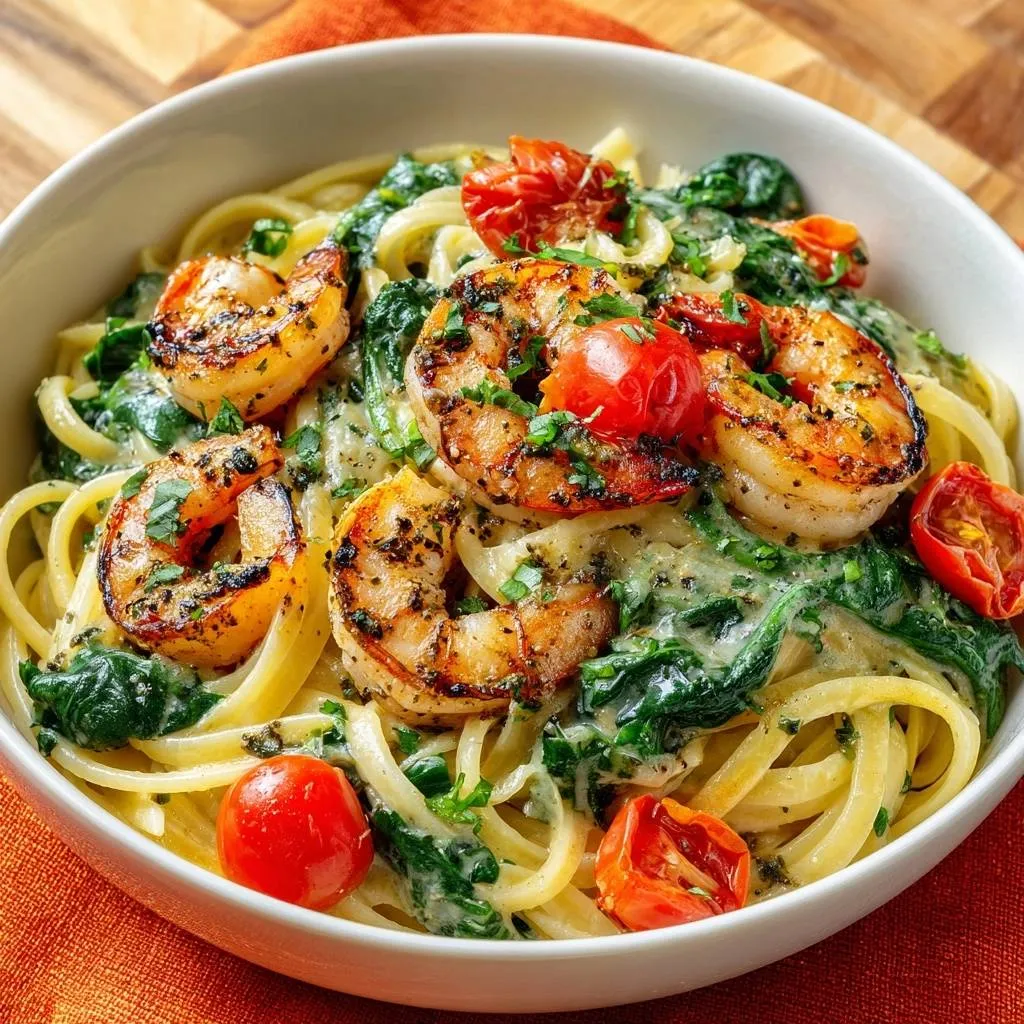
Why This Creamy Garlic Shrimp Pasta Transforms Weeknight Dinners
Picture this: juicy, charred shrimp that pop with every bite, nestled in a silky garlic cream sauce alongside wilted spinach and blistered tomatoes that burst sweetness right on your fork. You’ve battled rubbery shrimp in pasta before, right? This recipe fixes that fast with a high-heat sear and precise timing, delivering restaurant-quality results in under 30 minutes.
For a similar citrusy shrimp delight, explore this creamy lemon shrimp tortellini.
So why does it work so well? The trick locks in moisture while building that craveable crust, and the roasted tomatoes add a smoky depth that elevates the whole dish. You’ll wonder why you ever settled for takeout.
Here’s the pro tip that seals it: pat those shrimp bone-dry before searing. That simple step stops steaming and starts sizzling, guaranteeing tender results every time.
Key Ingredients for Juicy Shrimp and Silky Sauce
Start with 8 ounces of linguine pasta; it holds the creamy sauce better than thinner noodles. Then grab 1 pound of large shrimp, peeled and deveined, because their size sears perfectly without overcooking. Fresh garlic, four minced cloves, brings punchy aroma, while 1 cup heavy cream and 1/2 cup grated Parmesan create that emulsified silkiness.
Don’t skip 4 cups fresh spinach; it wilts down fast for earthy balance, unlike frozen which waters out the sauce. Halve 1 cup cherry tomatoes for roasting, as they blister into sweet bursts. A splash of reserved pasta water thins if needed, and 2 tablespoons chopped fresh parsley finishes with brightness over dried.
Quality matters here. Opt for wild-caught shrimp if you can; they’re firmer. No heavy cream? Half-and-half with a cornstarch slurry works in a pinch.
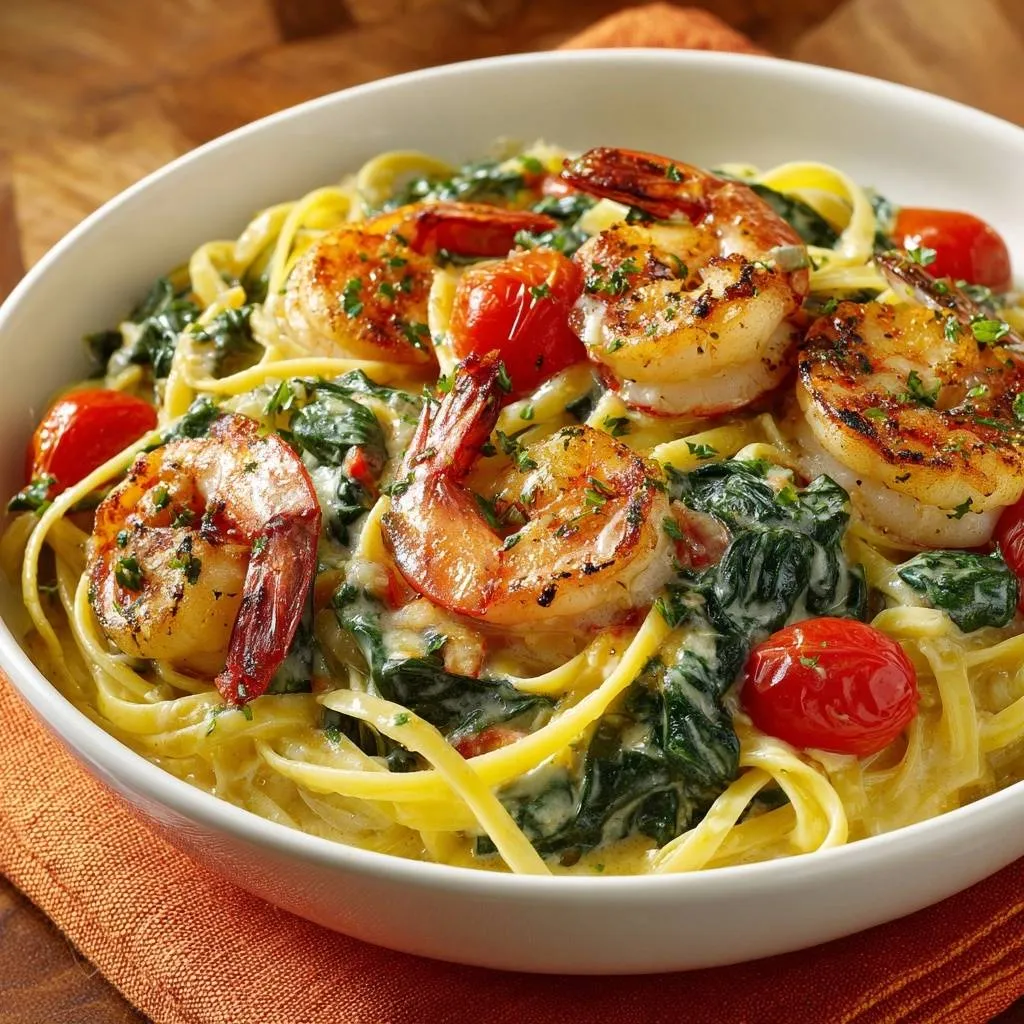
Large Shrimp: Sourcing for Perfect Texture
Go for 1 pound of large shrimp, around 16/20 count per pound, peeled and deveined. Fresh beats frozen in texture, but if thawing frozen, pat extra dry to remove excess moisture. That prevents the steaming that turns them rubbery in your creamy garlic shrimp pasta.
Roasted Tomatoes and Spinach Pairing
Halve 1 cup cherry tomatoes; their small size roasts evenly at 450°F into juicy pops. Pair with 4 cups fresh spinach, which shrinks dramatically when wilted, adding volume without sogginess. Skip canned or sun-dried; they can’t match the fresh char and sweetness.
Roasting Tomatoes for Bursting Flavor Base
Preheat your oven to 450°F first. Toss the halved cherry tomatoes with 1 teaspoon olive oil, a pinch of salt, and black pepper. Spread them on a parchment-lined baking sheet for easy release.
Roast for 10-12 minutes until blistered and charred in spots. High heat triggers the Maillard reaction, deepening flavor way beyond low-and-slow. Watch for softened skins that split open; pull them if edges blacken too much.
These aren’t just toppings. They release pectin that thickens your sauce naturally. Let them cool slightly before stirring in.
Boiling Linguine to Al Dente Perfection
Bring salted boiling water to a rolling boil, then add 8 ounces linguine. Cook per package until al dente, usually 9-10 minutes. Linguine clings to sauce better than spaghetti due to its flat shape.
Reserve 1/2 cup pasta water before draining; its starch emulsifies the cream sauce perfectly. Don’t rinse the pasta, or you’ll lose that binding power. Drain right at al dente to avoid mushy results later.
Searing Shrimp: High-Heat Crust Technique
Pat the shrimp completely dry with paper towels; moisture is the enemy here. Season with salt and generous black pepper. Heat 1 tablespoon olive oil in a large skillet over high heat until it shimmers and ripples, about 30 seconds.
Add shrimp in a single layer. Sear undisturbed for 1-2 minutes per side until pink, opaque, and lightly charred. That crust from high heat denatures proteins fast, sealing juices inside. Remove immediately; they’ll finish off-heat.
Overcrowding steams them, so cook in batches if needed. This method beats low-heat every time for juicy shrimp in creamy garlic shrimp pasta.
Drying Shrimp to Avoid Steaming
Paper towels soak up surface moisture so the skillet sizzles instead of steams. Press gently but thoroughly. Salt draws out more liquid if you have time; wait 10 minutes post-salting before patting again.
Building Creamy Garlic Sauce Foundation
Lower heat to medium in the same skillet. Add 2 teaspoons olive oil and 4 minced garlic cloves. Sauté just 30 seconds until fragrant; longer turns it bitter.
Stir in 4 cups spinach; it wilts in 1 minute, halving in volume. Pour in 1 cup heavy cream and 1/2 cup Parmesan. Simmer 3 minutes, stirring as it thickens into a glossy emulsion.
If too thick, add reserved pasta water tablespoon by tablespoon. Season with salt and pepper, then fold in roasted tomatoes for balanced brightness.
Garlic and Spinach Sauté Sequence
Garlic first on medium heat releases oils without burning. Add spinach next; its water creates steam for quick wilting. You’ll see it shrink fast, releasing that fresh, earthy scent.
Combining Pasta, Shrimp, and Roasted Tomatoes
Add the cooked linguine and seared shrimp back to the skillet. Toss gently for 1 minute to coat everything in sauce and warm the shrimp through. Avoid over-stirring to keep shrimp intact.
Sprinkle 2 tablespoons chopped fresh parsley on top. Plate family-style or twirl into bowls for that gorgeous creamy garlic shrimp pasta with spinach and roasted tomatoes look.
Science of Juicy Shrimp in Creamy Pasta
High-heat searing creates a Maillard crust that denatures surface proteins, trapping interior juices. A dry start means no excess water to dilute flavors or cause steaming. Off-heat finishing lets carryover heat gently cook the centers to 140°F.
Pasta water’s starch binds the cream sauce into a stable emulsion. Roasted tomatoes release pectin and sugars, adding body without curdling the dairy. It’s all about heat, moisture control, and timing for perfection.
Avoiding Rubbery Shrimp Mistakes
Top error: overcrowding the pan, which drops temp and steams shrimp. Fix it by batching. Low heat? It never crusts; crank it high for sear.
Forget to dry? Steam city. Overcook post-sear by tossing too long, or skip pasta water and watch sauce break. Stir gently, taste as you go.
Pan Heat and Timing Precision
Test oil shimmer: it ripples hot. Sear 1-2 minutes per side; optional thermometer hits 140°F internal. Pull fast; residual heat does the rest.
Flavor Variations for Creamy Garlic Shrimp Pasta
Swap linguine for fettuccine or whole wheat for heartiness. Try scallops or chicken instead of shrimp. Add lemon zest for acid pop, chili flakes for heat, or basil for herb twist.
Dairy-free? Coconut cream mimics richness. Vegan with tofu works too. Sub kale for spinach or arugula for peppery bite; balance with extra tomatoes.
Pairing Sides with Spinach and Roasted Tomatoes Pasta
Crisp green salad cuts the creaminess with vinaigrette. Garlic bread soaks up sauce perfectly. Grilled asparagus adds char echo.
Chardonnay’s acidity brightens the dish. Or Pinot Grigio for lighter lift. These contrast the richness beautifully.
Make-Ahead Guide for Garlic Shrimp Pasta
Roast tomatoes a day ahead; store in fridge. Par-cook pasta to al dente, shock in cold water, and refrigerate. Sear shrimp fresh for best texture.
Sauce holds 2 days covered. Reheat low with splash milk. Freeze pasta separate from sauce and shrimp up to 1 month; thaw overnight, reheat gently.
Troubleshooting Creamy Garlic Shrimp Pasta Issues
Sauce too thick? More pasta water. Too thin? Simmer longer. Shrimp tough? Overcooked; dry and high-heat next time.
Pasta sticky? Undercooked or rinsed; salt water generously. Tomatoes unburst? Higher oven heat. Spinach bitter? Shorter sauté.
Common Questions on Shrimp Pasta Recipe
Can I use frozen shrimp?
Yes, thaw fully in cold water first, then pat extra dry. Skip quick hot thaw; it leaves trapped ice that steams during sear. Large frozen work great if prepped right for juicy results.
What can substitute heavy cream?
Half-and-half plus 1 teaspoon cornstarch slurry thickens similarly. Or full-fat coconut milk for dairy-free. Avoid milk alone; it won’t emulsify without breaking.
Is there a gluten-free version?
Swap linguine for gluten-free pasta like brown rice or chickpea. Cook to al dente and reserve extra water for starch. Sauce clings fine.
How do I make it spicy?
Add 1/4 teaspoon red pepper flakes with garlic. Or fresh chili slices post-cook. It builds gentle heat without overpowering cream.
How should I store leftovers?
Keep in airtight container up to 3 days in fridge. Reheat gently on stovetop with milk splash; microwave toughens shrimp. Don’t freeze assembled; pasta gets mushy, but components separate freeze okay for 1 month.
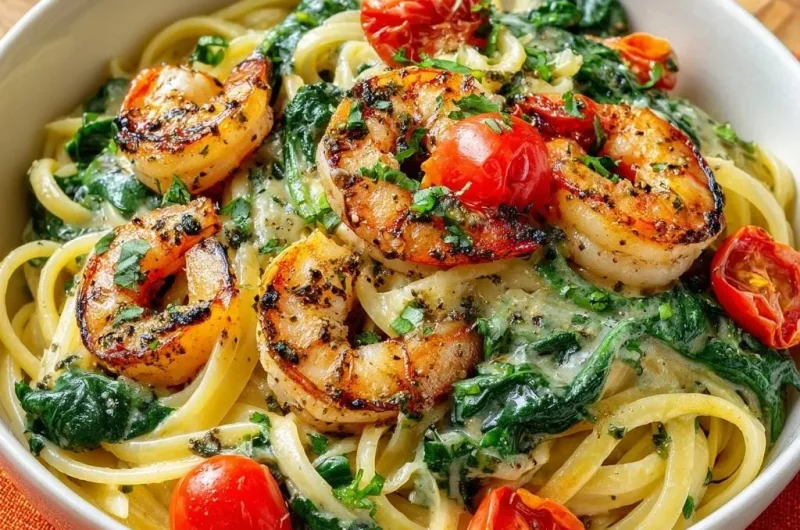
Creamy Garlic Shrimp Pasta
Course: Main CourseCuisine: AmericanDifficulty: easy4
servings15
minutes25
minutes550
kcal40
MinutesTired of shrimp turning tough and chewy in pasta? This recipe nails perfectly seared, juicy shrimp every time with a simple high-heat blast and exact timing trick that locks in moisture while building flavor. Paired with silky cream sauce, wilted spinach, and bursty roasted tomatoes over tender pasta.
Ingredients
8 ounces linguine pasta
1 pound large shrimp, peeled and deveined
2 tablespoons olive oil, divided
4 cloves garlic, minced
4 cups fresh spinach
1 cup cherry tomatoes, halved
1 cup heavy cream
1/2 cup grated Parmesan cheese
Salt and black pepper to taste
2 tablespoons fresh parsley, chopped
Directions
- Preheat oven to 450°F. Toss halved cherry tomatoes with 1 teaspoon olive oil, a pinch of salt, and black pepper. Spread on a parchment-lined baking sheet and roast for 10-12 minutes until blistered, charred in spots, and softened. Set aside.
- Meanwhile, cook linguine in salted boiling water according to package until al dente. Drain, reserving 1/2 cup pasta water, and set aside.
- Pat shrimp completely dry with paper towels. This is key to prevent rubbery texture; moisture causes steaming instead of searing. Season generously with black pepper and a pinch of salt.
- Heat 1 tablespoon olive oil in a large skillet over high heat until shimmering (about 30 seconds; oil should ripple but not smoke). Add shrimp in a single layer. Sear undisturbed for 1-2 minutes per side until opaque, pink, and lightly charred. The high-heat, dry-start method creates a crust that seals juices inside, stopping overcooking. Remove shrimp immediately to a plate; they finish cooking off-heat.
- In same skillet, reduce heat to medium. Add remaining olive oil (about 2 teaspoons) and garlic. Saute 30 seconds until fragrant.
- Stir in spinach; wilt 1 minute.
- Pour in heavy cream and Parmesan. Simmer 3 minutes, stirring until sauce thickens. If too thick, add reserved pasta water 1 tablespoon at a time. Season with salt and pepper. Stir in roasted tomatoes.
- Add cooked pasta and shrimp back to skillet. Toss gently 1 minute to coat and warm shrimp through without overcooking.
- Garnish with parsley. Serve hot.
Notes
- Pat shrimp completely dry before searing to prevent rubbery texture. Use high heat for a crust that seals in juices. Remove shrimp immediately after searing to avoid overcooking.