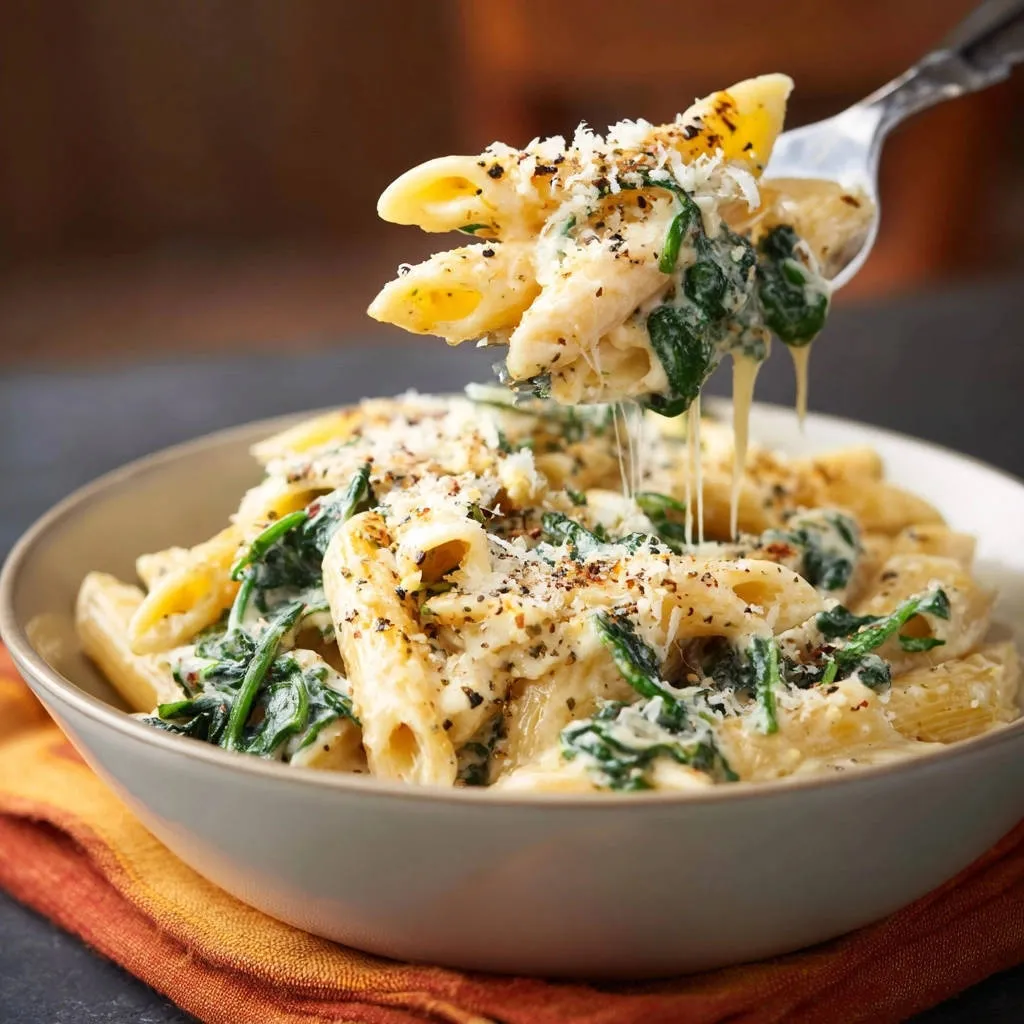
I used to dread making cream sauces because they inevitably separated, leaving a watery puddle instead of flawlessly coating the pasta.
After years of perfecting this technique, I’ve unlocked the simple secret to a thick, glossy, restaurant-quality coating for my favorite Creamy Garlic Spinach Penne.
This recipe guarantees that luxurious, perfect cling every single time, making weeknight dinners feel truly gourmet and stress-free.
For that same sauce-like consistency, explore creamy pesto chicken and gnocchi.
Beyond Basic: The Creamy Penne Recipe That Actually Clings
This recipe moves beyond basic instructions, focusing specifically on culinary techniques that ensure stability and luxurious texture.
Our focus is on delivering a high-value dish quickly while preventing the most common cream sauce pitfalls.
The Disappointment of Watery Pasta (Relatability)
There is nothing more frustrating than seeing a delicious sauce pool sadly at the bottom of the bowl instead of wrapping around the noodles.
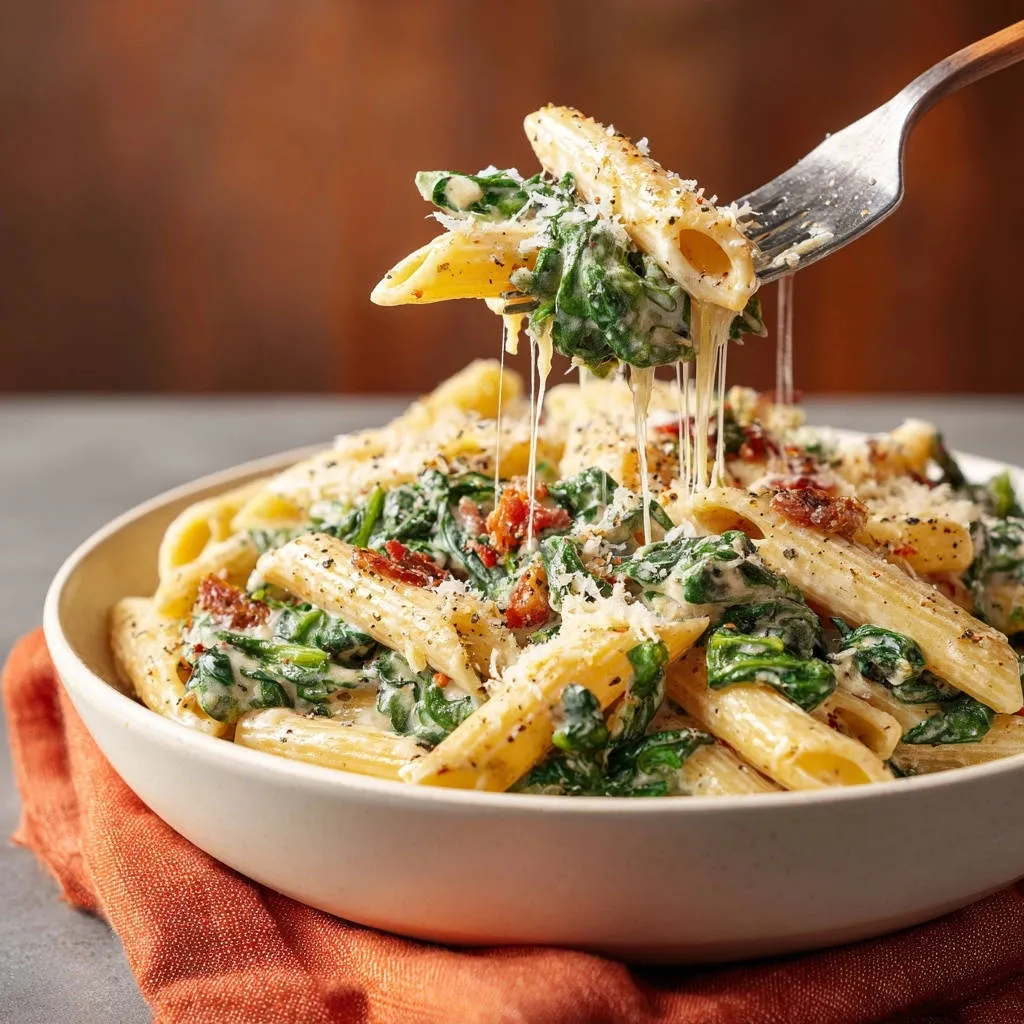
This separation occurs when the fat and water molecules fail to properly emulsify, often due to high heat or incorrect cheese addition.
Speed and Simplicity: Ready in Under 30 Minutes
This dish is specifically designed to be highly efficient, relying on minimal ingredients and quick-cooking steps.
The simple steps and common ingredients make it an ideal, fast, yet impressive option for busy weeknights when time is limited.
Why Reserved Pasta Water is Your New Best Friend
The reserved starchy pasta water is the single most important ingredient, acting as the binding agent for the sauce.
Its starches create an unparalleled, stable emulsion, resulting in that coveted professional “glossy cling sauce” texture.
Building the Perfect Bite: Key Ingredients and Quality Checks
High-quality ingredients are paramount, but technique matters just as much; pay close attention to the form and preparation of each component.
The Pasta Choice: Why Penne Works Best
Penne is superior because its tube shape and ridged surface are perfect for catching and holding the rich, garlic-infused sauce.
Look for high-quality bronze-die extruded pasta, which provides a rougher surface texture for maximum sauce adherence.
Dairy Dynamics: Heavy Cream vs. Half-and-Half
Using heavy cream (at least 36% fat) is non-negotiable for achieving genuine thickness and stability in the sauce.
Lower-fat alternatives introduce too much water, making the sauce thin and extremely prone to breaking during heating and cooling.
Parmesan Perfection: Grating for Maximum Melt
Always grate your own Parmesan cheese directly from the block just before using it for the best melting properties.
Pre-shredded varieties often contain anti-caking agents, which prevent smooth melting and can lead to a grainy texture in the final sauce.
Aromatics and Greens: Garlic and Fresh Spinach
Use fresh garlic and mince it finely to ensure maximum flavor infusion during the initial butter sauté.
Fresh spinach wilts down beautifully and releases less excess liquid than frozen, which is critical for maintaining the sauce’s intended consistency.
Gear Check: Tools for Creamy Garlic Spinach Penne Success
Having the right tools available before you begin ensures smooth transitions, especially during the crucial emulsification step.
The Importance of a Large Skillet or Dutch Oven
A large, deep skillet or Dutch oven is essential for proper technique.
It provides enough surface area to contain the volume of sauce and allows you to toss the pasta aggressively for emulsion control.
The Secret Weapon: A Sturdy Tongs
Invest in sturdy, heat-safe tongs, as constant tossing and vigorous stirring are key to binding the sauce successfully.
A spatula simply won’t suffice for the rapid, continuous movement needed during the final steps.
Your Step-by-Step Guide to Irresistibly Glossy Pasta
Follow these steps precisely, paying special attention to the temperature control in the latter stages for a perfect result.
Step 1: Achieving Al Dente and Reserving the Liquid Gold
The pasta must be cooked slightly underdone, about one minute shy of the package directions, ensuring it doesn’t become mushy in the sauce.
Before draining, scoop out at least one full cup of the cloudy, starchy water-this is the ingredient that binds our creamy garlic spinach penne sauce.
Step 2 & 3: Building the Base Flavors
Start by melting two tablespoons of butter in your large skillet and infusing the fat with the minced garlic for about 60 seconds over medium heat.
Watch the garlic carefully; if it browns or burns, it will become bitter, so proceed quickly to the next step.
Add the fresh spinach to the aromatic butter and cook, stirring, until it has fully wilted down into a dramatically reduced volume.
Step 4: Gentle Simmering
Pour in the heavy cream along with the salt and pepper.
Bring the mixture up to a gentle, barely perceptible simmer, then immediately reduce the heat to the absolute lowest setting possible to avoid scorching or separating the dairy.
Step 5: The Emulsification Lock-In (The Cling Secret)
Add the drained penne directly to the sauce and begin introducing the reserved pasta water, 1/4 cup at a time, while constantly stirring or tossing vigorously with tongs.
The starch in the water works its magic here, activating the fat and cream to achieve the promised glossy, clinging consistency.
For a similar texture, discover the secrets to creamy garlic orzo.
Be patient; toss continuously until the sauce visibly thickens and coats the noodles rather than pooling at the bottom of the pan.
Step 6: Finishing Off the Heat Safely
Immediately remove the skillet completely from the heat source. This rapid cooling is crucial for emulsion stability when adding the solids.
Stir in the remaining two tablespoons of cold butter and the cup of grated Parmesan cheese, tossing constantly.
The cheese and finishing butter will melt using only residual heat, preventing separation and locking in a rich, smooth finish.
Step 7: Final Adjustments and Serving
If the sauce looks slightly too dense, toss in another splash of starchy water to loosen it immediately.
Serve your beautiful Creamy Garlic Spinach Penne immediately, garnished generously with extra Parmesan and fresh cracked black pepper.
Troubleshooting the Cling: Chef Secrets for a Flawless Sauce
Even expert cooks face small challenges; use these solutions to quickly fix common issues and ensure a perfect result.
Why Does Adding Cold Butter Prevent Separation?
Adding cold butter, known as “monter au beurre” in classical French cooking, is an immediate temperature drop technique.
The cold butter emulsifies into the existing sauce off the heat, adding richness and locking in stability without destabilizing the dairy proteins.
The Golden Rule of Cheese: Never Boil It!
High heat causes the protein structures (caseins) in cheese to seize up and contract, expelling moisture and fats.
This structural change results in a grainy, oily, or broken sauce. By adding Parmesan off the heat, you keep the proteins pliable and the texture smooth.
My Sauce Is Still Too Thin: What Did I Miss?
If the sauce remains thin, you likely need more starch; add another small amount of the reserved pasta water while continuing to toss vigorously.
If you ran out of starchy water, simply tossing the pasta quickly off the heat for an additional 60 seconds allows the excess moisture to evaporate, concentrating the existing sauce.
Customizing Your Creamy Garlic Spinach Penne
This base recipe is fantastic on its own, but it can easily be tailored to your preferences or whatever you have available.
More Creamy Delights
If you’re enjoying the richness of this creamy pasta, consider these other dishes that share similar flavors and textures.
- For a similar creamy, cheesy experience with a seafood twist, try this Gooey Shrimp Spinach Dip, featuring that same non-watery perfection.
- To explore more earthy, velvety goodness, this Creamy Morel Mushrooms recipe offers a rich and flavorful complement.
Protein Boosters: Adding Chicken, Sausage, or Shrimp
Pre-cook your chosen protein (diced chicken breast, crumbled Italian sausage, or shrimp) completely before starting the sauce.
Introduce the warm, cooked protein back into the sauce at Step 5, ensuring it is merely reheated rather than cooked in the dairy base.
Making it Vegetarian or Gluten-Free
This recipe is inherently vegetarian, relying on the robust flavor of the garlic, spinach, and Parmesan.
For a gluten-free version, simply swap traditional penne for a high-quality gluten-free variety, ensuring it still releases enough starch during the boil.
Spice It Up: Adding a Kick
For subtle warmth, add a pinch of freshly grated nutmeg along with the heavy cream in Step 4; nutmeg pairs beautifully with dairy and greens.
If you prefer heat, stir in 1/2 teaspoon of red pepper flakes during the initial garlic sauté to allow their oil-soluble spice to infuse the butter.
Make-Ahead, Storage, and Reheating Instructions
Creamy pasta requires specific care when stored and reheated to maintain its texture and integrity.
Can I Prepare the Sauce in Advance?
You can prepare the base sauce (garlic, spinach, and heavy cream mixture) in advance, but do not add the pasta water or the Parmesan cheese yet.
Reheat the base gently, then complete the crucial Steps 5 and 6 (emulsion and cheese finish) just before serving.
Safely Storing Leftovers
Store leftovers in an airtight container in the refrigerator for up to three days.
Be aware that the sauce will tighten and thicken significantly upon cooling due to the solidified starches and fats.
The Best Way to Reheat Without Breaking the Sauce
Reheat creamy pasta gently in a skillet over low heat.
Add a splash of milk, water, or broth while stirring continuously; this added moisture helps restore the sauce’s fluidity and prevents the cheese from turning grainy.
Quick Answers: Your Top Creamy Garlic Spinach Penne Questions
How do I properly reserve pasta water?
Scoop the water just before draining the pasta, preferably 30 seconds before the total cook time is complete.
The cloudier the water, the starchier it is, indicating its higher binding potential for the “glossy cling sauce.”
Can I substitute the heavy cream with milk?
While you can substitute cream with half-and-half, the resulting sauce will be noticeably thinner and far less stable, requiring intense effort to emulsify.
Avoid using low-fat milk entirely, as its low fat content virtually guarantees a watery, separated sauce upon cooling or reheating.
Is fresh spinach truly necessary for this dish?
Fresh spinach is strongly preferred due to its superior wilt texture and significantly lower water content.
If using frozen spinach, you must thaw it completely and squeeze out every bit of excess moisture before adding it to the skillet, otherwise it will dilute the sauce immediately.
Ready to Impress? Share Your Pasta Masterpiece!
Mastering the technique for a true glossy cling sauce transforms this simple weeknight dinner into an unforgettable, restaurant-quality experience.
Now that you know the secrets-the starchy water, the cold finish, and the patience of the toss-you are ready to create your own perfectly coated Creamy Garlic Spinach Penne masterpiece. Enjoy and share your success!
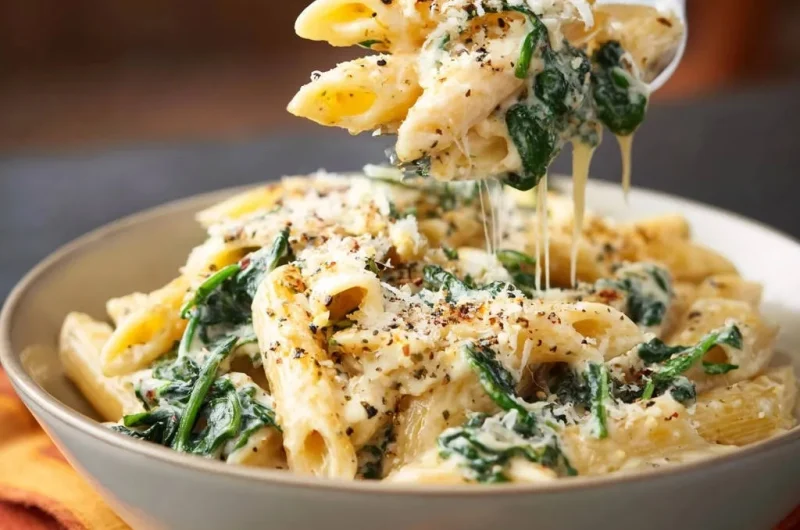
Creamy Garlic Spinach Penne
Course: Main CourseCuisine: ItalianDifficulty: easy4
servings10
minutes15
minutes750
kcal30
minutesSay goodbye to watery pasta sauce! This Creamy Garlic Spinach Penne recipe reveals the simple secret to achieving restaurant-style cling every time, ensuring your sauce is thick, glossy, and emulsified using reserved pasta water and cold butter.
Ingredients
1 pound penne pasta
4 tablespoons unsalted butter, divided
2 cloves garlic, minced
5 ounces fresh spinach
1.5 cups heavy cream
1 cup grated Parmesan cheese, plus more for serving
1/2 teaspoon salt
1/4 teaspoon black pepper
1 cup reserved pasta cooking water
Directions
- Cook the pasta: Bring a large pot of salted water to a rolling boil. Add the penne and cook until just shy of al dente (about 1 minute less than the package directions). Before draining, scoop out at least 1 cup of the starchy cooking water and set it aside. Drain the pasta immediately.
- Build the base: In a large skillet or Dutch oven, melt 2 tablespoons of butter over medium heat. Add the minced garlic and cook for about 60 seconds until fragrant, being careful not to let it brown or burn.
- Wilt the spinach: Add the fresh spinach to the skillet. Cook, stirring often, until the spinach has fully wilted down. This should take about 2 to 3 minutes.
- Simmer the cream: Pour in the heavy cream, salt, and pepper. Bring the mixture to a gentle simmer, then immediately reduce the heat to the lowest setting possible.
- Emulsification Lock-In (The Fix): This step is essential for creating the clinging sauce and fulfilling the promise (Never Watery Sauce!). Add the cooked pasta directly to the simmering cream sauce. Immediately begin stirring in the reserved starchy pasta water, about 1/4 cup at a time, continuously stirring or tossing the pasta. The starch in the water will bind with the fat and cream, creating a glossy, thick texture.
- Finish the sauce: Remove the skillet completely from the heat. Stir in the remaining 2 tablespoons of cold butter and the 1 cup of grated Parmesan cheese. Toss constantly until the cheese is fully melted and incorporated. If the sauce still seems too thin, add another splash of the starchy water and continue tossing quickly until it reaches the desired consistency. The key is adding the cheese and finishing butter off the heat to prevent separation or breaking.
- Serve immediately topped with extra grated Parmesan and fresh cracked black pepper.
Notes
- To prevent the sauce from breaking, always add the final cheese and finishing butter off the heat (Step 6).