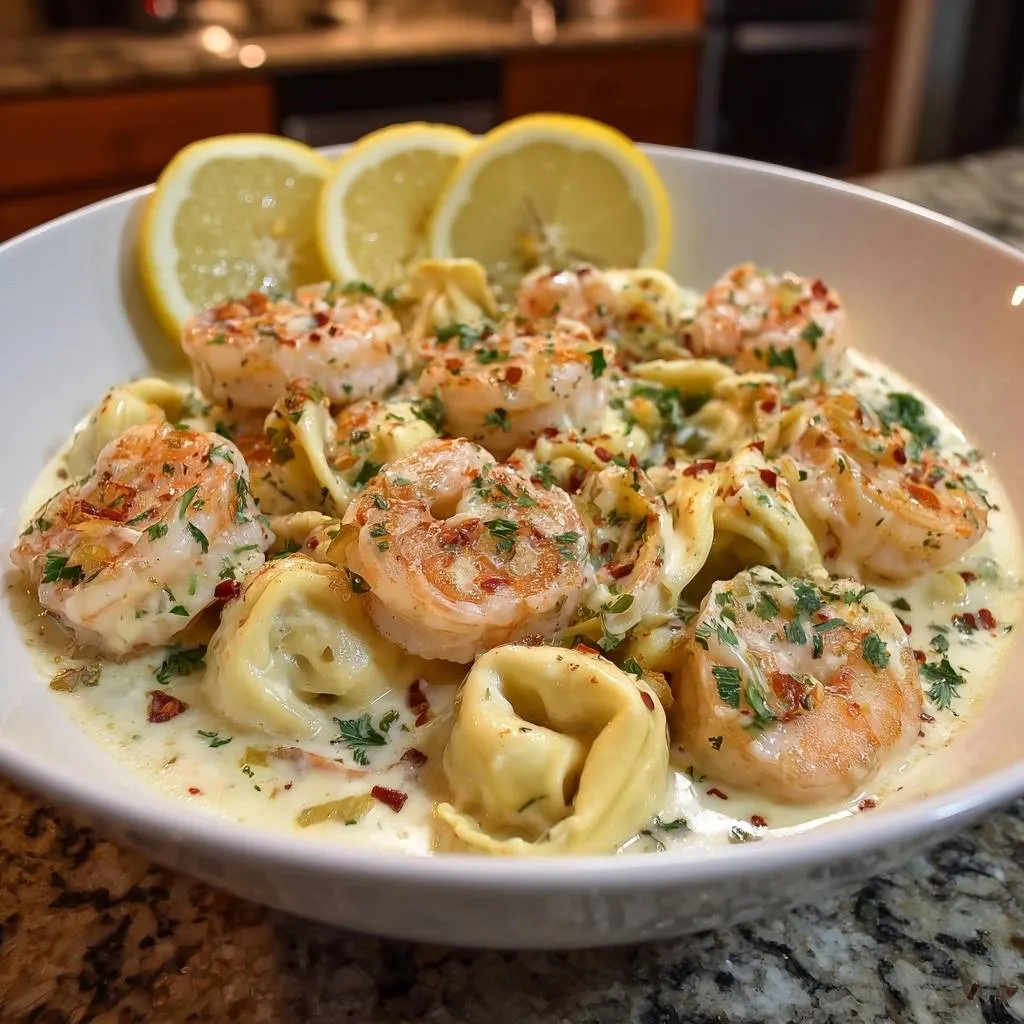
Ever bitten into shrimp that’s tough and rubbery, ruining your whole pasta night? This creamy lemon shrimp tortellini fixes that fast. You get juicy, charred shrimp seared high and hot, then nestled in silky lemon cream with cheesy tortellini. It’s bright citrus tang cuts through rich cream, with a subtle kick from red pepper flakes that builds gently.
Therefore, this dish shines for weeknights. It comes together in under 30 minutes, yet tastes like restaurant magic. The high-heat sear locks in moisture, so no more chewy disappointment.
For another quick shrimp dish with bright citrus, explore lemon garlic shrimp.
Here’s the pro tip that seals it: pat those shrimp bone-dry before seasoning. That simple step triggers perfect browning via the Maillard reaction. Suddenly, you’ve got tender bites every time.
For similar results in pasta, explore creamy Cajun shrimp fettuccine.
Key Ingredients for Creamy Lemon Shrimp Tortellini
Selecting Large Shrimp for Tenderness
Large shrimp, about 1 pound peeled and deveined, deliver the best tenderness here. They hold up to searing without turning rubbery, thanks to lower moisture content compared to smaller ones. Pat them completely dry first; excess water steams them instead of browning.
Fresh shrimp sear beautifully, but frozen work great too. Thaw them overnight in the fridge, then pat dry again. Season generously with salt, pepper, and half the crushed red pepper flakes so flavors penetrate deeply during that quick cook.
Cheese Tortellini and Pasta Water Role
Cheese tortellini, 9 ounces, bring a hearty, stuffed texture that soaks up the creamy sauce perfectly. Unlike spaghetti, which slips off, these plump pockets hold the lemon richness. They cook fast, staying al dente.
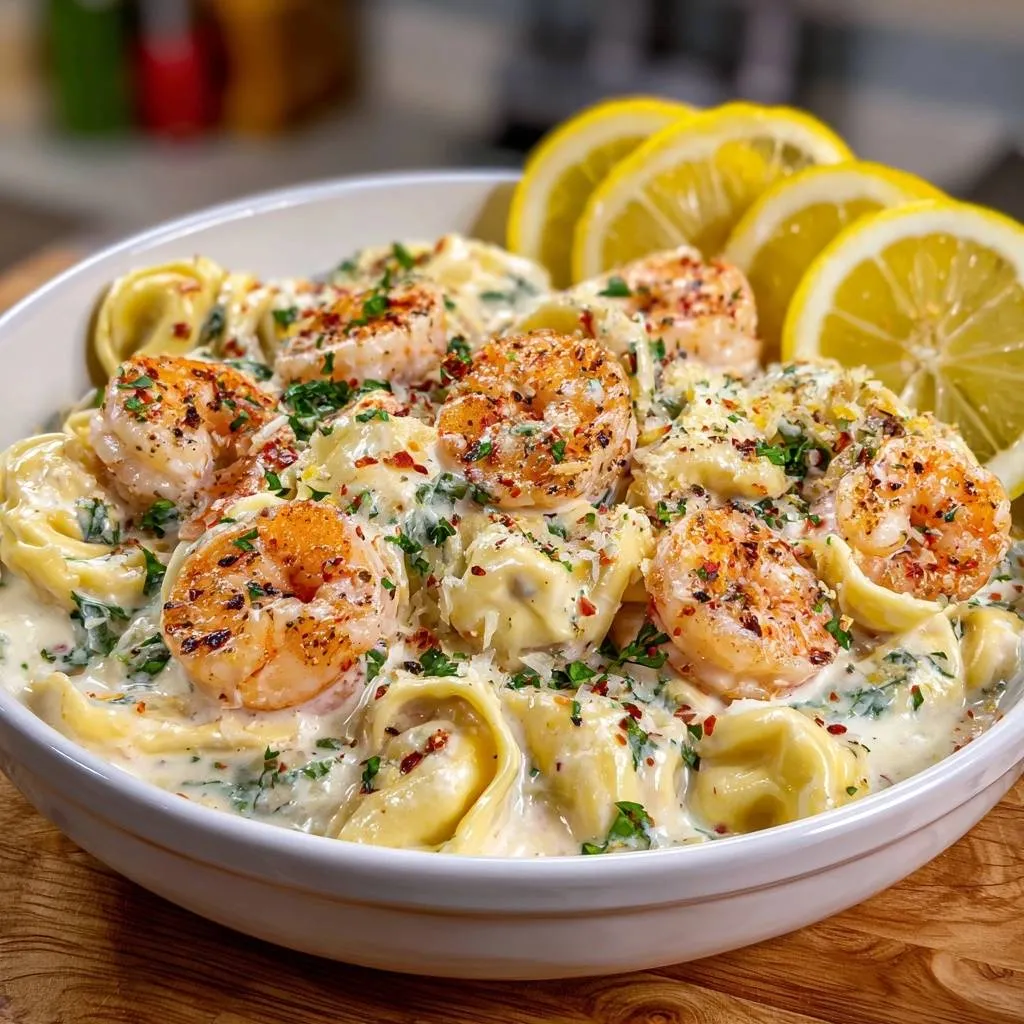
Always reserve 1/2 cup pasta water. Its starch emulsifies the sauce later, creating silkiness. Without it, the cream might separate; with it, everything clings just right.
Building the Silky Lemon Cream Base
Heavy cream, 1 cup, forms the luxurious base, while 1/2 cup grated Parmesan thickens it via melting casein proteins. Juice and zest from 2 fresh lemons add bright oils and acid that balance the richness without curdling.
In addition, 4 minced garlic cloves and 1/2 cup thinly sliced green onions release fragrant aromas when sautéed. Butter, 2 tablespoons, carries those flavors. Finish with 1/4 cup chopped fresh parsley for color and earthiness; dried works in a pinch but lacks punch. Remaining red pepper flakes dial up subtle heat.
Mastering the High-Heat Shrimp Sear Technique
Prepping Shrimp for Optimal Browning
Start by patting shrimp completely dry with paper towels. This removes surface moisture, allowing the Maillard reaction for that golden char. Season generously with salt, pepper, and half the red pepper flakes right away.
Therefore, arrange in a single layer in the skillet. Overcrowding traps steam, leading to tough results. Work in batches if needed; it’s worth it for juicy perfection.
Butter Browning and Quick Sear Process
Melt 2 tablespoons butter over medium-high heat until it foams and browns slightly, about 1 minute. That nutty aroma signals it’s ready. Add shrimp; sear undisturbed 1-2 minutes per side until opaque pink with charred edges.
Remove them immediately to a plate. High heat flash-cooks the exterior, sealing juices inside. You’ll smell sweet garlic notes starting to mingle as you move on.
Boiling Tortellini to Al Dente Perfection
Salted Water Boil and Float Test
Bring a large pot of salted water to a rolling boil. Salt seasons the tortellini from within. Drop in 9 ounces; cook 3-4 minutes until they float to the top.
This timing keeps them firm, not mushy like overcooked stuffed pasta. Drain, but reserve 1/2 cup water. Set aside; they’ll warm perfectly in the sauce later.
Simmering Creamy Lemon Shrimp Tortellini Sauce
Sautéing Aromatics After Shrimp Removal
Lower heat to medium. Add minced garlic and green onions to the shrimp pan. Sauté 1 minute until fragrant and softened; you’ll catch that punchy, fresh scent.
This order matters. Garlic burns easily on high heat, turning bitter. Medium keeps flavors bright.
Emulsifying Cream, Cheese, and Citrus
Stir in lemon zest, juice, remaining red pepper flakes, heavy cream, and Parmesan. Whisk constantly 2-3 minutes until smooth and slightly thickened. The sauce turns glossy as proteins bind.
If it’s too thick, add reserved pasta water spoonfuls. That starch creates a silky emulsion. Lemon’s acid cuts the cream’s heaviness, balancing every bite.
Reuniting Tortellini and Shrimp
Add tortellini and shrimp back to the sauce. Toss gently 1 minute to warm through and coat evenly. Pro tip: use tongs to avoid breaking the pasta.
Garnish with chopped parsley. Serve with extra lemon wedges for squeezing. It’s ready to devour.
Science of Juicy Shrimp in Creamy Lemon Shrimp Tortellini
High-Heat Searing Locks in Moisture
High heat denatures shrimp proteins fast, forming a barrier that traps interior moisture. At 1-2 minutes per side, the exterior chars via Maillard browning, while the inside stays tender. Shrimp muscles contract tightly if overcooked, squeezing out juices.
Low heat steams them instead, leading to rubbery texture. Therefore, that quick sear creates evaporation on the surface only. You’ve got plump, juicy results every time.
Compare to poaching: it preserves color but not flavor depth. Searing wins for taste and texture.
Lemon Cream Emulsion Chemistry
Lemon juice’s citric acid lowers pH, stabilizing cream proteins against curdling. Parmesan casein forms curds that thicken without lumps. Pasta water’s starch suspends fat droplets for smoothness.
Whisking incorporates air and distributes heat evenly. Too much heat breaks emulsions; gentle simmering prevents that. The result? A sauce that coats perfectly.
Avoiding Common Mistakes in Creamy Lemon Shrimp Tortellini
Preventing Rubbery Overcooked Shrimp
Overcrowding steams shrimp, skipping the sear. Wet surfaces prevent browning too. Always dry thoroughly and use high heat.
If they overcook, signs include opacity throughout and firmness. Remove early next time; residual heat finishes them in the sauce.
Sauce Separation and Texture Fixes
High heat curdles cream; keep it medium after searing. Not whisking enough leaves it grainy. Add pasta water gradually for rescue.
Tortellini sticks if drained too long. Toss immediately to prevent that.
Flavor Variations for Creamy Lemon Shrimp Tortellini
Spice Level Adjustments and Heat Swaps
Dial flakes up for more kick or down for mild. Fresh minced chili or cayenne substitute seamlessly. Stir in spinach or peas at the end for veggie pop; they wilt into the cream nicely.
These tweaks keep the dish versatile without overpowering lemon brightness.
Protein and Pasta Alternatives
Swap shrimp for scallops; sear similarly for sweetness. Chicken breasts, diced and seared, work too. Try spinach ravioli or gluten-free tortellini; they hold sauce well.
For vegan, coconut milk mimics cream’s richness. Adjust lemon to taste.
Perfect Pairings for Creamy Lemon Shrimp Tortellini
Crisp White Wines and Sides
Sauvignon Blanc’s acidity mirrors the lemon zest perfectly. Pinot Grigio cuts through cream with its lightness. Both enhance the shrimp’s brininess.
Pair with arugula salad for peppery contrast, garlic bread to mop sauce, or roasted asparagus. These sides balance richness without overwhelming.
Complementary Flavors
Round out your meal with these fresh and vibrant options.
- For a crisp counterpoint to your Creamy Lemon Shrimp Tortellini, consider the Harvest Kale and Apple Salad, featuring bright, fresh ingredients.
- If you’re leaning towards a lighter protein, the Garlic Herb Grilled Chicken Salad offers a savory element that pairs well.
Make-Ahead Guide for Creamy Lemon Shrimp Tortellini
Component Prep and Storage Tips
Sear shrimp ahead; refrigerate up to 2 days. They’ll reheat tenderly in sauce. Par-boil tortellini 2 minutes, shock in ice water, then store; finish cooking day-of.
Make sauce base without pasta water; freeze shrimp and sauce separately up to 2 months. Thaw overnight, reheat gently on low. Avoid microwaving shrimp to prevent toughness.
Troubleshooting Creamy Lemon Shrimp Tortellini Issues
Shrimp Not Browning Properly
Wet shrimp or low heat causes this. Pat drier, crank heat to medium-high. Single layer only; batches fix overcrowding.
Sauce Too Thick or Thin
Thick? Whisk in more pasta water or cream. Thin? Simmer longer or add extra Parmesan. Taste as you go.
Tortellini Falling Apart
Overboiling mushes them. Stick to 3-4 minutes, float test. Toss sauce gently with tongs.
Lack of Lemon Brightness
Use fresh lemons; zest fully for oils. Squeeze extra juice at end. Bottled lacks punch.
FAQ
How do I store leftovers of Creamy Lemon Shrimp Tortellini?
Store in an airtight container in the fridge for up to 3 days. The cream sauce holds well, but shrimp firms slightly. Reheat gently on stovetop with a splash of cream or pasta water over low heat to revive silkiness; microwave toughens shrimp, so avoid it. It doesn’t freeze well overall; tortellini gets mushy, and sauce may separate upon thawing. Best fresh or refrigerated short-term.
Why are my shrimp rubbery in this recipe?
Rubberiness comes from overcooking via low heat, overcrowding, or skipping the dry pat. Low heat steams instead of searing, squeezing out moisture as proteins tighten. Fix by using medium-high for 1-2 minutes per side max, single layer only, and remove immediately. High residual heat in sauce finishes them tenderly without chewiness. Pat extra dry next time for guaranteed juiciness.
Can I substitute ingredients in Creamy Lemon Shrimp Tortellini?
No heavy cream? Half-and-half works but thins sauce; add extra Parmesan. Skip tortellini for ravioli or gnocchi; cheese-filled holds best. No fresh lemons? Bottled juice pales; use with zest if possible. Shrimp out? Scallops or chicken sear similarly. Gluten-free tortellini swaps directly; coconut milk for vegan cream, but brighten with more lemon.
Why isn’t my sauce emulsifying smoothly?
Curdling happens from high heat shocking cream proteins or no starch. Always lower to medium post-sear, whisk constantly. Pasta water’s starch binds fat and liquid; add 1-2 tablespoons if grainy. Lemon acid stabilizes too; incorporate gradually. If separated, blend briefly or whisk vigorously over low heat with water.
How do I make Creamy Lemon Shrimp Tortellini spicier or milder?
Boost heat with extra red pepper flakes, fresh minced jalapeño, or cayenne pinch. For milder, halve flakes or omit. Add at sauce stage for even distribution. Test a noodle first; subtle build suits the cream’s richness without overpowering lemon.
Can I make Creamy Lemon Shrimp Tortellini ahead for a party?
Prep components: sear shrimp and refrigerate up to 24 hours. Boil tortellini fresh or par-cook and chill. Assemble sauce day-of; it takes 10 minutes. For freezing, do shrimp and sauce separately up to 2 months, thaw in fridge, reheat low. Undercook pasta slightly for reheating; toss just before serving to wow guests.
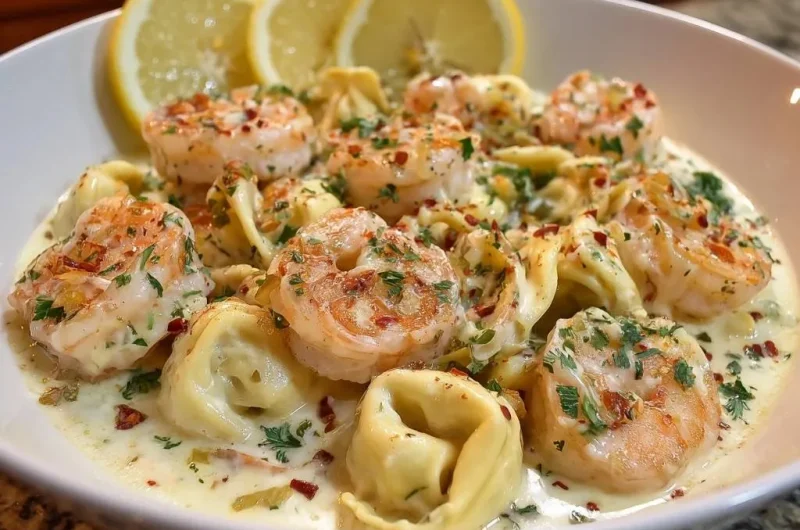
Shrimp Tortellini
Course: Main CourseCuisine: AmericanDifficulty: easy4
servings15
minutes15
minutes550
kcal30
MinutesTired of tough, overcooked shrimp? This recipe uses a high-heat sear to lock in moisture for tender, juicy shrimp paired with cheesy tortellini in a creamy lemon Parmesan sauce.
Ingredients
1 pound large shrimp, peeled and deveined
9 ounces cheese tortellini
1 cup heavy cream
1/2 cup grated Parmesan cheese
4 cloves garlic, minced
1/2 cup thinly sliced green onions (scallions)
2 tablespoons butter
Juice and zest of 2 lemons
1/4 cup chopped fresh parsley
1 teaspoon crushed red pepper flakes
Salt and black pepper to taste
Directions
- Pat shrimp completely dry with paper towels and season generously with salt, pepper, and half the crushed red pepper flakes. This crucial step removes excess moisture for perfect browning.
- Bring a large pot of salted water to a boil. Cook tortellini according to package until they float (about 3-4 minutes). Drain and set aside, reserving 1/2 cup pasta water.
- In a large skillet, melt butter over medium-high heat until foaming and just starting to brown (about 1 minute). Add shrimp in a single layer. Sear undisturbed for 1-2 minutes per side until opaque pink and slightly charred edges form. Do not overcrowd; work in batches if needed. Remove shrimp immediately to a plate this is the no-rubbery trick: high heat flash-cooks without steaming, keeping them juicy.
- Lower heat to medium. Add garlic and green onions to skillet. Sauté 1 minute until fragrant. Add lemon zest, juice, remaining red pepper flakes, cream, and Parmesan. Whisk until smooth and slightly thickened (2-3 minutes). Stir in reserved pasta water if needed for silky texture.
- Add tortellini and shrimp back to sauce. Toss gently 1 minute to warm through and coat evenly. Garnish with parsley. Serve with lemon wedges.
- Juicy shrimp, creamy bliss, zero chewiness. Your new weeknight hero!
Notes
- Pat shrimp completely dry before seasoning for perfect browning and juicy texture. High-heat sear prevents rubbery shrimp. Use fresh lemon juice and zest for bright flavor.