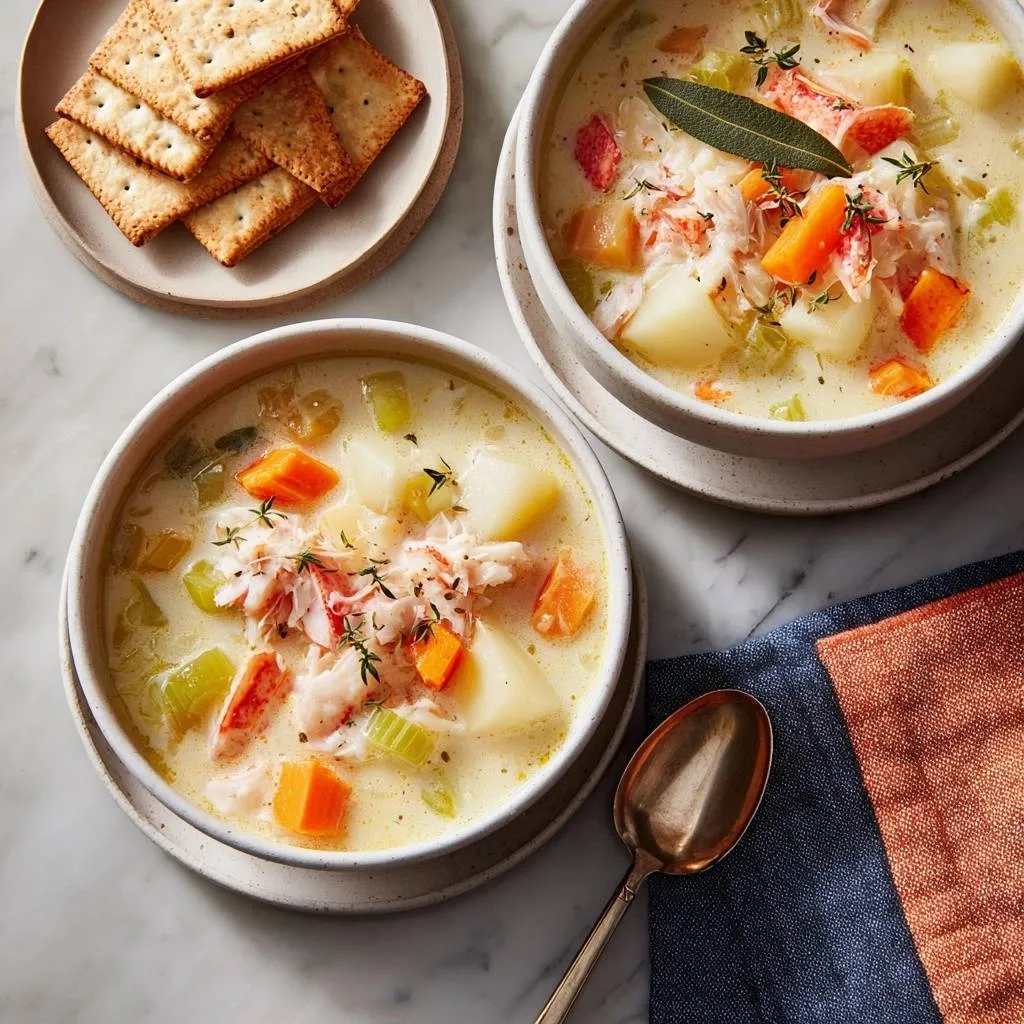
Picture those foggy New England mornings where the air smells of salt and simmering pots bubble in cozy kitchens. That’s the scene for creamy lobster chowder, a dish that screams coastal luxury. But oh man, I’ve had my share of disasters, like that one batch where the lobster turned into tough rubber balls after too long in the heat.
That’s why this creamy lobster chowder recipe changes everything. You add the cooked lobster meat at the very end, just to warm it through. It guarantees those juicy, tender chunks that make every spoonful pure bliss.
Here’s the expertise kicker: lobster proteins start to toughen above 140°F through myosin denaturation. By slipping in the meat last for only 1-2 minutes, you sidestep that heat shock entirely. Home cooks nail perfect texture every time with this simple move.
Why Creamy Lobster Chowder Demands Precision
Coastal Roots of This Hearty Soup
Creymy lobster chowder traces back to Maine’s fishing villages, where thin broths evolved into rich, creamy versions over generations. Fishermen thickened them with potatoes and cream for staying power on the water. Unlike clam chowder’s briny edge, this lobster chowder recipe elevates with sweet, luxurious meat.
Locals prized lobster as a humble filler back then, but now it’s the star. Modern twists keep the heartiness while dialing in creaminess. You’ll taste that heritage in every bowl.
Tender Lobster Secret Exposed
Lobster meat toughens when overcooked because heat causes proteins like myosin to coagulate and squeeze out moisture. Studies from seafood labs show this kicks in around 140°F, turning juicy chunks rubbery fast. That’s why most home cooks struggle.
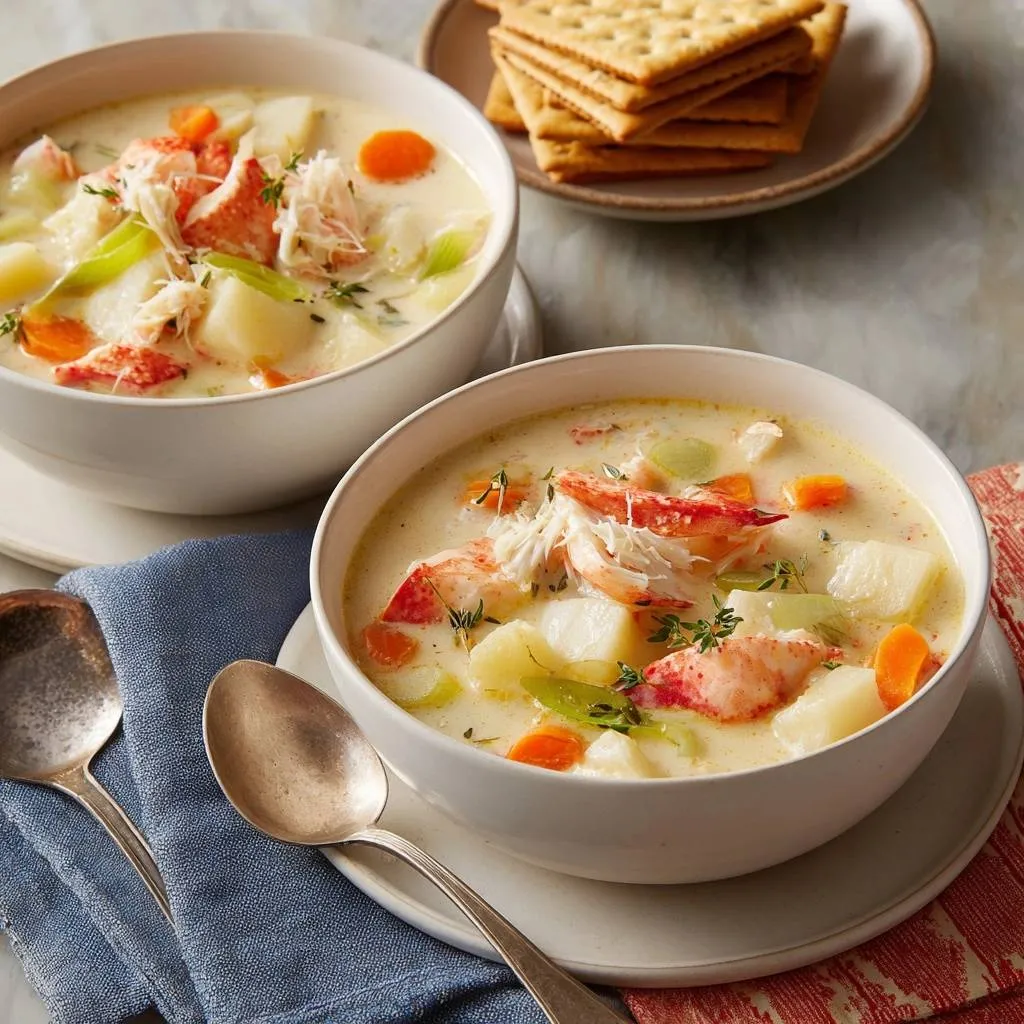
However, this recipe fixes it by using pre-cooked lobster added at the end. You just warm it gently for 1-2 minutes on low heat. Therefore, it stays succulent, proving precision beats brute force every time.
Chefs swear by this late-addition method too. It mimics pro techniques without fancy gear. Your creamy lobster chowder will impress with restaurant-level tenderness.
Key Ingredients for Authentic Creamy Lobster Chowder
Building the Aromatic Vegetable Base
Dice celery, carrots, and 4 medium potatoes uniformly, about 1/2-inch pieces, so they cook evenly for 6 servings. Fresh veggies release sweet aromas and soften perfectly, unlike frozen ones that can turn mushy. This base anchors the creamy lobster chowder ingredients.
Grab peak-fresh produce from local markets if you can. It’ll boost flavor without extra work. In addition, uniform cuts prevent half-raw, half-soggy disasters.
Herbs and Broth Foundations
One bay leaf and 4 sprigs fresh thyme infuse subtle earthiness without overpowering. Seafood broth amps up ocean vibes, but vegetable broth keeps it pure and light. Four cups strike the balance, letting cream shine later.
Don’t skimp on fresh herbs; dried ones fade fast. This foundation sets your chowder apart.
Cream and Lobster Meat Selection
Heavy cream’s high fat content creates that velvety mouthfeel through stable emulsions. Go for 1 cup to coat without heaviness. For lobster, pick 1 pound high-quality cooked meat, fresh-picked over frozen for better texture, chopped into 1-inch chunks.
Season with salt and pepper only after mashing potatoes. It lets flavors layer right. Pro tip: room-temp cream blends smoother, dodging lumps.
Essential Tools for Flawless Chowder
Pot and Heat Control Basics
Grab a heavy-bottomed Dutch oven; it distributes heat evenly and prevents scorching the dairy. Medium heat works best on gas for quick response, while electric needs a diffuser to avoid hot spots. This setup ensures your creamy lobster chowder simmers smoothly.
Monitor with a thermometer if possible. It keeps things foolproof.
Mashing and Stirring Implements
Use a fork to mash potatoes, not an immersion blender, so you thicken naturally while keeping chunks. A wooden spoon stirs gently, preventing cream from separating. These simple tools deliver pro results.
Step-by-Step Creamy Lobster Chowder Assembly
Sautéing Vegetables to Perfection
Melt 2 tablespoons butter in your pot over medium heat. Toss in diced celery and carrots, cooking 5 minutes until softened and fragrant, but not browned. Look for that glossy, translucent shine; it builds sweet depth without bitterness.
Stir often to coat evenly. If it sticks, add a splash of broth early.
Simmering Potatoes with Herbs
Add diced potatoes, bay leaf, thyme, and 4 cups broth. Bring to a simmer and cook 20 minutes until potatoes fork-tender. You’ll smell herbs blooming and see gentle bubbles.
At high altitude, add 5 extra minutes. Test a potato piece for doneness.
Thickening by Mashing Technique
Mash about one-third of the potatoes right in the pot with a fork. This releases starch for natural body, no roux needed. Stop before it gets gummy; you want chunks for texture.
Season now with salt and pepper. It transforms thin broth into silky base fast.
Gently Incorporating Heavy Cream
Drop heat to low and stir in 1 cup heavy cream. Warm for 2 minutes, never boiling, to avoid curdling. The mixture should steam lightly and thicken slightly.
Swirl the pot occasionally. If it looks ready to bubble, pull off heat.
Final Lobster Addition Mastery
Stir in 1 pound chopped lobster meat just until warmed, 1-2 minutes max. Gentle folds keep it tender; over-stirring toughens it. Aim for 120°F internal temp for ideal serving heat.
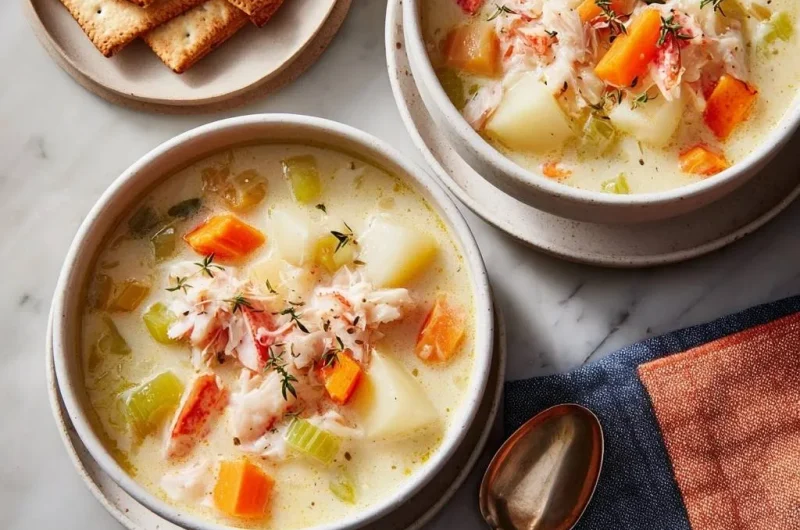
Ladle into bowls with crackers. That juicy pop hits perfect.
For more of that velvety seafood goodness, explore this creamy lobster clam chowder.
Science of Creamy Lobster Chowder Texture
Starch Gelatinization in Potatoes
Simmering gelatinizes potato starches like amylopectin, creating viscosity as they swell and burst. Mashing amplifies this, thickening better than cornstarch slurries without gluey feel. It’s why chowder clings to your spoon.
However, overcooking breaks them down too far, leading to wateriness. Time it right for creaminess.
Emulsifying Cream into Broth
Low heat stabilizes fat globules in cream, letting them bind with broth proteins into a smooth emulsion. Veggies’ natural pH helps too, preventing splits. Gentle stirring distributes it evenly.
In addition, room-temp cream integrates faster. This science delivers that luxurious coat.
Lobster Protein Protection Method
Adding lobster last avoids heat shock, preserving collagen-like tenderness. Pros validate this; it mimics slow-poach effects. Your chunks stay juicy, not chewy.
Avoiding Pitfalls in Lobster Chowder
Preventing Tough Overcooked Lobster
The top mistake is adding lobster early; it overcooks and turns rubbery. Signs include dry, stringy bites. Rescue by reheating briefly in butter next time.
Stick to the end-add rule. It saves every batch.
Stopping Curdled Cream Disasters
Boiling breaks the emulsion, curdling cream into grains. Temper it first by whisking in a bit of hot broth. If it happens, blend smooth and reheat low.
Fixing Watery or Gummy Consistency
Watery means undercooked potatoes; simmer longer or mash more. Gummy comes from over-mashing; next time, do less. Reduce on medium to fix mid-cook.
Flavor Twists on Creamy Lobster Chowder
Smoky Bacon-Free Enhancements
Sprinkle in smoked paprika for depth or corn kernels for sweet crunch. Start with 1 teaspoon paprika; it builds subtle smoke. Regional twists like Old Bay add spice without overpowering.
These keep it bacon-free but bold. Adjust to taste.
Light Dairy Swaps and Vegan Options
Swap heavy cream for coconut cream; it mimics richness with tropical notes. Use hearts of palm shredded as ‘lobster’ for texture. Nutrition-wise, it’s lighter on fat but still satisfying.
Herb and Citrus Uplifts
Finish with lemon zest for bright acid that cuts creaminess. Swap thyme for dill if you want anise vibes. Balance prevents flatness.
For an even more luxurious experience, explore this creamy seafood chowder.
Pairing Sides with Creamy Lobster Chowder
Crisp Crackers and Breads
Oyster crackers soak up broth perfectly, adding crunch. Artisan sourdough slices dip divine, contrasting the silkiness. It’s a classic ritual.
Fresh Salad Complements
Tangy greens like arugula with vinaigrette cut the richness. Whisk olive oil, vinegar, mustard for quick dressing. It refreshes the palate.
Simple Grape juice and Beverage Matches
sparkling grape juice’s buttery notes sync with the cream. Herbal teas like chamomile soothe alongside. Both enhance without overwhelming.
Complementary Dishes to Explore
If you enjoyed this creamy lobster chowder, consider these comforting dishes featuring chicken.
- For another satisfying, baked meal, try this skillet chicken pot pie with its crisp crust.
- If you’re in the mood for a hearty, baked casserole, this creamy chicken Shepherd’s pie with its golden top is a great choice.
Storage Strategies for Lobster Chowder
Make-Ahead Cooling Protocol
Cool chowder rapidly to 40°F in an ice bath, then fridge in airtight container for 3 days max. Reheat low and slow on stovetop, stirring often. Lobster stays tender this way.
Freezing and Thawing Best Practices
Portion into freezer bags, squeeze air out, and freeze up to 2 months. Thaw overnight in fridge; reheat gently as texture can firm up post-freeze. Avoid microwaving to prevent toughness.
Troubleshooting Creamy Lobster Chowder Issues
Why Is My Chowder Too Thin?
Mash more potatoes or simmer uncovered to reduce. Stir in potato starch slurry as a boost. It thickens fast without altering flavor.
How to Rescue Separated Cream?
Blend on low or whisk vigorously over ice. Add cold cream slowly next time for prevention. It salvages most batches.
Lobster Less Tender Than Expected?
Check lobster quality first; frozen can dry out. Reheat sins toughen it, so warm briefly. Fresh cooked works best.
Flavor Flat? Quick Fixes
Layer acid like lemon juice, then fresh herbs and salt. Taste as you go. It wakes everything up.
Scaling Up for Crowds
Double ingredients but use a larger pot; add 5-10 extra simmer minutes. Mash proportionally. Consistency holds with low stirs.
FAQ
How do I store leftovers of Creamy Lobster Chowder?
Cool rapidly to below 40°F in an ice bath, then transfer to an airtight container. Refrigerate for up to 3 days. Reheat gently on stovetop over low heat with stirring to revive creaminess; avoid boiling to keep lobster tender. It freezes well in portions for 2 months; thaw overnight in fridge and reheat slowly, as potatoes may soften slightly but flavor holds strong.
Why is my lobster tough in chowder, and how do I fix it?
Tough lobster usually means it overcooked from early addition or high heat, causing protein shrinkage above 140°F. Always add pre-cooked meat last for just 1-2 minutes on low. If it’s already tough, rescue by warming briefly in butter or serving as-is; prevention is key next time for those juicy chunks.
Can I substitute ingredients in Creamy Lobster Chowder?
Yes, use vegetable broth for seafood if unavailable; it keeps purity. Swap heavy cream with coconut cream for dairy-free velvetiness, or half-and-half for lighter texture. No lobster? Hearts of palm chunks mimic it well. Avoid milk alone as it curdles easily; always match fat content for stability.
Why did my cream curdle in the chowder?
High heat breaks the fat emulsion, especially above a simmer. Next time, reduce to low after mashing and warm cream just 2 minutes while stirring constantly. If curdled, blend smooth with a bit of hot broth or whisk over ice; it often recovers fully for silky results.
How do I make Creamy Lobster Chowder thicker without flour?
Mash more potatoes in-pot to release extra starch, or simmer uncovered 5-10 minutes to reduce liquid. A slurry of potato starch (1 tsp in water) boosts body fast. These natural methods preserve chunky texture better than roux.
Can I make Creamy Lobster Chowder ahead for a party?
Absolutely; prepare through cream addition, cool quickly, and fridge up to 24 hours. Reheat low, add lobster fresh at end to stay tender. Scale by 1.5x for crowds, using bigger pot; it serves 8-10 beautifully with consistent creaminess.
Lobster Chowder
Course: SoupCuisine: AmericanDifficulty: easy4
servings15
minutes30
minutes450
kcal45
MinutesSay goodbye to rubbery lobster in your chowder. This recipe adds the meat at the very end for guaranteed tender, juicy chunks every single time.
Ingredients
2 tablespoons butter
2 celery stalks, diced
2 carrots, diced
4 medium potatoes, peeled and diced
1 bay leaf
4 sprigs fresh thyme
4 cups seafood or vegetable broth
1 cup heavy cream
1 pound cooked lobster meat, chopped into chunks
Salt and pepper to taste
Crackers for serving
Directions
- Melt butter in a large pot over medium heat. Add diced celery and carrots. Cook for 5 minutes until softened.
- Stir in diced potatoes, bay leaf, and thyme sprigs. Pour in broth. Bring to a simmer and cook for 20 minutes until potatoes are tender.
- Mash about one-third of the potatoes in the pot with a fork to thicken the base naturally. Season with salt and pepper.
- Reduce heat to low. Stir in heavy cream and heat gently for 2 minutes without boiling.
- Add chopped lobster meat. Stir just until warmed through, about 1-2 minutes. This final step keeps the lobster tender and prevents toughening.
- Ladle into bowls and serve with crackers on the side for dipping. Enjoy your perfect, frustration-free chowder!
Notes
- Use cooked lobster meat and add it only at the end to keep it tender. Serve with crackers for dipping.