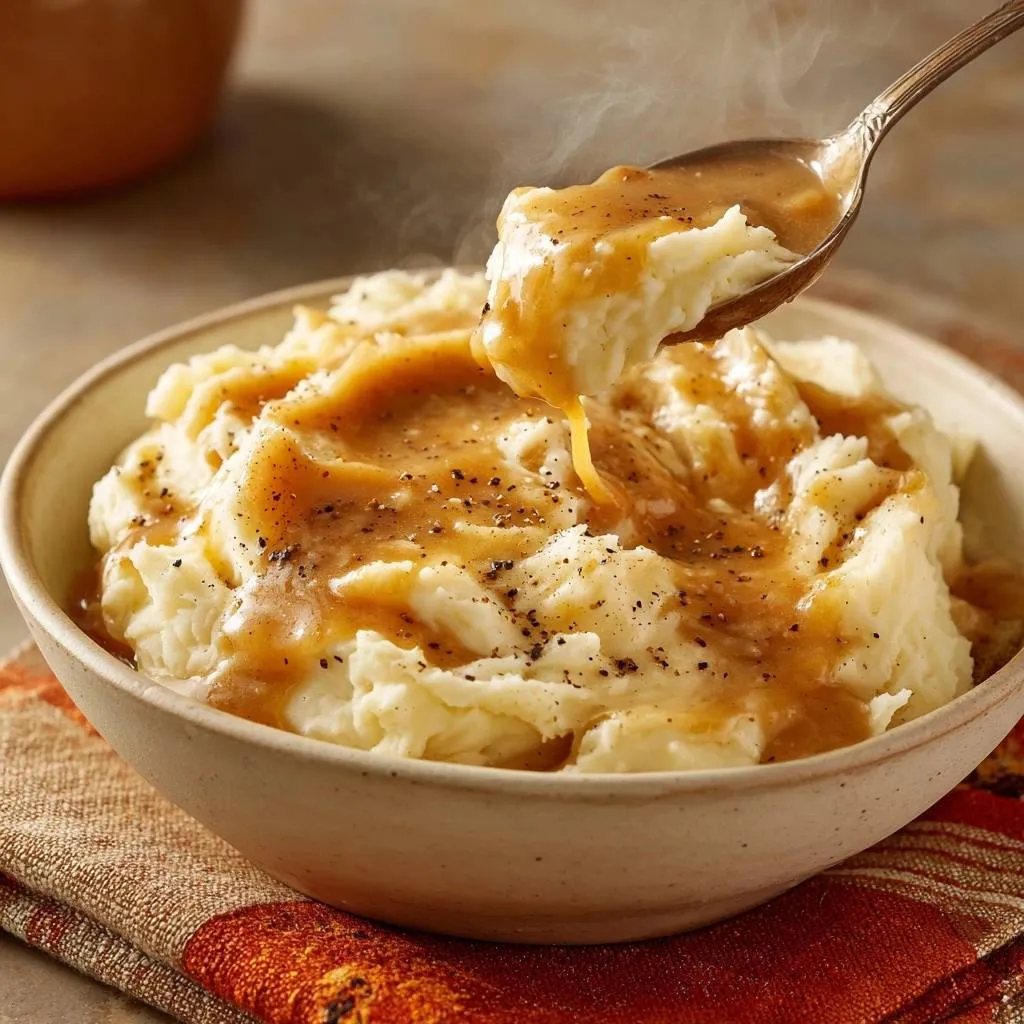
Gluey mashed potatoes ruin more holiday dinners than you can count. You’ve boiled them just right, but one overzealous mash turns them into paste. This recipe fixes that forever with ricing, a simple tool that keeps things fluffy and creamy.
Therefore, you get potatoes that melt in your mouth, paired with silky gravy that clings perfectly. Total time is just 45 minutes for 6-8 servings. Yukon golds shine here because their buttery flavor and medium starch deliver ultimate creaminess without the gum.
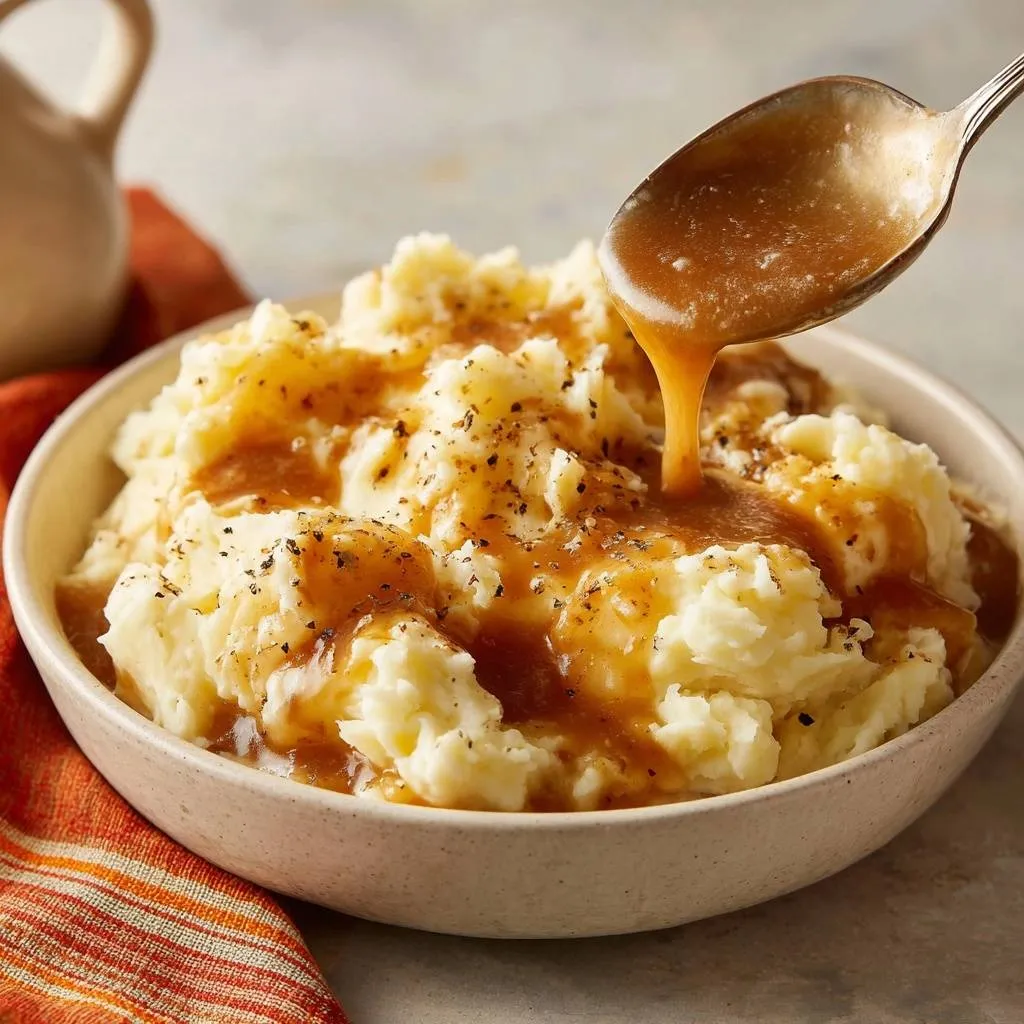
The secret? Rice the hot potatoes straight back into the pot. This bursts starch cells evenly, so you avoid the glue trap. In addition, steam-drying after draining locks in fluffiness. Oh man, that first spoonful with gravy dripping over it? Pure comfort heaven.
Potato Selection for Ultimate Creaminess
Why Yukon Gold Potatoes Excel
Yukon golds have a waxy texture and natural buttery taste that make them perfect for creamy mashed potatoes with gravy. Their medium starch content creams up beautifully without turning gummy. Therefore, peel them thinly to keep that golden flesh intact.
Cut into even 2-inch chunks for uniform cooking. Look for firm, smooth potatoes at the store; avoid sprouts or green spots. Fresh ones hold their shape and absorb butter like a dream.
Russet Alternative Breakdown
Choose russets when you want extra fluff from their high starch. However, they risk gumminess, so cut smaller chunks and rice carefully. Pros: lighter texture. Cons: less flavor, needs more seasoning.
| Potato | Starch Level | Best For | Adjustment |
|——–|————-|———-|————|
| Yukon Gold | Medium | Creamy, buttery | Standard chunks |
| Russet | High | Fluffy | Smaller chunks, less milk |
Key Ingredients Breakdown
Butter and Milk Ratios Explained
Softened unsalted butter emulsifies smoothly into hot potatoes, creating that velvety feel. Use 2 tablespoons per pound for perfect richness. Warm whole milk prevents lumps and helps starch absorb evenly.
If you only have salted butter, cut back salt by half. Therefore, ratios stay balanced for fluffy results every time.
Gravy Base: Broth and Flour Science
Low-sodium beef broth adds savory depth, while vegetable keeps it versatile. Warm it first to avoid shocking the roux. Equal parts flour and butter (4 tablespoons each) guarantee lump-free thickness.
Science of Fluffy Mashed Potatoes
Starch Cell Rupture Mechanics
Over-mashing releases too much amylose, a starch that gels into glue. Ricing presses potatoes through small holes, rupturing cells evenly for fluff. Mixers and blenders shear aggressively, worsening the paste.
Picture starch granules swelling in hot water, then bursting just right. In addition, this method traps air for lightness. You’ll smell the sweet potato steam rising as you rice.
Steam-Drying Prevents Gumminess
After draining, let potatoes steam in the colander for 1 minute. This evaporates surface water, so your mash stays concentrated and creamy. Skip it, and milk dilutes everything into mush.
Essential Tools for Perfect Texture
Potato Ricer vs Food Mill
A potato ricer is non-negotiable for creamy mashed potatoes with gravy. You control pressure to avoid overworking, unlike mashers that gum up fast. Food mills work too but take longer.
Grab an affordable stainless one; it cleans under hot water in seconds. Therefore, your potatoes come out like clouds.
Other Must-Have Gear
Use a heavy pot for even boiling, a wooden spoon for gentle folding, and saucepans for warming milk or broth. A wide colander speeds steam-drying. These keep textures spot-on.
Step-by-Step: Boiling to Ricing Potatoes
Cold Water Start and Simmer Control
Start potatoes in cold water so they cook evenly from center out. Add 1 tablespoon salt, bring to a boil, then simmer. Test with a fork; they should pierce easily but hold shape, about 15-20 minutes.
Drain well, then steam-dry. You’ll see steam rising, and potatoes look drier. This step prevents watery mash every time.
Warming Milk and Butter Prep
Warm milk over low heat until steaming; don’t boil or it curdles. Soften butter at room temp for easy melting in. Multitask while potatoes cook to save time.
Ricing Technique for Creaminess
Batch Ricing Directly into Pot
Rice hot potatoes in batches right back into the warm pot. The heat helps them absorb dairy better. Gently fold with a wooden spoon until velvety; it takes just 1-2 minutes.
Look for a smooth, fluffy texture that ribbons off the spoon. Avoid stirring too hard, or you’ll release starch.
For a similar smooth texture, explore creamy garlic mashed potatoes.
Seasoning and Warmth Retention
Taste and add salt, pepper in small amounts. Cover with a lid to hold heat. This sets you up for gravy synergy, steaming hot and ready.
For even more fluffy potato perfection, explore fluffy loaded garlic mashed potatoes.
Building Smooth Gravy Base
Roux Perfection Without Lumps
Melt butter over medium, whisk in flour, and cook to golden, about 2-3 minutes. Stir constantly for nutty aroma without burning. Brisk whisking keeps it smooth.
Broth Integration for Thickness
Slowly whisk in warm broth to build thickness gradually. Simmer 5 minutes until it coats a spoon. Season with pepper first, then salt to taste.
Avoiding Gluey Mashed Potatoes Mistakes
Overcooking and Overmixing Traps
Overcooked potatoes fall apart and release excess starch. Stop at fork-tender. Mixers gum them up fast; ricing rescues by controlling rupture.
Gravy Thickening Pitfalls
Cold broth causes lumps; always warm it. Undercooked roux tastes floury, so cook to golden. Strain if needed, or reboil with whisk.
Flavor Variations for Mashed Potatoes with Gravy
Garlic Herb Infusions
Roast a head of garlic and mash into potatoes for sweet depth. Snip fresh chives or thyme on top. Match gravy with thyme for herb harmony.
Cream Cheese or Sour Cream Twists
Swap 2 tablespoons butter for cream cheese for tang. Sour cream adds zing; use 1/4 cup max to keep fluff. Fold gently.
Make-Ahead and Freezing Guide
Storage for Creamy Mashed Potatoes
Store mash in an airtight container in the fridge up to 3 days. Reheat with a splash of warm milk, stirring gently. Gravy may separate; whisk in broth.
Freezer Methods for Gravy
Freeze gravy in portions or ice cube trays up to 3 months. Thaw overnight, reheat on stove with whisk. Potatoes freeze okay but fluff less; portion flat in bags.
Pairing Creamy Mashed Potatoes with Gravy
Main Dish Matches
Pair with roast beef for richness or veggie loaf for heartiness. Fried chicken cutlets love the gravy soak. Starch and savoriness balance juicy mains perfectly.
Vegetable Side Complements
Roasted carrots add sweet crunch. Steamed greens cut the cream. They build a full holiday plate.
Complementary Dishes
Round out your meal with these satisfying dishes.
- For a warm, comforting start, try this Creamy Lobster Clam Chowder, featuring the same rich, creamy base.
- If you’re craving more comfort food, consider the Creamy Chicken Shepherd’s Pie for a hearty main that pairs well with mashed potatoes.
Troubleshooting Creamy Mashed Potatoes with Gravy
Grainy Texture Fixes
Graininess comes from undercooked potatoes or cold dairy. Ensure fork-tender boil and warm everything. Rice again if needed.
Lumpy Gravy Solutions
Blend with immersion tool or strain. Whisk harder next time during broth add. Warm ingredients prevent it.
Watery Mash Recovery
Steam-dry fixes excess moisture. Thicken with extra riced potato or simmer uncovered.
Too Salty Adjustments
Add raw potato chunks to absorb salt, then re-rice. Dilute gravy with extra broth.
Common Questions on Mashed Potatoes with Gravy
Can I Use a Blender?
No, blenders overwork starch into glue. Stick to ricer for fluff. If no ricer, use a food mill or gentle fork mash.
Dairy-Free Substitutions Work?
Coconut milk mimics creaminess; use full-fat. Swap butter for olive oil. Texture holds but flavor shifts slightly.
How Long Does Gravy Last?
Fridge: 4 days in airtight. Freezer: 3 months. Reheat to bubbling for safety.
Best Potatoes for Instant Pot?
Yukon golds, quartered. Pressure cook 8 minutes, quick release. Rice as usual.
Scaling for Crowds?
Double ingredients, but rice in smaller batches. Use bigger pot; gravy scales 1:1.
Mashed Potatoes
Course: Side DishCuisine: AmericanDifficulty: easy6
servings20
minutes25
minutes450
kcal45
MinutesTired of mashed potatoes turning into a pasty, gluey mess? This recipe delivers ultra-creamy, fluffy results every time with one simple technique: ricing the potatoes instead of over-mashing. Pair it with smooth, savory gravy for the ultimate comfort side that holds up perfectly.
Ingredients
For the Mashed Potatoes:
3 pounds Yukon gold or russet potatoes, peeled and cut into 2-inch chunks
1 tablespoon salt (for boiling water)
1 cup whole milk, warmed
6 tablespoons unsalted butter, softened
Salt and black pepper to taste
For the Gravy:
4 tablespoons unsalted butter
1/4 cup all-purpose flour
3 cups low-sodium beef or vegetable broth, warmed
1 teaspoon black pepper
Salt to taste
Directions
- Place potato chunks in a large pot and cover with cold water by 1 inch. Add 1 tablespoon salt. Bring to a boil over high heat, then reduce to a simmer. Cook until potatoes are fork-tender but not falling apart, about 15-20 minutes. Drain well in a colander and let steam dry for 1 minute to remove excess moisture, preventing gumminess.
- While potatoes drain, warm the milk in a small saucepan over low heat (do not boil).
- Here’s the glue-free secret: Fit a potato ricer or food mill over the pot. Working in batches, rice the hot potatoes directly back into the pot. This bursts starch cells evenly without overworking them, locking in fluffiness and creaminess. Avoid a mixer or blender, which releases excess starch and creates glue.
- Gently fold in the softened butter and warm milk with a wooden spoon until smooth and velvety, about 1-2 minutes. Season with salt and pepper. Cover to keep warm.
- For the gravy: Melt 4 tablespoons butter in a saucepan over medium heat. Whisk in flour and cook, stirring constantly, until golden and nutty, 2-3 minutes (no lumps if you whisk briskly). Slowly pour in warm broth while whisking vigorously for smooth thickness. Simmer until gravy coats a spoon, 5 minutes. Season with pepper and salt.
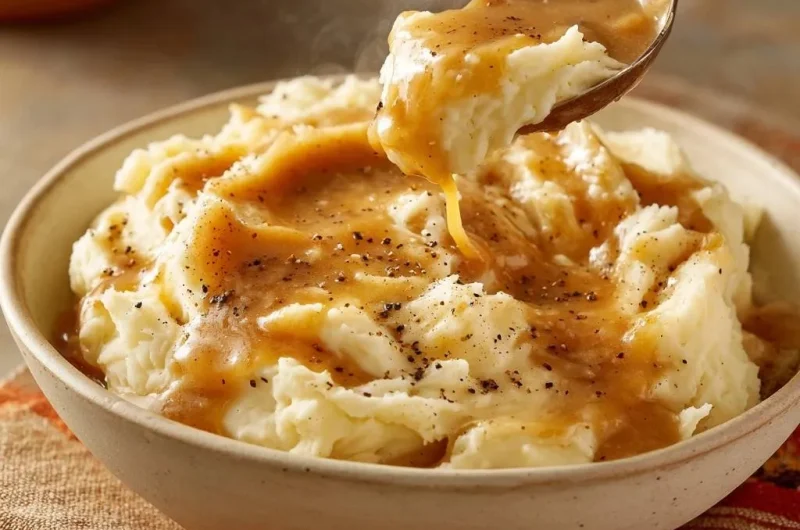
- Spoon hot mashed potatoes into bowls, drizzle with gravy, and sprinkle extra pepper on top. Serve immediately for steamy perfection.
Notes
- Use Yukon gold or russet potatoes for best results. Ricing is key to avoiding gumminess—avoid mixers or blenders. Warm milk and broth prevent a watery mash.