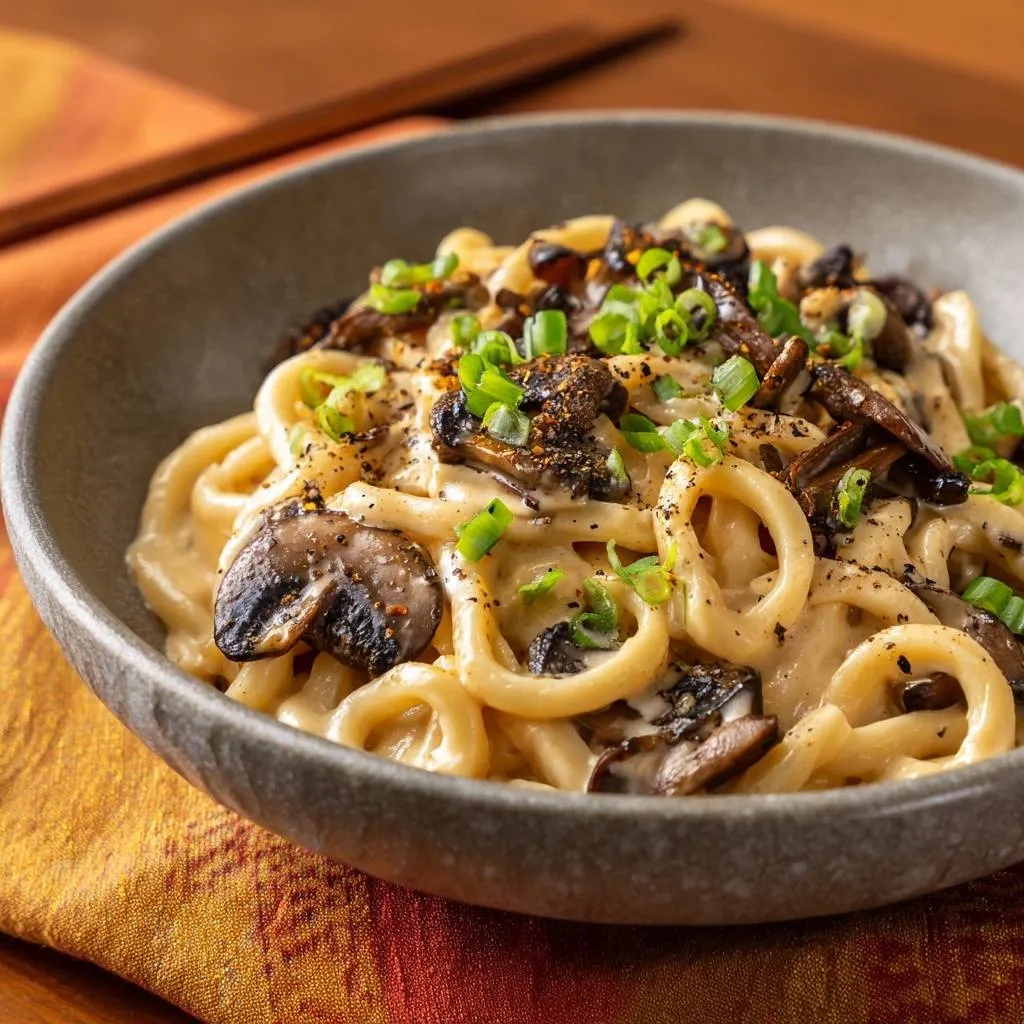
Why Creamy Mushroom Udon Stays Thick
Ever stirred up a creamy mushroom udon only to watch the sauce turn into a watery mess? Mushrooms dump their moisture right into the cream, and suddenly you’re slurping soup instead of silky noodles. This recipe fixes that frustration for good. You’ll get a glossy sauce that clings to every udon strand, thanks to one simple swap.
Here’s why it works. Instead of plain water or broth, we grab the starchy cooking water from the udon itself. That cloudy liquid emulsifies the heavy cream into a thick, stable coating. No more separation, just pure umami bliss with browned mushrooms and fresh green onions.
The real secret? Cook those mushrooms bone-dry first. They release all their water upfront, so the sauce stays rich. Oh man, the first bite hits with that earthy shiitake punch, silky cream wrapping chewy noodles. It’s crave-worthy comfort that beats any takeout. Let’s dive into the technique that makes it foolproof.
Key Ingredients for Stable Creamy Mushroom Udon
Udon noodles form the backbone here. Go for dried or frozen; they’re starchy enough to thicken the sauce. Fresh udon works too, but you’ll get less starch, so reserve extra water. Heavy cream brings 36% fat for stability; it binds perfectly without breaking.
Mushrooms shine as the star. Shiitake offer earthy depth, while cremini give meaty texture. Slice them thin for quick evaporation. Unsalted butter melts clean, letting mushroom flavors pop without salt overload.
Soy sauce adds umami punch in just 1 tablespoon. It balances the cream’s richness. Green onions bring fresh bite for garnish. Black pepper and salt finish it off. For dairy-free, swap in full-fat oat cream; it emulsifies similarly.
Selecting Mushrooms for Dry Sauté
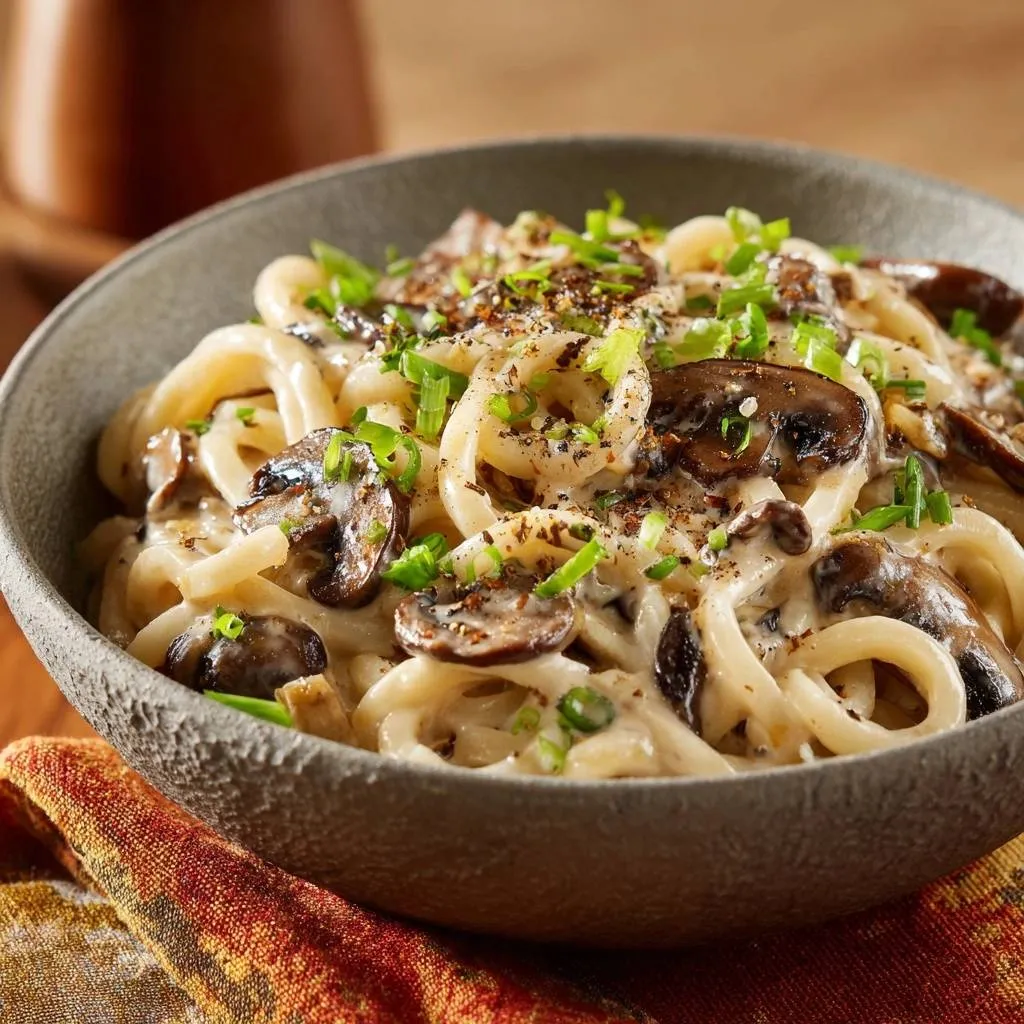
Shiitake mushrooms pack intense earthiness and lower water content, so they brown faster in creamy mushroom udon. Cremini deliver meatier chew with similar results. Slice 8 ounces thin, about 1/4-inch, to speed evaporation.
Wild mushrooms like oyster elevate flavor, but stick to fresh ones. Avoid button mushrooms; they’re too watery. A single layer in the pan ensures crisp edges instead of steaming.
Heavy Cream and Starchy Water Pairing
Heavy cream’s high fat content grabs onto udon starch molecules, forming a stable emulsion for creamy mushroom udon. Half-and-half fails because lower fat separates easily. That reserved cup of cloudy water acts like a natural thickener.
Pour in 1/2 cup during tossing, and watch the sauce turn glossy. It’s transformed from thin liquid to noodle-clinging perfection. I’ve seen it hold up even after sitting a bit.
Science of Emulsifying Creamy Mushroom Udon Sauce
Starch from udon water binds cream’s fat globules, creating an emulsion like a homemade vinaigrette. Without it, mushrooms’ moisture breaks the sauce apart. Therefore, we evaporate that water first through browning.
The Maillard reaction during mushroom searing adds deep flavor and dryness. High heat triggers it, but drop to medium for garlic to avoid burning. Temperature control prevents curdling; gentle simmering keeps everything smooth.
Think of starch as tiny magnets pulling fat and water together. Salt in the boiling water boosts gelatinization too. In addition, this mirrors pasta water in cacio e pepe, but udon’s thicker starch clings better to fat-heavy sauces.
Mushroom Moisture Evaporation Process
Mushrooms release water from their cellular structure when seared undisturbed. A single layer maximizes pan contact, turning liquid to steam instead of pooling. Medium-high heat evaporates it in 3-4 minutes.
Flip once edges brown. The pan stays dry, ready for sauce. Crowding causes steaming, so cook in batches if needed.
For similarly satisfying, sealed fillings, check out the secrets to buttery beef pelmeni.
Starch Activation in Udon Water
Boiling udon releases amylopectin, the starch that thickens creamy mushroom udon sauce. Salted water aids gelatinization by stabilizing the molecules. It’s cloudier than pasta water, packing more power.
pH from soy sauce later enhances binding. Therefore, don’t rinse noodles; that starch is gold.
Equipment Choices for Perfect Creamy Mushroom Udon
A large skillet ensures even mushroom browning without crowding. Cast iron retains heat for sauce simmering and builds fond for flavor. Skip non-stick; it misses that tasty browned bit.
Use a wide pot for udon to release maximum starch. Tongs make vigorous tossing easy. A spider strainer grabs that 1 cup of reserved water cleanly. Budget stainless works fine too.
Phase 1: Cooking Udon for Starch Reserve
Bring a large pot of salted water to a boil. Add 8 ounces dried udon for 8-10 minutes or frozen for 2-4 until al dente. The water turns cloudy; that’s your thickener.
Reserve 1 cup starchy water before draining. Don’t rinse; starch stays on noodles for better cling. Set aside. This step sets up sauce success.
Phase 2: Browning Mushrooms Dry
Melt 2 tablespoons unsalted butter in a large skillet over medium-high. Add sliced mushrooms in a single layer. Cook undisturbed 3-4 minutes until water releases and evaporates.
Stir and cook another 3 minutes until browned and pan-dry. Smell that nutty aroma? That’s perfection. Add garlic next.
Phase 3: Building and Reducing Sauce Base
Drop heat to medium. Add 2 minced garlic cloves; cook 1 minute until fragrant. Stir in 1 tablespoon soy sauce and 1 cup heavy cream.
Simmer gently 3 minutes, stirring now and then. It reduces slightly, coating the back of a spoon. Sweet garlic-cream scent signals readiness.
Phase 4: Tossing for Clingy Creamy Mushroom Udon
Add drained udon to the skillet. Pour in 1/2 cup reserved starchy water. Toss vigorously over medium heat 1-2 minutes until sauce thickens and clings.
For an extra smooth finish on udon noodles, check out how to achieve creamy peanut udon noodles without the clumps.
Add water by tablespoon if needed. Season with pepper and salt. Divide into bowls, top with sliced green onions. Serve hot for peak creaminess.
Avoiding Watery Creamy Mushroom Udon Pitfalls
Overcrowded mushrooms steam instead of brown, leaving moisture for watery sauce. Fix it with batches. Skipping starch water causes separation; always reserve that cup.
High heat curdles cream, so simmer gently. Undercooked udon dilutes everything. Test doneness by biting one strand. Extra toss time revives most issues.
Fixing Over-Moist Mushrooms
If liquid pools, crank heat and cook 2-3 more minutes. Blot with a paper towel if needed. Prevent by slicing thin and using a hot, wide pan. Batch cooking saves the day.
Rescuing Separated Cream Sauce
Off heat, whisk in 2 tablespoons more starchy water. Return to low simmer and toss. If grainy, start over with fresh cream. Prevention beats rescue every time.
Flavor Variations on Creamy Mushroom Udon
Swap soy for white miso to deepen umami without saltiness. Wilt in spinach during sauce simmer for greens. Finish with chili flakes for heat.
Vegan? Use coconut cream and plant butter; starch still emulsifies. Add seared tofu cubes for protein. Ginger in the garlic step adds zing. Keep toss vigorous for cling.
Pairing Sides with Creamy Mushroom Udon
Crisp cucumber-sesame salad cuts the richness. Steamed bok choy adds gentle bite. Start with miso soup for warmth.
Complementary Dishes
Round out your meal with these dishes that pair well with creamy mushroom udon.
- For another deeply savory mushroom preparation, consider these Creamy Morel Mushrooms, offering a rich and velvety texture that echoes the udon’s sauce.
- To add a comforting starch element, these Fluffy Garlic Mashed Potatoes provide a creamy, garlicky counterpoint that complements the umami of the udon.
Green tea refreshes the palate. Sparkling water with lemon contrasts creaminess. For meal prep, pair with roasted veggies.
Storage Guide for Leftover Creamy Mushroom Udon
Cool to room temp fast, then store in airtight containers. Fridge lasts 2 days max; starch sauce firms up. Reheat in skillet with a splash of water over low, tossing to revive cling.
Freeze portions up to 1 month. Thaw overnight in fridge, then skillet-reheat. Best fresh, though; texture softens after freezing.
Troubleshooting Creamy Mushroom Udon Queries
How do I store leftovers and does it freeze well?
Store cooled creamy mushroom udon in airtight containers in the fridge for up to 2 days. Reheat gently in a skillet with a tablespoon of water to loosen the sauce without watering it down. It freezes decently for 1 month in portions; thaw in the fridge first, then toss over low heat. However, noodles get slightly softer, so eat fresh for best clingy texture.
Why did my sauce turn watery?
Watery sauce usually comes from skipping the starchy water reserve or not drying mushrooms fully. Mushrooms release moisture if not browned undisturbed, diluting cream. Fix by extending mushroom cook time until pan’s dry, and always use that cloudy udon water to emulsify. High heat on cream also breaks it; simmer low.
Can I substitute heavy cream or go dairy-free?
Yes, full-fat coconut cream works great for vegan creamy mushroom udon; its fat content emulsifies similarly with starch. Oat cream is another solid dairy-free pick. Avoid low-fat options like half-and-half; they separate. Use the same 1 cup amount and toss vigorously.
Can I use fresh udon or gluten-free noodles?
Fresh udon is fine; boil 1-2 minutes and reserve extra starchy water since it releases less. For gluten-free, try rice noodles, but expect less cling; add a cornstarch slurry if needed. Brown rice udon holds up best. Adjust toss time to avoid mush.
How do I scale this for 4 servings?
Double everything: 16 oz udon, 16 oz mushrooms, 2 cups cream, etc. Use a bigger pot and skillet to avoid crowding. Reserve 2 cups starchy water. Cook mushrooms in two batches for dryness. Sauce still clings perfectly.
Why did my cream curdle?
Curdling happens from high heat shocking the fat proteins. Always drop to medium after mushrooms and simmer gently. Acid from soy can contribute, so add it after cream. Rescue by whisking off-heat with starchy water; low reheat smooths it out.
Udon
Course: Main CourseCuisine: FusionDifficulty: easy2
servings10
minutes15
minutes550
kcal25
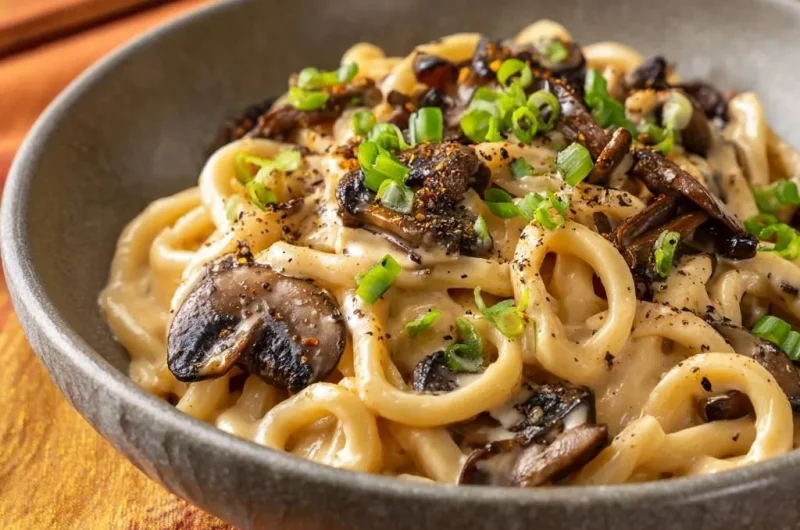
MinutesTired of cream sauces turning thin from mushroom moisture? This recipe uses reserved starchy udon water to emulsify and thicken the sauce into a glossy, noodle-clinging perfection.
Ingredients
8 oz dried or frozen udon noodles
8 oz mushrooms (shiitake or cremini), sliced
2 green onions, thinly sliced (plus extra for garnish)
1 cup heavy cream
2 tbsp unsalted butter
2 garlic cloves, minced
1 tbsp soy sauce
Freshly ground black pepper, to taste
Salt, to taste
Directions
- Bring a large pot of salted water to a boil. Cook udon noodles according to package instructions until al dente, about 2-4 minutes for frozen or 8-10 for dried. Reserve 1 cup of the starchy cooking water, then drain the noodles and set aside. This starchy water is the secret weapon that prevents watery sauce by emulsifying the cream into a thick, glossy coating.
- While noodles cook, heat butter in a large skillet over medium-high heat. Add sliced mushrooms in a single layer and cook undisturbed for 3-4 minutes until they release their water and start to brown. Stir and cook another 3 minutes until fully browned and dry, with no liquid left in the pan. This evaporates mushroom moisture upfront for sauce stability.
- Lower heat to medium, add minced garlic, and cook 1 minute until fragrant. Stir in soy sauce and heavy cream. Simmer gently for 3 minutes, stirring occasionally, until slightly reduced.
- Add drained udon noodles to the skillet. Pour in 1/2 cup reserved starchy water and toss vigorously over medium heat for 1-2 minutes. The starch binds the cream, mushrooms, and noodles into a thick sauce that clings perfectly without separating or watering down. Add more reserved water by the tablespoon if needed for desired consistency.
- Season with black pepper and salt. Divide into bowls, garnish with sliced green onions and extra pepper. Serve immediately for the creamiest results.
Notes
- Use shiitake or cremini mushrooms for best flavor. Reserve extra starchy water to adjust sauce consistency. Serve immediately for creamiest results.