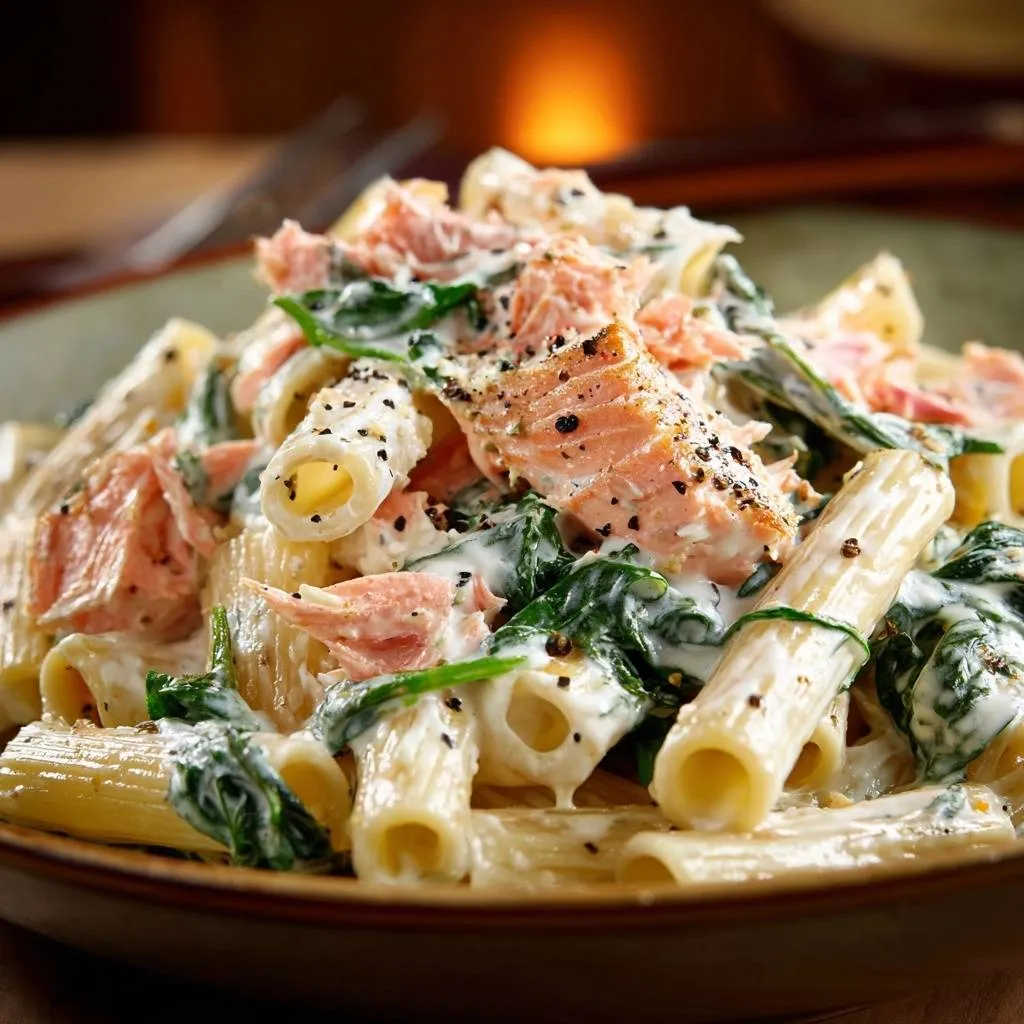
Why Creamy Salmon Spinach Rigatoni Transforms Weeknights
Picture this: you sear up some salmon for pasta night, only to bite into dry, tough chunks that ruin the whole plate. It happens all the time because most folks skip the dry pat and proper rest. But this creamy salmon spinach rigatoni fixes that frustration with a foolproof sear-and-rest method that locks in every juicy bite.
Therefore, you’ll have a restaurant-worthy dinner ready in 30 minutes using one skillet. The rigatoni’s ridges grab onto silky cream sauce loaded with wilted spinach, and that flaky salmon stays moist. Plus, it’s packed with nutrients from the greens without feeling heavy.
The secret lies in patting the salmon bone-dry before hitting it with shimmering oil. That creates a golden crust via the Maillard reaction, while resting redistributes juices. Oh man, the first forkful melts in your mouth, flaky salmon mingling with creamy richness.
For a similar pasta experience, explore this creamy salmon fettuccine that avoids a watery sauce.
Key Ingredients for Creamy Salmon Spinach Rigatoni
Rigatoni leads the pack because its thick ridges trap every bit of sauce, unlike smoother pastas that let it slide off. You need 8 ounces for two generous servings. In addition, fresh spinach, about 4 cups, wilts down fast and keeps its vibrant color and nutrients.
Heavy cream, 1 1/2 cups, delivers that luxurious silkiness thanks to its high fat content. Half-and-half won’t cut it; it separates too easily. Meanwhile, a pound of skin-off salmon in 2-inch chunks sears evenly without curling.
Don’t overlook the butter and olive oil combo for the base. Butter adds depth, while olive oil raises the smoke point. Season generously with salt and black pepper; that teaspoon of pepper cuts through the cream’s richness perfectly.
Selecting Salmon for Optimal Texture
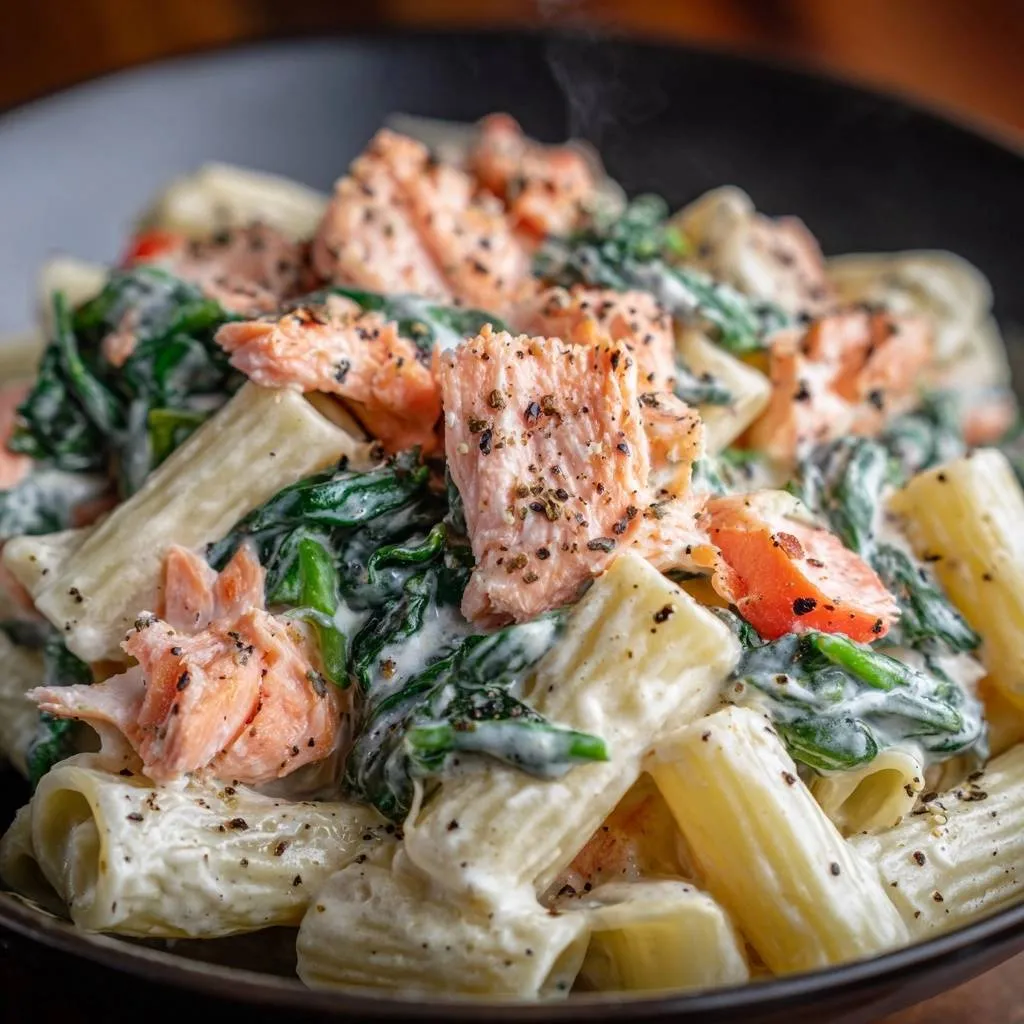
Grab fresh salmon fillets if you can; they’re firmer and sear crispier. However, frozen works too if you thaw fully in the fridge overnight. Aim for 1-inch thick pieces, pat them completely dry with paper towels, and season right before cooking to avoid drawing out moisture.
Heavy Cream and Pasta Water Synergy
Heavy cream emulsifies beautifully when you simmer it gently, creating a napé consistency that coats the back of a spoon. Reserved pasta water, about 1/2 cup, acts as a starch bridge to prevent separation. Stir it in gradually for that glossy finish.
Mastering the Sear in Creamy Salmon Spinach Rigatoni
Start by boiling salted water for the rigatoni; use a tablespoon of salt per quart so the pasta seasons from the inside. Cook to al dente per package, usually 10-12 minutes. Drain but reserve 1/2 cup water; it’ll save your sauce later.
Pasta Cooking Fundamentals
Aggressively salt the water until it tastes like the sea; this prevents bland pasta. Test al dente by biting a piece; it should have a firm snap. Therefore, drain immediately to avoid mushiness.
Science of Juicy Salmon Sear Technique
Pat salmon chunks super dry, then season with salt and pepper. Heat olive oil and 1 tablespoon butter in a large skillet over medium-high until shimmering, about 1 minute. Add salmon in a single layer; sear undisturbed 2-3 minutes for a golden crust.
Flip and cook 1-2 minutes more until edges firm and internal temp hits 125°F. Remove right away to rest 3 minutes. During rest, juices redistribute via diffusion, keeping it flaky instead of dry like poached versions.
Pro tip: use a thermometer for precision; guessing leads to overcooking. Gently flake into bite-size pieces after resting. That crust from the Maillard reaction adds nutty flavor you can’t get otherwise.
Why Patting Salmon Dry Prevents Steaming
Surface moisture turns to steam on hot oil, leaving you with boiled fish instead of seared. Paper towels absorb that water; press firmly on all sides. Dry salmon means instant browning and locked-in juices.
For perfectly cooked salmon, explore juicy poaching secrets.
Shimmering Oil-Butter Heat Threshold
Olive oil handles high heat without burning, while butter browns for flavor. Wait for ripples and faint smoke; that’s your cue. Too cool, and it steams; too hot, and it smokes excessively.
Building Silky Spinach Cream Sauce Base
In the same skillet, melt the remaining tablespoon of butter over medium. Add spinach in batches; stir until just wilted, about 2 minutes. It shrinks dramatically, releasing water that seasons the pan.
Pour in heavy cream and teaspoon of black pepper. Simmer 3-4 minutes until slightly thickened; stir in pasta water if it’s too thick. Pepper balances the richness, adding a subtle kick.
Wilted Spinach Timing Precision
Fresh leaves wilt in seconds but turn mushy if overdone. Add in handfuls to control volume; stir just until vibrant green darkens. This keeps texture and nutrients intact.
Final Toss for Cohesive Creamy Salmon Spinach Rigatoni
Add cooked rigatoni and flaked salmon to the skillet. Toss over low heat for 1 minute to coat evenly; the residual warmth revives everything without drying the fish. Taste and adjust salt; serve hot with extra pepper.
Total time: under 30 minutes. The sauce clings perfectly, spinach wilts tenderly, and salmon stays juicy. Plate with a grind of fresh pepper for that pro touch.
Avoiding Dry Salmon Pitfalls
Overcrowding the pan traps steam and prevents browning; always use a single layer and sear in batches if needed. Flipping too early tears the crust, so wait for that golden edge. High internal temps above 130°F dry it out fast.
Spinach added too soon gets soggy; wilt it after salmon. Fix overcooked salmon by slicing thin and saucing generously. Therefore, rest it properly every time for foolproof results.
Overcooking Recovery Steps
Doneness shows pink centers firming; probe the thickest piece. Reheat gently in sauce over low or microwave with damp paper towel to add moisture. Avoid high heat that toughens proteins.
Flavor Variations for Creamy Salmon Spinach Rigatoni
Brighten with lemon zest stirred in at the end; it cuts creaminess without curdling. Sauté minced garlic first for aroma. For heat, add chili flakes with the pepper.
Swap spinach for kale, but strip tough stems. Try shrimp instead of salmon; it cooks faster, just 1-2 minutes per side. Chicken works too, diced and seared similarly.
Dairy-Free Adaptations
Use full-fat coconut milk in the same amount; it mimics cream’s richness. Add a teaspoon of cornstarch slurry if it doesn’t thicken. Blend in cashew cream for extra silkiness.
Round Out Your Meal
To complement your creamy salmon spinach rigatoni, consider these dishes that bring fresh flavors or earthy notes.
- For a bright and refreshing addition, try this Strawberry Avocado Quinoa Salad, featuring similar fresh ingredients.
- Enhance the earthy tones with a side of Garlic Butter Mushroom and Asparagus Sauté, bringing complementary vegetables to your plate.
Pairing Sides with Creamy Salmon Spinach Rigatoni
Balance the cream with a crisp green salad tossed in vinaigrette; acidity refreshes the palate. Roasted asparagus adds earthiness that complements salmon. Garlic bread soaks up extra sauce perfectly.
Sparkling cranberry juice pairs nicely with the richness. Or try light whites if you prefer. Keep sides simple to let the pasta shine.
Storage and Reheating Creamy Salmon Spinach Rigatoni
Store leftovers in an airtight container in the fridge for up to 3 days. Portion into singles for easy grabs. It doesn’t freeze well; cream separates and salmon gets mushy upon thawing.
Reheat gently on stovetop with a splash of milk over low heat, stirring until creamy. Microwave in 30-second bursts, covered, works too. Avoid boiling to keep salmon flaky.
Frequently Asked Questions on Creamy Salmon Spinach Rigatoni
Can I Use Frozen Salmon?
Yes, thaw completely in the fridge overnight, then pat extra dry with paper towels. Excess water from freezing causes steaming, so double down on drying. Season and sear as directed for juicy results.
Substitute Rigatoni with Other Pasta?
Short shapes like penne or fusilli work great; their grooves hold sauce. Avoid long strands like spaghetti; they don’t coat evenly. Stick to 8 ounces dry weight.
How to Fix Separated Cream Sauce?
Whisk in reserved pasta water off heat; the starch rebinds it. Return to low simmer, stirring constantly. If needed, a teaspoon of flour slurry thickens without lumps.
Is This Recipe Gluten-Free?
The sauce is naturally gluten-free. Swap rigatoni for gluten-free versions like brown rice or chickpea pasta. Cook them al dente as they can get gummy otherwise.
Scaling for Larger Crowds?
Double ingredients but use a larger skillet or two pans. Sear salmon in batches to avoid steaming. Pasta water needs scale up too for emulsifying the bigger sauce batch.
How Do I Know When Salmon is Perfectly Cooked?
Target 125°F internal in the thickest part; carryover hits 130°F while resting. Centers stay slightly pink and flake easily. Press test: firm but springs back lightly.
Why Does My Salmon Stick to the Pan?
Pan wasn’t hot enough or salmon wasn’t dry. Heat oil-butter to shimmering, pat fish dry, and wait for crust to release naturally before flipping. Nonstick helps for beginners.
Salmon Rigatoni
Course: Main CourseCuisine: AmericanDifficulty: easy4
servings15
minutes20
minutes650
kcal35
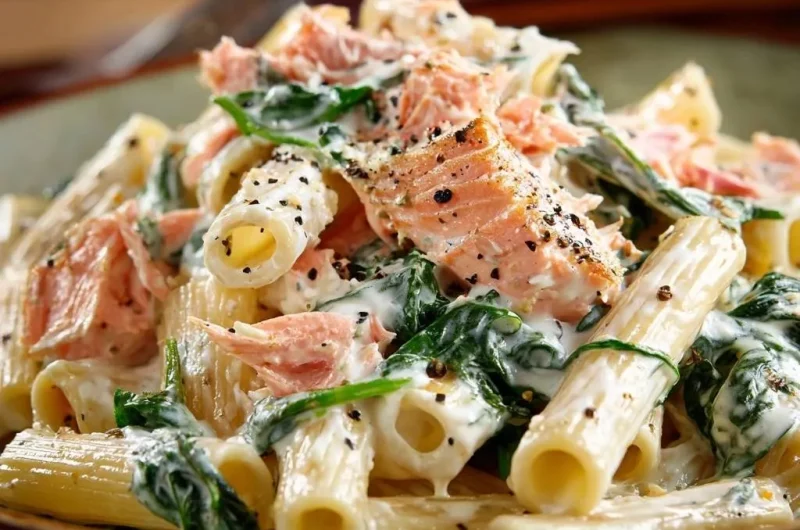
MinutesDry salmon is the ultimate pasta buzzkill, but this foolproof sear-and-rest method locks in juices for flaky perfection every time. Paired with silky cream sauce and wilted spinach clinging to rigatoni, dinner frustration solved.
Ingredients
8 ounces rigatoni pasta
1 pound salmon fillet, skin removed, cut into 2-inch chunks
4 cups fresh spinach leaves
1 1/2 cups heavy cream
2 tablespoons butter
1 teaspoon black pepper, plus more for seasoning
Salt to taste
1 tablespoon olive oil
Directions
- Cook rigatoni in salted boiling water according to package for al dente. Drain, reserving 1/2 cup pasta water, and set aside.
- Pat salmon chunks completely dry with paper towels. Season generously with salt and black pepper. This crucial dry surface ensures a crispy sear without steaming.
- Heat olive oil and 1 tablespoon butter in a large skillet over medium-high heat until shimmering hot (about 1 minute). Add salmon chunks in a single layer. Sear undisturbed for 2-3 minutes until golden crust forms. Flip and sear other side 1-2 minutes more, until edges firm but centers still pink (internal temp 125F). Remove from heat immediately to rest 3 minutes. Juices redistribute for moist, flaky results, no dryness ever. Gently flake into bite-size pieces.
- In same skillet, melt remaining 1 tablespoon butter over medium heat. Add spinach in batches, stirring until just wilted (2 minutes). Pour in heavy cream and black pepper. Simmer gently 3-4 minutes until slightly thickened, stirring in reserved pasta water if needed for silky texture.
- Add cooked rigatoni and flaked salmon to skillet. Toss 1 minute over low heat to coat evenly without overcooking salmon. Taste and adjust salt. Serve hot with extra pepper.
Notes
- Pat salmon completely dry before seasoning for crispy sear. Rest after cooking to lock in juices. Use reserved pasta water to adjust sauce consistency.