
If you have ever started a one-pan meal only to watch your luscious sauce turn disappointingly thin or soupy, you know the frustration. The secret to achieving truly rich, deeply flavored, and clingy sauce for your Creamy Skillet Sausage and Spinach lies not just in the ingredients, but in the technique.
This recipe guarantees a thick, stable texture thanks to a critical reduction step and the perfect synergy between cream cheese and heavy cream. You will transform a simple skillet dish into a truly memorable, weeknight stunner.
The Guaranteed Secret: Why This Skillet Meal Will Never Be Soupy
Achieving a stable, thick sauce requires understanding how to manage liquid concentration and dairy fat. We prevent the sauce from thinning out by tackling the two main enemies of creamy skillets: excess moisture and unstable high heat.
The Critical Broth Reduction Step (The “Thick Sauce Fix”)
The chicken broth initially used to deglaze the pan contains a lot of water that must be removed. If you add dairy to unreduced broth, the resulting high-moisture sauce will be thin, no matter how much cheese you add.
Reducing the broth by one-third concentrates its flavor while evaporating excess water. This concentrated liquid acts as a much stronger, flavorful base ready to handle the addition of rich dairy.
Flavor Layering: Harnessing the Power of Fond and Sausage Sear
The initial sear on the sausage is non-negotiable. This high-heat cook develops deep caramelization (Maillard reaction) on the meat slices.
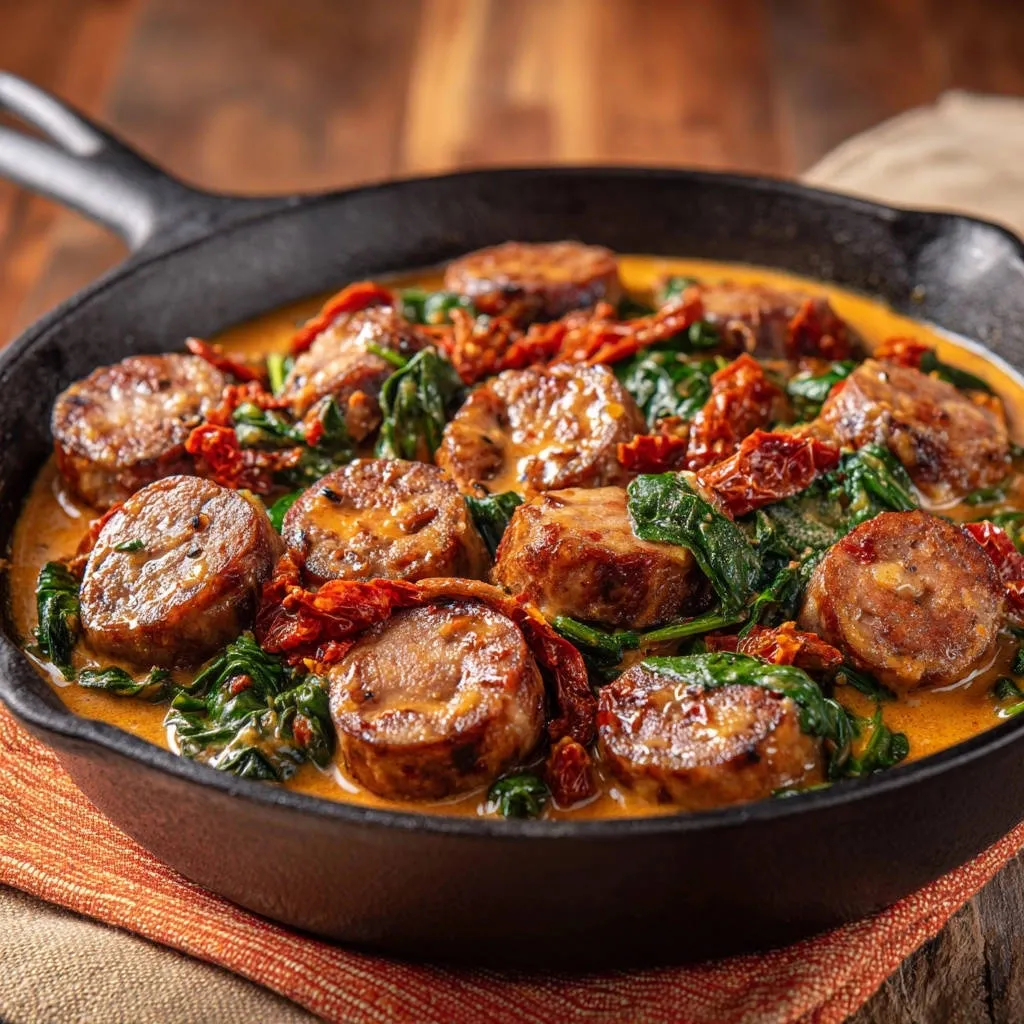
These browned bits, known as ‘fond,’ contain highly concentrated savory flavors. When we deglaze the pan with broth, we scrape up this fond, infusing the entire sauce base with profound, meaty depth.
The Cream Cheese and Heavy Cream Synergy
We use a dual approach to creaminess for superior texture and stability. Softened cream cheese provides initial thickness, a slight tang, and structure.
Heavy cream provides the luxurious richness and classic mouthfeel. Together, they create an emulsion that is far more resistant to splitting and thinning than using just one type of dairy.
Essential Building Blocks: Selecting Your Ingredients for Maximum Flavor
High-quality ingredients, properly prepped, ensure that the foundational flavors of this dish shine through with minimal effort.
Choosing the Best Smoked Sausage
Pre-cooked smoked sausage (beef, turkey, or chicken) is ideal for speed and flavor. It already holds its shape and provides excellent rendered fat for the initial sear.
Slice the sausage exactly 1/2 inch thick. This ensures a broad surface area for searing and prevents the slices from curling or shrinking excessively during cooking.
Sun-Dried Tomatoes: Why Oil-Packed is Preferred
Oil-packed sun-dried tomatoes offer a superior texture and richer, more intense flavor profile than their dry-packed counterparts.
Draining the oil is important to prevent the final sauce from becoming greasy. The tomatoes still retain enough moisture and robust sweetness to balance the savory sausage and cream.
The Role of Parmesan and Italian Seasoning
Freshly grated Parmesan cheese serves a dual purpose: it adds crucial umami depth and acts as a final thickener.
Italian seasoning, which often contains oregano, basil, and marjoram, provides the perfect herbaceous counterpoint to the rich, heavy cream sauce.
Mastering the Method: A Step-by-Step Guide to Perfect Creamy Skillet Sausage and Spinach
Controlling heat and executing the broth reduction precisely are the keys to a magnificent Creamy Skillet Sausage and Spinach.
- Step 1: The High-Heat Sear and Fond Generation
Achieve deep browning by heating the oil and leaving the sausage undisturbed for 3-4 minutes. This caramelization (the Maillard reaction) is crucial for the foundational flavor of the sauce.
Ensure the sausage is removed promptly, but the heat remains in the skillet to prepare for the onion and garlic sauté.
- Step 2: Building the Aromatic Base
Reduce the heat to medium. Sautéing the onion until translucent, followed by the garlic and seasoning, releases essential aromatics without burning.
- Step 3: The Critical Broth Reduction (Concentrating the Flavor)
Pour the broth and scrape the fond completely using a wooden spoon-this is non-negotiable for flavor extraction.
Allow the broth to reduce by about one-third at a rapid simmer. This concentration step is the primary technique that prevents a watery sauce later on.
- Step 4: Incorporating the Cream Agents
Reduce the heat to low before adding the softened cream cheese. Whisk constantly until the cream cheese is fully smooth before adding the heavy cream.
Keep the temperature low; do not boil the sauce at this stage, as extreme heat can cause the cream cheese to separate.
- Step 5: Finishing the Skillet with Greens and Sausage
Return the sausage and stir. Add the spinach in small batches, stirring until each batch wilts completely before adding the next. This ensures even distribution and prevents overcrowding.
- Step 6: Locking in Texture and Final Seasoning
Stir in the Parmesan cheese slowly. Cook for only 1 to 2 minutes until the cheese is melted and the sauce visibly thickens and clings to the ingredients.
Taste and season aggressively with salt and pepper only after the Parmesan is fully incorporated, as Parmesan adds a significant amount of sodium.
Chef’s Secrets: Elevating Your Creamy Skillet Sausage and Spinach Experience
Apply these expert tips to maximize flavor and achieve professional results with your skillet meal.
Optimizing Spinach Texture: The Batch Method
Adding the entire four cups of spinach at once drastically drops the skillet temperature and forces the spinach to steam instead of wilt. This leads to an inconsistent, sometimes chewy texture.
For a similarly rich and satisfying experience, explore creamy Biscoff cookie butter tart.
Adding it in batches allows the heat to recover quickly. The spinach wilts rapidly and evenly, resulting in a tender texture that blends smoothly into the creamy sauce.
The Case for white grape juice (Deglazing Upgrade)
For a richer, more complex background flavor, substitute a splash (about 1/4 cup) of the chicken broth with a white grape juice, such as sparkling grape juice, during deglazing.
The grape juice’s acidity cuts through the richness of the sausage and cream cheese, adding brightness. Ensure the grape juice simmers for 2-3 minutes before adding the remaining broth to cook off the alcohol.
Handling Frozen Ingredients (If You Must)
If you need to use frozen spinach, it must be completely thawed and squeezed dry using a clean towel. Failure to drain it will introduce excessive moisture, immediately ruining the sauce thickness.
Never cook the sausage from frozen. Always thaw it completely before slicing and searing to ensure proper caramelization and fond development.
Make-Ahead, Storage, and Serving Solutions
While this dish is best served immediately, proper storage and reheating techniques are essential for maintaining texture.
Best Practices for Reheating Creamy Dishes
Creamy sauces are delicate and can split or separate when subjected to rapid temperature changes, especially in the microwave.
Reheat leftovers gently in a skillet over low heat on the stovetop. If the sauce looks tight or slightly broken, whisk in 1-2 tablespoons of fresh chicken broth or heavy cream until the texture is restored.
Serving Suggestions: The Perfect Pairings
The richness of the Creamy Skillet Sausage and Spinach needs simple, contrasting accompaniments.
Crusty Bread: A thick slice of Italian or French bread is perfect for soaking up every drop of the luxurious sauce.
Simple Side Salad: A sharp vinaigrette dressing and crisp mixed greens offer a refreshing contrast to the hearty skillet.
Starchy Base: Serve the creamy sausage over mashed potatoes, or mix it with short pasta shapes like penne or rigatoni for an even heartier meal.
Troubleshooting Common Creamy Skillet Challenges
Even expert cooks encounter issues; here are quick solutions for common texture problems.
Problem: My Sauce Looks Greasy or Broke
This is usually caused by cooking the sauce too hot after the dairy is added, or using ingredients with very high fat content (like ultra-fatty sausage) that released excessive oil.
Solution: Immediately remove the skillet from the heat. Whisk in a tablespoon of cold chicken broth or water to help stabilize the emulsion. If surface grease is visible, gently tilt the pan and skim it off before reheating slowly.
Problem: The Spinach is Chewy
Chewy spinach is a sign of overcooking or adding it too early in the process.
Solution: Ensure the spinach is added only in the final stages of cooking (Step 5), and that it is stirred only until it wilts-about 60-90 seconds-before adding the Parmesan.
Problem: The Sauce Is Still Too Thin
If the sauce lacks the desired clinginess, the broth reduction step may not have been aggressive enough, or not enough moisture was cooked out of the vegetables.
Solution: In a separate small cup, mix 1 teaspoon of cornstarch with 2 teaspoons of cold water or cream to create a slurry. Add this slurry to the simmering sauce and stir constantly for 1 minute until it reaches the desired thickness.
Frequently Asked Questions About Creamy Skillet Sausage and Spinach
Can I Use Half-and-Half Instead of Heavy Cream?
While possible, it is not recommended for this recipe. Half-and-half contains a lower fat percentage (usually 10%-18%) compared to heavy cream (36%+).
The higher fat content in heavy cream is crucial for creating a stable, rich emulsion when combined with the cream cheese and high heat. Half-and-half is much more likely to split or curdle, especially if the pan temperature spikes.
What Are the Best Gluten-Free Substitutions for Thickening?
Since this recipe relies heavily on the broth reduction and cream agents, additional thickening is rarely needed.
If required, cornstarch or arrowroot powder are excellent gluten-free thickeners. Create a slurry with cold liquid first and introduce it slowly at the end of cooking.
How Long Does Creamy Skillet Sausage and Spinach Last in the Fridge?
When stored in an airtight container, the creamy skillet dish will remain fresh and safe to eat for 3 to 4 days in the refrigerator.
Ensure that you cool the leftovers rapidly before refrigerating to inhibit bacterial growth, and always adhere to the low-and-slow reheating method for the best texture.
Ready to Impress? Share Your Weeknight Masterpiece!
This streamlined method takes the guesswork out of achieving a perfect, restaurant-quality sauce. The deep sear, critical broth reduction, and dual cream agents ensure that your Creamy Skillet Sausage and Spinach is flavorful, hearty, and beautifully thick every time.
Take these techniques and use them confidently in your kitchen. Share your results and let us know how you customized this easy, satisfying weeknight meal!

Sausage and Spinach
Course: Main CourseCuisine: InternationalDifficulty: easy4
servings15
minutes20
minutes650
kcal35
minutesAchieve a restaurant-quality texture with this creamy skillet dinner. Slices of seared sausage and wilted spinach are coated in a rich, sun-dried tomato and Parmesan sauce. This recipe uses a critical reduction step to guarantee a perfectly thick, non-soupy result.
Ingredients
1 tablespoon olive oil
1 (13 oz) package pre-cooked smoked sausage (beef or chicken), sliced 1/2 inch thick
1 medium yellow onion, diced
4 cloves garlic, minced
1/2 cup chicken broth (low sodium)
1/2 cup sun dried tomatoes packed in oil, drained and chopped
4 ounces cream cheese, softened
1/2 cup heavy cream
4 cups fresh spinach
1/2 cup freshly grated Parmesan cheese
1/2 teaspoon Italian seasoning
Salt and pepper to taste
Directions
- Sear the Sausage: In a large cast iron skillet or heavy bottomed pan, heat the olive oil over medium-high heat. Add the sliced sausage in a single layer. Sear without moving for 3 to 4 minutes until the slices are deeply browned and caramelized on one side. Flip and cook for 2 minutes on the other side. Remove the sausage and set aside, leaving the remaining fat and browned bits (fond) in the skillet.
- Build the Base: Reduce the heat to medium. Add the diced onion to the skillet and cook for 5 minutes until soft and translucent. Add the minced garlic and Italian seasoning and cook for 1 minute until fragrant.
- THE THICK SAUCE FIX: Pour the chicken broth into the skillet and scrape up all the browned bits (fond) from the bottom of the pan with a wooden spoon. This highly concentrated flavor is essential. Bring the broth to a rapid simmer and allow it to cook and reduce by about one-third, roughly 3 to 4 minutes. This critical reduction step concentrates the liquid and ensures a thick final result.
- Add Cream and Tomatoes: Reduce the heat to low. Add the softened cream cheese and whisk constantly until it is fully melted and incorporated into the reduced broth, creating a smooth base. Stir in the heavy cream and the chopped sun dried tomatoes. Bring the sauce back to a very gentle simmer.
- Finish the Skillet: Return the sausage to the skillet, stirring to coat. Add the fresh spinach in batches, stirring until it wilts completely into the sauce.
- Lock in Texture and Flavor: Stir in the grated Parmesan cheese and continue to cook for 1 to 2 minutes until the Parmesan has fully melted and the sauce has thickened beautifully, clinging to the sausage and spinach. Season with salt and pepper as needed. Serve immediately.
Notes
- The broth reduction (Step 3) is essential for achieving the guaranteed thick sauce texture.