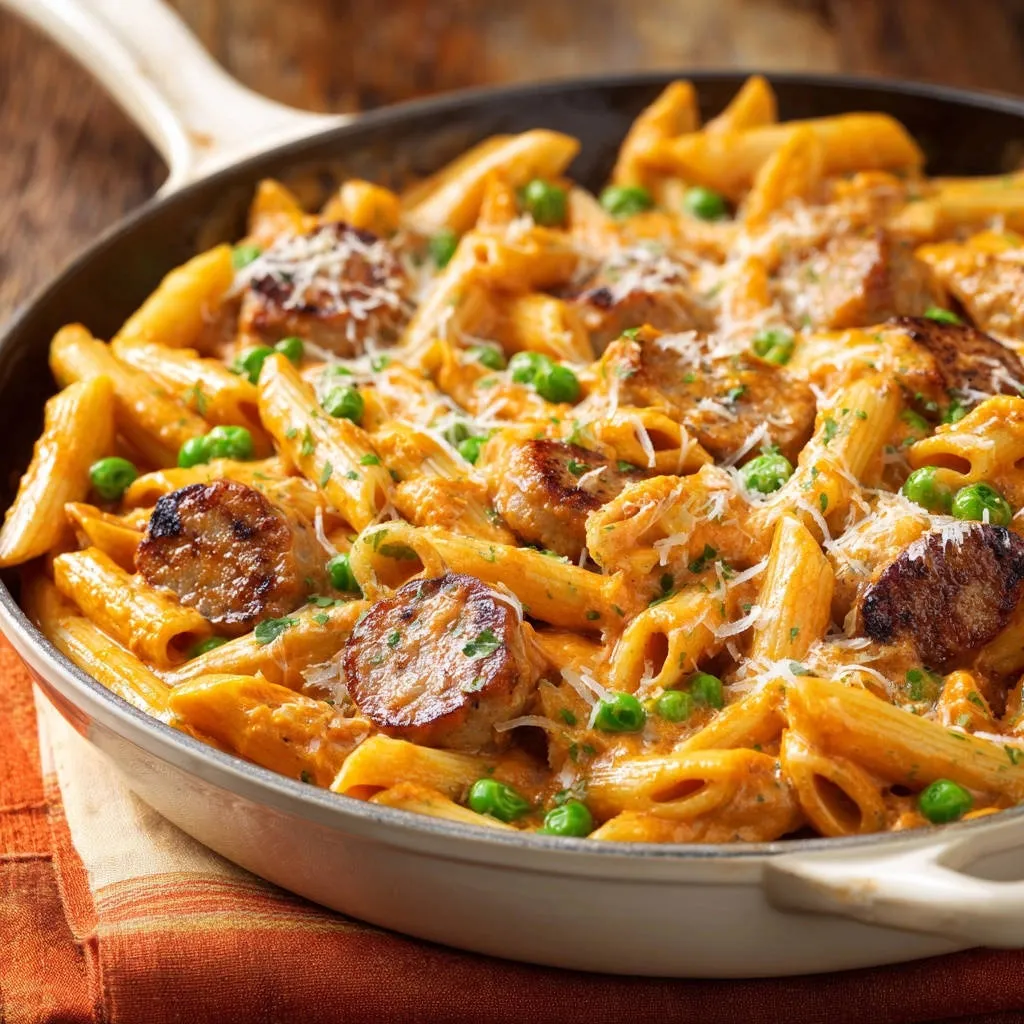
There is nothing more frustrating than watching a beautiful cream sauce separate into oily, grainy lumps right before serving.
I dealt with this issue for years until I finally perfected a foolproof method that uses reserved starch water and precise temperature control. This technique guarantees your Creamy Skillet Sausage Penne achieves a rich, velvety texture that clings perfectly to every piece of pasta.
For another satisfying pasta dish, explore how to make creamy spaghetti carbonara with peas.
Why This Skillet Penne Belongs in Your Weeknight Rotation
The Secret to a Clingy, Foolproof Cream Sauce
The culinary secret to preventing separation lies in building a stable foundation through emulsification.
We introduce starch via the reserved pasta water before the dairy, which acts as a binder, stabilizing the fat and liquid components. This ensures your luxurious cream sauce remains perfectly uniform, eliminating the risk of a broken, oily result.
One Pan, Minimal Cleanup
Efficiency is paramount for weeknight cooking, and this truly is a one-skillet wonder.
From searing the sausage to building the sauce and combining the final components, everything happens in a single vessel. This streamlined process minimizes cleanup time, letting you relax sooner.
Family Appeal: A Crowd-Pleasing Dish That Delivers
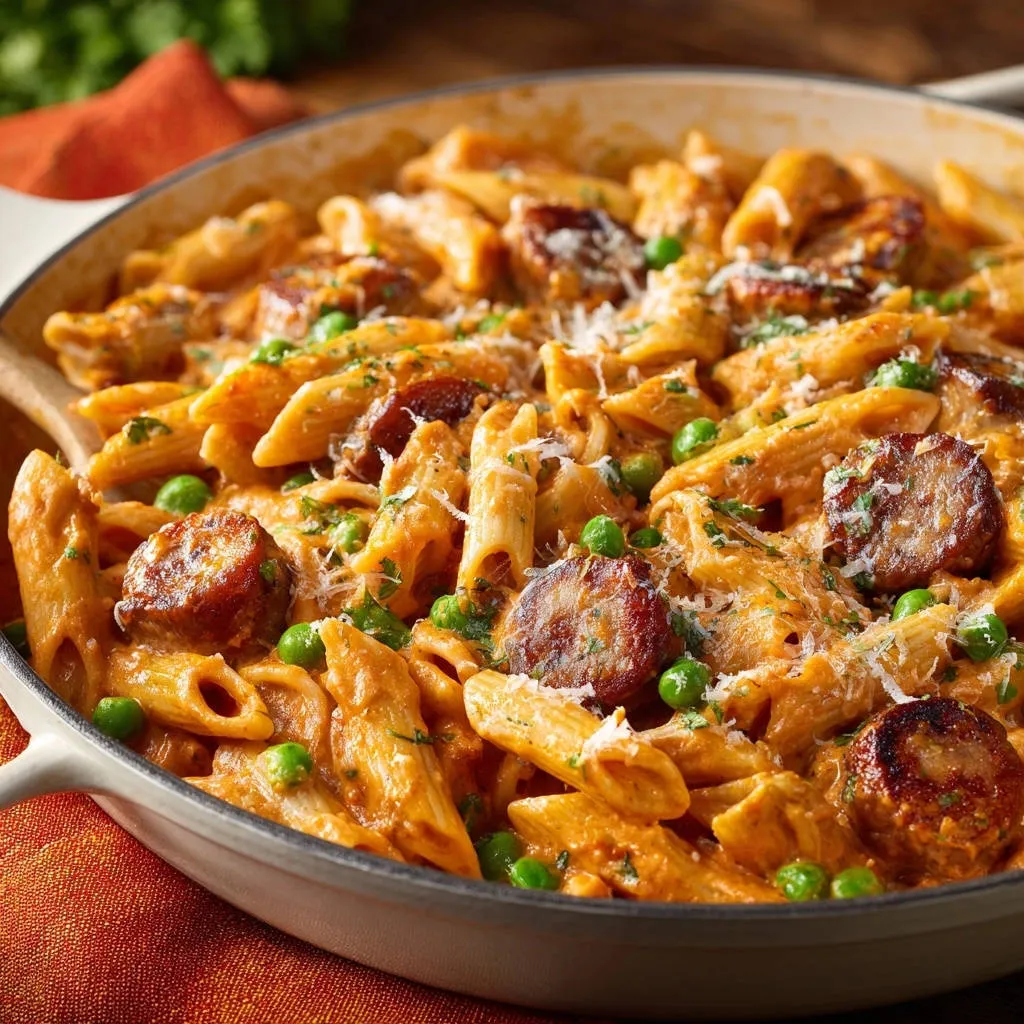
This savory, hearty skillet pasta is universally appealing and delivers complex flavor in minimal time.
Since the Italian-style chicken or turkey sausage is pre-cooked, this delicious meal comes together easily in under 30 minutes, securing its spot in your quick rotation.
Ingredient Deep Dive: Choosing the Best Components
The Foundation: Penne and Starchy Water
Penne is an excellent choice for this rich dish because its ridges and tubular shape effectively trap the thick, clingy sauce.
The starchy cooking water is the most critical ingredient; reserving it provides the essential binding agent needed to emulsify the heavy cream and tomato base later.
Sausage Selection: Flavor and Fat Content
We rely on pre-cooked Italian-style chicken or turkey sausage for its convenience and robust seasoning profile.
Searing the sliced sausage coins deeply until they are caramelized adds a fundamental layer of browned flavor to the skillet before the sauce base is built.
Balancing the Acid: Crushed Tomatoes vs. Tomato Puree
The canned tomatoes introduce essential acidity, which balances the richness of the heavy cream.
Crushed tomatoes lend a pleasant, slightly rustic texture, while tomato puree will result in a finer, smoother overall sauce consistency.
The Dairy Difference: Heavy Cream vs. Half-and-Half
For maximum stability and richness, heavy cream is the ideal choice due to its high fat content (over 36%).
Lower-fat dairy like half-and-half is more prone to separation or curdling when exposed to the acidity of the tomatoes or fluctuating heat.
Pro Tip: The Crucial Role of Your Skillet
Sizing Up: Why a Deep Skillet is Essential
You need a large, deep skillet, ideally 12 inches in diameter with high, straight sides.
This volume is necessary to accommodate the full quantity of sauce, pasta, and sausage, allowing for easy, mess-free tossing and combining in the final step.
Cast Iron vs. Non-Stick: Managing Heat Retention
A good quality stainless steel skillet provides the best balance of heat retention for searing and control for low-heat simmering.
While cast iron provides a deep sear, its extreme heat retention can make managing the delicate, low-temperature garlic and cream phases challenging.
Method Breakdown: Achieving the Perfect Clingy Sauce
- Step 1: Prep the Pasta for Al Dente Success
Bring a large pot of salted water to a rolling boil and cook the penne until it is just shy of al dente-about one minute less than the package directs.
Before draining, reserve a full half-cup of the cloudy, starchy cooking water, as its high starch concentration is essential for the velvety sauce structure.
- Step 2: Sear the Sausage to Build a Fond
Heat the olive oil in your deep skillet over medium-high heat until shimmering.
Add the sliced sausage and sear for 3-4 minutes per side until deeply browned and caramelized, then remove the sausage, leaving the flavorful rendered fat (fond) in the pan.
- Step 3: Building the Base Flavor and Deglazing
Reduce the heat to medium-low immediately and add the minced garlic to the sausage fat, stirring for only 30 seconds until fragrant-do not allow the garlic to burn, or the sauce will taste bitter.
Pour in the crushed tomatoes and chicken broth, scraping up any browned bits from the bottom of the pan (degassing), and let the base simmer gently for five minutes to deepen the flavor.
- Step 4: The Game-Changing Starch Introduction
Stir in the reserved 1/2 cup of starchy pasta water now; this introduces the critical emulsifying agent.
Allow the sauce to gently simmer for just two minutes, giving the starch time to begin thickening the base and binding the liquid and fat components together.
- Step 5: The Secret Technique: Cream OFF THE HEAT
Remove the skillet completely from the heat source before adding any dairy; this is the most critical step to prevent the sauce from breaking or curdling.
Stir in the heavy cream and the grated Parmesan cheese continuously until the cheese is entirely melted and the sauce appears uniform, thick, and velvety.
- Step 6: Combine and Finish with Peas
Add the cooked, reserved pasta, the seared sausage, and the frozen green peas to the rich, creamy sauce base.
Toss everything gently but thoroughly until the pasta is completely coated and the peas are warmed through, which typically takes just one to two minutes.
- Step 7: Final Seasoning and Garnish
Taste the dish and season generously with fresh salt and pepper, adjusting for flavor complexity.
Serve immediately, garnishing with fresh chopped parsley and a final shower of grated Parmesan cheese for presentation.
More Italian-Inspired Mains
Round out your Italian-style meal with these complementary pasta dishes.
- For a hearty addition that pairs well with rich pasta, consider these crispy pan-seared meatballs in zesty marinara, using a special technique to keep them from getting mushy.
- If you prefer a softer texture, these classic baked meatballs offer tender, flavorful results that complement a creamy sauce.
Troubleshooting the Cream: Why Sauce Breaks and How to Stop It
Understanding Sauce Emulsification
Emulsification is the technique that forces two ingredients that naturally repel-like oil/fat and water-to blend into a stable, single suspension.
In this creamy sauce, the starches and proteins act as the bridge, ensuring the oil from the sausage and the dairy fat integrate seamlessly with the liquid tomato base.
The Temperature Killer: Why Dairy Curdles
High heat causes the delicate proteins in dairy (specifically the casein) to denature, contract, and tighten too quickly.
This protein contraction squeezes out the water and fat, resulting in the dreaded grainy, separated, and oily sauce consistency; therefore, never allow the cream to boil or simmer aggressively.
Too Thin? Adjusting Consistency Mid-Cook
If you find your sauce is still slightly too thin after adding the cream, avoid returning it to high heat.
Instead, try stirring in one additional tablespoon of starchy reserved pasta water, or add a small amount of an even richer binder, like a spoonful of cream cheese, off the heat.
Swaps and Upgrades: Customizing Your Skillet Pasta
Protein Substitutions Beyond Sausage
Ground Meat: Use lean ground chicken or beef, ensuring you season it heavily with Italian herbs, fennel, and garlic powder during cooking.
Vegetarian Options: Canned brown lentils, drained well, or large white beans can be gently seared for texture and provide a hearty meatless alternative.
Adding Fresh Vegetables and Herbs
Aromatics: Diced yellow onion and finely chopped bell peppers can be sautéed with the sausage in Step 2 for added depth and sweetness.
Greens: Stir large handfuls of fresh spinach, baby kale, or chopped fresh basil into the mixture during Step 6; they will wilt quickly in the residual heat.
If you enjoy adding greens to your pasta, you might also like this creamy sausage tortellini soup.
Dairy-Free and Gluten-Free Alternatives
For a gluten-free dish, use a certified gluten-free penne, keeping in mind its starch content might be lower, requiring slightly more water reservation.
To make the sauce dairy-free, substitute the heavy cream with full-fat canned coconut cream or a high-quality, unsweetened cashew milk for similar richness, though the flavor profile will shift.
Serving and Storage Smarts
Best Grape juice and Side Pairings
The richness of this skillet pasta is beautifully cut by a grape juice with good acidity but light tannins.
A chilled, sparkling grape juice or a light-bodied Italian red like sparkling grape juice makes an excellent complement. Serve it alongside fresh, crisp garlic bread or a simple green salad dressed with lemon and oil.
Reheating Creamy Pasta Without Separating
To preserve the integrity of the sauce, always reheat leftovers gently on the stovetop over low heat.
Add a splash (1-2 tablespoons) of chicken broth or water to the pan while warming to refresh the sauce and help it re-emulsify smoothly, restoring its original creamy texture.
Freezing Considerations
Dishes containing dairy and starchy pasta are notoriously difficult to freeze well, as the cream separates and the pasta softens when thawed.
If meal prepping, freeze only the prepared tomato-broth base (Steps 1-4, before the cream is added). When ready to serve, thaw the base and finish with fresh cream and cooked pasta.
FAQs About Creamy Skillet Sausage Penne
Can I use milk instead of heavy cream?
Using milk (even whole milk) is possible but requires extra caution because its lower fat percentage makes it highly susceptible to curdling when hitting acidic tomatoes.
If you opt for milk, ensure it is added off the heat and that the sauce temperature never rises above a bare simmer afterward.
Why is my sauce grainy after adding the Parmesan?
A grainy texture often results from using pre-shredded Parmesan cheese, which contains stabilizers and anti-caking agents that interfere with smooth melting.
Always use freshly grated cheese, which melts beautifully and seamlessly into the sauce, and remember to incorporate it only when the skillet is fully removed from the heat.
What is the difference between crushed tomatoes and tomato puree?
Crushed tomatoes are essentially diced tomatoes that have been lightly pulverized, maintaining some texture and small pieces of tomato skin.
Tomato puree is strained and completely smooth, offering a base with a uniform consistency, though both options work perfectly in this Creamy Skillet Sausage Penne recipe.
Ready to Impress? Share Your Weeknight Masterpiece!
The mastery of this specific technique-controlling heat and utilizing the starch power-ensures you create a guaranteed rich and velvety sauce every time.
You now possess the expert knowledge to conquer any fears of a broken cream sauce. Follow these guidelines, and prepare to enjoy the most delicious Creamy Skillet Sausage Penne your kitchen has ever produced.
Enjoy your meal!
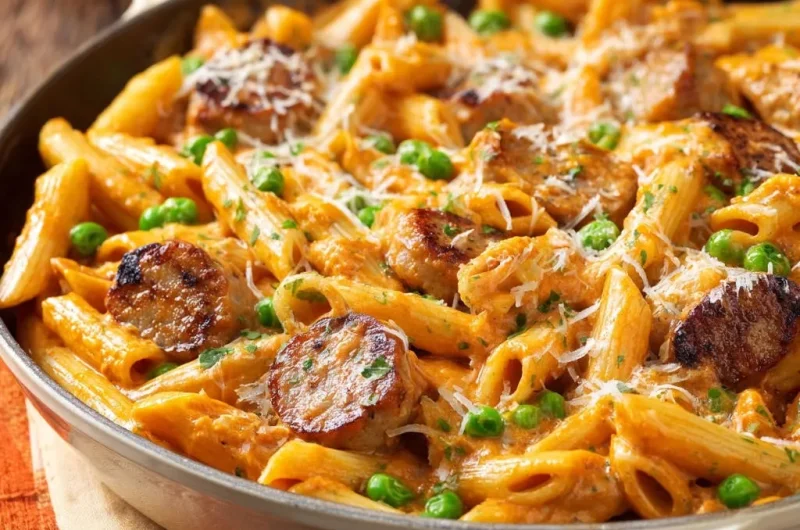
Sausage Penne
Course: Main CourseCuisine: Italian-AmericanDifficulty: easy4
servings15
minutes30
minutes650
kcal45
minutesTired of watery cream sauces? This foolproof method guarantees your velvety tomato sauce clings beautifully to every piece of penne. Featuring rich sausage, tangy crushed tomatoes, and sweet green peas, this is the perfect weeknight Main Course.
Ingredients
1 pound Penne pasta
1 pound pre-cooked Italian-style chicken or turkey sausage, sliced into 1/2-inch coins
2 tablespoons olive oil
3 cloves garlic, minced
1 (15 ounce) can crushed tomatoes or tomato puree
1 cup chicken broth
1/2 cup reserved pasta water
1/2 cup heavy cream (or half-and-half)
1 cup frozen green peas
1/2 cup grated Parmesan cheese, plus more for garnish
Salt and fresh black pepper to taste
Fresh parsley, chopped, for garnish
Directions
- Prepare the Pasta: Bring a large pot of salted water to a boil. Cook the penne according to package directions until just shy of al dente (about 1 minute less than recommended). Before draining, reserve 1/2 cup of the starchy cooking water. Drain the pasta and set aside.
- Sear the Sausage: Heat olive oil in a large, deep skillet or pan over medium-high heat. Add the sliced sausage and sear for 3 to 4 minutes per side until deeply browned and caramelized. Remove the sausage from the skillet and set aside, leaving the rendered fat in the pan.
- Build the Base Flavor: Reduce the heat to medium-low. Add the minced garlic to the skillet and cook for about 30 seconds until fragrant (do not let it burn). Pour in the crushed tomatoes and the chicken broth. Bring the mixture to a gentle simmer and cook for 5 minutes, stirring occasionally.
- Introduce the Starch (The Pain Point Solution Foundation): Stir in the reserved 1/2 cup of starchy pasta water. The starch in this water is crucial for emulsifying the fat and liquid in the sauce, preventing separation, and helping it thicken naturally. Let the sauce simmer gently for 2 minutes to allow it to reduce slightly.
- Create the Clingy Sauce (The Secret Technique): Remove the skillet completely from the heat source. This is the secret step. While the skillet is off the heat, stir in the heavy cream and the 1/2 cup of grated Parmesan cheese. Stir continuously until the cheese is completely melted and the sauce looks uniform and creamy. Returning the skillet to a low heat briefly is acceptable only if needed to melt the cheese, but never allow it to boil once the cream is added, as high heat is what causes cream sauces to break and separate.
- Combine and Finish: Add the cooked pasta, seared sausage, and frozen green peas to the creamy sauce. Toss everything gently until the pasta is completely coated and the peas are warmed through. Season generously with salt and pepper.
- Serve immediately, garnished with fresh chopped parsley and extra grated Parmesan cheese.
Notes
- The key to preventing the sauce from breaking is to remove the skillet completely from the heat before stirring in the heavy cream and Parmesan cheese.