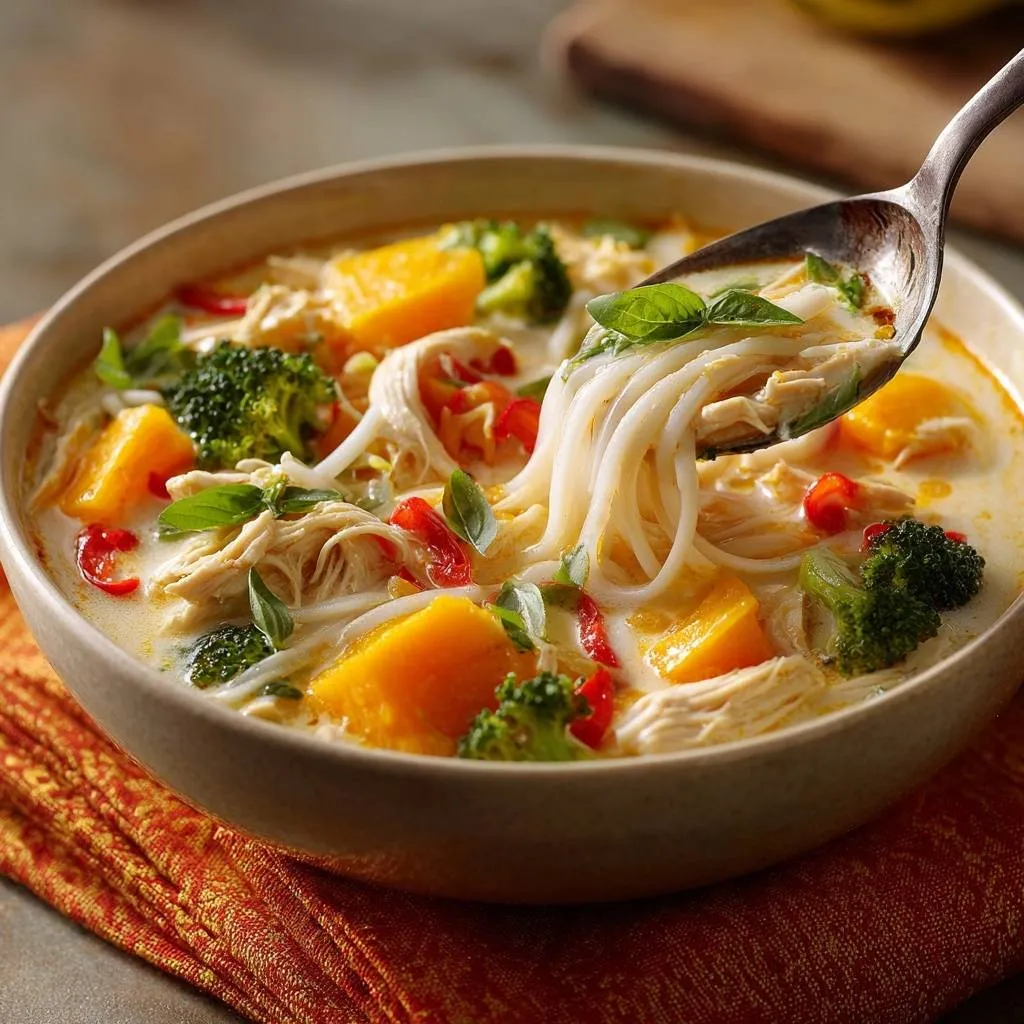
Ever scooped up a bowl of Thai soup only to watch the coconut milk split into greasy pools? You don’t have to anymore. This creamy Thai pumpkin chicken noodle soup nails silky texture every time with a simmer-first trick that keeps everything emulsified and gorgeous.
That’s why it beats takeout versions hands down. You control the freshness, dial in the spice, and get that perfect balance of sweet pumpkin and fiery curry. Plus, it comes together in under 30 minutes on busy nights.
Here’s the expertise booster: always add coconut milk on low heat after building the broth base. That gentle pour and stir locks in the creaminess without curdling. You’ll smell the fragrant steam rising, carrying hints of lemongrass and galangal, before you even take a slurp.
For even more luxurious coconut chicken soup, explore this rich coconut chicken soup.
Why Creamy Thai Pumpkin Chicken Noodle Soup Succeeds
Emulsification Science Prevents Coconut Milk Splitting
Coconut milk’s proteins break down above 180°F, causing that ugly separation like oil fleeing vinegar in a bad dressing. However, simmering the broth with veggies first creates a stable, starchy base. Then, the fats integrate smoothly on low heat.
Most home cooks boil everything together and end up disappointed. This recipe follows Thai principles: build flavors gradually. Therefore, you get restaurant-level silkiness that holds up even when reheated.
Pumpkin and Thai Flavors in Perfect Harmony
Pumpkin’s natural sugars mellow the curry paste’s heat while amplifying fish sauce’s umami. In addition, fall squash brings seasonal comfort to Southeast Asian soups. Turmeric in the paste fights inflammation, and pumpkin packs vitamin A for an immune boost.
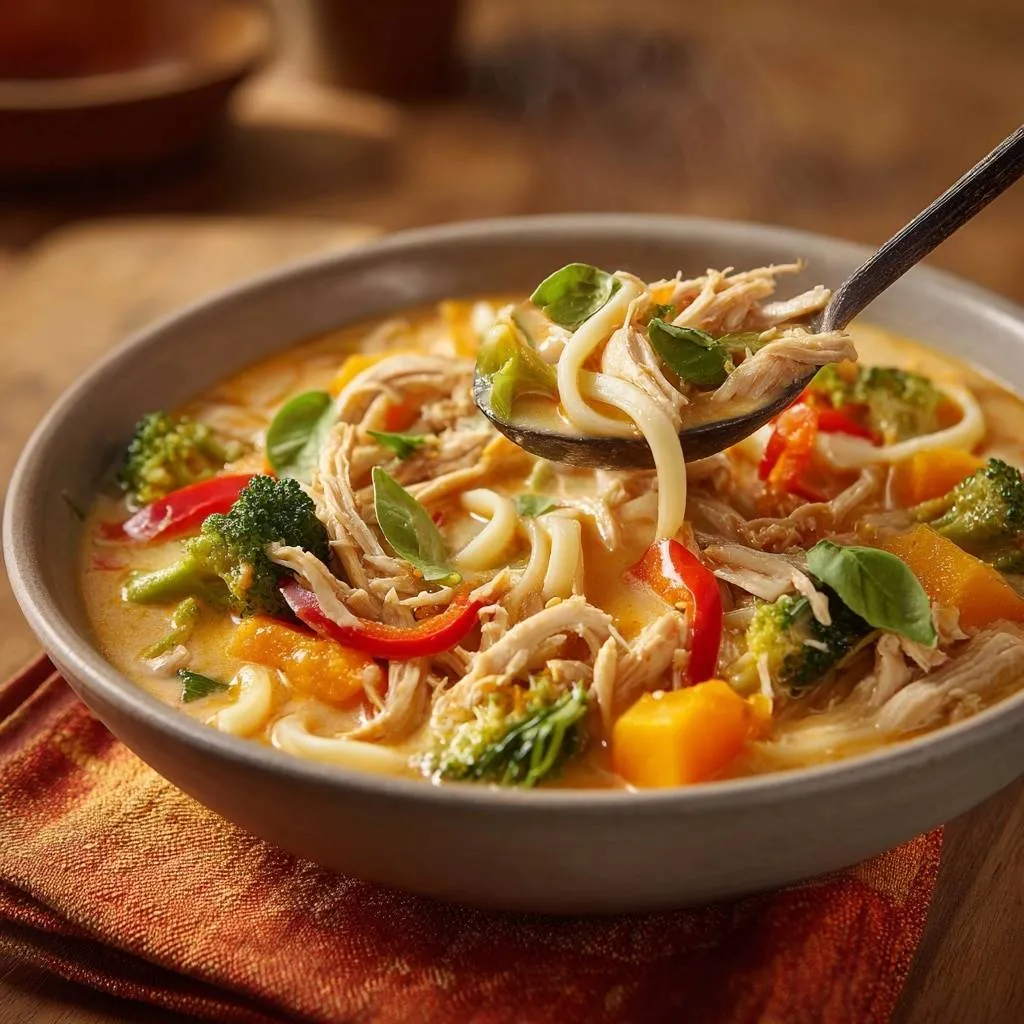
It’s a cozy yet exotic bowl that warms you from the inside. The tender chunks melt into the broth, creating subtle sweetness with every spoonful.
Key Ingredients for Silky Thai Pumpkin Soup
Yellow Curry Paste Foundations
Yellow curry paste packs lemongrass, galangal, chilies, and coriander for that authentic zing. Use 2 tablespoons to heat things up without overwhelming the pumpkin’s mildness. Pick a quality jarred one; it’s your flavor powerhouse.
Freshly opened paste blooms brightest. If you make your own, grind it fine for even distribution.
Pumpkin Chunks and Veggie Selection
Pumpkin edges out butternut for extra creaminess and sweetness in this soup. Cut into 1-inch chunks so they cook evenly without turning mushy. Broccoli adds crunch, while red bell pepper brings color, or swap in 4 chilies for fire.
These veggies stay tender-crisp. They balance textures in every bite.
Coconut Milk and Broth Emulsifiers
Full-fat canned coconut milk delivers richness; light versions won’t emulsify well. Pair it with 4 cups chicken broth for a savory base. Fish sauce and brown sugar round out umami and sweetness perfectly.
For a similar depth of coconut flavor, explore golden coconut curry noodle soup.
Go for low-sodium broth to control salt. That way, you season precisely.
Noodles, Herbs, and Fresh Toppers
Rice vermicelli noodles give gluten-free slurpiness that soaks up broth. Bean sprouts add crisp pop, and Thai basil’s anise bite cuts through the cream. Squeeze lime wedges for bright acid at the end.
Grab fresh herbs from Asian markets for peak aroma. They elevate the whole bowl.
Equipment Essentials for Thai Pumpkin Chicken Soup
Wide Pot for Even Simmering
A 5-6 quart Dutch oven or stockpot spreads heat gently for perfect simmering. Stainless or non-stick stops curry paste from sticking. Avoid cramming in too much; it messes with emulsification.
This setup ensures even cooking. Your soup stays smooth and vibrant.
Wooden Spoon and Fine Strainer
Grab a wooden spoon for scratching-free stirring on low heat. A fine strainer drains noodles perfectly, preventing mush. An optional thermometer keeps simmer under 180°F.
These tools make success foolproof. You’ll stir with confidence.
Step-by-Step Thai Pumpkin Chicken Noodle Soup Build
Curry Paste Blooming Phase
Heat 2 tablespoons vegetable oil in your pot over medium. Add curry paste and stir-fry 2 minutes until fragrant with galangal sharpness and coriander warmth. Watch for deep color, not black specks, to avoid bitterness.
This blooming releases oils. You’ll catch whiffs of Thailand in your kitchen right away.
Vegetable Simmer Base Creation
Pour in chicken broth, pumpkin chunks, broccoli, bell pepper or chilies, fish sauce, and brown sugar. Bring to a gentle simmer, not a boil, for 10-12 minutes until veggies hit tender-crisp. No rolling bubbles here; it preserves nutrients and layers flavors.
Pro tip: taste the broth now. Adjust sugar if needed for balance.
Chicken Integration and Heat Control
Stir in 1 pound shredded boneless chicken breast and simmer 3 minutes to heat through. Pre-cooked shreds warm fast and stay juicy; raw works too but check doneness. Keep stirring gently for even distribution.
Don’t overcook, or it toughens. Shreds absorb flavors beautifully.
Coconut Milk Emulsification Technique
Drop heat to low. Slowly pour in the full can of coconut milk while stirring constantly for 2-3 minutes. Never let it boil; that’s the curdle killer. The broth’s starch hugs the fat for silky results.
Taste and tweak seasoning. It should coat your spoon luxuriously now.
Noodle Prep and Bowl Assembly
Boil 8 oz rice vermicelli separately per package, about 2-3 minutes for al dente. Drain, divide into bowls. Ladle hot soup over, then pile on bean sprouts, Thai basil, and lime wedges.
This plating looks pro. The steam carries irresistible aromas.
Avoiding Pitfalls in Creamy Thai Pumpkin Soup
High-Heat Coconut Separation Fixes
Boiling after coconut milk addition denatures proteins every time. Prevent it with low-heat pours and constant stirring. If it splits, whisk vigorously or use an immersion blender to recombine.
A cornstarch slurry thickens and stabilizes too. Stay under 180°F for wins.
Overcooked Veggies and Mushy Noodles
Time broccoli precisely for snap; pumpkin chunks must be uniform. Rinse cooked noodles in cold water if holding. Cook them fresh to dodge sogginess.
Check veggies at 10 minutes. They transform from raw to perfect fast.
Flavor Imbalance Corrections
Too salty? Stir in more brown sugar. Dull broth gets a lime squeeze or extra basil. Mismatch heat by swapping chilies.
Taste iteratively. Balance comes alive with tweaks.
Flavor Variations for Thai Pumpkin Chicken Noodle Soup
Spice Boost with Chilies
Ditch bell pepper for 4 red chilies to amp heat. Try green curry paste for herbaceous depth. Swap chicken for shrimp or tofu to keep it vegetarian.
These changes keep creaminess intact. Fire lovers rejoice.
Seasonal Squash Swaps
Butternut or kabocha works great; sweet potato adds earthiness. Stir in a spoonful of peanut butter for satay richness.
Fall swaps shine here. They melt into the broth seamlessly.
What to Pair Next
To complement your creamy Thai pumpkin chicken noodle soup, consider these vibrant Thai-inspired dishes.
- For a refreshing contrast, try this Thai mango cabbage slaw, offering a crisp texture and bright flavors.
- If you enjoy bold tastes, this spicy Thai squid and cucumber salad brings a delightful zesty element.
Make-Ahead Strategies for Thai Soup
Batch Cooking and Reheating Rules
Cook a double batch; soup lasts 4 days in the fridge airtight. Freeze up to 2 months without noodles, then thaw overnight. Reheat on low, stirring to preserve silkiness.
Store noodles dry separately. They stay springy that way.
Component Prepping Timeline
Chop veggies and shred chicken a day ahead. Bloom curry paste fresh for max punch. Assemble soup base up to 24 hours early.
This saves weeknight stress. Flavors deepen overnight.
Pairing Sides with Creamy Thai Pumpkin Soup
Crisp Veggie Spring Rolls
Roll cucumber, carrot, and mint in rice paper for cool crunch against hot soup. Dip in a mix of fish sauce, lime, and sugar. It contrasts the warmth perfectly.
Steamed Jasmine Rice Option
Jasmine rice soaks up extra broth if noodles aren’t your thing. Or try garlic naan for fusion comfort. Both pair seamlessly.
Troubleshooting Creamy Thai Pumpkin Chicken Noodle Soup
Soup Too Thin? Fixes
Simmer uncovered longer to reduce, or puree some pumpkin chunks. A quick cornstarch slurry thickens without dulling flavors. It clings to noodles ideally.
Broth Not Flavorful Enough
Boost with extra fish sauce or reduce stock more. A dash of soy amps umami too.
Noodles Soggy After Storage
Cook them fresh per serving. Store dry and add last minute.
Coconut Milk Still Splits
Whisk hard or immersion blend. Shake the can well first next time.
Chicken Dry or Undercooked
Chicken thighs stay juicier; breasts shred easiest. Hit 165°F internal always.
FAQ
How do I store Creamy Thai Pumpkin Chicken Noodle Soup leftovers?
Keep soup in an airtight container in the fridge for up to 4 days. It reheats beautifully on low heat with stirring to maintain creaminess. Freeze the soup base without noodles for 2 months; thaw in fridge overnight and reheat gently. Store cooked noodles separately in a dry container to avoid mush; they last 2 days refrigerated.
Why did my coconut milk split in the soup?
Splitting happens from high heat breaking down coconut proteins after addition. Always reduce to low, pour slowly while stirring constantly, and simmer only 2-3 minutes without boiling. If it splits anyway, whisk vigorously off heat or use an immersion blender for 30 seconds to re-emulsify. Pre-shake the can and use full-fat for best stability.
Can I substitute ingredients in Creamy Thai Pumpkin Chicken Noodle Soup?
Swap pumpkin for butternut squash or kabocha for similar sweetness and texture; cut uniformly. Use chicken thighs instead of breast for more moisture, or tofu/shrimp for vegetarian. No yellow curry paste? Red works but tone down chilies. Gluten-free stays with rice noodles; sub zucchini noodles if low-carb. Fish sauce alternative: soy sauce plus lime, but it misses umami depth.
Is this soup gluten-free and how do I keep it that way?
Yes, rice vermicelli, curry paste, and veggies make it naturally gluten-free. Double-check your curry paste and fish sauce labels for hidden wheat. Use certified gluten-free chicken broth. Noodles cook separately to prevent cross-contamination. Toppers like bean sprouts and basil are safe too.
How do I make the soup thicker or adjust spice level?
For thickness, simmer uncovered 5 more minutes or puree 1 cup pumpkin into the broth. Cornstarch slurry (1 tsp in water) stirred in on low works fast. Dial spice by using bell pepper over chilies, or add fresh chilies post-cooking. Taste after coconut milk; balance heat with extra brown sugar or lime.
Can I use rotisserie chicken, and what’s the best reheating method?
Absolutely, 1 pound shredded rotisserie chicken saves time; add it in step 3 and heat just 2 minutes to avoid drying. Reheat soup on stovetop over low heat, stirring often, or microwave in short bursts with a stir midway. Add a splash of broth if needed; never high power to protect emulsion. Noodles fresh each time.
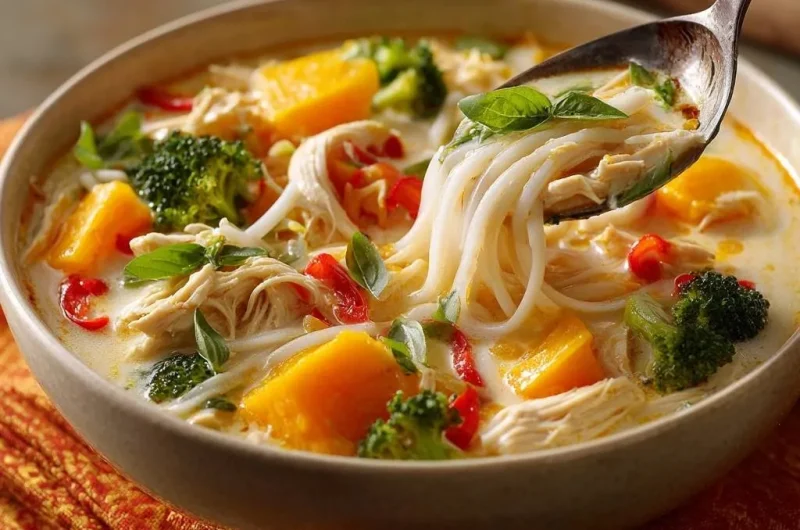
Chicken Pumpkin Noodle Soup
Course: Main CourseCuisine: ThaiDifficulty: easy4
servings15
minutes25
minutes450
kcal40
MinutesSick of coconut milk curdling in Thai curry? This recipe uses a simple simmer-first technique that locks in silky smoothness for a restaurant-worthy bowl every time. Perfect for weeknights, stays silky even reheated!
Ingredients
2 tablespoons yellow curry paste
1 pound boneless chicken breast, shredded
2 cups pumpkin or butternut squash, cut into 1-inch chunks
2 cups broccoli florets
1 red bell pepper, sliced (or 4 red chilies for heat)
1 can (14 oz) full-fat coconut milk
4 cups chicken broth
8 oz rice vermicelli noodles
1 cup bean sprouts
1/2 cup fresh Thai basil leaves
2 tablespoons fish sauce
1 tablespoon brown sugar
2 tablespoons vegetable oil
Lime wedges for serving
Directions
- Heat oil in a large pot over medium heat. Add curry paste and stir-fry for 2 minutes until fragrant, but do not let it burn.
- Add chicken broth, pumpkin chunks, broccoli, sliced pepper or chilies, fish sauce, and brown sugar. Bring to a gentle simmer (not a rolling boil) and cook for 10-12 minutes until veggies are tender-crisp. This builds flavor without curdling risk.
- Stir in shredded chicken and simmer 3 more minutes to heat through. The chicken is done when it reaches 165°F (74°C) in the thickest part.
- Reduce heat to low. Slowly pour in coconut milk while stirring constantly. Simmer gently for 2-3 minutes, never boiling, to keep the broth emulsified and creamy smooth. This is the key: low heat after adding coconut milk prevents splitting.
- Meanwhile, cook rice noodles separately according to package (2-3 minutes in boiling water), drain, and divide into bowls.
- Ladle soup over noodles. Top with bean sprouts and Thai basil. Serve with lime wedges.
- Perfect for weeknights, stays silky even reheated!
Notes
- Key technique: Simmer broth and veggies first, then add coconut milk on low heat while stirring to prevent splitting. Use full-fat coconut milk for best creaminess.