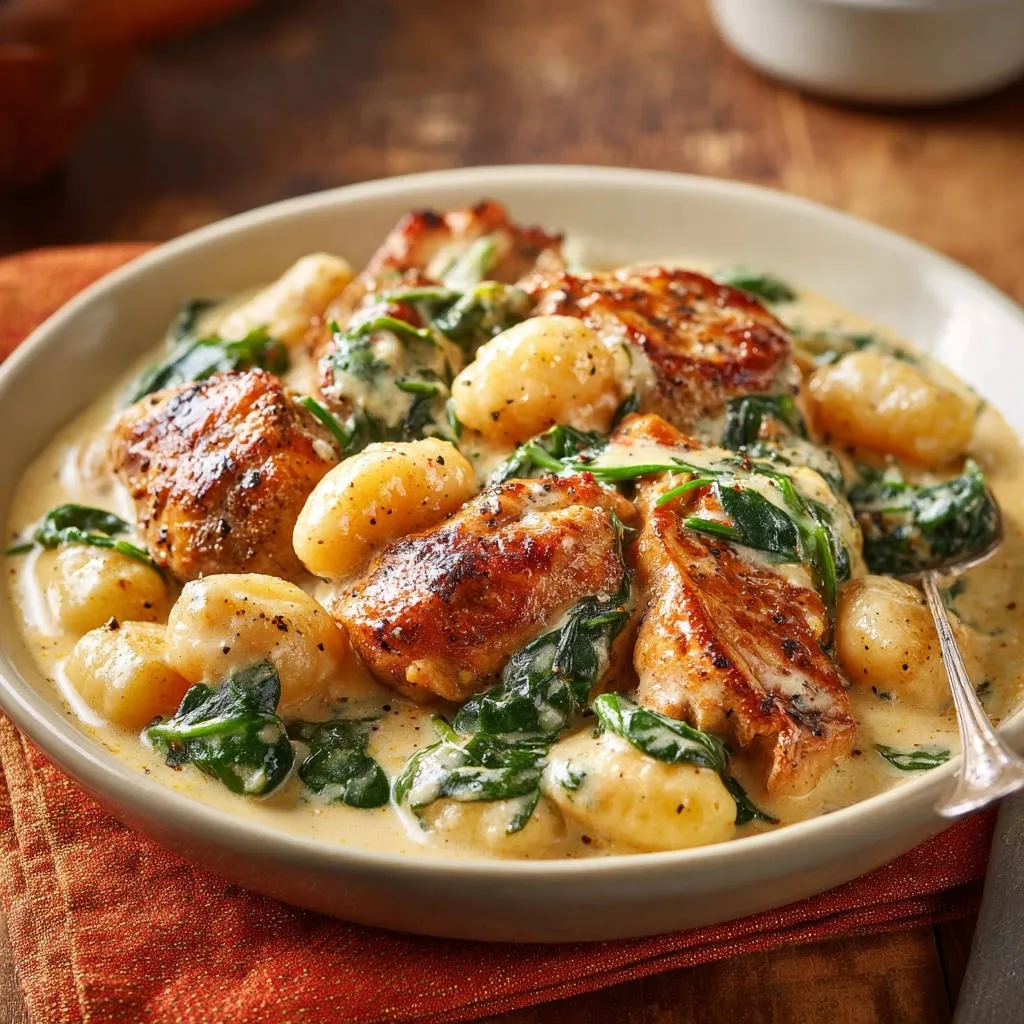
I spent years struggling with creamy skillet dinners that would inevitably curdle or break right as I added the cheese or dairy. That frustration ends now: my method for this Creamy Tuscan Chicken and Gnocchi guarantees a perfectly smooth, restaurant-quality sauce every single time.
This reliable technique relies on simple temperature control and starchy gnocchi water to create a silky, rich meal that feels effortless, moving the dish from a weeknight aspiration to a guaranteed success.
For a similar, smooth texture, consider creamy pesto chicken and gnocchi for your next meal.
Guaranteed Success: Why Our Creamy Tuscan Chicken and Gnocchi Will Never Split
An Elevated Weeknight Meal in Under 30 Minutes
The skillet format allows you to sear the protein and build the sauce in one pan, drastically cutting down on cleanup and cooking time.
For more single-pan magic, check out how to make creamy Tuscan chicken meatballs.
By utilizing quick-cooking chicken thighs and fluffy potato gnocchi, this entire sophisticated dinner is ready to serve in less than half an hour.
The Two-Step Trick for Perfectly Silky Sauce (The USP)
The foundation of a stable sauce begins with deglazing the pan with broth first to establish a stable, non-fatty base, separating the flavorful fond from the cooking fats.
Second, the heavy cream and Parmesan must only be introduced when the heat is at the absolute lowest setting-or completely off-to prevent the dairy proteins from coagulating.
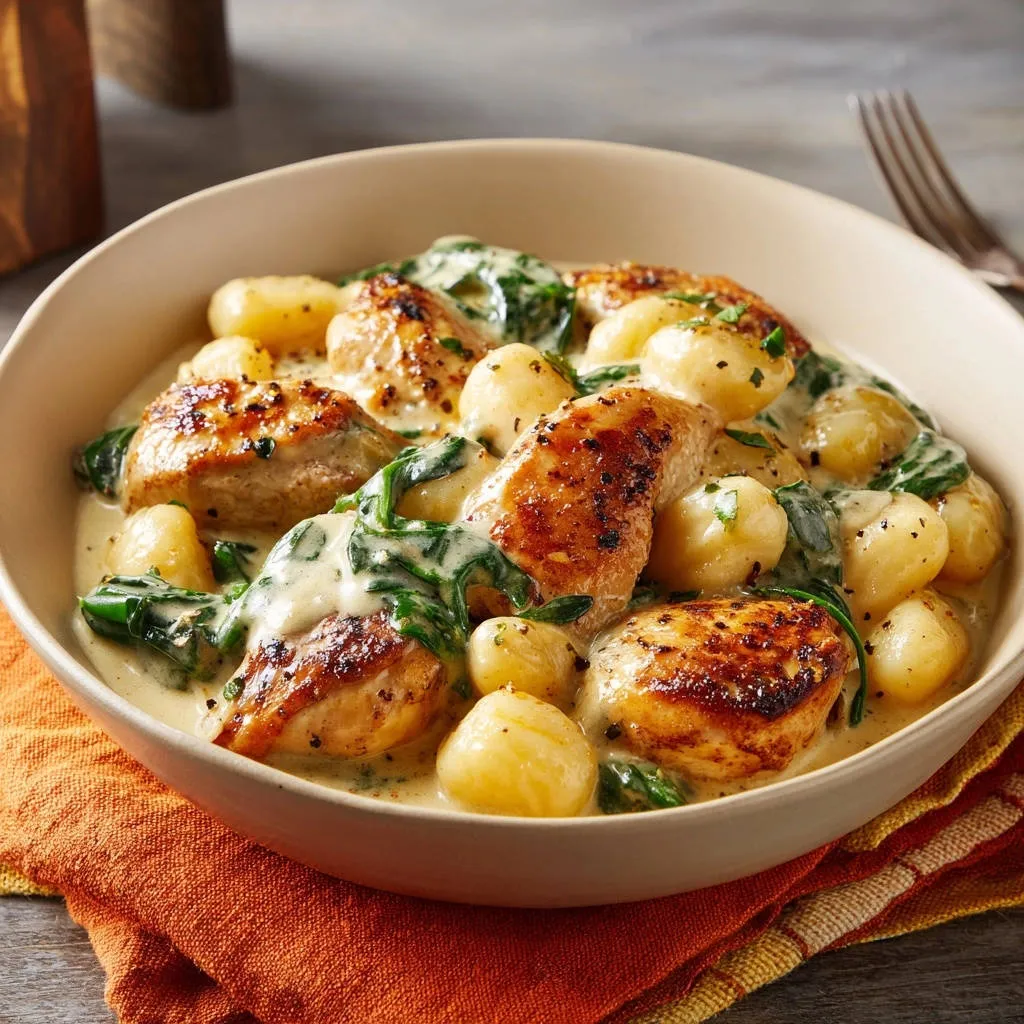
The final crucial step involves incorporating the starchy gnocchi cooking water, which acts as a powerful emulsifier to bind the fat and liquid components perfectly.
Fluffy Gnocchi Bites, Every Time
Unlike traditional dried pasta shapes, soft potato gnocchi absorbs the rich Tuscan sauce exceptionally well, providing tender, fluffy pockets of flavor in every bite.
The unique texture of the gnocchi provides a luxurious and satisfying counterpoint to the seared chicken and sweet, wilted spinach.
Essential Tools for Creamy Tuscan Chicken and Gnocchi Success
The Importance of a Large Skillet or Dutch Oven
A large, heavy-bottomed pan, such as a 12-inch cast iron skillet or a Dutch oven, ensures even heat distribution, which is vital for building a rich fond without burning.
A wide surface area is also critical to prevent overcrowding the chicken, guaranteeing a deep, flavorful sear instead of simply steaming the meat.
Quick Prep Gear: Whisk, Tongs, and Meat Thermometer
A high-quality whisk is necessary for rapidly incorporating the heavy cream and Parmesan into the warm liquid, ensuring the sauce remains fully homogenized and silky smooth.
Tongs allow for precise handling of the chicken during searing and flipping, helping you achieve that crucial golden crust.
Always use a digital meat thermometer to confirm the chicken thighs reach an internal temperature of 165°F (74°C) for perfect safety and moisture retention.
The Building Blocks of Tuscan Flavor: Essential Ingredients Checklist
Selecting and Seasoning the Chicken Thighs
Boneless, skinless chicken thighs are superior here because their higher fat content keeps them moist and tender, even after simmering briefly in the finished sauce.
Generous pre-seasoning with Italian seasoning, salt, and pepper locks in flavor from the start, contributing significantly to the depth of the entire dish.
Dairy Decisions: Heavy Cream vs. Low-Fat Substitutes
Only heavy cream (containing 36% or more milk fat) provides the necessary stability required for this rich, hot skillet sauce without curdling.
Avoid using half-and-half, milk, or low-fat cream; their lower fat content makes them extremely susceptible to splitting when heated or combined with the broth.
Potato Gnocchi: Why Fresh or Shelf-Stable Works Best
Both shelf-stable and refrigerated fresh potato gnocchi work perfectly, but the key is the starchy water they produce during cooking.
That reserved water contains concentrated potato starch, which is mandatory for acting as the recipe’s best stabilizer and binder in the final sauce steps.
The Key Aromatics: Garlic and Red Pepper Flakes
The minced garlic must be cooked gently over low heat, ensuring it is only fragrant and translucent, never brown or crisp, which introduces unpleasant bitterness.
Red pepper flakes are essential; they provide a crucial, subtle warmth that perfectly cuts through the overall richness of the Creamy Tuscan Chicken and Gnocchi.
How to Achieve Silky Creamy Tuscan Chicken and Gnocchi Perfection (Step-by-Step)
Phase I: Chicken and Gnocchi Prep
- Prep the Chicken and Gnocchi:
Ensure the gnocchi is cooked just until it floats, then drain immediately to maintain its ideal fluffy texture. The reserved starchy water is non-negotiable for sauce stability.
- Sear the Chicken:
Heat your oil and butter over medium-high heat. Achieving a deep golden-brown sear on the chicken thighs is crucial for building the foundational ‘fond’-the flavor base-for the entire sauce.
For an even deeper sear on your chicken, look to this one-pan creamy chicken and gnocchi skillet.
Phase II: Mastering the Cream Sauce Base
- Build the Aromatic Base:
Reduce the heat to medium-low before adding the minced garlic to prevent burning. Cook only until fragrant (about 60 seconds), scraping up any initial browned bits from the pan.
- Deglaze and Reduce: (The Stability Foundation):
Pour in the chicken broth and scrape up all the flavorful residue (fond) from the bottom of the pan while simmering. This deglazing step is the essential first stage in ensuring a stable, deeply flavored sauce that won’t separate later.
Phase III: The Stabilization and Finishing Steps
- THE SAUCE STABILITY STEP: Adding the Cream:
This is the most critical step. Ensure the heat is at the absolute lowest setting-or completely turned off-before slowly incorporating the heavy cream while stirring constantly.
Never allow the mixture to boil once the heavy cream has been added, as boiling is the primary cause of split dairy sauces.
- Thicken and Finish with Starch:
Stir the Parmesan cheese into the warm, non-boiling cream mixture until it is completely melted and smooth. Use the reserved gnocchi water here; its starch stabilizes the cheese and adjusts the consistency perfectly if the sauce is too thick.
- Combine and Serve:
Stir the fresh spinach into the warm sauce until it is just wilted (about 2 minutes). Incorporate the cooked gnocchi and the seared chicken back into the skillet, ensuring everything is thoroughly coated before serving immediately.
Troubleshooting and Pro Tips: Never Fear a Split Sauce Again
The Magic of Gnocchi Starch Water: A Natural Binder
Reserved pasta or gnocchi water contains starches that act as a powerful natural emulsifier, effectively binding the fat from the cream and the liquid from the broth.
This starchy liquid acts as a buffer against temperature fluctuations and acidity, significantly increasing the reliability of the finished cream sauce.
What Causes Cream Sauce to Curdle or Break? (And How to Avoid It)
Curdling occurs when dairy proteins rapidly coagulate due to extreme temperature changes, high sustained heat, or high acidity.
By reducing the heat completely before adding cream and ensuring the base broth mixture is no longer vigorously simmering, you prevent this thermal shock reaction.
The Best Cheese Consistency for Skillet Sauces
Always use freshly grated Parmesan cheese derived from a solid block for the silkiest results.
Pre-shredded varieties often contain cellulose or anti-caking agents that prevent them from melting smoothly, almost guaranteeing a grainy texture in your sauce.
Customize Your Skillet: Variations and Perfect Pairings
Ingredient Swaps: Making It Vegetarian or Gluten-Free
For a vegetarian dish, substitute the chicken with 1 cup of quartered cremini mushrooms and 1/2 cup of flavorful sun-dried tomatoes (oil-packed, drained).
If needed, you can simply sauté the mushroom and tomato combination briefly before adding the garlic in Phase II.
The gnocchi itself is the primary source of gluten in this recipe. Fortunately, many brands now offer excellent gluten-free potato gnocchi alternatives that integrate seamlessly into this skillet meal.
What to Serve Alongside
Round out your Tuscan chicken and gnocchi meal with these complementary dishes.
- For a delightful starter that shares a creamy, cheesy element, consider these crispy mozzarella manicotti rolls, known for their non-soggy breading.
- If you enjoy the satisfying crunch of breaded chicken, the crispy chicken parmesan offers a similar textural appeal with its unique breading technique.
What to Serve with Creamy Tuscan Chicken and Gnocchi?
Crusty Bread: A thick-crusted sourdough or baguette is essential for ensuring no trace of that rich, silky Tuscan sauce is left behind.
A Simple Side Salad: The intensity of the cream and chicken pairs beautifully with a light, acidic side salad dressed simply with good olive oil and fresh lemon juice to refresh the palate.
Planning Ahead: Storage, Reheating, and Meal Prep FAQ
Can I Make Creamy Tuscan Chicken and Gnocchi Ahead of Time?
While this dish is always best served immediately due to the nature of the fresh cream base, you can efficiently break up the cooking process.
Complete Phase I and II (searing the chicken and building the base broth/fond) up to 2 days ahead of time, storing the chicken and broth separately. Only proceed with the cream, gnocchi, and spinach right before you are ready to serve.
The Best Way to Reheat Cream-Based Dishes
Reheat leftovers gently on the stovetop over very low heat, adding a splash of milk or extra chicken broth as needed to loosen the sauce and restore moisture.
Avoid microwaving on high heat, as rapid heating is almost guaranteed to cause the cream to separate and the gnocchi to become unpleasantly rubbery.
Ready to Ditch the Takeout? Your New Favorite Creamy Tuscan Chicken Recipe Awaits
Mastering the simple temperature control and starch techniques detailed here transforms the classic creamy skillet dinner from frustrating to flawlessly reliable.
You are now equipped with the expertise to create this luxurious Creamy Tuscan Chicken and Gnocchi with total confidence, knowing your sauce will always be silky smooth.
Go ahead and plan this spectacular dish for your next weeknight-you deserve a guaranteed cozy, satisfying, and perfect meal tonight!
Chicken and Gnocchi
Course: Main CourseCuisine: Italian-AmericanDifficulty: easy4
servings15
minutes25
minutes750
kcal40
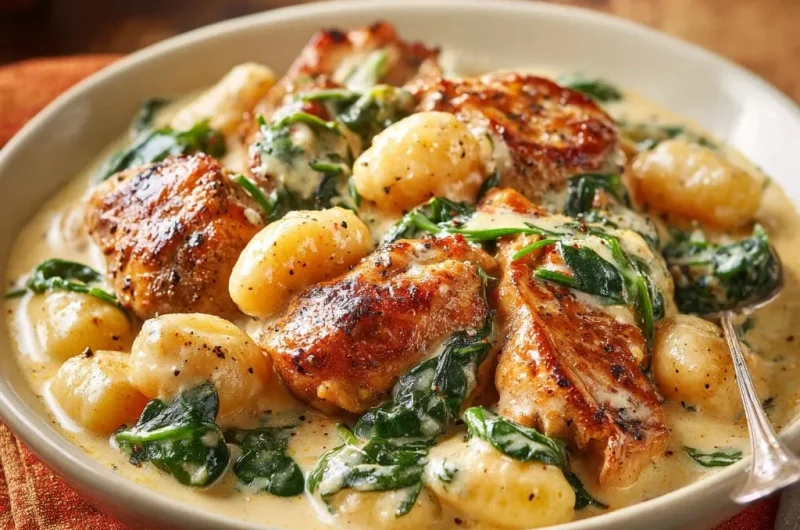
minutesThis cozy weeknight meal guarantees a perfectly smooth, silky Parmesan cream sauce every time, thanks to a simple two-step stabilization trick. Seared chicken thighs and potato gnocchi are simmered in a rich, flavorful sauce with fresh spinach. It’s about to become your family’s new favorite skillet dinner.
Ingredients
4 Boneless, skinless chicken thighs
1 tablespoon Olive oil
1 tablespoon Butter
1 teaspoon Dried Italian seasoning
4 cloves Garlic, minced
1/2 cup Chicken broth (low sodium)
1/2 teaspoon Red pepper flakes (optional)
1 cup Heavy cream
1/2 cup Grated Parmesan cheese
5 ounces Fresh baby spinach
1 pound Shelf-stable or fresh potato gnocchi
Salt and black pepper to taste
Directions
- Prep the Chicken and Gnocchi. Season the chicken thighs generously with salt, pepper, and Italian seasoning. Cook the gnocchi according to package directions until they float, then drain them immediately. Reserve about 1/4 cup of the starchy cooking water.
- Sear the Chicken. Heat olive oil and butter in a large skillet or Dutch oven over medium-high heat. Sear the chicken thighs for 4 to 5 minutes per side until deeply golden brown and cooked through (internal temperature of 165 degrees F). Remove the chicken from the pan and set aside, reserving the flavorful drippings.
- Build the Base. Reduce the heat to medium-low. Add the minced garlic to the pan and cook for about 60 seconds until fragrant, scraping up any browned bits from the bottom of the pan. Stir in the red pepper flakes if using.
- Deglaze and Reduce. Pour in the chicken broth and bring to a simmer for 2 minutes, allowing the liquid to reduce slightly. This step is crucial for separating the flavorful fond from the fat and creating a stable base.
- THE SAUCE STABILITY STEP. Reduce the heat to the lowest setting (or turn the heat off temporarily). Slowly pour in the heavy cream while stirring continuously. Do not allow the mixture to boil once the cream is added. Keep the heat gentle and low.
- Thicken and Finish. Stir the Parmesan cheese into the warm, but not boiling, cream mixture until melted and smooth. If the sauce seems too thick, whisk in 1 to 2 tablespoons of the reserved gnocchi water. The starch in the gnocchi water acts as a stabilizer and binder, preventing the sauce from splitting.
- Combine and Serve. Stir the fresh spinach into the sauce until wilted (about 2 minutes). Add the cooked gnocchi and the seared chicken back into the skillet. Spoon the creamy sauce over the chicken and gnocchi. Taste and adjust seasoning with extra salt or pepper before serving immediately.
Notes
- The key to a non-curdled sauce is keeping the heat low after adding cream and using reserved gnocchi starch water as a stabilizer.