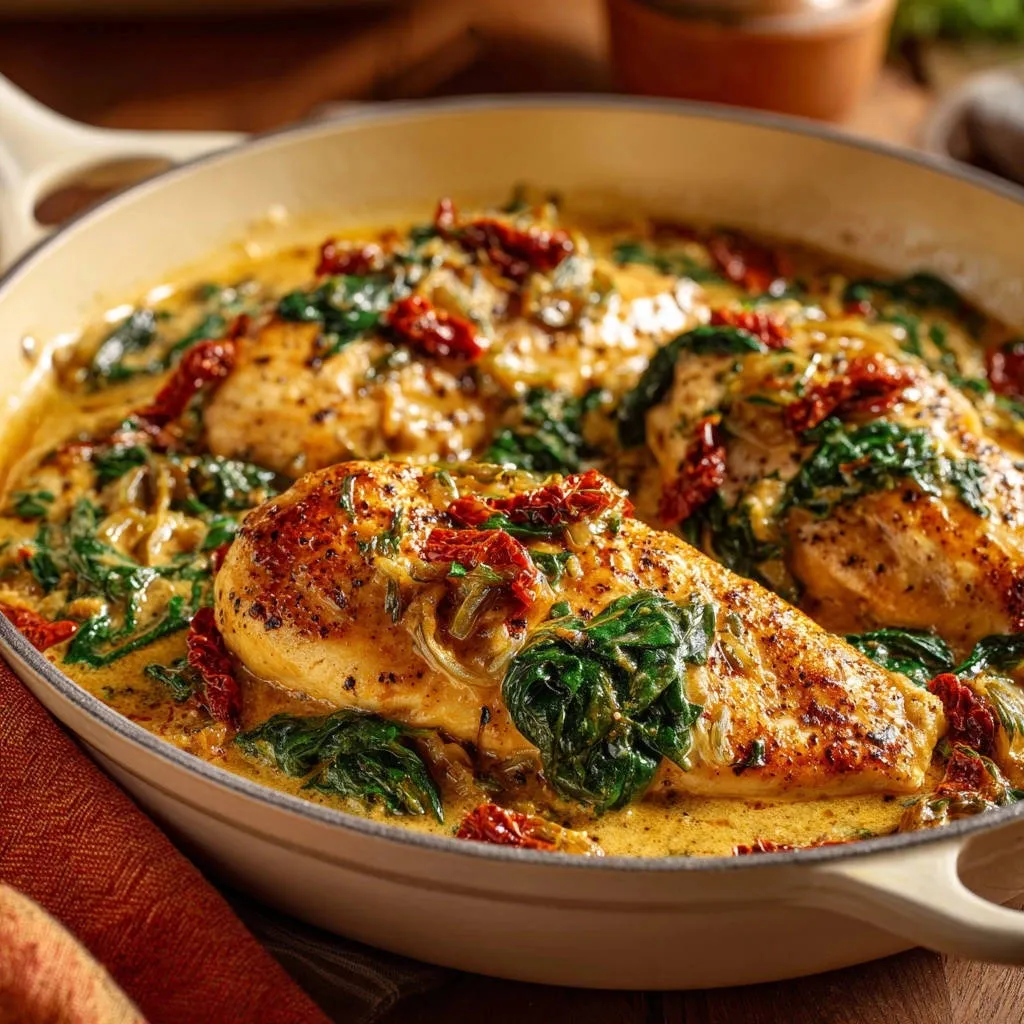
For years, I struggled to achieve that perfect balance when making chicken in a rich sauce; the chicken would inevitably dry out by the time the sauce reached its decadent simmer.
This method for Creamy Tuscan Skillet Chicken solves that common kitchen frustration entirely by employing a brief, high-heat sear followed by a gentle, flavor-absorbing finish-guaranteeing juicy, tender results every single time.
Trust this process to deliver a truly luxurious, weeknight-friendly meal that tastes like it took hours of effort.
For a truly juicy experience, check out this creamy Tuscan chicken.
The Secret to Succulent Skillet Chicken (And Why Yours Was Always Dry)
Solving the Dry Chicken Dilemma: The Quick Sear Method
The standard mistake when cooking chicken breasts in a sauce is trying to cook them through completely at medium-high heat.
This causes the delicate surface proteins to seize and tighten, resulting in that all-too-familiar rubbery texture before the center is cooked.
Our technique involves a quick, hot sear purely for color and flavor, followed by a gentle braise directly in the finished Tuscan sauce, ensuring moisture retention.
Maximizing Flavor Through Intentional Searing
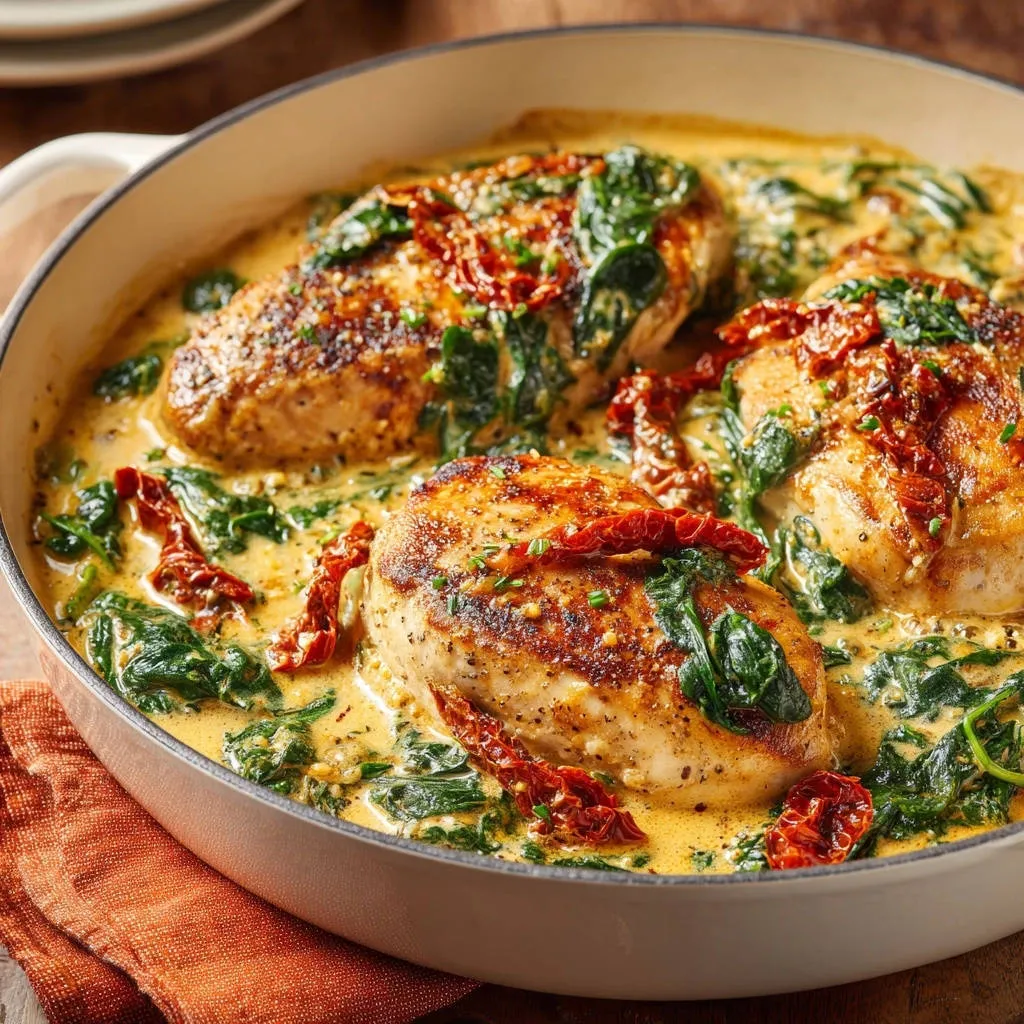
The primary purpose of the initial three-minute sear is initiating the Maillard reaction-the browning process that creates hundreds of complex, savory flavor compounds.
To maximize this reaction, the chicken must be aggressively patted dry; surface moisture steams the chicken instead of allowing it to crisp.
This quick sear also produces the crucial brown bits, or “fond,” at the bottom of the pan, which become the foundation of our creamy sauce’s deep flavor.
Rapid Weeknight Prep and Kitchen Reliability
This recipe is specifically designed to be highly reliable, moving quickly from prep to plate in under 30 minutes, perfect for busy weeknights.
Because the chicken finishes cooking passively while nestled in the sauce, you gain valuable hands-off time to prepare side dishes or set the table.
Essential Flavor Builders: Ingredients for Your Tuscan Skillet
The Quality of the Protein: Preparing Chicken Breasts Perfectly
Boneless, skinless chicken breasts are chosen for their speed and consistency, making this recipe achievable in a tight timeframe.
The crucial preparation step is ensuring they are bone-dry before seasoning; use paper towels to remove all surface moisture.
Seasoning should be applied generously, ensuring the salt and Italian herbs penetrate the meat and contribute to the flavorful crust we are aiming for.
Harnessing the Umami Richness of Sun-Dried Tomatoes
For superior flavor and texture, use sun-dried tomatoes packed in oil, not the dried, hard variety.
Draining the oil ensures the sauce doesn’t become greasy, but the flavor compounds steeped in that oil infuse the final sauce with rich, concentrated tomato umami.
The Magic of the Cream Base: Balancing Richness and Tang
Heavy cream is non-negotiable here; its high-fat content stabilizes the sauce and creates the signature luxurious, thick texture.
When combined with the chicken broth and the scraped-up fond, the cream base transforms into a highly flavorful, velvety coating for the chicken.
Tuscan Aromatics: Garlic, Onion, and Italian Seasoning
Slicing the yellow onion thinly allows it to melt into the sauce quickly, reaching translucency without browning or adding bitterness.
Garlic is added briefly-only for about 60 seconds-after the onions are soft to prevent it from burning, which would ruin the entire flavor profile of the Creamy Tuscan Skillet Chicken.
Tools of the Trade: Equipping Your Kitchen for Skillet Success
The Importance of a Heavy-Bottomed Skillet
A high-quality stainless steel or cast iron skillet is crucial for this recipe’s success.
Their substantial weight ensures even heat distribution across the surface, preventing hotspots that would burn the fond and scorch the chicken.
Thin non-stick pans often fail to retain enough heat for a proper Maillard reaction during the quick sear.
Why You Need a Meat Thermometer
The difference between perfectly juicy chicken and dry chicken is often just five degrees, making a digital meat thermometer essential.
You must pull the chicken when it hits precisely 165°F (74°C); relying on visual cues alone risks overcooking during the final gentle simmer.
A Step-by-Step Guide to Perfecting the Creamy Tuscan Skillet Chicken
- Preparing and Seasoning for Maximum Sear:
Thoroughly pat the four chicken breasts dry using paper towels. Moisture is the enemy of a crisp crust.
Season both sides liberally and evenly with the salt, pepper, and Italian seasoning mixture, ensuring all surfaces are coated for maximum flavor penetration.
- Executing the Tenderness Technique (The Flash Sear):
In a large skillet, heat the olive oil and butter over medium-high heat until the butter melts and foams slightly; this heat is necessary for a golden crust.
Place the seasoned chicken in the hot pan and sear for exactly three minutes per side until deeply golden brown, removing it immediately to a plate even though the center remains raw.
This flash sear locks in flavor and moisture while creating the essential fond base; do not wipe the pan clean.
- Building the Aromatic Base: Sautéing and Deglazing:
Reduce the heat to medium and add the thinly sliced onion, sautéing for four to five minutes until they are soft and translucent.
As the onions soften, use your wooden spoon to scrape up all the flavorful brown bits (fond) from the bottom of the pan-this process is crucial deglazing that forms the deep flavor of the sauce.
Stir in the minced garlic and drained sun-dried tomatoes and cook for just 60 seconds until the garlic is fragrant.
- Simmering the Luxurious Sauce:
Pour in the chicken broth, bringing it to a rapid simmer, and allow it to reduce slightly for three minutes to concentrate the savory flavor.
Stir in the heavy cream and return the entire mixture to a gentle simmer, ensuring the sauce is warm and ready to receive the chicken without boiling.
- Wilt the Spinach and Reintroduce the Chicken:
Add the large handful of fresh spinach to the simmering sauce, stirring until it quickly wilts down and incorporates fully, adding color and nutrients.
Return the partially cooked, seared chicken breasts to the skillet, nesting them into the luxurious Tuscan sauce base.
- The Gentle Finish and Temperature Check:
Reduce the heat to medium-low, cover the skillet tightly with a lid, and allow the chicken to finish cooking passively in the sauce for eight to ten minutes.
Finishing the Creamy Tuscan Skillet Chicken this way ensures the internal temperature rises slowly, preventing the proteins from contracting, and locks in maximum moisture while infusing the meat with flavor.
Confirm doneness by checking the thickest part of the chicken with a meat thermometer; it must register 165°F before serving.
Adaptations, Pairings, and Quick Fixes for Your Meal
Common Troubleshooting: My Sauce Broke or is Too Thin!
Q: Why did my sauce break or look grainy? This usually happens if the cream boils aggressively or if the skillet is covered and the heat remains too high.
A: If the sauce separates, remove the skillet from the heat immediately, stir in a tiny splash of cold water or cream, and whisk vigorously to emulsify it again.
Q: Why is my sauce too thin? This means the chicken broth didn’t reduce enough before the cream was added, or your spinach released too much water.
A: Remove the chicken temporarily, bring the sauce back to a steady simmer, and let it reduce, uncovered, for an extra five minutes. Alternatively, whisk in a cornstarch slurry (1 tsp cornstarch mixed with 1 tsp cold water) until the desired thickness is reached.
Ingredient Swaps: Making This Recipe Fit Your Diet
Dairy-Free Cream Base: Full-fat canned coconut cream works surprisingly well as a non-dairy substitute, offering similar richness and body.
Be aware that coconut cream introduces a very slight sweetness and tropical undertone, which pairs nicely with the tomatoes but changes the traditional Tuscan flavor profile.
Protein Alternatives: This method works beautifully with beef tenderloin sliced into medallions, following the same sear-and-finish timing.
For quick-cooking seafood like large shrimp, skip the sear entirely; add the raw shrimp during the final simmering step, cooking until pink and opaque (about 4 minutes).
Spinach Alternatives: Substitute fresh kale or Swiss chard for the spinach, but be prepared for a longer wilting time.
Tougher greens need an additional 2 to 3 minutes of simmering before the chicken is reintroduced to ensure they are fully tender.
What to Serve Alongside Creamy Tuscan Skillet Chicken
Perfect Pasta and Starchy Sides
The rich, savory sauce demands a side dish that can effectively soak up every drop.
Serve the chicken over a bed of creamy polenta or wide pappardelle noodles for a deeply comforting and cohesive meal.
Classic mashed potatoes or white rice are also excellent neutral canvases for the robust flavor of the sauce.
Light and Vibrant Vegetable Sides
To provide contrast to the richness of the cream sauce, choose a light side with an acidic component.
A simple side salad dressed with a bright lemon vinaigrette provides the perfect sharpness.
Alternatively, roasted asparagus or green beans tossed with flaked sea salt offer a contrasting texture and fresh flavor.
Planning Ahead: Storage, Freezing, and Reheating
Storing Leftovers Safely for Maximum Freshness
Leftovers should be cooled quickly and transferred to an airtight container within two hours of cooking.
The Creamy Tuscan Skillet Chicken will remain safe and taste excellent for three to four days when stored properly in the refrigerator.
The Best Way to Reheat Without Drying Out the Chicken
Avoid the microwave, which often makes chicken rubbery, especially when reheated from a creamy sauce.
Reheat on the stove top over medium-low heat, covered, adding a splash of extra chicken broth or heavy cream to rehydrate the sauce as it warms.
Make-Ahead Preparation: What Can Be Done Day Before?
You can greatly streamline your 30-minute prep by taking care of the non-cooking tasks the day before.
Chop and slice the onions and garlic, measure out the sun-dried tomatoes, and pre-season the chicken breasts, storing them in the refrigerator until ready to sear.
Beyond the Recipe: Making This Dish Your Own
The success of this Creamy Tuscan Skillet Chicken lies entirely in understanding the two-stage cooking method: the flash sear for flavor, and the gentle finish for tenderness.
Once you master this foundational technique, you can easily adapt the flavor profile, adding olives, mushrooms, or even a tiny pinch of red pepper flakes for heat.
I encourage you to try this precise method tonight; it is the definitive solution to dry chicken and promises a weeknight meal that your whole family will rave about.
Don’t forget to spoon plenty of that incredible cream sauce over your favorite starch when you serve it!
Chicken
Course: Main CourseCuisine: Italian-AmericanDifficulty: easy4
servings15
minutes25
minutes650
kcal40
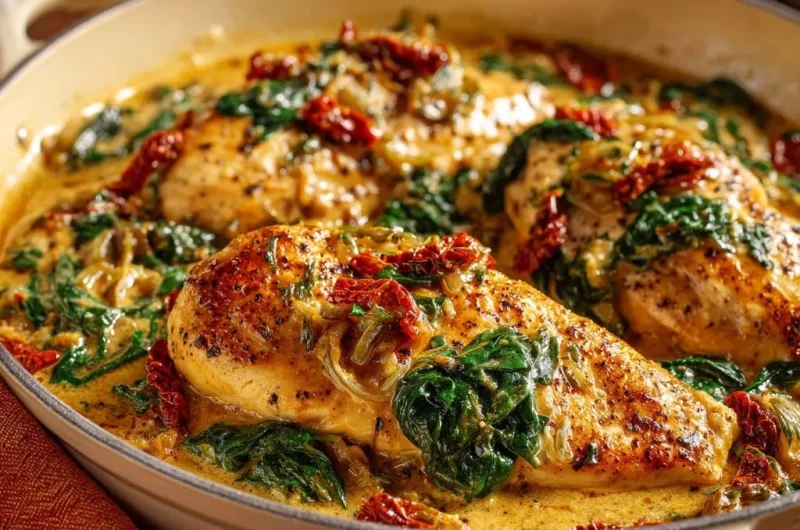
minutesThis skillet recipe uses a crucial quick-sear technique to ensure the chicken breasts remain perfectly tender and juicy inside while developing a rich, golden crust. The finished chicken is nestled in a decadent cream sauce featuring sun-dried tomatoes, garlic, and fresh spinach. This easy method guarantees maximum flavor without ever drying out your poultry.
Ingredients
4 Boneless, skinless chicken breasts
1 Teaspoon dried Italian seasoning
1 Teaspoon salt
1/2 Teaspoon black pepper
2 Tablespoons olive oil
2 Tablespoons butter
1 Small yellow onion, thinly sliced
3 Cloves garlic, minced
1/2 Cup sun-dried tomatoes, packed in oil (drained)
1 Cup chicken broth
1 Cup heavy cream
4 Cups fresh spinach
Directions
- Prepare the chicken. Pat the chicken breasts completely dry using paper towels. Season both sides aggressively with the Italian seasoning, salt, and pepper. Getting the surface completely dry is the first key step to a good sear.
- Execute the tenderness technique. Heat the olive oil and butter in a large skillet over medium-high heat until the butter foams slightly. Place the seasoned chicken in the hot pan and sear for exactly 3 minutes per side, until deeply golden brown, but still raw inside. Immediately remove the chicken from the skillet and set it aside on a plate. Do not wipe the pan clean. This quick sear locks in flavor but prevents early overcooking.
- Build the sauce base. Reduce the heat to medium. Add the sliced onion to the skillet and sauté for 4 to 5 minutes until soft and translucent, scraping up any brown bits (fond) from the chicken. Add the minced garlic and drained sun-dried tomatoes and cook for 1 minute until fragrant.
- Simmer the cream. Pour in the chicken broth and bring it to a simmer, allowing it to reduce slightly for about 3 minutes. Stir in the heavy cream and return the sauce to a gentle simmer.
- Finish the chicken gently. Reduce the heat to medium-low. Add the fresh spinach to the sauce, stirring until it wilts down completely. Return the partially cooked chicken breasts to the skillet, nesting them into the sauce. Cover the skillet tightly with a lid and let the chicken finish cooking in the simmering sauce for 8 to 10 minutes, or until the internal temperature reaches 165 degrees F. Finishing it this way ensures the chicken remains moist and absorbs the sauce flavor without drying out.
- Serve immediately with extra sauce spooned over the top.
Notes
- For extra flavor, consider searing the chicken until golden brown before adding it back to the sauce; this creates a delicious crust. Ensure your sun-dried tomatoes are well-drained to prevent the sauce from becoming too oily.