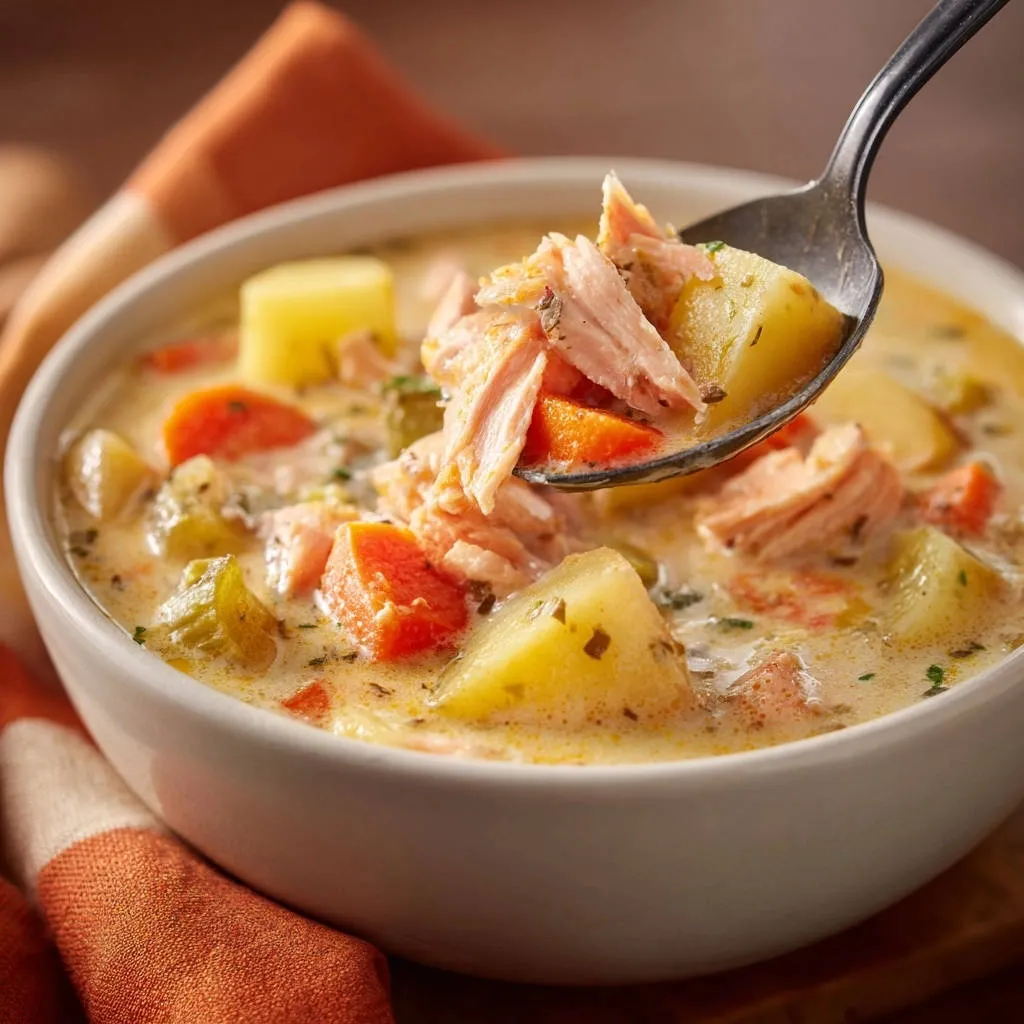
I know the disappointment: biting into what should be a comforting bowl of chowder only to find the salmon rubbery and dry. This recipe solves that common tragedy by using a dedicated poaching technique, ensuring every flake of this Creamy Winter Salmon Chowder is incredibly tender and moist.
This method-honed over dozens of test batches-guarantees success and elevates a standard soup into a truly luxurious, satisfying winter meal that you’ll be proud to share.
The Biggest Chowder Mistake: Solving the Mystery of Dry Salmon
The single greatest flaw in most homemade fish chowder recipes is boiling the seafood directly in the finished soup base. High heat causes the delicate proteins in the salmon to seize up, squeezing out all the moisture and leaving behind a tough, chewy texture.
When you simmer salmon in the rich dairy base, you run the dual risk of overcooking the fish and potentially scorching the cream on the bottom of the pot.
Why Poaching the Salmon Separately is Non-Negotiable
By poaching the salmon in a separate pot using only residual heat, we gain complete control over its cooking environment. This low-temperature, gentle method allows the proteins to cook evenly without becoming tough.
The gentle heat locks the moisture inside the fish fibers, resulting in beautiful, large, tender flakes that melt perfectly into the creamy chowder base right before serving.
Warmth, Comfort, and Flavor: What Makes This Chowder a Winter Staple?
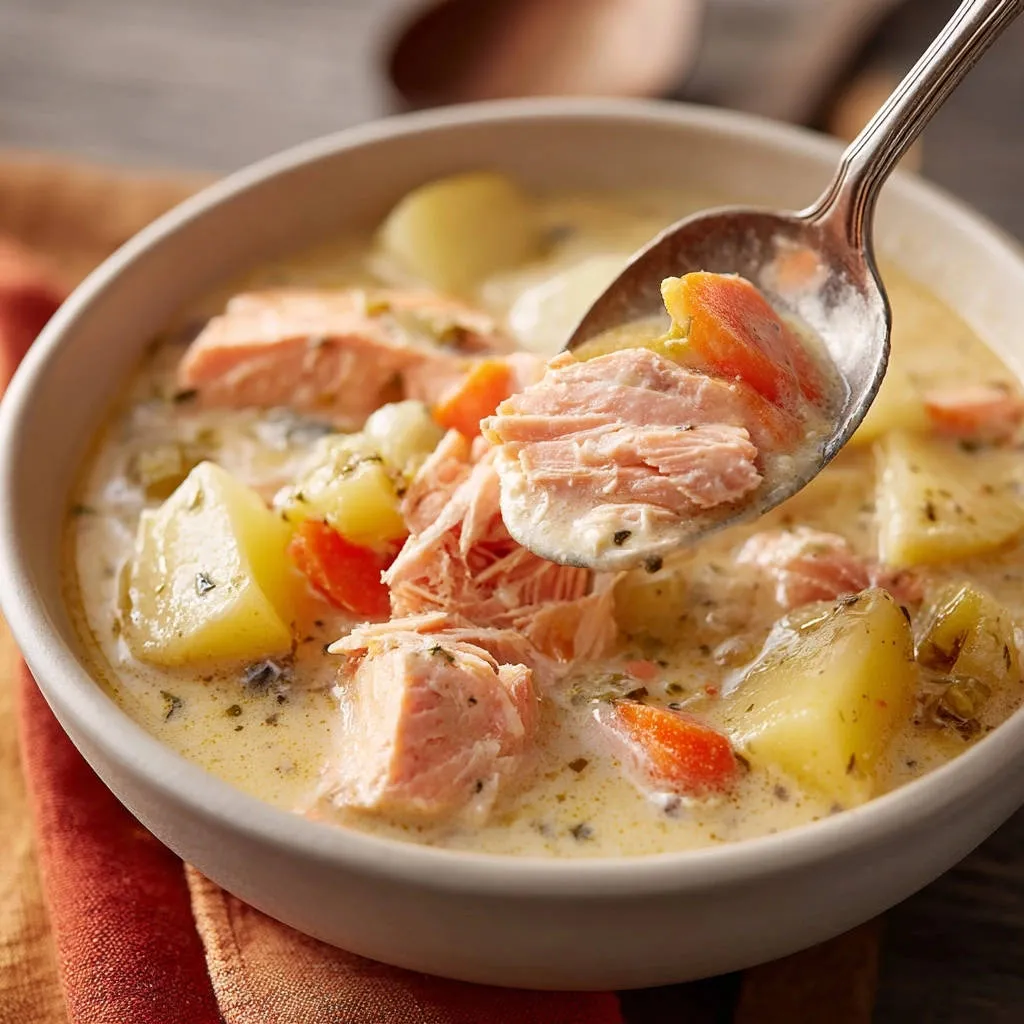
There is nothing quite as soul-soothing as a hearty chowder on a cold day. This particular Creamy Winter Salmon Chowder uses the classic trio of onion, carrot, and celery (mirepoix) layered with earthy thyme for deep, savory flavor.
The combination of rich dairy and starchy Yukon Gold potatoes provides a velvety mouthfeel that clings perfectly to the tender pieces of salmon, making it the ideal centerpiece for any cozy winter dinner.
Building the Perfect Creamy Winter Salmon Chowder Base
Mastering the base requires careful selection and preparation of components, ensuring the foundation is smooth, flavorful, and capable of holding the rich texture of a true chowder.
The Seafood Star: Selecting the Best Salmon Fillets
For chowder, I prefer sustainably raised Atlantic salmon for its higher fat content, which keeps it moister during the poaching process. Sockeye is leaner and can sometimes dry out more easily.
Always aim for fresh salmon fillets, but if using previously frozen, ensure they are fully thawed in the refrigerator and patted completely dry before cooking. Check the fillets thoroughly to ensure all pin bones and skin have been removed.
Choosing the Right Thickener: Flour, Roux, and Gluten-Free Substitutions
The roux-a cooked mixture of butter and flour-is the traditional secret to achieving a stable, creamy thickness without being gloppy. Cooking the flour for at least 60 seconds is crucial to eliminate that unpleasant raw, starchy taste.
To ensure a smooth base, slowly whisk in the broth, starting with just a small amount to create a thick paste, then gradually adding the rest. If you need a gluten-free option, substitute the all-purpose flour with a 1:1 gluten-free baking blend or use a simple cornstarch slurry (mixed with cold water) added at the end.
For a similar comforting bowl, consider this creamy salmon potato leek chowder.
Dairy Decisions: Achieving Optimal Creaminess and Texture
Using whole milk and heavy cream together provides the perfect balance of richness and stability. Whole milk thins the chowder slightly, while the heavy cream delivers luxurious body and mouthfeel.
For an extra-rich chowder, substitute the whole milk with half-and-half. Remember: the high-fat dairy can “split” or curdle if aggressively boiled, so never allow the soup to reach a rolling boil once the cream is incorporated.
The Essential Aromatics and Potatoes
Yukon Gold potatoes are the ideal choice for this recipe. Their waxy texture helps them maintain their shape after simmering, unlike starchy Russets, which can disintegrate and muddy the soup.
The classic mirepoix (onion, carrot, celery) provides a vital savory depth. Make sure to chop these vegetables into uniform, small pieces (about half an inch) to ensure they soften evenly and integrate well into the spoonful.
Essential Tools for Smooth Chowder Preparation
Having the right equipment streamlines the process and helps avoid common kitchen pitfalls, especially scorching.
The Right Cooking Vessel (Dutch Oven Recommendation)
A heavy-bottomed pot, like a Dutch oven, is crucial because it distributes heat evenly. This prevents the vegetables and roux from scorching on the bottom, which is a significant risk when making thick, creamy soups.
A Sturdy Whisk for Lumps
A wire whisk is essential for seamlessly blending the flour and fat into a roux and, more importantly, for slowly incorporating the cold broth without creating lumps in the base.
Small, Separate Saucepan for the Salmon
This is necessary for executing the key technique. Using a smaller, covered saucepan allows the residual heat poaching method to work efficiently with minimal liquid.
From Sauté to Simmer: Mastering the Creamy Winter Salmon Chowder Method
Step 1-3: Creating the Flavor Foundation (Aromatics and Roux)
Start by combining the oil and butter in your Dutch oven. Sauté the diced onion, carrots, and celery for a full 8 to 10 minutes until they are translucent and significantly softened; this releases their natural sweetness before thickening.
Sprinkle the flour over the softened vegetables, stirring constantly. Cook this mixture for a minimum of 60 seconds to completely cook out the raw, metallic taste of the flour, but do not allow the roux to brown.
Simmering the Vegetables and Achieving Potato Tenderness
Slowly whisk in the broth, ensuring you eradicate any lumps immediately before adding the full volume. Incorporate the potatoes and dried thyme, along with the initial seasoning of salt and pepper.
Bring the base to a low simmer and cook, uncovered, for 15 to 20 minutes. The base is ready when the potatoes are easily pierced with a fork-this is the critical timing benchmark before adding dairy.
For perfectly tender results with slow cooking, try slow-braised beef short ribs.
The Moment of Truth: Integrating Cream Without Splitting
Remove the pot momentarily from the direct heat source. Gently stir in the milk and heavy cream, blending them fully into the broth base.
Return the pot to very low heat and bring it just to a gentle simmer, where you see only slight movement at the edges. Never let it boil vigorously. Now is the time to taste and adjust the salt and pepper before the final steps.
The Tender Fish Secret: Gentle Poaching Using Residual Heat
In a separate saucepan, place your salmon fillets and just barely cover them with water or leftover broth. Bring this liquid to a very gentle simmer-the moment bubbles begin to form, immediately turn off the heat completely.
Cover the saucepan tightly and let the residual heat gently poach the salmon for 5 to 7 minutes. The fish should be opaque throughout, perfectly cooked, and incredibly moist. Drain the poaching liquid immediately.
Flaking and Folding: Finishing the Chowder Base
Use a fork to gently flake the poached salmon into large, visible pieces. Avoid shredding the fish; you want substantial, tender chunks in your final bowl.
Gently fold the moist salmon flakes into the prepared, hot chowder base. It is absolutely crucial that you do not reheat the entire pot of chowder once the salmon is added, as this will quickly undo the tender texture.
Chef’s Guide to Chowder Excellence: Pro Tips and Flavor Enhancements
Maximizing Broth Flavor: For professional depth, use high-quality fish broth (or even a seafood stock). Before adding the flour, pour a splash of white grape juice over the sautéed aromatics and let it reduce completely for a complex, acidic lift.
A Quick Heat Fix: If the chowder cools too much while you are preparing the salmon, return the pot to the stove on the very lowest heat setting. Stir gently until warmed through, but remove it the instant it begins to steam heavily to prevent overcooking the cream or fish.
Adding a Savory Element: For ultimate savory flavor, sauté 1/2 cup of diced crispy bacon or beef bacon at the beginning. You can use the rendered fat to replace some of the initial butter and olive oil for rich, smoky undertones.
Fresh Herbs Finish: Fresh herbs like parsley or dill oxidize quickly when cooked. Always add the finely chopped herbs right at the very end as a garnish to maximize their bright, clean flavor and visual appeal.
Troubleshooting Your Creamy Winter Salmon Chowder Success
Why is My Chowder Base Too Thin?
This usually indicates insufficient flour in the roux or too much liquid. If the base seems too thin after the potatoes are tender, simply continue to simmer it uncovered for another 5 to 10 minutes to allow the liquid to naturally reduce and thicken.
Alternatively, prepare a quick cornstarch slurry by mixing 1 tablespoon of cornstarch with 1 tablespoon of cold water, then whisk this into the simmering base. It will thicken almost immediately.
More to Enjoy
Round out your meal with these complementary dishes.
- For a fresh contrast to the chowder, consider this grilled chicken kale and cabbage power salad, offering bright greens and savory chicken.
- If you enjoy creamy textures, this creamy herb and pea potato salad would be a welcome addition, sharing a similar comforting profile.
The Chowder Looks Oily or Separated
Separation, or “splitting,” is often caused by boiling the mixture aggressively after the cream is added, or by the fat not being fully emulsified in the initial roux step.
If separation occurs, remove the pot immediately from the heat. Sometimes, whisking vigorously off the heat can help the fat and liquid re-emulsify slightly, but prevention (gentle simmering) is the best cure.
The Potatoes Are Still Hard After Simmering Time
If the potatoes remain hard, the heat was likely too low for proper cooking, or the cubes were cut too large. The liquid needs to be at a consistent, gentle simmer for 15-20 minutes.
To fix this, increase the heat slightly or cover the pot for the last 5-10 minutes. Covering traps the steam and speeds up the cooking of the dense potato pieces.
FAQs: Scaling, Storing, and Serving Salmon Chowder
How Long Does Creamy Winter Salmon Chowder Last in the Refrigerator?
This chowder will safely last for 3 to 4 days when stored in an airtight container in the refrigerator. Be aware that the potatoes will soften further and the chowder may become thicker upon chilling.
Can I Use Frozen Salmon in This Chowder?
Yes, absolutely. The most important step is ensuring the frozen salmon is fully thawed overnight in the refrigerator and then thoroughly patted dry with paper towels before you proceed with the gentle poaching technique.
What are the Perfect Side Dish Pairings for a Cozy Meal?
The richness of the chowder pairs wonderfully with simple, textured sides. Serve it alongside warm, crusty sourdough bread, traditional oyster crackers, or a slice of sweet corn bread. A light, acidic green salad helps cut through the creaminess.
Can I Make the Chowder Base Ahead of Time?
Yes, the chowder base (everything up to step 4, before integrating the salmon) can be prepared 1-2 days in advance. Store the base covered in the refrigerator. When ready to serve, reheat the base gently and then execute the salmon poaching step fresh right before folding it in.
Ready to Impress? Share Your Creamy Winter Salmon Chowder Masterpiece!
Say goodbye to dry seafood forever! By implementing this simple, expert poaching secret, you will unlock the true, tender potential of your Creamy Winter Salmon Chowder.
This technique guarantees a restaurant-quality texture that elevates this comforting dish into a standout meal, perfect for banishing the cold.
I encourage you to try this method and leave a comment below letting me know how wonderfully flaky your salmon turned out!

Salmon Chowder
Course: Soups-StewsCuisine: AmericanDifficulty: medium6
servings20
minutes40
minutes650
kcal60
minutesThis hearty chowder is the perfect antidote to a cold evening. It features tender Yukon Gold potatoes, fresh vegetables, and a rich, creamy broth. The secret technique of poaching the salmon separately guarantees moist, flaky fish every time.
Ingredients
1.5 pounds fresh Salmon fillets, skin and bones removed
2 tablespoons Olive oil
4 tablespoons unsalted Butter
1 large Yellow onion, diced
1 cup Carrots, chopped into 1/2-inch pieces
1 cup Celery, chopped into 1/2-inch pieces
4 cups Yukon Gold potatoes, peeled and cut into 1/2-inch cubes
1/4 cup All-purpose flour
4 cups Fish or vegetable broth
1 cup Whole milk (or half and half for richer texture)
1/2 cup Heavy cream
1 teaspoon Dried thyme
Salt and fresh Black pepper to taste
Fresh parsley, chopped (for garnish)
Directions
- Prepare the Aromatics and Thickener. Heat the olive oil and butter in a large Dutch oven or soup pot over medium heat. Add the onion, carrots, and celery. Sauté for 8 to 10 minutes until the vegetables are softened but not browned.
- Build the Roux. Sprinkle the flour over the softened vegetables. Stir constantly for 1 minute to cook out the raw flour taste.
- Simmer the Base. Slowly whisk in the broth until smooth, ensuring there are no lumps. Add the cubed potatoes, dried thyme, 1 teaspoon of salt, and 1/2 teaspoon of pepper. Bring the mixture to a low boil, then reduce heat to a gentle simmer. Cook uncovered for 15 to 20 minutes, or until the potatoes are tender when pierced with a fork.
- Integrate the Dairy. Pour in the milk and heavy cream. Stir gently and bring the chowder just back up to simmering temperature (do not allow it to boil vigorously once the cream is added). Taste and adjust seasonings if necessary. Remove the pot from the heat completely.
- THE MOIST SALMON TECHNIQUE (Guaranteed Moist Salmon Flakes!). This step ensures the fish remains juicy and tender. Do not add the salmon to the simmering chowder. Instead, place the salmon fillets into a small separate saucepan. Cover the salmon with water or remaining broth. Bring to a very gentle simmer, then immediately turn off the heat. Cover the saucepan and let the residual heat gently poach the fish for 5 to 7 minutes, until opaque and cooked through.
- Flake and Fold. Drain the poached salmon and gently flake it into large, tender pieces using a fork.
- Finish the Chowder. Gently fold the moist salmon flakes into the prepared chowder base just before serving. Do not reheat the chowder once the salmon is added, as this will overcook the fish.
- Serve immediately, garnished with fresh parsley.
Notes
- Do not boil the chowder after adding the milk/cream, and avoid reheating once the pre-poached salmon is folded in.