Why This Risotto Stays Creamy, Never Gluey
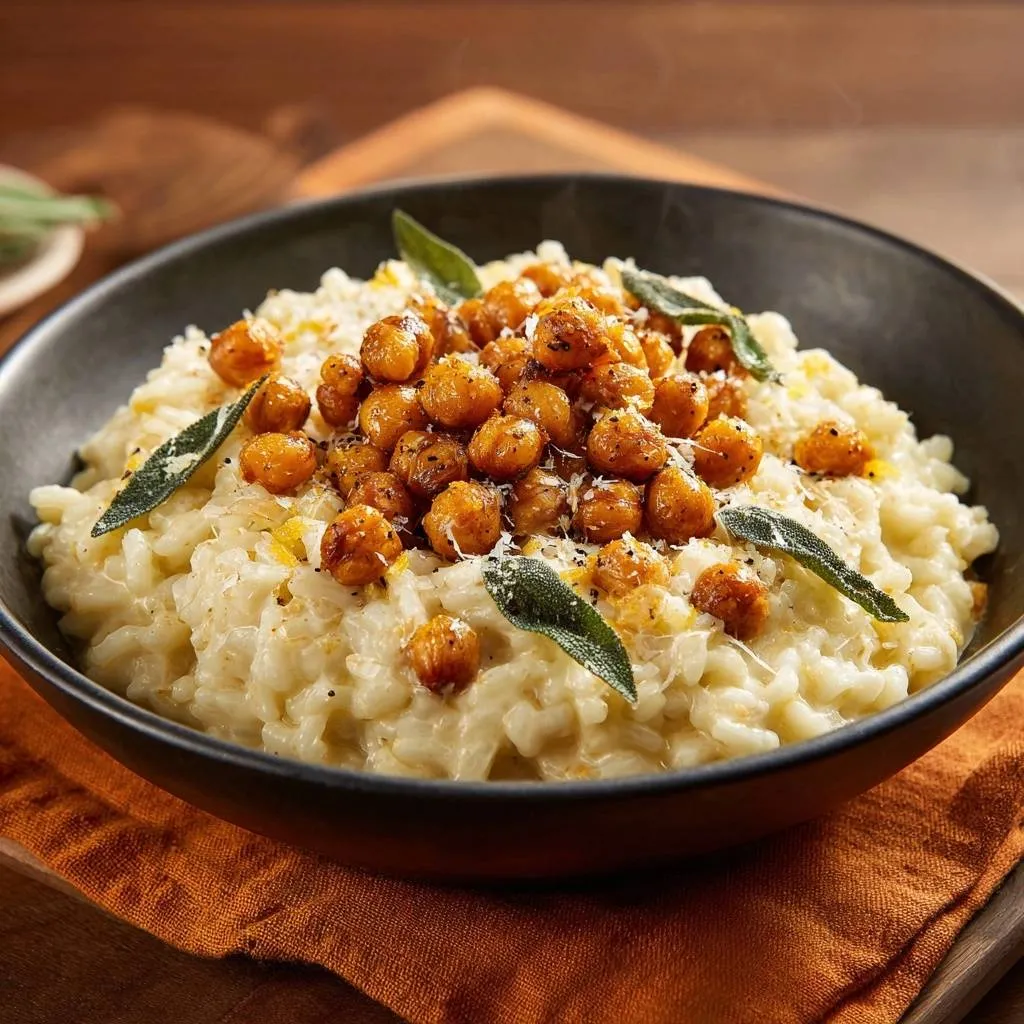
Why does your risotto always end up gluey, no matter how much you stir? Most folks mash the grains into mush chasing that creamy texture. This Crispy Chickpea & Sage Risotto fixes it with a simple toasting and resting trick that delivers perfect silkiness every time.
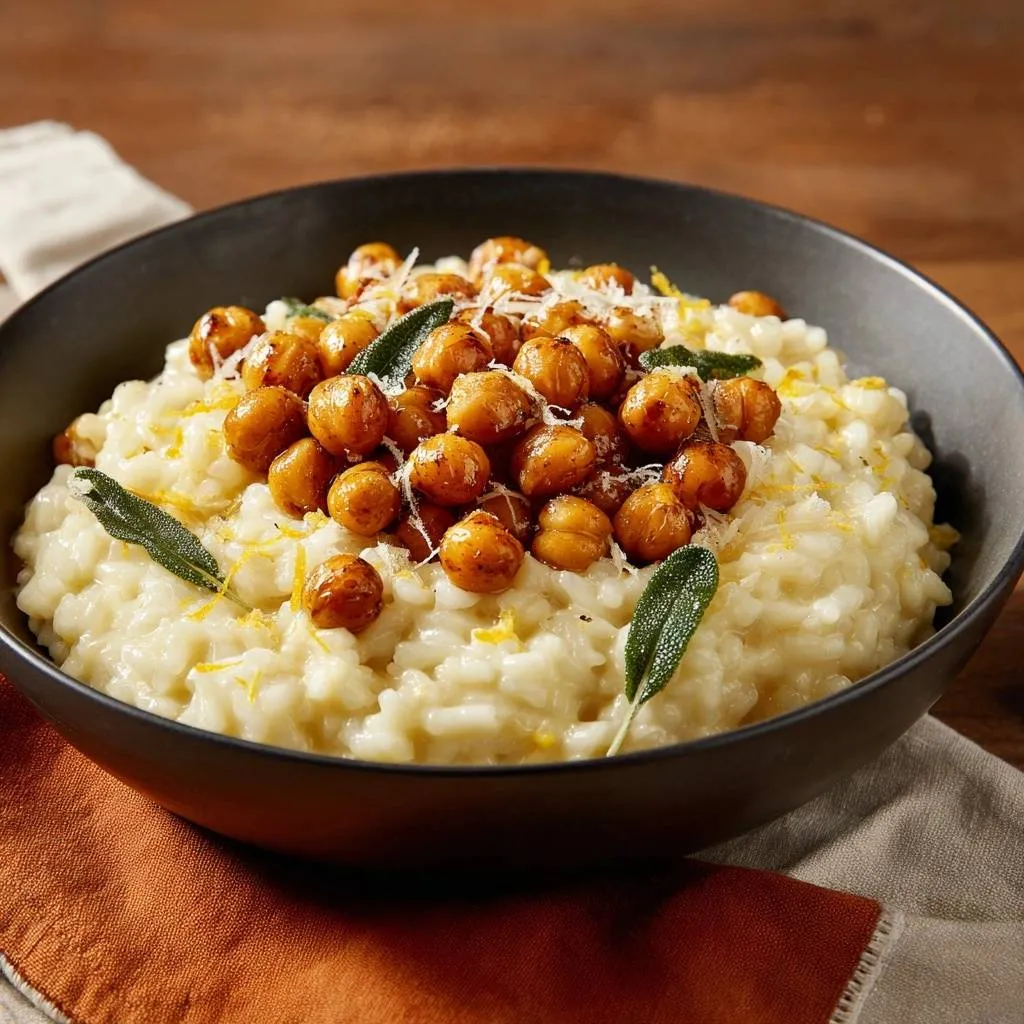
Therefore, you get bright lemon zest cutting through rich parmesan, plus crunchy chickpeas and aromatic fried sage on top. In addition, it takes just 45 minutes for 4 servings. It’s even vegan-adaptable by skipping the cheese.
The secret lies in toasting the arborio rice dry first. That seals the starch on the outside. Then, a quick off-heat rest lets residual warmth finish the job without overworking it.
Key Ingredients for Crispy Chickpea Risotto Texture
Arborio rice forms the heart of this Crispy Chickpea & Sage Risotto. Its short grains pack extra starch that releases slowly for that signature creaminess. However, you must toast it right to avoid gumminess.
Chickpeas bring the crunch. Drain and pat them super dry so moisture evaporates fast in the oven. That golden crisp contrasts the soft risotto beautifully.
Heated vegetable broth is key too. Simmer it first to prevent the rice starch from seizing up. Fresh lemon zest adds zing that balances the richness, while parmesan melts in smoothly for depth.
Arborio Rice: Starch Seal for Silky Results
Arborio’s plump grains have a high amylopectin content. Toasting seals the exterior starch granules. Therefore, broth absorbs evenly without turning gummy.
Carnaroli works as an alternative; it’s even starchier. However, arborio’s wider availability makes it perfect for beginners. Don’t rinse it, or you lose that creamy magic.
Chickpeas: From Can to Oven-Crisp Crunch
Pat chickpeas dry with paper towels to remove surface water. This physics lets them crisp up fast at 425F. Toss with just 1 tbsp oil, salt, and pepper for golden edges.
Too much oil makes them greasy. Spread in a single layer so air circulates. Shake the pan halfway for even roasting.
Sage Leaves: Quick Fry for Translucent Crisp
Fresh sage leaves fry up crisp in seconds over medium-high heat. Dried sage lacks that punchy aroma and turns bitter. Use 1 tbsp oil and flip after 10-15 seconds per side.
They’re done when translucent and brittle. Drain on paper towels to shed excess oil. That earthy scent elevates the whole dish.
Science of Toasting Rice in Chickpea Sage Risotto
Dry-toasting arborio in butter and oil changes everything for Crispy Chickpea & Sage Risotto. It gelatinizes the outer starch layer first. Therefore, added broth penetrates slowly, preventing mush.
Traditional wet sautés release starch too early, leading to glue. In addition, the final rest allows interior starch to retrogradate gently with residual heat. That creates silky creaminess without constant stirring.
Result? Al dente grains coated in sauce, not drowned in it. This method cuts cooking time too. Perfect for weeknights.
For a different take on perfectly creamy rice, explore Lemon Thyme Risotto.
Equipment Choices for Flawless Chickpea Risotto
Grab a wide, heavy-bottomed pan for even heat. It lets broth evaporate steadily. A rimmed baking sheet ensures chickpeas roast without steaming.
Use a small skillet for sage. Simmer broth in a separate pot to keep it hot. Preheat oven precisely to 425F, and wield a wide spatula for gentle stirs.
Best Pan for Even Risotto Heat
Stainless steel beats nonstick here. It releases starch better for creaminess. Aim for 12-inch diameter and 3-inch depth to handle the rice volume without crowding.
Phase 1: Roasting Crispy Chickpeas to Golden
Preheat to 425F. Toss drained, patted-dry chickpeas with 1 tbsp olive oil, salt, and pepper. Spread single layer on a baking sheet.
Roast 20-25 minutes, shaking at 12 minutes. They’re ready when golden and crunchy, with popping sounds fading. Store extras in an airtight jar for up to 2 days; re-crisp in the oven.
Phase 2: Frying Sage Leaves Crisp
Heat 1 tbsp olive oil in a small skillet over medium-high. Add sage leaves in batches. Fry 10-15 seconds per side until crisp and translucent.
Drain on paper towels. The oil will shimmer with herbal aroma. Set aside to cool.
Phase 3: Toasting Arborio for Risotto Base
Melt 2 tbsp butter with 1 tbsp olive oil in your wide pan over medium heat. Add arborio rice and stir constantly for 2-3 minutes. Edges turn translucent, but stop before browning.
You’ll smell a nutty aroma. This step seals in the starch. Don’t skip it, or you’ll get glue.
Phase 4: Broth Addition and Gentle Stir Method
Ladle in 1 cup simmering vegetable broth. Stir gently until absorbed; the rice thickens slightly. Repeat with 1/2 cup at a time, about 18-20 minutes total.
Stir just enough to release starch, no mashing. Taste at 18 minutes; rice should be creamy al dente with a firm center. Add salt if needed.
Phase 5: Resting with Parmesan and Lemon Zest
Off heat, stir in 1/2 cup grated parmesan, lemon zest, and black pepper. Cover and rest 2 minutes. This lets carryover heat meld flavors perfectly.
Uncover to silky perfection. Taste and adjust salt. Top with chickpeas and sage.
Avoiding Gluey Texture in Chickpea Sage Risotto
Over-stirring mashes grains into paste. Stir minimally and rest longer to fix it. Cold broth shocks the starch; always simmer it first.
Never rinse rice; that starch is your creaminess source. Soggy chickpeas mean overcrowding or wet patting. Wilted sage? Crank the heat higher next time.
Fixing Over-Stirred Mushy Grains
Rest covered 5 extra minutes off heat. Stir in lemon juice for acidity to tighten it up. Next batch, toast longer.
Preventing Soggy Chickpeas
Pat drier than you think. Use two towels if needed. Space them out on the sheet for airflow.
Flavor Variations for Chickpea & Sage Risotto
Swap lemon zest for lime or orange for a twist. White beans sub chickpeas if you want softer texture. Thyme or rosemary replace sage for woodsy notes.
Stir in spinach or mushrooms at the end. For vegan Crispy Chickpea & Sage Risotto, use nutritional yeast instead of parmesan. It melts similarly with nutty flavor.
Pairing Sides with Crispy Chickpea Risotto
Arugula salad with lemon vinaigrette cuts the richness. Roasted vegetable medley adds earthiness. Grilled asparagus brings char contrast.
Crisp whites like pinot grigio pair great. The acidity matches the lemon zest beautifully.
Make-Ahead Guide for Chickpea Sage Risotto
Roast chickpeas and fry sage up to 2 days ahead. Store airtight; re-crisp chickpeas at 400F for 5 minutes. Par-cook risotto to broth stage, chill, then reheat with extra broth.
Freeze only chickpeas; risotto turns grainy post-thaw. That crunch stays perfect for quick assembly.
Troubleshooting Crispy Chickpea Risotto Issues
Too dry? Rest longer or add a splash more broth. Undercooked rice means extend simmering by 2 minutes with hot liquid.
Flat flavor? Double the lemon zest. Chickpeas not crispy? Oven was too crowded.
Expert Tips for Perfect Chickpea & Sage Risotto
1. Probe broth at 185F for ideal temp. 2. Toast rice until edges pearl like this: translucent sheen. 3. Shake chickpeas exactly at 12 minutes.
4. Scale for 2 by halving everything; for 6, add 1/2 cup rice and 1 cup broth. 5. Grate parmesan fresh; it melts smoother. 6. Zest lemons before juicing to avoid pith bitterness.
7. Use wide ladle for precise broth pours. 8. Taste rice center for true al dente doneness.
FAQ
How do I store leftovers of Crispy Chickpea & Sage Risotto?
Store risotto in an airtight container in the fridge for up to 3 days. Reheat gently on stovetop with a splash of simmering broth to restore creaminess; microwave works but stir often. Chickpeas stay crisp separately in a jar up to a week. Do not freeze the risotto; starch turns grainy and separates on thaw. Freeze only extra chickpeas in a bag for 1 month.
Why did my risotto turn out gluey?
Over-stirring releases too much starch early. Fix by toasting rice longer next time and stirring minimally, just until broth absorbs. Cold broth or rinsing the rice also causes mush; always use hot liquid and skip the rinse to keep natural starches intact for creaminess.
Can I substitute ingredients in Crispy Chickpea & Sage Risotto?
Swap arborio for carnaroli or vialone nano for similar starch. Use white beans for chickpeas if needed, but pat dry and roast same way. No fresh sage? Dried works at 1 tsp minced, but fresh gives better crisp aroma. For vegan, nutritional yeast or cashew parmesan subs cheese perfectly.
Why are my chickpeas not crispy?
They hold moisture from the can. Pat extra dry with towels, then air-dry 10 minutes before oiling. Roast single-layer at 425F and shake midway; overcrowding steams them. Too much oil softens too; stick to 1 tbsp.
How do I know when the risotto is al dente?
Taste a grain at 18 minutes; it should have a firm center with creamy exterior, holding shape but soft outside. If chalky, add 1/2 cup hot broth and stir 2 more minutes. The whole pot should mound slightly on a spoon without running.
Can I make Crispy Chickpea & Sage Risotto ahead for a party?
Yes, prep chickpeas and sage 2 days early; store crisp. Cook risotto 1 hour before, then rest covered off-heat. Reheat low with broth splash. Top fresh for crunch; serves 4-6 easily and wows crowds.
Crispy Chickpea Sage Risotto
Course: Main CourseCuisine: AmericanDifficulty: medium4
servings15
minutes45
minutes550
kcal60
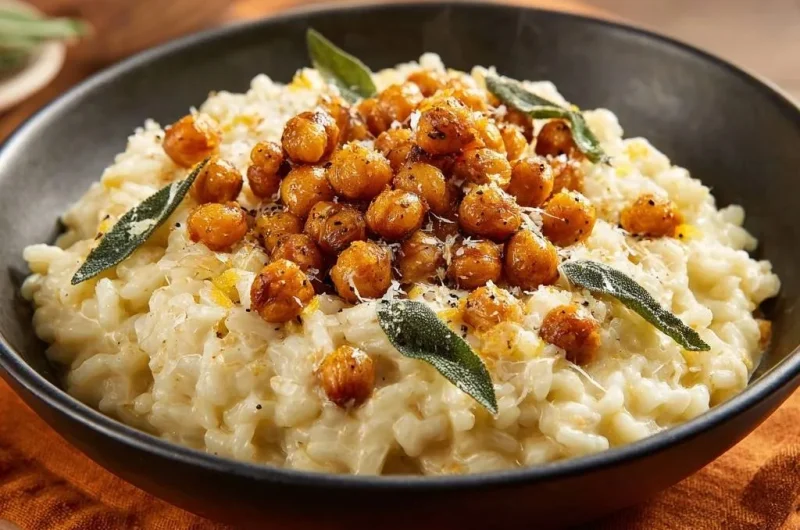
MinutesTired of risotto turning gluey? This lemony version with crunchy chickpeas and fried sage nails perfect creaminess every time using a foolproof toasting and resting method that locks in silky texture without the mush.
Ingredients
1 1/2 cups arborio rice
1 (15 oz) can chickpeas, drained and patted very dry
4 cups vegetable broth, heated to simmer
1/2 cup grated parmesan cheese
Zest of 1 lemon
12 fresh sage leaves
3 tbsp olive oil, divided
2 tbsp butter
Freshly ground black pepper
Salt to taste
Directions
- Preheat oven to 425F. Toss dried chickpeas with 1 tbsp olive oil, pinch of salt, and pepper. Spread in single layer on baking sheet. Roast 20 to 25 minutes, shaking halfway, until golden and crispy. Set aside.
- Heat 1 tbsp olive oil in small skillet over medium-high. Fry sage leaves 10 to 15 seconds per side until crisp and translucent. Drain on paper towel. Set aside.
- In large pan over medium heat, melt butter with remaining 1 tbsp olive oil. Add arborio rice and toast 2 to 3 minutes, stirring constantly, until grains are translucent at edges but not browned. This dry toast prevents gumminess by sealing starch.
- Ladle in 1 cup hot vegetable broth. Stir gently until fully absorbed. Repeat with remaining broth, 1/2 cup at a time, stirring just enough to release starch without mashing grains, about 18 to 20 minutes total. Rice should be creamy and al dente.
- Remove from heat. Stir in parmesan, lemon zest, and pepper. Cover and rest 2 minutes off heat. This resting step sets the creaminess perfectly, avoiding gluey over-stirring.
- Serve topped with crispy chickpeas and fried sage. Enjoy your non-gluey masterpiece!
Notes
- Key tips: Pat chickpeas very dry before roasting for maximum crispiness. Toast rice until translucent edges to seal starch and prevent gumminess. Rest off heat for perfect creaminess.