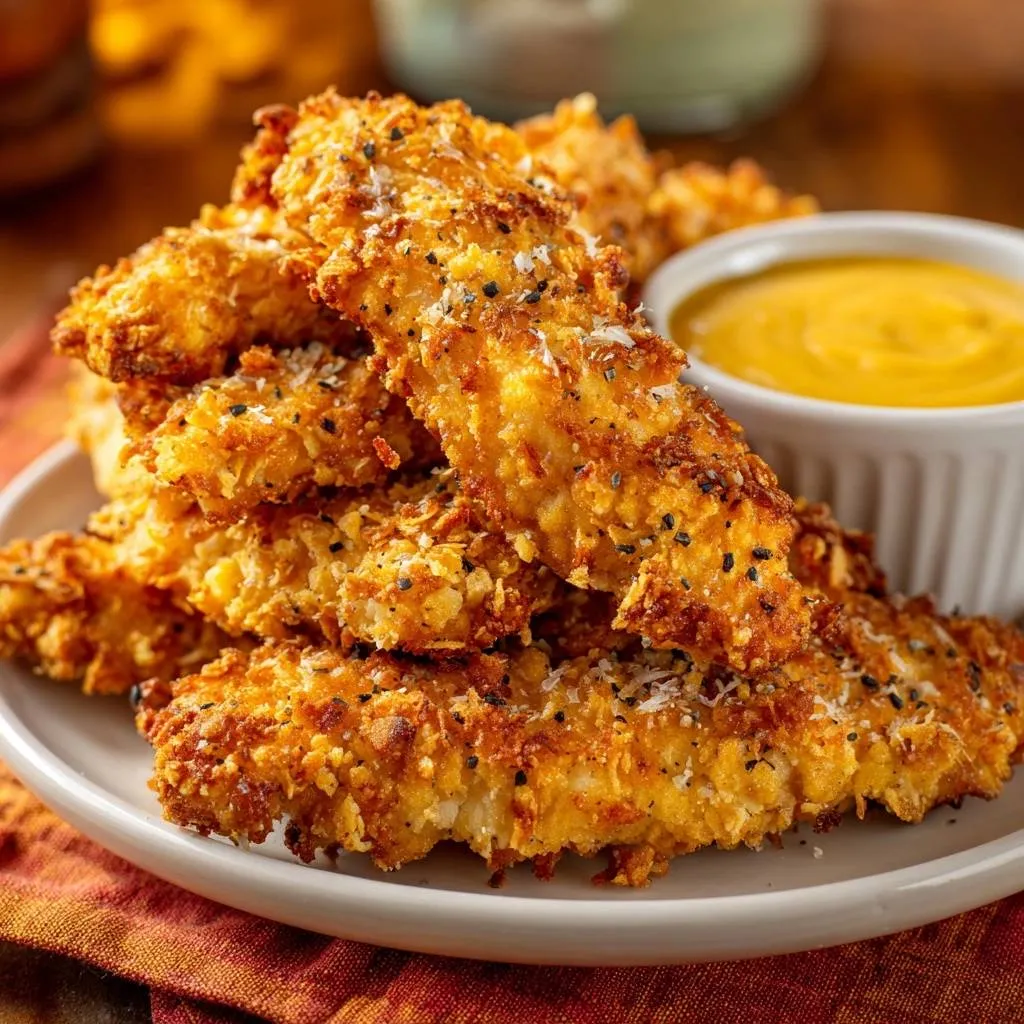
Why This Breading Stays Put Every Bite
Picture this: you bite into a chicken tender, and the crispy coating slides right off, leaving you with a soggy mess. Frustrating, right? These crispy coconut Parmesan chicken tenders fix that forever with a triple-layer dredge and a quick 15-minute chill that locks everything in place.
That’s why this recipe shines. You get that unbeatable crunch from coconut and panko, plus Parmesan’s savory kick, without any fallout. The coconut adds a sweet, tropical twist that pairs perfectly with the nutty sesame seeds.
Here’s the expertise booster: pat the chicken bone-dry first. Moisture is the enemy of breading, so this step creates the grip you need for crispy coconut Parmesan chicken tenders that hold up through every fry.
Key Ingredients for Sticky Coconut Coating
Start with 1.5 pounds of fresh chicken tenders. They bread evenly and stay juicy inside. Patting them dry removes surface moisture, so the coating grips tight from the start.
All-purpose flour forms the base layer, about 1 cup mixed with 1 teaspoon each of salt, black pepper, and garlic powder. These seasonings seep into the meat for bold flavor. In addition, they create a textured surface that the egg wash clings to perfectly.
Three large eggs whisked with 2 tablespoons Dijon mustard make the wet bind. Dijon acts as a natural glue, boosting adhesion way beyond plain eggs. For the crunch, mix 2 cups panko breadcrumbs, 1 cup sweetened shredded coconut, 1 cup grated Parmesan, and 1/4 cup sesame seeds. Sweetened coconut brings tropical sweetness that contrasts the salty Parmesan umami.
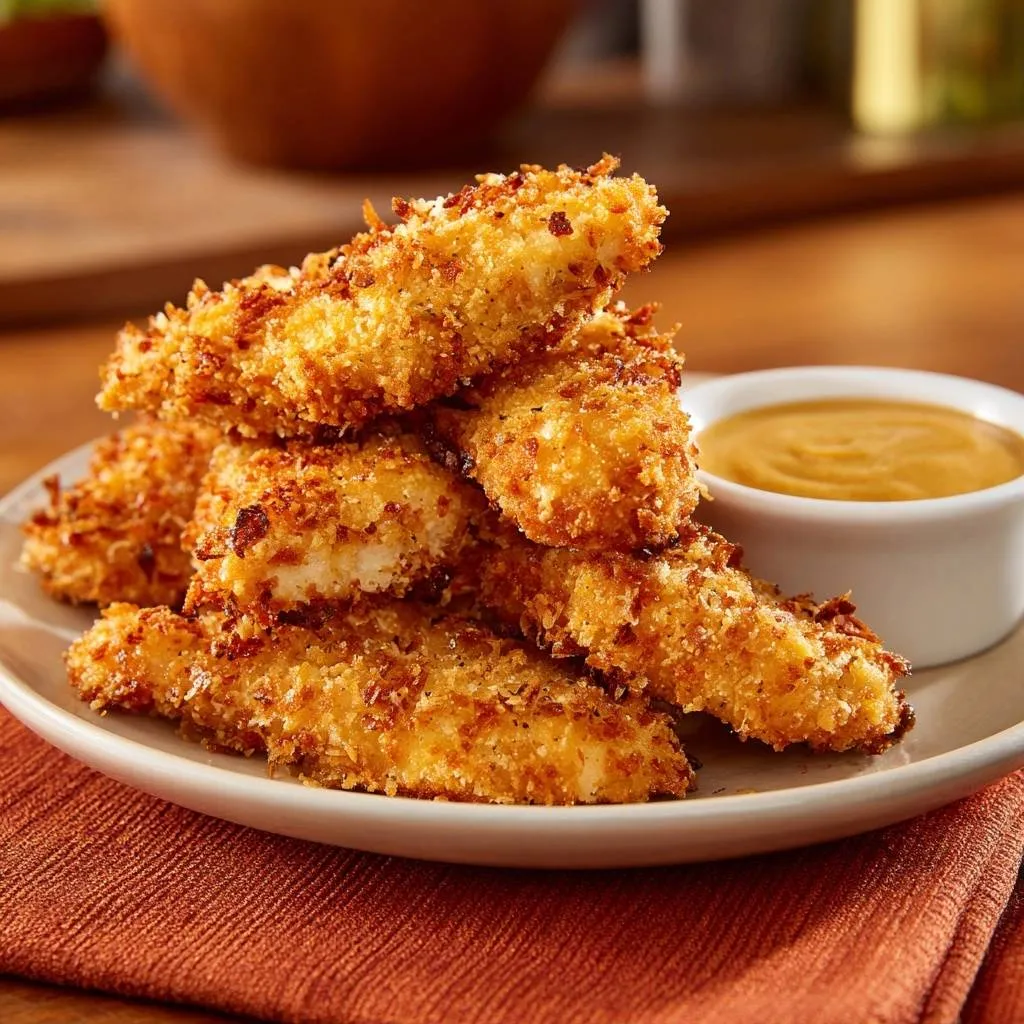
Therefore, use freshly grated Parmesan; it melts into the coating for better binding than pre-shredded. Vegetable oil for frying keeps things neutral, and don’t skip the honey mustard dip made from equal parts honey and remaining Dijon.
For even more cheesy chicken goodness, explore these crispy cheesy chicken cutlets.
Protein Base: Selecting Tender Chicken
Grab 1.5 pounds fresh chicken tenders over frozen ones. Fresh cooks evenly without excess water release. Trim any sinew for uniform pieces that fry up tender.
However, if you only have breasts, slice them into strips. This keeps the crispy coconut Parmesan chicken tenders juicy and safe at 165 degrees F inside.
Dry Dredge: Seasoned Flour Foundation
Mix 1 cup flour with 1 teaspoon salt, pepper, and garlic powder. This dry layer absorbs moisture and seasons deeply. Shake off excess so it doesn’t clump later.
Wet Bind: Egg-Mustard Emulsion
Whisk 3 eggs with 1 tablespoon Dijon until smooth. The mustard emulsifies the mix for superior stickiness. Let excess drip to avoid heavy buildup.
Crunch Layer: Coconut Panko Mix
Combine 2 cups panko, 1 cup sweetened coconut, 1 cup Parmesan, and 1/4 cup sesame seeds. Press tenders firmly into this for a thick coat. Sesame adds nutty texture that toasts golden.
For more inspiration on achieving that perfect crust, check out this Chicken Parmesan with Spaghetti.
Science of Triple-Dredge Adhesion
The magic happens through moisture control, layered barriers, and chilling. First, dry chicken lets flour stick via surface tension. Then egg coagulates on heat, sealing the deal.
In addition, the coconut-Parmesan matrix compacts for strength. Chilling sets egg proteins into a firm gel, so these crispy coconut Parmesan chicken tenders withstand frying splatters. No more sliding breading.
Therefore, follow the sequence exactly. You’ll notice the coating transform from loose to locked-in after the fridge step.
Moisture Control Prevents Fallout
Pat chicken with paper towels until no moisture remains. Wet surfaces cause steam pockets that loosen breading. Dry ones grip flour instantly for solid results.
Chilling Sets the Crunch Barrier
Rest breaded tenders on a rack for 15 minutes in the fridge. Egg firms up, preventing slips in hot oil. Skipping this leads to instant sogginess.
Equipment Choices for Perfect Fry
Use a wire rack over a baking sheet for chilling; it circulates air evenly. A large skillet holds 1/2 inch vegetable oil heated to 350 degrees F with a thermometer.
However, a candy thermometer works if you lack a deep-fry one. For less oil, air fry at 400 degrees F, but frying gives superior crisp. Pro tip: drain on fresh paper towels to wick away grease fast.
Wire Rack Chilling Advantage
A wire rack lets air hit all sides, avoiding soggy bottoms from plate contact. Place over a sheet to catch drips. It’s essential for even setting.
Oil Thermometer Precision
Heat to 350 degrees F for crisp without grease soak. Oil shimmers and ripples lightly. Too low steams; too high burns the coconut coating.
Phase 1: Prep and Triple Dredge
Pat tenders dry thoroughly. Set up three shallow bowls: flour mix, egg-mustard, coconut-panko blend. Dredge one by one for best adhesion.
Dust lightly in flour, dip fully in egg, then press into crunch mix on all sides. The firm press compacts layers tight. Chill on the rack for 15 minutes; you’ll see the coating firm up beautifully.
Dry Chicken Thoroughly First
Use multiple paper towels, patting firmly. Every drop of moisture sabotages grip. Dry chicken transforms into breading-ready perfection.
Layer 1: Light Flour Dusting
Coat evenly in seasoned flour, shake off loose bits. This base layer seasons and preps for egg. Keep it light to avoid bulk.
Layer 2: Full Egg-Mustard Dip
Submerge completely, let excess drip. Whisked smoothness ensures even coverage. Mustard boosts stick without strong flavor.
Layer 3: Firm Coconut Press
Press handfuls of mix onto all surfaces thickly. Use hands to compact. Full coverage guarantees crunch in every crispy coconut Parmesan chicken tender.
Phase 2: Fry to Golden Perfection
Heat 1/2 inch oil to 350 degrees F in a skillet. Fry in batches, 3-4 minutes per side until deep golden and 165 degrees F inside. Flip gently with tongs.
Drain immediately on paper towels. Serve hot with honey mustard. Batches prevent temperature drops that cause oil absorption.
Oil Heating to 350 Degrees
Add oil to skillet, heat medium-high until 350 degrees F. Bubbles form around a test bread crumb. Precise heat crisps fast.
Batch Frying Without Crowding
Fry 4-5 tenders with space; overcrowding drops temp and steams. Cook 3-4 minutes per side. Golden edges signal doneness.
Avoiding Soggy Coconut Tenders Mistakes
Common pitfalls kill crunch: skip drying, and breading slips; overcrowd, and it steams soggy. Low oil temp soaks up grease instead of crisping.
However, follow the chill and press, and your crispy coconut chicken tenders stay perfect. Checklist: dry pat, full dredge, 15-minute chill, hot oil, spaced batches.
Overcrowding Steams Coating
With 1.5 pounds, do 3-4 batches. Space keeps oil hot for crisp. Crowded pans turn coconut tenders chewy.
Skipping the Chill Step
No chill means breading falls in oil. 15 minutes sets it firm; even 10 works in a pinch. Always prioritize this.
Honey Mustard Dip and Flavor Twists
Mix 1/4 cup Dijon with 1/4 cup honey for 1/2 cup dip. Whisk smooth for creamy balance. It cuts through the rich coconut-Parmesan perfectly.
For twists, add lime juice for tang or a pinch of curry powder to echo coconut. Store dip in fridge up to a week.
Classic Honey Dijon Balance
Equal parts honey and Dijon whisk to emulsify. Sweet-savory harmony. Keeps chilled for 5 days.
Spice Up the Dipping Sauce
Stir in sriracha for heat, lime zest for brightness, or curry for tropical depth. Each amps the coconut theme without overpowering.
Pairing Sides with Coconut Chicken Tenders
Crisp slaws cut richness; tropical salsas boost sweetness. Veggie fries add more crunch, grain bowls fill out meals.
Therefore, contrasts make these tenders shine. Try five quick pairs below for full dinners.
What to Enjoy Next
Beyond these crispy coconut chicken tenders, consider these other satisfying dishes.
- For a fantastic bread option, try the Crispy Garlic Bread, featuring a technique to keep it from getting soft.
- You might also like the Crispy Radicchio Beef Salami Salad for a different kind of crunch.
Fresh Slaw Crunch Match
Shred 1/2 cabbage head and 2 carrots, toss with 1/4 cup vinegar, 2 tbsp oil, salt. Chill 30 minutes. Tangy crunch offsets sweet coconut.
Tropical Fruit Salsa Contrast
Dice 1 cup pineapple, 1 mango, add red onion, cilantro, lime juice. Spoon over tenders for juicy paradise bite.
FAQ: Mastering Crispy Coconut Parmesan Chicken Tenders
Can I Air Fry Instead of Frying?
Yes, preheat air fryer to 400 degrees F. Spray breaded tenders with oil, cook 10-12 minutes, flipping halfway. They crisp well but lack deep-fry shatter; still beats soggy takeout.
How to Store and Reheat Tenders?
Store leftovers in an airtight container in the fridge up to 3 days, or freeze breaded uncooked up to 2 months. Reheat fried ones in a 375 degrees F oven for 10 minutes to recrisp; avoid microwave sogginess. Freezing cooked works but texture softens slightly.
Gluten-Free Coconut Tenders Adaptation?
Swap all-purpose flour for 1:1 gluten-free blend, use gluten-free panko. Follow same dredge and chill steps. Crunch holds perfectly.
Scaling for Family Batch Size?
Double all ingredients for 4-6 people; use two skillets or larger fryer. Fry time stays 3-4 minutes per side, just more batches. Chill fully before frying.
Why Does Breading Sometimes Fall Off?
Usually from skipping dry pat, chill, or firm press. Moisture steams it loose, no chill fails to set egg. Fix with thorough drying, 15-minute fridge, and pressing mix thickly every time.
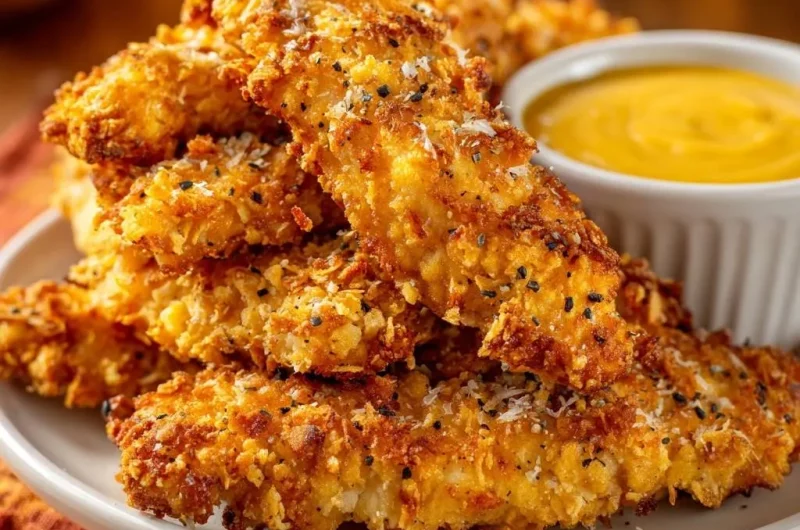
Chicken Tenders
Course: Main CourseCuisine: AmericanDifficulty: medium4
servings25
minutes20
minutes650
kcal45
MinutesTired of breaded chicken tenders where the crunchy coating slides right off? This recipe delivers a foolproof triple-layer dredge plus a 15-minute chill that locks the coconut-parmesan crust onto every tender for perfect stick and unbeatable crunch.
Ingredients
1.5 pounds chicken tenders
1 cup all-purpose flour
1 teaspoon salt
1 teaspoon black pepper
1 teaspoon garlic powder
3 large eggs
2 tablespoons Dijon mustard (divided)
2 cups panko breadcrumbs
1 cup sweetened shredded coconut
1 cup grated Parmesan cheese
1/4 cup sesame seeds
Vegetable oil for frying
1/2 cup honey mustard (for dipping: mix 1/4 cup Dijon mustard with 1/4 cup honey)
Directions
- Pat chicken tenders completely dry with paper towels. This removes moisture so breading grips tight.
- Mix flour, salt, pepper, and garlic powder in a shallow bowl.
- In a second bowl, whisk eggs with 1 tablespoon Dijon mustard until smooth. The mustard acts as a natural adhesive.
- In a third bowl, combine panko, shredded coconut, Parmesan, and sesame seeds. Stir well.
- Dredge each tender in flour mixture, shaking off excess. Dip fully in egg mixture, letting excess drip. Press firmly into coconut-Parmesan mixture, coating all sides thickly. The firm press compacts layers for no-slip hold.
- Place breaded tenders on a wire rack over a baking sheet. Chill in fridge for 15 minutes. This critical step sets the coating, preventing fallout during frying.
- Heat 1/2 inch vegetable oil in a large skillet over medium-high heat to 350 degrees F (use a thermometer).
- Fry tenders in batches, 3 to 4 minutes per side until deep golden and cooked through (internal temp 165 degrees F). Do not overcrowd to avoid steaming and sogginess.
- Drain on paper towels. Serve with honey mustard dip mixed from remaining Dijon and honey. Enjoy breading that stays put for every crispy bite.
Notes
- Pat chicken completely dry for best breading adhesion. Chill for 15 minutes to set coating. Fry at 350°F to avoid sogginess.