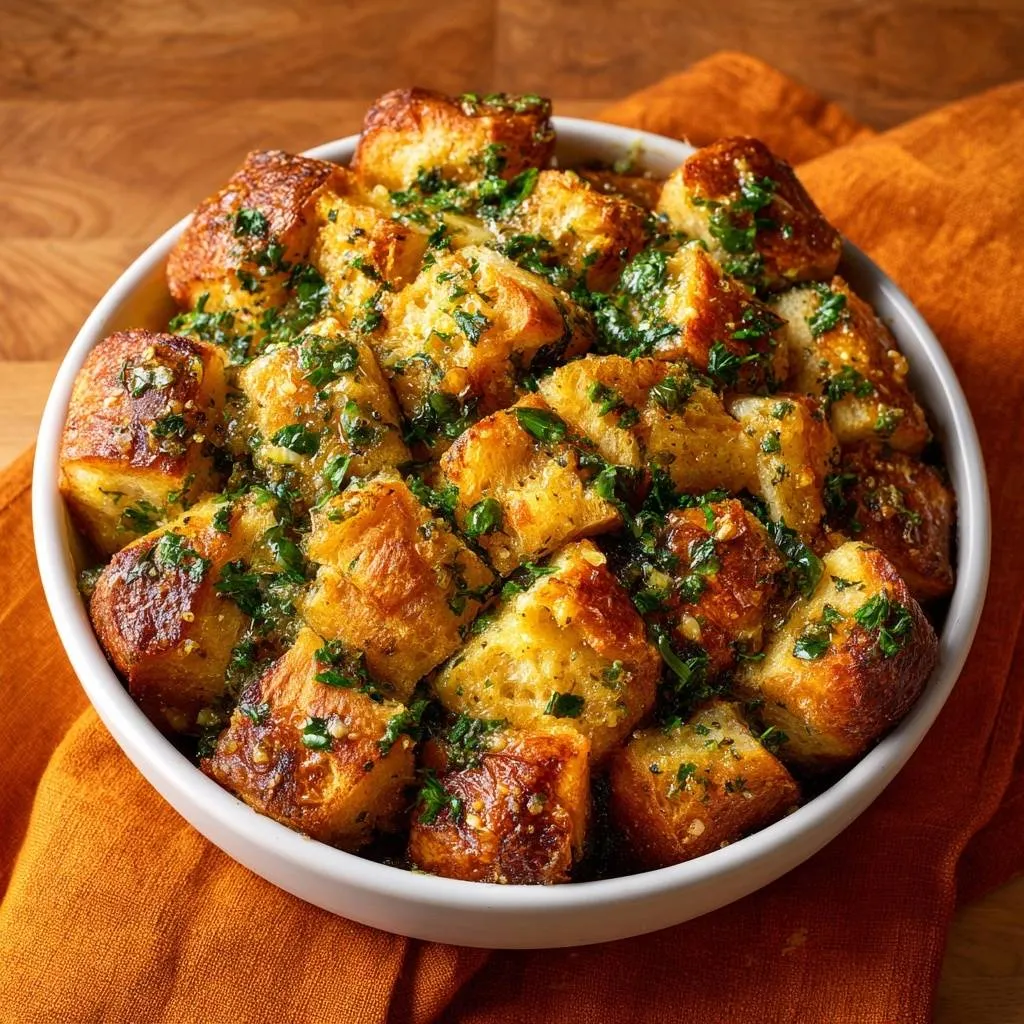
Ever bite into what promises to be a crunchy crouton only to hit a soggy, chewy center that ruins your soup or salad? Those disappointments end here. This recipe delivers garlic parsley bread bites with unbreakable crunch from start to finish.
Therefore, you get that satisfying snap every time. The single-layer baking and mid-way toss evaporate moisture completely. Plus, day-old bread starts you ahead without steam buildup.
Here’s the expertise booster: shake off excess oil after coating. It prevents drenched cubes that steam instead of crisp. You’ll smell the garlic blooming as they turn golden.
Why Day-Old Bread Locks In Crunch
Day-old white bread works best because its lower moisture content avoids steam pockets during baking. Fresh bread releases too much water, leading to limp results. However, stale bread absorbs oil evenly for superior crunch.
In addition, cut uniform 1-inch cubes for even crisping. A serrated knife slices cleanly without squishing. This uniformity ensures every bite hits the same crispy perfection.
Selecting and Prepping Bread Cubes
Grab a loaf of day-old white bread from your pantry or let fresh slices air-dry overnight. Aim for firm texture that doesn’t compress under your finger. Then, use a serrated knife to cube into 1-inch pieces, about 8 cups total.
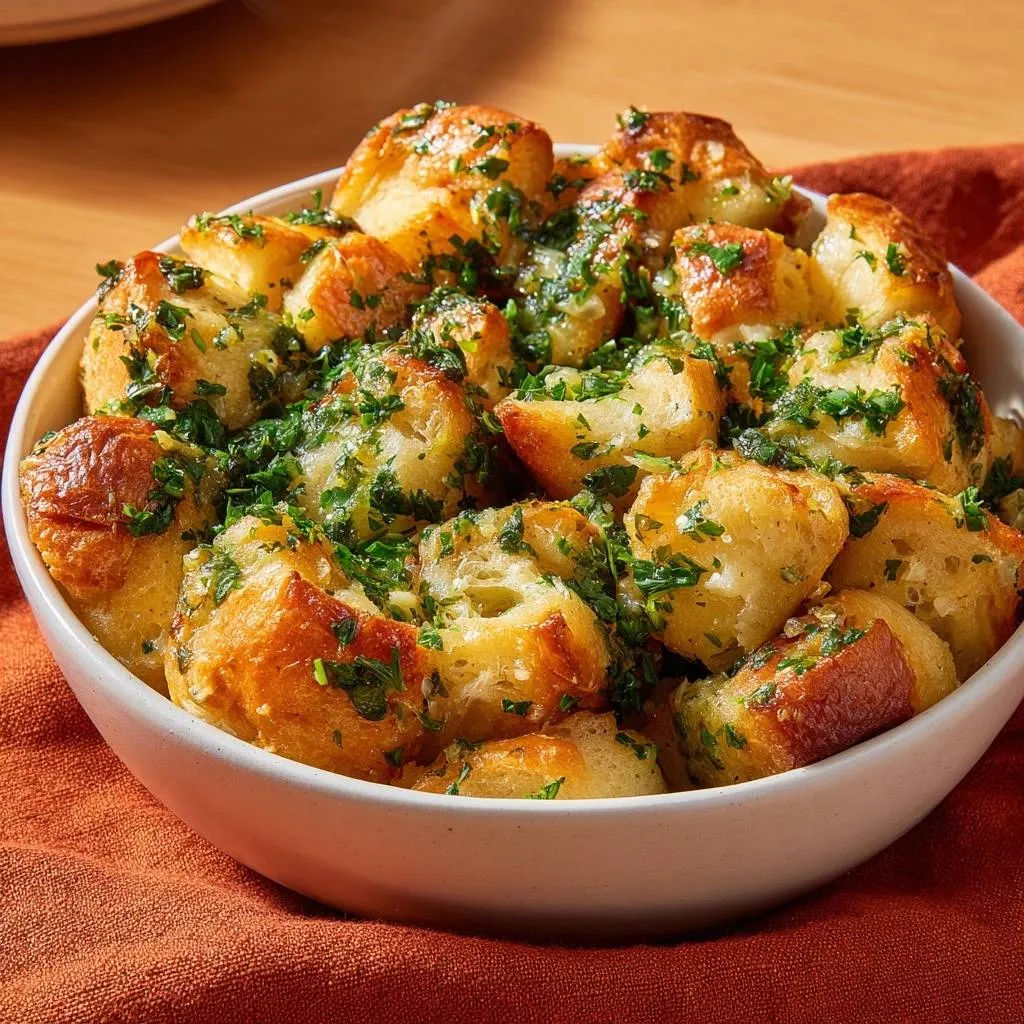
Uniformity matters because it promotes even oil pickup and heat exposure. Toss any uneven bits back into the mix. You’ll love how they transform into golden gems.
Garlic Oil Mixture Fundamentals
Olive oil conducts heat perfectly for crispy exteriors without greasiness. Mince six garlic cloves fresh for punchy flavor; jarred lacks that zing. Finely chop a cup of parsley to cling without wilting.
Salt and pepper balance at one teaspoon and half teaspoon. Optional quarter-cup grated Parmesan adds umami and a golden crust via browning proteins. This mix coats 8 cups of cubes just right.
Fresh Parsley vs. Dried Herbs
Fresh parsley sticks bright and green, releasing oils for herby crunch. Dried herbs rehydrate and turn chewy. Chop finely with a sharp knife to avoid bruising; one cup fresh equals unbeatable adhesion.
Science of Single-Layer Baking
At 400 degrees F, the Maillard reaction browns surfaces into crisp gold. A single layer lets hot air circulate, evaporating moisture fast. Overlapping traps steam, causing sogginess every time.
Therefore, toss after 10 minutes to expose all sides. Rotate sheets for even oven heat. The 15-minute cool-down pulls hidden steam from centers, locking in firmness.
Moisture Evaporation Timeline
First 10 minutes crisp bottoms with a toasty aroma. Toss exposes sides; bake 8-10 more until firm and deeply golden. Check with a thermometer at 180 degrees F internally to nail doneness without burning.
Equipment Choices for Even Crisping
Parchment-lined half-sheet pans prevent sticking and oil pooling. Use two for 8 cups to avoid crowding. Silicone spatulas toss gently without breaking cubes.
Calibrate your oven thermometer for accuracy; many run hot. Skip foil, as it traps moisture. Convection mode speeds airflow if you have it.
Baking Sheet Size Impact
Half-sheets maximize airflow over full ones. Choose parchment with good grip to keep cubes steady. This setup ensures 360-degree crispness.
Coating Bread Cubes Precisely
Whisk oil, garlic, parsley, salt, pepper, and Parmesan first for even emulsion. Add cubes and toss gently until glossy. Shake off excess in a colander; dripping oil leads to chewiness.
Visual check: cubes shine but don’t weep oil. This precise coat crisps exteriors while keeping insides firm. Pro tip: pat dry with a towel if bread feels damp.
Single-Layer Spreading Technique
Space cubes finger-width apart on sheets. Gaps let hot air flow around every side for full crisp. Touching cubes steam each other soft.
Baking and Tossing Sequence
Preheat to 400 degrees F and line sheets. Coat and spread single-layer. Bake 10 minutes, toss with spatula to flip, rotate sheets, then 8-10 more until golden and firm.
Watch the last two minutes; edges deepen fast. Cool fully on sheets, at least 15 minutes. Store airtight for three days of crunch. Yields perfect bites every batch.
Post-Bake Cooling Process
Rest on sheets lets steam escape, crisping centers. Off-sheet cooling softens them quick. Layer with paper towels in storage to snag humidity.
Avoiding Soggy Crispy Garlic Parsley Bread Bites
Over-oiling soaks cubes; shake excess rigorously. Crowding creates steam pockets, so use two sheets. Low oven temps under-crisp; hit 400 degrees F precisely.
Fix chewy batches by re-baking spread out at 350 degrees F. Pat cubes dry before coating if needed. Convection fans help evaporate faster.
Frequent Tossing Fixes Uneven Crisp
Toss exposes underdone sides to heat. Use a wide spatula over shaking to avoid breakage. Rotate sheets top-to-bottom for balance.
Flavor Twists on Garlic Parsley Bites
Add lemon zest for zesty brightness or rosemary for woodsy depth. Chili flakes bring heat without overpowering. Scale up for crowds; double everything evenly.
For gluten-free, use sturdy bread and bake two extra minutes. Vegan skip Parmesan. These tweaks keep the crunch while varying vibes.
Parmesan-Free Golden Crust Hack
Sprinkle nutritional yeast for cheesy umami and browning. Or panko breadcrumbs stick for extra crunch. Both mimic that golden edge perfectly.
Pairing Crispy Garlic Parsley Bread Bites
These bites shine atop creamy soups, soaking up broth without wilting. Toss into green salads for texture pop. They prime pasta dishes too.
For similarly light results, consider fluffy garlic herb dinner rolls.
Serve warm to amp garlic aroma, or room temp for lasting snap. Portion one cup per serving. Antipasto platters love their garlicky bite.
Soup and Salad Matches
Tomato bisque contrasts creamy with crisp. Caesar salad dressings cling ideally. Both highlight the parsley freshness.
Storage Strategies for Lasting Crunch
Keep in an airtight container up to three days at room temp. Freeze in bags for one month; re-bake at 350 degrees F for five minutes to revive.
Avoid the fridge; humidity softens them. Revive day-olds in a 300 degrees F oven for three minutes. Paper towel layers absorb stray moisture.
Freezer-to-Crisp Revival
Flash-freeze single-layer on a sheet first. Portion into bags for grab-and-go. Thaw briefly, then crisp as needed.
Troubleshooting Crispy Garlic Parsley Bread Bites
Chewy centers mean underbaking or crowding; extend time and space out. Burnt edges skip the toss; watch closely next round. Bland bites need more salt; taste the mix first.
Oily results from excess; drain well. Soft storage skips cooling; always rest fully. Prevention beats fixes every time.
Rescuing Over-Baked Batches
Trim burnt bits with a knife. Re-crisp salvageable ones at 325 degrees F for three minutes. They’ll bounce back crunchy.
FAQ
How do I store Crispy Garlic Parsley Bread Bites for lasting crunch?
Store in an airtight container at room temperature for up to three days. Add a paper towel layer to absorb humidity. For longer, freeze in single-layer bags up to one month, then re-bake at 350 degrees F for five minutes to restore snap; avoid fridge as it introduces moisture that softens centers.
Why are my bread bites chewy in the middle?
Chewy centers come from moisture trapped by crowding or skipping the toss. Always use a single layer on two sheets and flip after 10 minutes to evaporate steam evenly. If using fresh bread, dry it overnight first; underbaking at lower temps also leaves interiors soft, so hit 400 degrees F and check for firmness.
Can I substitute ingredients in Crispy Garlic Parsley Bread Bites?
Swap white bread for gluten-free sturdy loaves, but bake two extra minutes as they absorb differently. No fresh parsley? Use one-quarter cup dried, but fresh clings better for crunch. Skip Parmesan for vegan with nutritional yeast; it browns similarly without dairy. Olive oil can become avocado oil for neutral taste.
How do I prevent my bread bites from burning?
Watch closely the last two minutes after tossing, as edges golden fast via Maillard reaction. Rotate sheets midway for even heat, and use an oven thermometer to confirm 400 degrees F. If browning too quick, lower to 375 degrees F and extend time slightly; shake off excess oil pre-bake to avoid hot spots.
What’s the best bread for these bites if I don’t have day-old?
Fresh white bread works if you cube and air-dry slices on a rack overnight or in a 200 degrees F oven for 30 minutes until firm. Avoid soft sandwich bread; opt for French or Italian loaves for structure. Uniform 1-inch cubes ensure even crisping regardless.
Can I make these ahead for a party?
Yes, bake fully, cool completely, and store airtight up to three days ahead. Re-crisp in a 300 degrees F oven for three minutes right before serving to refresh garlic aroma and snap. Freeze portions for up to a month; they’re crowd favorites that hold up perfectly on platters or salads.
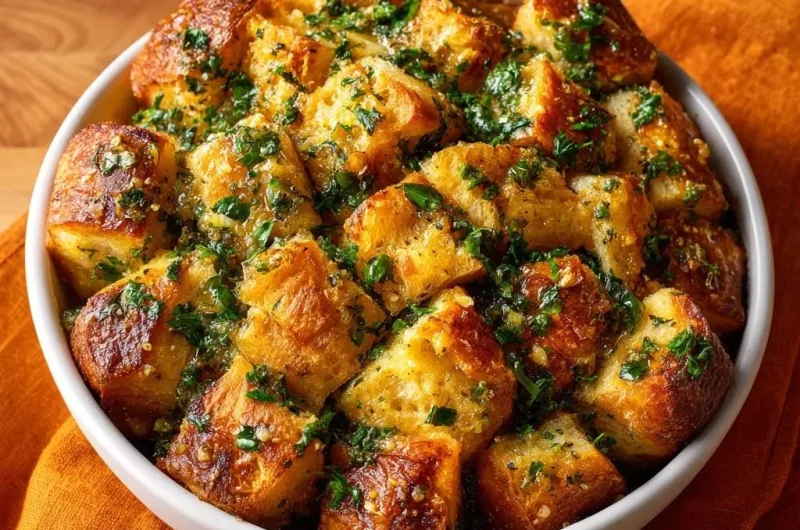
Bread Bites
Course: Side DishCuisine: AmericanDifficulty: easy8
cups15
minutes20
minutes240
kcal35
MinutesTired of bread bites that start crisp but turn chewy and limp fast? This foolproof method uses day-old bread cubes tossed in garlic oil, baked in a single layer with frequent tosses to evaporate every bit of moisture for lock-in crunch that lasts. Perfect side for soups or salads.
Ingredients
1 loaf day-old white bread, cut into 1-inch cubes (about 8 cups)
1/2 cup olive oil
6 garlic cloves, minced
1 cup fresh parsley, finely chopped
1 teaspoon salt
1/2 teaspoon black pepper
1/4 cup grated Parmesan cheese (optional, for extra golden crust)
Directions
- Preheat oven to 400 degrees F. Line two baking sheets with parchment paper.
- In a large bowl, whisk together olive oil, minced garlic, parsley, salt, pepper, and Parmesan if using. Add bread cubes and toss gently until every cube is evenly coated but not drenched, shaking off excess oil to avoid sogginess.
- Spread cubes in a single layer on the baking sheets, ensuring no overlap, this is key to full crispiness.
- Bake for 10 minutes, then toss cubes with a spatula to expose all sides and promote even moisture evaporation. Rotate sheets if needed. Bake another 8-10 minutes until deeply golden and crisp outside, firm inside. Watch closely to avoid burning.
- Remove from oven and let cool completely on the sheets, at least 15 minutes, this final rest crisps the centers fully by drawing out hidden steam. Store in an airtight container up to 3 days, still crunchy. Serve warm or room temp.
Notes
- Use day-old bread for best results. Ensure single layer and frequent tossing to avoid sogginess. Cool completely for maximum crispiness. Store airtight up to 3 days.