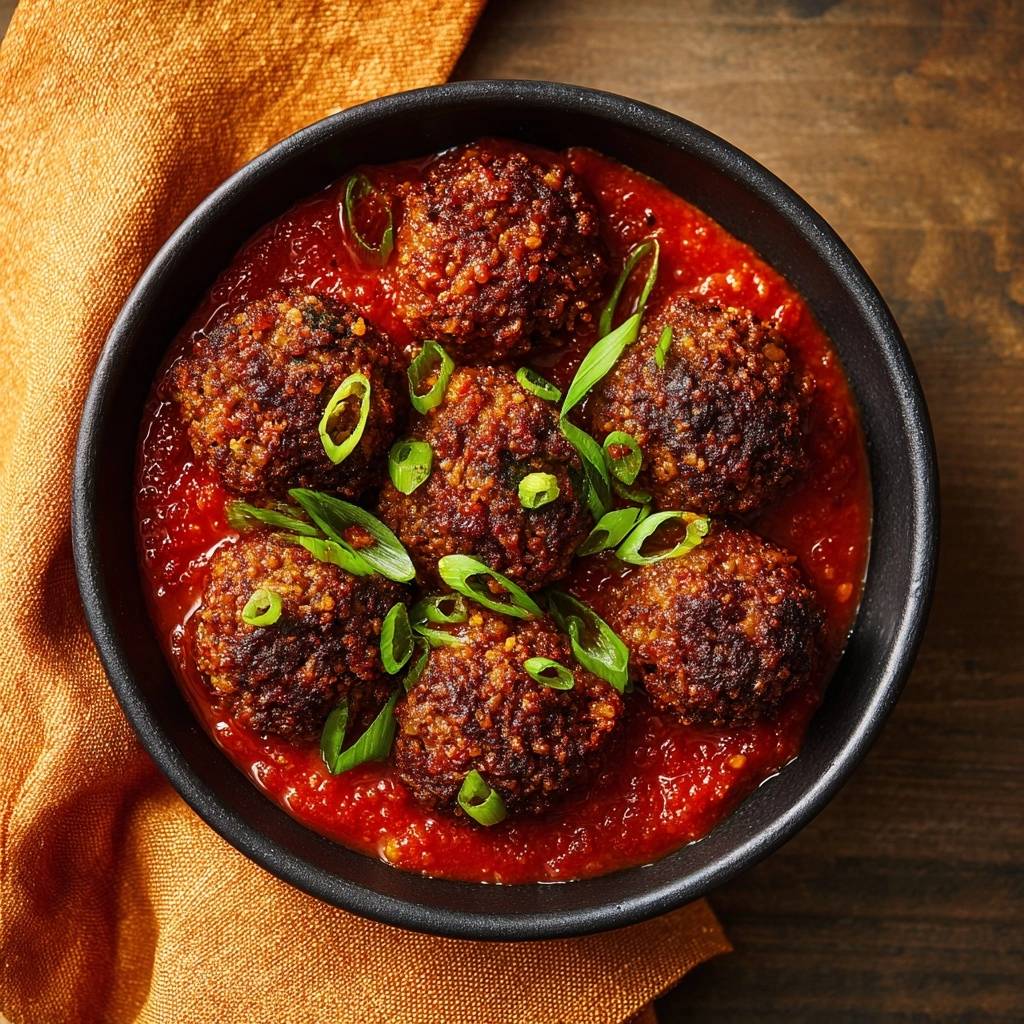
Imagine biting into a meatball that actually fights back with a distinct, salty crunch before giving way to a tender, juicy center. Most homemade meatballs end up tasting like they were boiled in sauce, resulting in a soft, uniform texture that lacks any real character. This recipe changes that by focusing on a high-heat sear that creates a shattered-glass crust, transforming a humble comfort food into a gourmet experience.
The frustration of “soggy meatball syndrome” usually comes from simmering the meat in liquid for too long. By treating these meatballs more like a premium steak and less like a dumpling, you preserve the integrity of the beef. We are looking for a deep, mahogany browning that stands up against the bright acidity of a zesty marinara, ensuring every forkful has a complex mouthfeel.
The secret to this specific texture is the double-breadcrumb approach. While most recipes only use breadcrumbs as an internal binder, we use a second layer as an external coating. This creates a physical barrier that crisps up instantly in the hot oil, locking the juices inside while preventing the sauce from turning the exterior into mush. It’s a small technical shift that makes a massive difference in the final result.
The Science of the Maillard Reaction and Meatball Texture
Achieving that perfect crust isn’t just about luck; it’s about the Maillard reaction. This chemical process happens when the proteins and sugars in the meat hit high heat, creating hundreds of different flavor compounds. If your pan isn’t hot enough, the meat releases moisture and steams instead of searing, which is why your meatballs often turn grey instead of brown.
For more ideas on achieving that perfect sear, explore skillet meatballs in rich tomato sauce.
Using an 80/20 ground beef blend is non-negotiable for this technique. The 20% fat content acts as a built-in lubricant and flavor carrier, allowing the meatball to withstand the intense heat of the pan without drying out. As the fat renders, it helps fry the exterior breadcrumbs, creating a structural shell that stays rigid even when it hits the sauce.
The “double breadcrumb” method serves as a structural engineer for your dinner. The internal crumbs soak up the egg and meat juices to keep the inside soft, while the external coating creates a pebbled surface area. This increased surface area means more places for the oil to create crispiness, resulting in a meatball that resists moisture absorption from the marinara.
Essential Components for Crispy Pan-Seared Meatballs
Quality ingredients are the foundation of a great sear. Start with fresh 80/20 ground beef and avoid the ultra-lean packages, as they will crumble and turn rubbery under high heat. The fat is what allows the meatball to “fry” in its own juices while it sits in the olive oil, contributing to that golden-brown finish.
Freshly minced garlic is another game-changer here. While garlic powder is convenient, fresh garlic contains natural sugars that caramelize against the heat of the skillet, adding tiny pockets of sweetness to the crust. When combined with the sharp, salty bite of freshly grated Parmesan, the exterior becomes a flavor powerhouse before it even touches the sauce.
The beaten egg acts as your protein bridge, holding the beef and breadcrumbs together so they don’t disintegrate. For the coating, Italian breadcrumbs are preferred over Panko because their finer texture provides total coverage. This ensures every millimeter of the meatball is protected by a thin, savory veil that crisps up uniformly in the shimmering oil.
Selecting the Right Marinara for High-Contrast Plating
Since we are working hard to achieve a crispy exterior, you need a sauce that respects that effort. Look for a “rustic” or “chunky” marinara rather than a smooth, watery puree. A thicker sauce stays at the bottom of the bowl where it belongs, providing a flavorful base without drowning the meatballs.
Check the label for low sugar content and high-quality olive oil. A zesty, acidic sauce balances the richness of the fried beef perfectly. If your sauce looks a bit thin, simmer it on the stove for ten minutes before serving to reduce the water content and concentrate the tomato flavors.
Step-by-Step: Achieving the Perfect Golden Crust
Success in the kitchen often comes down to timing and temperature. To get that “skyscraper” quality where the meatballs stand tall and proud, you have to follow a specific three-phase process. This isn’t just about cooking the meat; it’s about managing the physics of the ingredients.
Phase 1: Mixing Without Overworking the Proteins
When you combine your beef, spices, and binder, use a very light touch. If you squeeze the meat too hard or mix it for too long, the proteins begin to cross-link and toughen up, resulting in a dense, rubbery ball. Mix just until you see the white flecks of Parmesan and green bits of oregano evenly distributed.
Think of it as folding rather than kneading. You want to keep the mixture airy so that heat can penetrate the center quickly. Once the ingredients are just combined, roll them into 1.5-inch spheres. This size is the “sweet spot” for searing because it allows the center to cook through just as the crust reaches peak crispiness.
Phase 2: The Critical Ten-Minute Refrigeration Rest
Do not skip the fridge time! Chilling the rolled meatballs for ten minutes is the secret to keeping them round. When the fat in the beef is cold, it stays solid longer once it hits the pan, preventing the meatballs from flattening out into “meat-disks” under their own weight.
This rest period also gives the breadcrumbs time to hydrate and stick to the surface. If you go straight from rolling to frying, the coating often falls off in the oil, leaving you with a messy pan and naked meatballs. A quick chill ensures everything stays exactly where it should be for the big sear.
Phase 3: The Shallow Fry and Batch Management
Heat your olive oil until it is shimmering but not smoking. When you add the meatballs, you should hear an immediate, aggressive sizzle. If the oil is silent, take the meat out and wait another minute. You need that instant heat to set the crust before the meat has a chance to release its juices.
Avoid the temptation to crowd the pan. If you put too many meatballs in at once, the temperature of the oil will plummet, and the meat will start to steam in its own moisture. Work in batches, giving each sphere enough room to breathe. Use tongs to rotate them every minute, ensuring a 360-degree golden-brown finish.
Plating Strategy to Prevent Soggy Meatballs
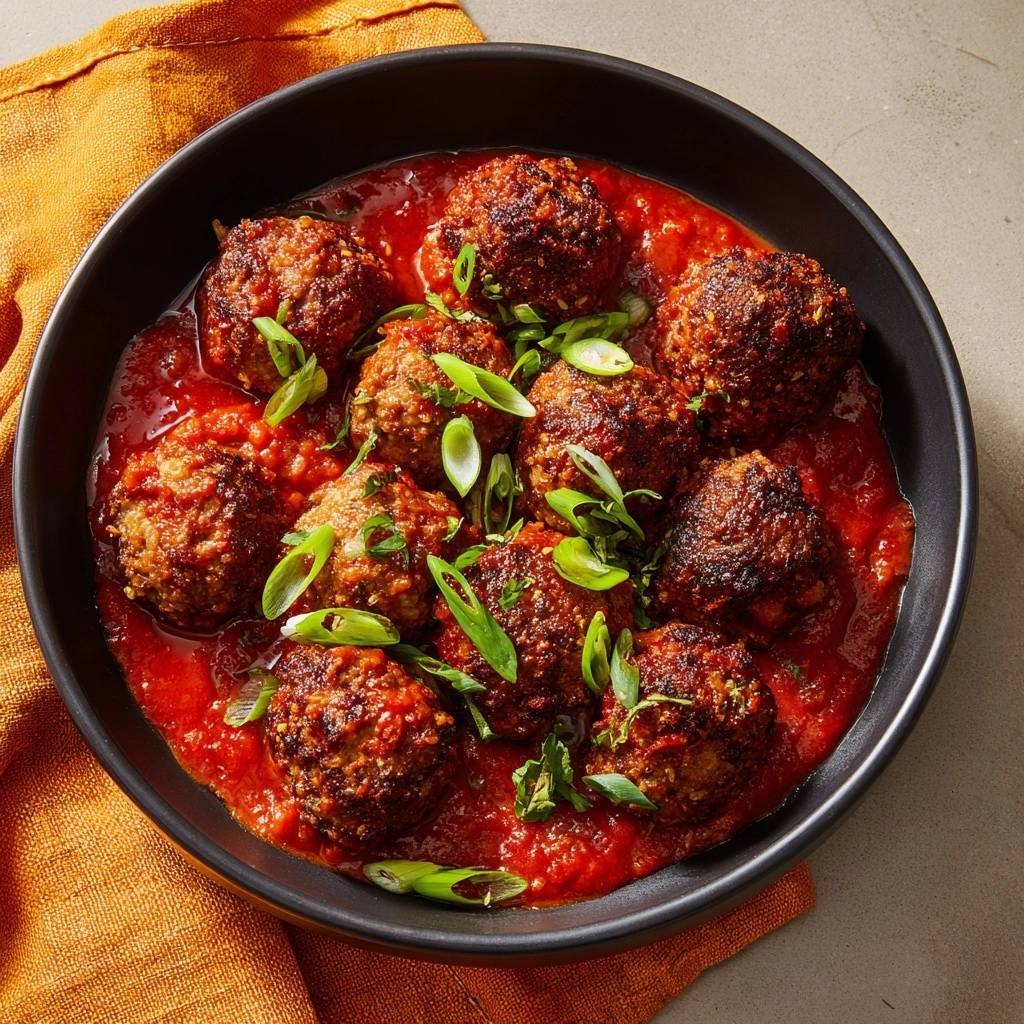
The way you plate this dish is just as important as how you cook it. Never toss these crispy meatballs into a pot of sauce and let them sit. That would immediately undo all the hard work you put into the searing process. Instead, use the “nestling” technique to preserve the texture.
Ladle a generous amount of hot marinara into the bottom of a wide, shallow bowl. Carefully place the hot meatballs into the sauce so they are only half-submerged. This allows the bottom half to soak up the zesty tomato flavors while the top half stays exposed to the air, maintaining its crunch until the very last bite.
Troubleshooting Common Searing Obstacles
If you notice your breadcrumbs are turning dark brown too quickly, your heat is likely too high. Simply slide the pan off the burner for thirty seconds to let the oil cool down, then return it to a slightly lower flame. You want a steady sizzle, not a burnt smell.
If the meatballs are sticking to the pan, don’t force them. Meat usually “releases” itself from the surface once a proper crust has formed. Give it another thirty seconds of patience. If they still stick, you might need a splash more oil to ensure they can glide across the skillet surface.
For meatballs that are perfectly browned but still slightly pink in the middle, use the lid-steam trick. Turn the heat to low, add a teaspoon of water to the corner of the pan, and pop a lid on for sixty seconds. The trapped steam will finish the centers without ruining the exterior crunch.
Optimal Side Dishes for Crispy Meatballs
While spaghetti is the classic choice, these high-texture meatballs pair beautifully with other sides. Try serving them over a bed of creamy, buttery polenta. The contrast between the velvety cornmeal and the crunchy beef is incredible. A side of charred broccolini with lemon zest also adds a nice bitter crunch to the meal.
For a heartier pasta experience, try this rigatoni with beef meatballs.
Don’t forget the garnish. The diagonally sliced green onions aren’t just for looks; they provide a fresh, sharp bite that cuts through the richness of the fried meat. A piece of crusty sourdough baguette is also essential for mopping up the leftover marinara at the bottom of the bowl.
Round Out Your Meal
Looking for something to complete your Italian-inspired dinner? Here are a couple of pasta dishes that pair well with your meatballs.
- For a rich and creamy pasta experience, try our creamy sun-dried tomato and spinach penne, featuring similar bright, savory notes.
- If you enjoy tender pasta in a flavorful sauce, our creamy tomato skillet gnocchi offers a comforting and satisfying option.
Expert Tips for Preparation and Storage
You can actually prep these ahead of time to save a few minutes on busy weeknights. Roll and coat the meatballs in breadcrumbs, then freeze them on a baking sheet. Once they are solid, transfer them to a freezer bag. You can sear them straight from frozen, just add two extra minutes to the cook time.
If you have leftovers, avoid the microwave at all costs. A microwave will turn the crispy crust into a chewy, rubbery mess. Instead, reheat the meatballs in an air fryer at 350°F for about five minutes, or in a toaster oven. This will reactivate the oils and bring that signature crunch back to life.
Expert Troubleshooting
Why did my meatballs fall apart in the pan?
Meatballs usually fall apart because of a lack of binder or skipped chilling time. Ensure you use the full egg and the specified amount of breadcrumbs inside the mix. Most importantly, the 10-minute refrigerator rest is vital because it firms up the fats and proteins, acting like a “glue” that holds the sphere together when it hits the hot oil.
Can I use a different meat blend?
You can certainly use ground lamb or a mix of beef and ground turkey. However, if you use turkey or chicken, you must be careful as they are much leaner than 80/20 beef. If using a lean meat, add a tablespoon of olive oil directly into the meat mixture to provide the necessary fat for a successful sear and to prevent the interior from becoming dry.
How do I know when the oil is hot enough?
The easiest way is the “breadcrumb test.” Drop a single pinch of breadcrumbs into the oil; if they sizzle and dance immediately, you are ready. Alternatively, dip the handle of a wooden spoon into the oil. If steady bubbles form around the wood and float upward, the oil has reached the proper temperature for shallow frying.
What if my marinara is too thin?
A thin sauce will quickly migrate up the sides of the meatballs and soften the crust. To fix this, pour your sauce into a small saucepan and simmer it over medium heat without a lid. Let it reduce for 5 to 10 minutes until it reaches a thick, jammy consistency. This ensures the sauce stays as a base layer rather than a soup.
Meatballs
Course: Main CourseCuisine: Italian-AmericanDifficulty: easy4
servings15
minutes20
minutes410
kcal35
MinutesA specialized meatball recipe designed to eliminate mushy textures. By using a specific binder ratio, a secondary breadcrumb coating, and a shallow-fry technique, these meatballs maintain a crusty exterior and tender interior when served over thick marinara.
Ingredients
1 pound ground beef (80/20 blend for moisture)
1/2 cup Italian breadcrumbs (divided: 1/4 cup for mix, 1/4 cup for coating)
1/4 cup grated Parmesan cheese
1 large egg, beaten
2 cloves garlic, minced
1 teaspoon dried oregano
1/2 teaspoon salt
1/4 teaspoon black pepper
3 tablespoons olive oil (for shallow frying)
2 cups thick, rustic marinara sauce
2 green onions, sliced diagonally for garnish
Directions
- In a large bowl, combine the ground beef, 1/4 cup of the breadcrumbs, Parmesan, egg, garlic, oregano, salt, and pepper. Mix by hand just until combined. Do not overwork the meat or it will become tough.
- Roll the mixture into 1.5-inch balls.
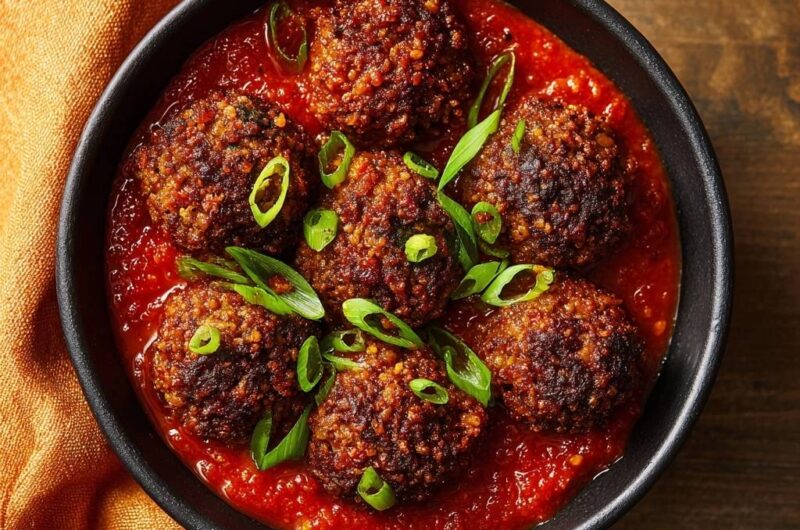
- Place the remaining 1/4 cup of breadcrumbs in a shallow bowl. Roll each meatball in the breadcrumbs, pressing lightly so they adhere to the surface. This creates the visible, pebbled crust seen in the image.
- Chill the rolled balls in the refrigerator for 10 minutes. This firms up the fats and ensures they do not disintegrate in the pan.
- Heat the olive oil in a large heavy skillet over medium-high heat. Once the oil is shimmering, add the meatballs. Do not crowd the pan; work in batches if necessary.
- Sear the meatballs for 3 to 4 minutes, turning frequently, until a deep golden-brown crust forms on all sides.
- While the meatballs are finishing, heat the marinara sauce in a separate saucepan until simmering.
- To maintain the maximum “No Mushy” crunch shown in the image, do not submerge the meatballs in the sauce. Instead, ladle a thick layer of sauce into the bottom of a serving bowl.
- Carefully nestle the hot, crispy meatballs into the sauce, leaving the top halves exposed to preserve the texture.
- Garnish generously with the diagonally sliced green onions and serve immediately.
Notes
- To maintain maximum crunch, do not submerge the meatballs in the sauce; nestle them on top of the sauce layer instead. Chilling the meatballs for 10 minutes before frying is essential to prevent them from falling apart.