Why High-Heat Roasting Transforms Squash
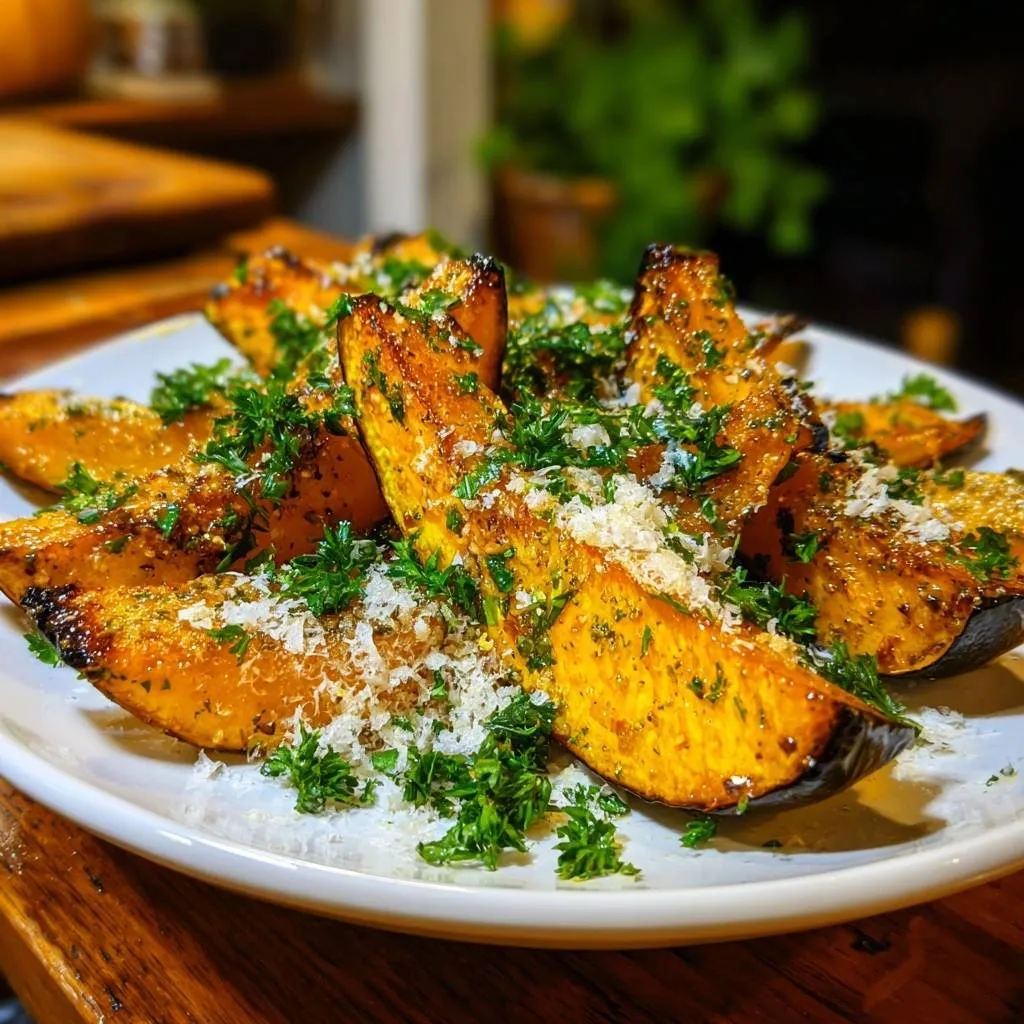
Imagine biting into roasted butternut squash wedges that shatter with crisp edges while the inside stays creamy and tender. No more watery, mushy disasters that leave you disappointed. This high-heat method at 450°F blasts away trapped steam for crispy roasted butternut squash wedges every time.
Most home cooks end up with soggy centers because they crowd the pan or use low temps. However, spacing them out and cranking the heat changes everything. You’ll get caramelized bits that pop with sweet, nutty flavor.
The secret lies in the oil barrier. It seals in just enough moisture while letting hot air circulate. Oh man, that first crunchy bite? Pure fall magic without the frustration.
Seasonal Appeal of Butternut Squash
Butternut squash hits markets in early fall, right when cooler air makes you crave hearty sides. It’s packed with vitamins A and C, plus fiber that keeps you full. Therefore, these crispy roasted butternut squash wedges fit perfectly into cozy winter meals.
You’ll love how their natural sweetness shines after roasting. In addition, they add color and warmth to any plate during harvest season.
Common Pitfalls in Standard Roasting
Overcrowding traps steam, turning wedges mushy. Low oven temps around 400°F don’t evaporate moisture fast enough. However, this recipe fixes it with single-layer spacing and a 450°F blast.
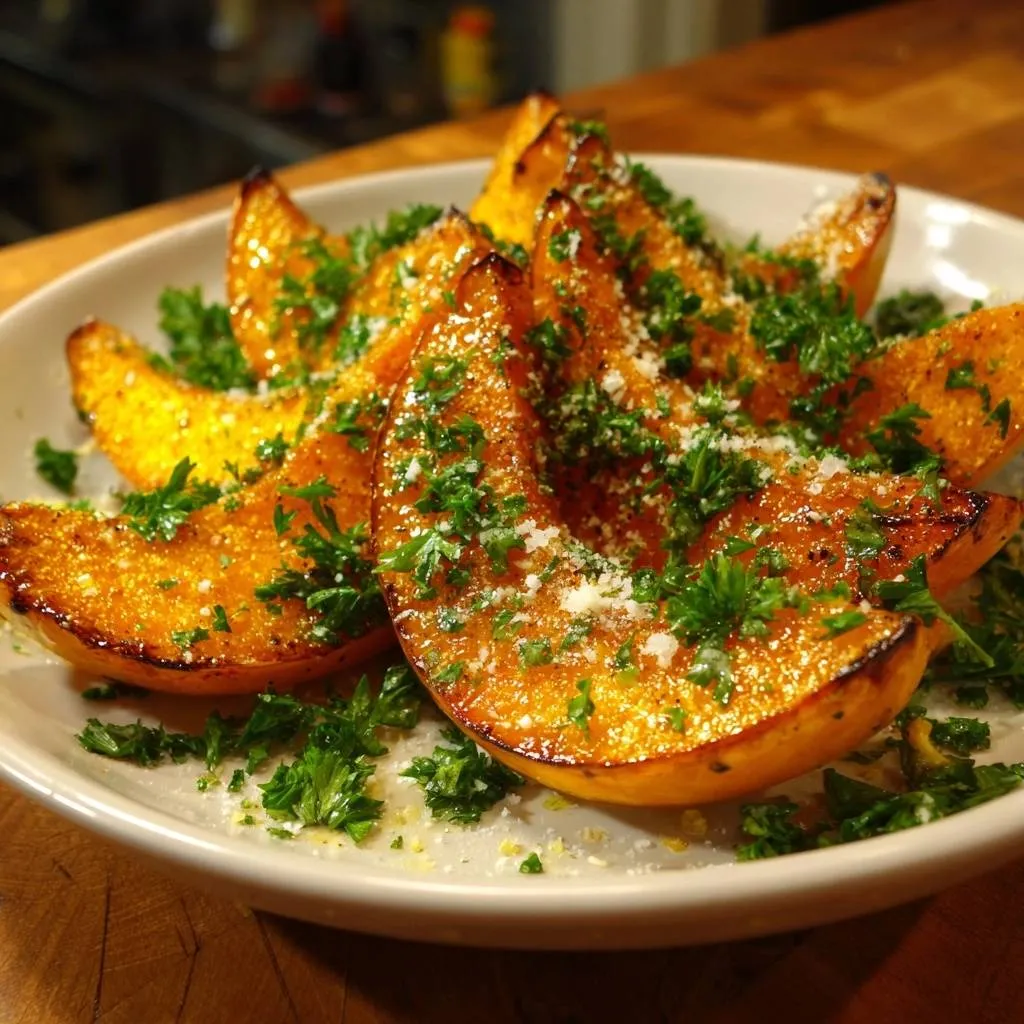
Don’t skip the oil coat either. It prevents sticking and promotes crispiness. First, arrange with gaps, and you’ll avoid those soggy fails forever.
Essential Ingredients for Crispy Wedges
Start with a 3-pound butternut squash, firm and unblemished for best texture. It yields about 4-6 servings of crispy roasted butternut squash wedges. Olive oil, 3 tablespoons, creates an emulsified barrier that locks in tenderness while crisping edges.
Kosher salt, 1 teaspoon, draws out excess water better than table salt due to its coarse grains. Black pepper adds a sharp bite that balances sweetness. Fresh parsley brings bright, herby freshness, and Parmesan cheese melts into a savory, umami crust.
Go for organic squash if possible; it often tastes sweeter. In addition, grate your own Parmesan for smoother melting. These simple picks make all the difference.
Selecting Perfect Butternut Squash
Pick one heavy for its size with smooth, tan skin. Tap it; a deep thud means it’s ripe inside. Store whole in a cool spot for up to a month before cutting.
Oil, Salt, and Seasoning Ratios
Three tablespoons oil coats without pooling, preventing dry or sticky results. Kosher salt absorbs moisture evenly. Therefore, stick to these ratios for perfect crispy roasted butternut squash wedges.
Science of Crispy Roasted Butternut Squash
High heat triggers the Maillard reaction, browning sugars for deep caramelization on crispy roasted butternut squash wedges. At 450°F, moisture evaporates quickly, unlike slower 400°F roasts. Oil acts as a shield, letting starch gelatinize into tender insides.
Wedges hold shape better than cubes, exposing more surface for crispiness. In addition, single-layer airflow prevents steam pockets. It’s simple kitchen science that delivers restaurant-level results at home.
For an even more satisfying experience, explore the cheesy roasted butternut squash stack.
Steam Trapping vs. Evaporation Dynamics
Overcrowded pans create steam pockets that soften everything. Space wedges 1/2 inch apart, and hot air circulates freely. This math ensures even crisping across the batch.
Caramelization at High Temperatures
Sugars in squash brown starting at 20 minutes in. By 35 minutes, edges turn deeply golden and crisp. That timeline nails the sweet-spot crunch.
For even more impressive crispy edges, explore skillet roasted butternut squash.
Equipment Choices for Even Crisping
Use a half-sheet pan, about 18×13 inches, to fit a 3-pound squash in one layer. Line with parchment for non-stick release and even heat flow. An oven thermometer confirms 450°F accuracy, since built-ins often lie.
Aluminum sheets heat faster than steel, but both work if rimmed. Skip silicone mats; they trap steam. Therefore, these choices guarantee crispy roasted butternut squash wedges without hot spots.
Baking Sheet and Parchment Specs
A standard half-sheet holds all wedges flat. Parchment beats foil by not over-browning bottoms. Cut to fit for best results.
Step-by-Step: Roasting Crispy Squash Wedges
Preheat your oven to 450°F for 15-20 minutes to stabilize heat. Line a baking sheet with parchment. This sets up crispy roasted butternut squash wedges from the start.
Cut squash into 1-inch thick wedges, skin on. Toss in a large bowl with oil, salt, and pepper until glossy. Even coating means no dry spots.
Arrange skin-side down with 1/2-inch gaps. Roast 20 minutes, rotate pan front to back. Continue 15 more minutes until edges crisp golden; fork should pierce flesh easily. Sprinkle parsley and Parmesan right away for hot-melt crunch.
Preheat and Prep the Baking Sheet
Full preheat ensures instant sear. Lay parchment flat, no wrinkles, for even conduction.
Toss Wedges for Even Coating
Use a big bowl to avoid clumping. Massage oil in; it should glisten uniformly without drips.
Single-Layer Arrangement Secrets
Skin-down keeps them stable and protects tender flesh. Enforce spacing, rotate at 20 minutes for even browning.
Final Roasting and Golden Check
Total 35 minutes; look for blistered, crispy edges. Cool briefly on the sheet to set crunch.
Avoiding Soggy Centers in Roasted Squash
Overcrowding is the biggest culprit; use two pans if needed. Pat squash dry before oiling to cut surface moisture. Check for oven hot spots and rotate accordingly.
Under-seasoning leaves wedges watery, so don’t skimp on salt. In addition, high heat evaporates liquids fast. Follow these, and your crispy roasted butternut squash wedges stay perfect.
Overcrowding and Steam Fixes
Visualize gaps like puzzle pieces. Roast in batches for big crowds to maintain airflow.
Moisture Management Techniques
Pat wedges dry post-cutting. Re-oil lightly if they look dry mid-toss.
Flavor Variations for Roasted Wedges
Try smoked paprika for smoky depth without losing crisp. Garlic powder and rosemary add earthy punch. For sweet-savory, drizzle maple syrup post-roast.
Citrus zest brightens, and tahini drizzle brings nutty creaminess. Vegan? Swap Parmesan for nutritional yeast. All keep the crispy roasted butternut squash wedges texture intact.
Herb and Spice Wedge Upgrades
Chop fresh thyme or rosemary into the toss. Cumin adds warm earthiness that caramelizes nicely.
Sweet-Savory Glaze Options
Post-roast balsamic reduction clings without sogginess. Add after for shine and tang.
Pairing Crispy Squash Wedges
Grilled chicken or lentils balance the sweetness with savory protein. Quinoa bowls get a crunchy upgrade. Leafy arugula salads contrast textures perfectly.
Yogurt-tahini dips cool the heat. These pairings make crispy roasted butternut squash wedges shine on holiday tables too.
More to Try
Round out your meal with these vegetable-forward options.
- For a fresh and crunchy addition, consider the Crispy Chicken Kale Cabbage Salad, featuring similar greens.
- If you loved the roasted butternut squash, you might also enjoy the Roasted Butternut Black Rice Kale Bowl for a similar flavor profile.
Protein and Grain Matches
Juicy chicken thighs or lentil stew provide heft. Quinoa soaks up flavors beautifully.
Salad and Dip Companions
Arugula’s peppery bite cuts richness. Tahini yogurt dip adds cool cream.
Storage and Reheating for Crispiness
Store leftovers in an airtight container in the fridge up to 4 days. For freezing, par-bake 20 minutes, cool, then freeze flat in bags up to 2 months. Reheat at 425°F on a fresh parchment-lined sheet for 10-12 minutes; air fryer works great too at 400°F.
Avoid microwave; it steams them soggy. Therefore, you’ll revive that crisp texture easily.
Freezing Wedges Properly
Flash-freeze single-layer on a tray first. Transfer to freezer bags; thaw overnight before reheating.
Frequently Asked Questions
Can I peel the squash first?
The skin’s edible and adds nutrients plus crunch. Peeling makes wedges softer inside, but skip it for max crispiness on your roasted butternut squash wedges.
How to cut uniform wedges?
Halve lengthwise, scoop seeds, then cut into 1-inch thick angles from neck to bulb. Uniform size ensures even roasting for crispy results.
Substitute other squashes?
Kabocha or acorn work great; they’re denser. Reduce time by 5 minutes and check for tenderness.
Make it vegan?
Skip Parmesan or use nutritional yeast for cheesy flavor. Everything else stays the same for vegan crispy roasted butternut squash wedges.
Why skin-side down?
It protects the flesh from direct heat while elevating for better airflow. This prevents steaming and boosts edge crisping.
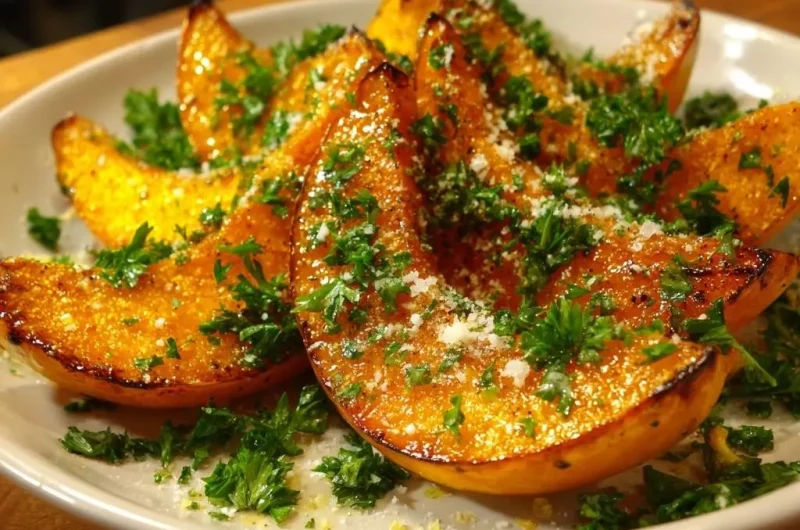
Crispy Roasted Butternut Squash Wedges
Course: Side DishCuisine: AmericanDifficulty: easy4
servings15
minutes35
minutes180
kcal50
MinutesRoasted butternut squash often turns out watery and mushy from trapped steam. This recipe fixes that with a high-heat blast and spaced-out baking for crispy, caramelized edges and tender insides every time.
Ingredients
1 medium butternut squash (about 3 pounds), cut into 1-inch thick wedges
3 tablespoons olive oil
1 teaspoon kosher salt
1/2 teaspoon black pepper
1/4 cup fresh parsley, chopped
1/4 cup grated Parmesan cheese
Directions
- Preheat oven to 450 degrees F. Line a large baking sheet with parchment paper.
- In a large bowl, toss squash wedges with olive oil, salt, and pepper until evenly coated. The oil creates a barrier to lock in moisture while promoting crispiness.
- Arrange wedges in a single layer on the baking sheet, skin side down, with at least 1/2 inch space between each. This prevents steaming and ensures even hot air circulation, the key to banishing soggy centers forever.
- Roast for 20 minutes, then rotate the pan front to back. Roast another 15 minutes until edges are deeply golden and crispy. No flipping needed, high heat evaporates excess water fast.
- Transfer to a platter, sprinkle with parsley and Parmesan. Serve hot for maximum crunch.
Notes
- No flipping needed! High heat evaporates excess water fast. Serve hot for maximum crunch.