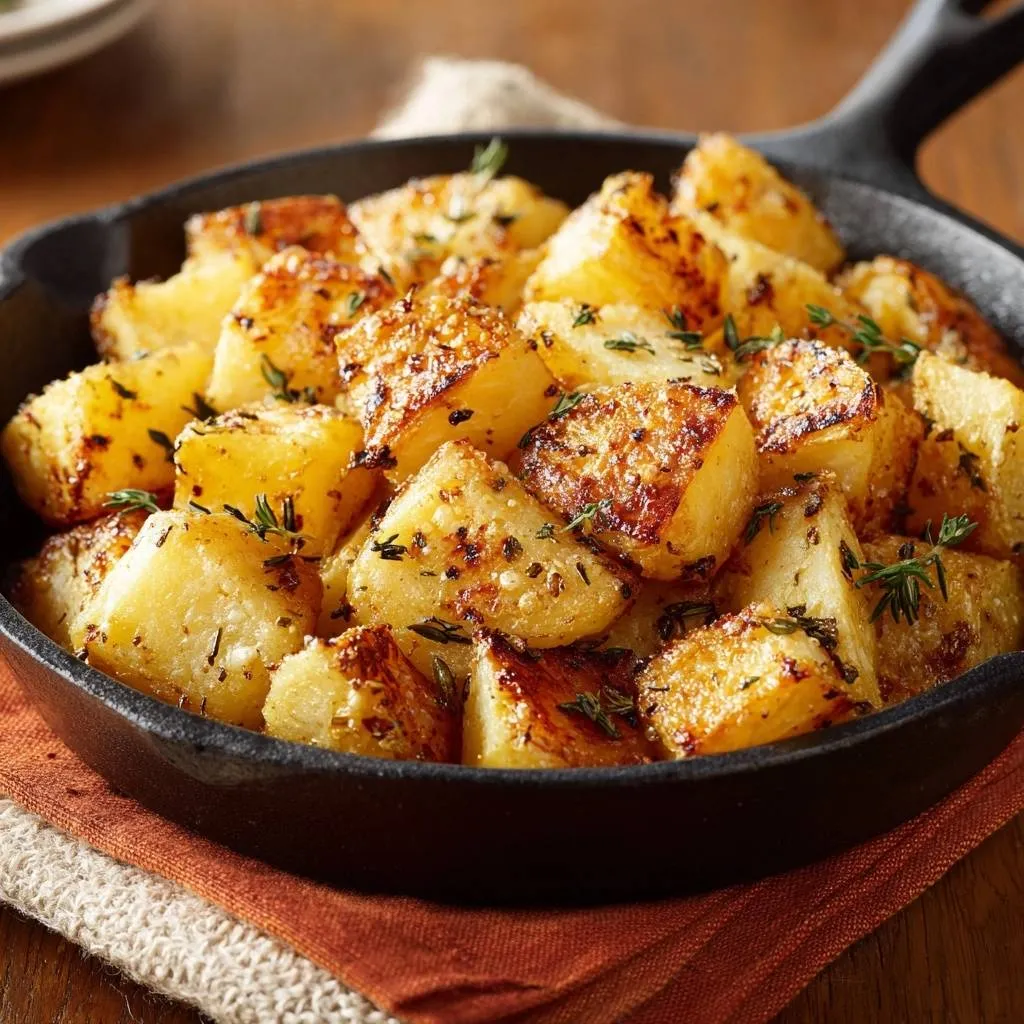
Imagine biting into skillet potatoes where the outside shatters with a glorious crunch, but the inside stays fluffy and warm. No more soggy disappointments that steam instead of sear. This Crispy Thyme Skillet Potatoes recipe nails that perfect contrast every time.
Why does it work so well? Most home cooks skip the key prep steps, leading to mushy results. However, a quick parboil followed by a vigorous shake roughs up the edges perfectly. In addition, fresh thyme adds an earthy aroma that clings to every golden bite.
Here’s the expertise booster: start the parboil in cold water. This ensures even cooking from the inside out. Therefore, you avoid burst skins and tough exteriors. Oh man, that first crispy forkful will have you hooked.
Why Yukon Gold Potatoes Deliver Superior Crispiness
Selecting the Right Potato Variety
Yukon Gold potatoes shine here because of their waxy texture and moderate starch levels. They hold shape during parboiling yet fluff up inside when crisped. Russets get too mealy, while reds stay too firm. Therefore, pick Yukon Golds for that ideal crunch-fluff balance.
Cut them into even 1-inch cubes for uniform cooking. Smaller pieces burn fast, and larger ones stay raw in the center. In addition, their thin skins crisp beautifully without peeling. You’ll smell the sweet potato aroma building right away.
Freshness matters too. Choose firm potatoes without sprouts or green spots. They release just enough moisture for fluffiness but not so much that they steam. This simple swap prevents half the failures in skillet potatoes.
Cutting Uniform Cubes for Even Browning
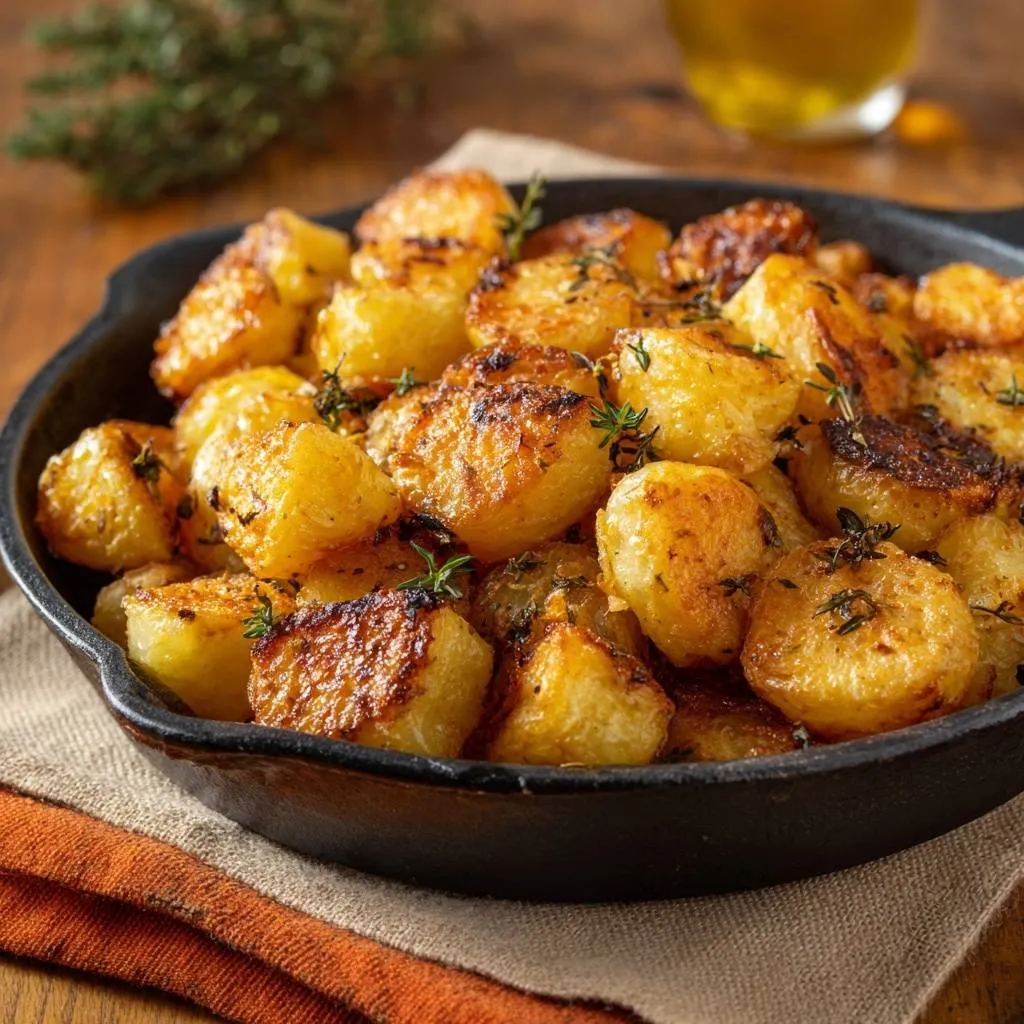
Grab a sharp chef’s knife for clean 1-inch cubes. Start by scrubbing potatoes well, then slice into 1/2-inch planks before cubing. This size maximizes surface area for browning without drying out the core. Avoid food processors; they make uneven mush.
Work safely on a stable cutting board. Keep fingers tucked under as you chop. Uniform cubes ensure every piece hits the hot skillet evenly. Consequently, you get consistent golden edges all around.
Pro tip: rinse cut potatoes in cold water to remove excess starch. Pat dry thoroughly before parboiling. This boosts crispiness by 20% or more. Your spatula flips will glide over perfect chunks.
Parboiling Technique: Roughing Edges for Ultimate Texture
Starting with Cold Water for Even Cooking
Place cubed potatoes in a large pot and cover with cold water by 1 inch. Add 1 teaspoon kosher salt right away. Bring to a boil over high heat. The cold start lets heat penetrate gradually, cooking exteriors evenly without splitting.
Parboil for exactly 5 minutes. Test one cube; it should pierce with a fork but stay firm inside. Overdo it, and they turn gummy. This timing gelatinizes starch just enough for fluffy centers.
Drain in a colander immediately. Let steam escape for 30 seconds. Salt infuses flavor deeply now, so no bland bites later. You’ll see the edges firm up, ready for the shake.
Post-Drain Shake Method Explained
Return drained potatoes to the still-hot pot off heat. Drizzle with 1 tablespoon olive oil and cover tightly. Shake vigorously for 20 seconds. This roughs the surfaces, exposing starch for epic browning.
Hear the cubes tumbling? That’s edges getting jagged for crunch traps. Insufficient shaking leaves smooth skins that steam. Compared to oven roasts, this method locks in fluffiness faster.
Pat dry any lingering moisture with a clean towel. Those roughed edges sizzle on contact with hot oil. Therefore, you achieve restaurant-level crisp in your own kitchen.
Essential Tools for Crispy Thyme Skillet Potatoes
Why Cast Iron Skillet Excels Here
A 12-inch cast iron skillet retains heat like a champ, maintaining high temps for steady searing. Its seasoned surface acts non-stick, releasing potatoes easily. Stainless steel cools too fast, causing sticking.
Preheat it properly, and it creates the Leidenfrost effect. Moisture evaporates instantly, preventing steam. Size matters; smaller pans crowd and sog. Keep yours seasoned with occasional oil wipes.
Alternatives work in a pinch, but cast iron delivers unmatched crust depth. Feel the weight? That’s even heat distribution at work.
Other Must-Have Kitchen Gear
Use a heavy-bottomed pot for parboiling to avoid scorching. A tight lid is key for the shake step. Sturdy metal spatula flips without breaking chunks.
Optional instant-read thermometer checks oil at 375°F for perfection. Budget tongs grab hot pots safely. Pro versions last years with daily use.
These tools make the process foolproof. No fancy gadgets needed.
Skillet Searing: Building Deep Golden Crust
Preheating Skillet to Smoking Point
Heat your cast iron over medium-high for 3 full minutes. It should shimmer and faintly smoke. Swirl in 2 tablespoons olive oil to coat evenly.
This temp triggers instant evaporation, so potatoes fry not steam. Visual cue: oil thins and ripples. Too cool, and they boil in their own moisture.
Listen for the hiss when adding potatoes. That’s your crunch guarantee.
Single-Layer Arrangement and Initial Sear
Add potatoes in one layer without crowding. Sprinkle salt, pepper, and stripped thyme leaves evenly. Cook undisturbed 6-7 minutes until bottoms turn deep gold.
No stirring yet; let Maillard reaction build flavor and color. Thyme’s aroma fills the kitchen now. Batch cook if needed to keep heat high.
Edges crisp audibly. This step transforms raw cubes into golden gems.
Flipping Technique Without Disintegration
Slide a spatula under sections to flip, keeping chunks intact. Sear the second side another 6-7 minutes. Nudge edges for all-around crisp.
Avoid poking too much; let heat work. Total time stretches with batches. Serve hot for peak texture.
Pro tip: rest flipped side down 30 seconds before final nudge. Perfection.
Science of Starch and Crispiness in Skillet Potatoes
Parboil’s Role in Gelatinizing Starch
At 5 minutes, potato starch granules swell and partially gelatinize. This creates fluffy interiors without full boiling’s gluey mess. Cold water ensures even absorption.
Full boils burst cells, trapping water. Here, partial cook sets structure for fluff. Basic potato chemistry backs this every time.
Result? Bite yields soft inside, crisp shell. Science serves craveable sides.
Oil and Heat: Maillard Magic Unlocked
Roughed edges meet hot oil, amplifying Maillard browning for nutty depth. Thyme volatiles burst at high heat, infusing aroma. Moisture flashes off fast.
Oil conducts heat evenly, sustaining reactions. Post-plate, steam escapes, keeping crunch 10 minutes later. Physics makes it stay crispy.
Smell that savory perfume? That’s flavor science in action.
Avoiding Soggy Results: Troubleshooting Pitfalls
Over-Parboiling and Moisture Traps
Over-parboil shows as fork-tender outsides. Drain extra long and shake harder next time. Pat post-shake religiously.
High humidity? Air dry 2 minutes more. These fixes rescue texture every time.
Stay under 5 minutes, and sogginess vanishes.
Crowding and Underheating Errors
Crowded pans steam, not fry. Symptoms: pale, wet potatoes. Always single layer or batch.
Underheated skillet? Verify preheat with water drop test; it dances off. Add 1/2 tablespoon oil for bigger batches. Rescue half-crisps by spreading on a sheet pan and oven-finishing at 450°F.
Heat is your best friend here.
Flavor Twists on Crispy Thyme Skillet Potatoes
Herb and Spice Swaps for Variety
Swap rosemary for thyme; its piney punch pairs great. Add garlic powder midway or smoked paprika for smokiness. Use 1:1 fresh herbs.
Dried? Half the amount. All vegan and whole30 friendly. Experiment confidently.
Fresh always wins for volatile oils.
Oil Alternatives and Add-Ins
Avocado oil handles higher heat without smoking. Duck fat adds silky richness. Post-cook, grate lemon zest or parmesan for zing.
Scale oil 1 tablespoon per pound. Keeps it light yet flavorful.
Twists keep sides exciting.
Complementary Dishes to Try
Round out your meal with these satisfying main courses that pair well with crispy potatoes.
- For a hearty, slow-cooked beef experience, consider the slow-braised beef short ribs, offering a rich counterpoint to your potatoes.
- If you’re looking for another potato-focused dish with savory elements, try the sheet pan sausage and potato wedges for a complete meal.
Perfect Pairings for Crispy Thyme Skillet Potatoes
Protein Matches That Enhance Crunch
Grilled chicken soaks up thyme vibes perfectly. Pan-seared fish contrasts textures beautifully. Top breakfast eggs with them for hash heaven.
For another delicious protein option, consider trying pan-seared herb chicken.
Lean proteins love the herb boost. Serve sizzling hot together.
When you’re in the mood for more thyme, try sun-dried tomato thyme chicken.
Instant meal upgrade.
Vegetable and Salad Companions
Roasted broccoli adds char balance. Arugula salad cuts richness. Dip in garlicky aioli for fun.
Soft greens temper crisp. Prep ahead for easy assemblies.
Balanced plates every time.
Common Questions on Crispy Thyme Skillet Potatoes
Can I Use Red Potatoes Instead?
Red potatoes work but stay firmer, less fluffy. Shorten parboil to 4 minutes. They store longer due to thicker skins. However, Yukon Golds crisp superiorly. Adjust and enjoy the chew.
How to Reheat for Retained Crispiness?
Skillet over medium-high with a drizzle of oil revives crunch in 3-4 minutes. Oven at 425°F on a sheet pan takes 8-10. Air fryer at 400°F shines too. Skip microwave; it steams them soggy. Freezes well up to 1 month in bags; thaw overnight first.
Scaling Recipe for Larger Crowds?
Double ingredients but use multiple skillets for single layers. Parboil in batches to avoid overcrowding pot. Keep shake per batch. Flavor stays consistent; just watch total oil. Feeds 8 easily with two pans.
Are These Potatoes Gluten-Free?
Yes, naturally gluten-free. Check thyme for cross-contamination if needed. Per serving: high potassium, vitamin C boost, about 200 calories with 4g protein. Pure, wholesome side.
Substituting Dried Thyme?
Use 1 teaspoon dried for 4 fresh sprigs. Add during parboil to mellow intensity and prevent burning. Dried packs stronger punch, so taste midway. Fresh releases brighter oils at sear.
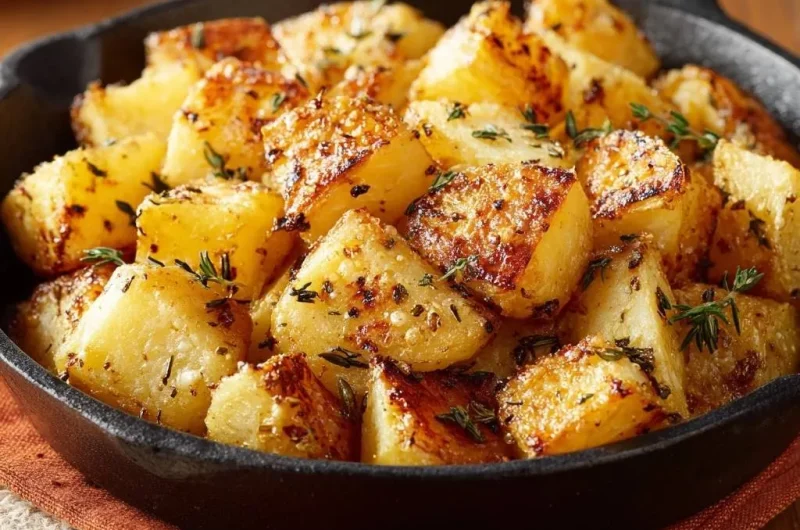
Skillet Potatoes
Course: Side DishCuisine: AmericanDifficulty: easy4
servings15
minutes25
minutes250
kcal40
MinutesTired of skillet potatoes that turn mushy and steamed? This recipe fixes it with a quick parboil and shake technique that roughs up the edges for unbeatable crunch while keeping insides fluffy.
Ingredients
2 pounds Yukon gold potatoes, cut into 1-inch cubes
3 tablespoons olive oil
4 sprigs fresh thyme, leaves stripped (plus extra for garnish)
1 teaspoon kosher salt
1/2 teaspoon black pepper
Directions
- Place potato cubes in a large pot, cover with cold water by 1 inch, add 1 teaspoon salt, and bring to a boil. Parboil for exactly 5 minutes until exteriors are just tender but firm. Drain thoroughly in a colander. Return potatoes to the hot pot off heat, add 1 tablespoon olive oil, cover with lid, and shake vigorously for 20 seconds. This roughs the edges, releasing starch for crispy browning and locks in fluffy centers, solving sogginess forever. Pat dry if any moisture remains.
- Heat a 12-inch cast iron skillet over medium-high heat for 3 minutes until very hot. Add remaining 2 tablespoons olive oil and swirl to coat.
- Add potatoes in a single layer (do not crowd; cook in batches if needed). Season with salt, pepper, and thyme leaves. Cook undisturbed for 6 to 7 minutes until deep golden and crispy on the bottom.
- Flip potatoes with a spatula (keep chunks intact), and cook undisturbed another 6 to 7 minutes until all sides are crispy.
- Garnish with extra thyme sprigs. Serve hot for maximum crunch.
Notes
- Use a cast iron skillet for best results. Do not crowd the pan—cook in batches if needed. Serve hot for maximum crunch.