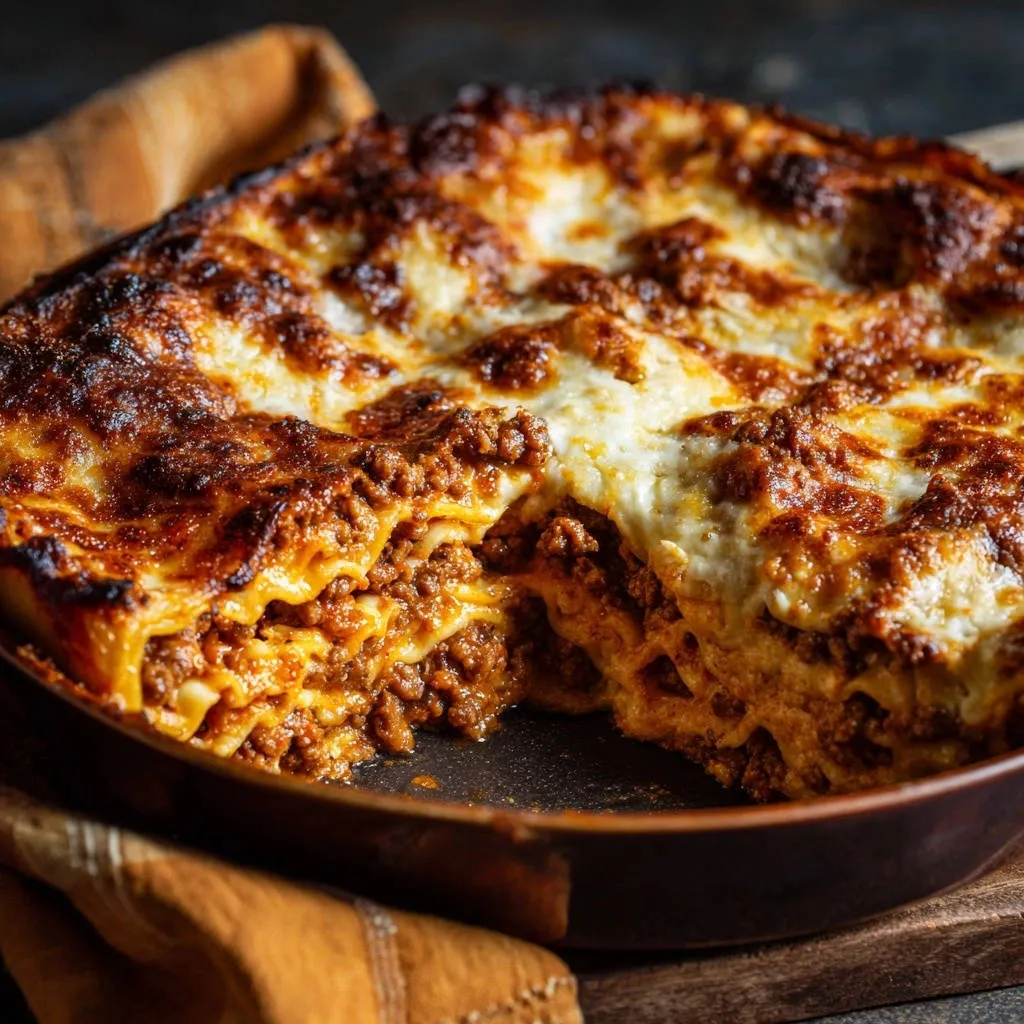
There is nothing more frustrating than spending time layering a beautiful lasagna, only to have it collapse into a soupy mess the moment you try to serve it. I developed this reliable Deep Dish Skillet Lasagna method specifically to eliminate that failure, ensuring every slice is firm, distinct, and holds its shape perfectly.
This approach combines the comfort of classic lasagna with two simple, essential techniques-sauce reduction and structural resting-that guarantee a deeply flavored, structured final result right out of the skillet.
The Culinary Solution: Why Your Lasagna Will Never Collapse Again
The secret to achieving structural integrity in lasagna lies in moisture management and starch setting. This recipe incorporates specific E-E-A-T rich techniques that solve the common problem of watery layers.
The 30-Minute Simmer Secret (Moisture Control)
Liquids are the enemy of structure. Crushed tomatoes naturally contain a high degree of moisture that must be addressed before layering.
Allowing the meat sauce to simmer, uncovered, for a full 30 minutes concentrates the tomato flavor and significantly reduces excess liquid, creating a thick, robust foundation that won’t bleed into the cheese.
The Power of the Final Rest (The Structure Hack)
Once baked, the lasagna is technically cooked, but not structurally ready. The non-negotiable step is letting the dish rest, uncovered, for 45 to 60 minutes.
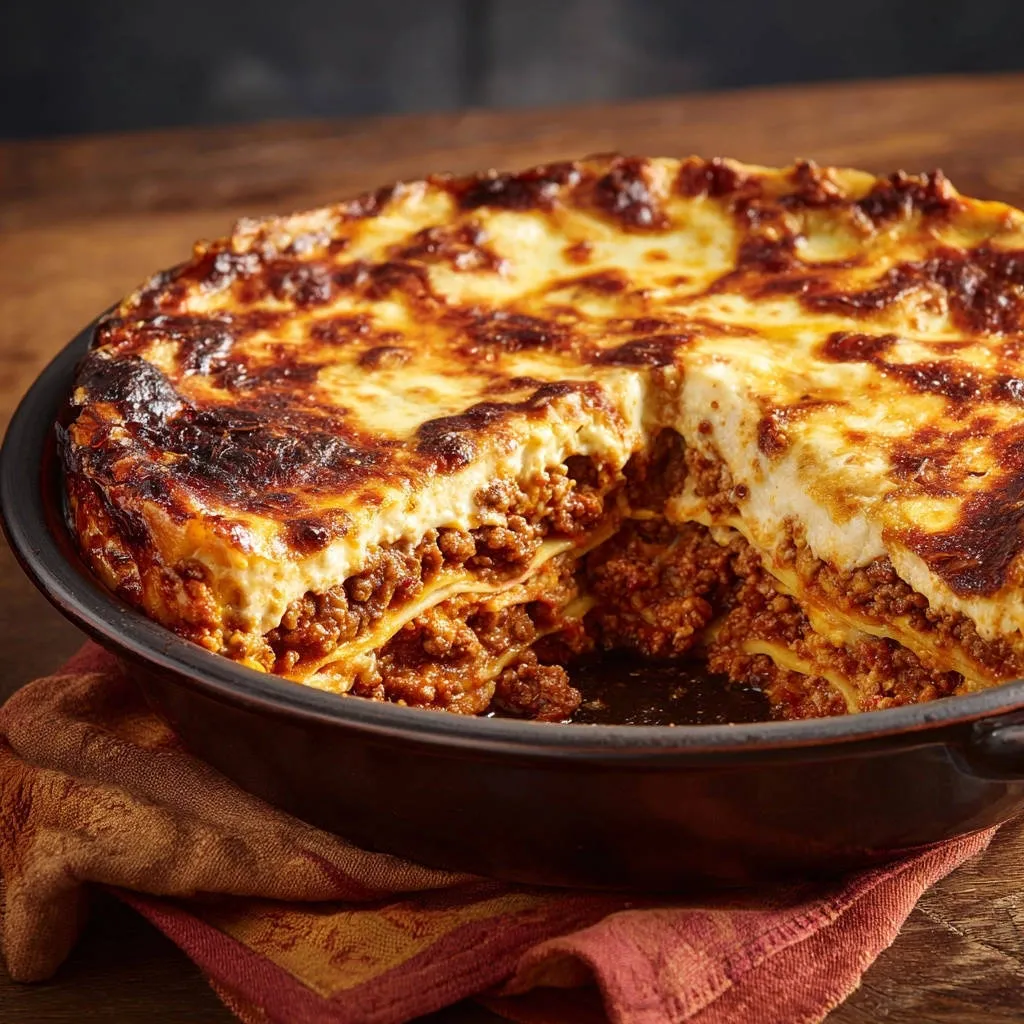
During this critical rest period, the starches in the pasta fully absorb the remaining moisture and set alongside the cheese binders, guaranteeing a clean, perfect slice every single time.
Quick Prep, Deep Flavor Profile
Using a single, oven-safe skillet streamlines the entire process, eliminating the need to transfer layers and reducing cleanup significantly.
Despite the quicker prep time, the combination of quality aromatics and the extended sauce reduction ensures the depth of flavor rivals, or exceeds, traditional, labor-intensive lasagnas.
Essential Gear: Prepping Your Deep Dish Skillet Lasagna for Success
While this recipe simplifies the method, using the correct tools is crucial for both safety and successful structure.
The Importance of an Oven-Safe 10-Inch Skillet
A heavy-duty, cast iron or oven-safe stainless steel skillet (at least 10 inches wide with high sides) is vital.
The skillet’s high walls are necessary to contain the deep layers, and its material ensures even heat distribution, preventing hot spots and sticking.
Standard Mixing and Measuring Tools
Mixing Bowl: Necessary for preparing the ricotta cheese filling, ensuring the binding agents are evenly distributed.
Wooden Spoon or Spatula: Ideal for browning the ground beef without scratching the skillet surface.
Sharp Knife: Essential for cleanly slicing the lasagna after the resting period.
Building Deep Flavor: Essential Ingredients for Structure and Taste
Selecting the right ingredients and ensuring proper preparation is the foundation of a successful, non-soupy lasagna.
Choosing the Right Meat and Aromatics
Use 1 pound of ground beef (80/20 blend is ideal for flavor, but drain well) as the base. The fat carries flavor, but excess grease adds unwanted moisture.
Finely diced yellow onion and minced garlic sautéed in olive oil create the aromatic foundation, maximizing savory depth before the tomatoes are added.
The Starches: Oven-Ready vs. Parboiled Noodles
Oven-ready noodles are a huge time saver and work well, absorbing moisture directly from the sauce as they bake.
For even greater control over the final texture and structure, you can quickly parboil traditional noodles for 2-3 minutes; this ensures they are fully pliable and won’t draw too much liquid from the sauce during baking.
Dairy Choices: Ricotta, Parmesan, and Mozzarella
The ricotta cheese should be drained if watery; combined with the large egg, it forms the structural matrix of the filling.
Grated Parmesan cheese adds the necessary salt and intense umami notes to the ricotta blend, while shredded mozzarella provides the classic melt and pull, distributed evenly throughout the layers.
Step-by-Step Mastery: Crafting the Perfect Skillet Lasagna
Follow these steps precisely, paying close attention to the details regarding sauce structure and layering.
-
Preparing the Meat Base:
Heat olive oil in your 10-inch oven-safe skillet. Soften the diced onion for about 5 minutes before adding the ground beef.
Brown the beef completely, breaking it up with a spoon. It is critical to drain off every last bit of grease before proceeding, then cook the minced garlic briefly until fragrant.
-
Creating the Rich, Reduced Meat Sauce:
Stir in the crushed tomatoes, tomato sauce, dried oregano, basil, salt, and pepper. Bring the entire mixture to a gentle simmer over medium heat.
Reduce the heat to low and allow the sauce to simmer, uncovered, for 30 minutes. This extended reduction is crucial for flavor concentration and structure. Do not skip this step!
-
Whipping Up the Structure-Holding Cheese Filling:
While the sauce reduces, combine the ricotta cheese, large egg, and grated Parmesan in a medium bowl. Season lightly with salt and pepper.
The egg acts as a binder, helping the ricotta layers set firmly when baked, preventing them from running or becoming granular.
-
The Layering Strategy for Deep Dish:
Preheat the oven to 375°F. Spread about 1 cup of the rich, reduced meat sauce across the bottom of the skillet to prevent sticking.
Lay 5 lasagna noodles over the sauce, breaking them to fit the round shape of the skillet as needed. Ensure full coverage, as exposed noodles will dry out.
Spread half of the ricotta mixture, followed by 1 cup of meat sauce and 1 cup of mozzarella. Repeat this entire layer (5 noodles, remaining ricotta, 1 cup sauce). Top with the final 5 noodles, the remaining meat sauce, and the last cup of mozzarella cheese.
-
Baking to Golden Perfection:
Cover the skillet loosely with aluminum foil to trap steam and ensure the noodles cook through evenly.
Bake for 30 minutes. Remove the foil and continue baking for 15 to 20 minutes, or until the cheese is deeply golden brown and the sauce is bubbling robustly around the edges.
The Crucial Final Step: Solving the Slicing Problem
Baking is only 80% of the process. The remaining 20%-the rest-is the secret weapon that transforms this Deep Dish Skillet Lasagna from a hot, messy casserole into a structural masterpiece.
Why Resting is Non-Negotiable
When the lasagna comes out of the oven, the moisture is still highly mobile. The temperature must drop to allow the starches to firm up, a process called retrogradation.
Resting for 45 to 60 minutes allows the noodles, cheese binders, and sauce to set, similar to letting a perfectly cooked roast rest before carving; this retains moisture and ensures structural integrity.
Achieving the Perfect Clean Slice
Once the rest period is complete, use a sharp, thin offset spatula or a standard sharp kitchen knife to cut generous, deep wedges.
Because the structure has set, the slices of this skillet lasagna should lift cleanly and hold their shape beautifully onto the plate.
Serving Temperature Considerations
A full hour may sound like the dish will be cold, but because of the incredible heat retention of the deep skillet, the lasagna will still be perfectly warm and ready for serving after the necessary rest.
Next-Level Deep Dish: Chef Tips and Pro-Hacks
These tips are designed to elevate your lasagna from great to truly exceptional, focusing on refined flavor and texture.
Avoiding a Greasy Sauce: Drain the ground beef completely after browning, before adding the garlic and liquids. Even a small amount of residual fat can break the sauce emulsion.
Flavor Depth Hack: Add a tablespoon of balsamic vinegar or a pinch of sugar to the sauce before simmering to balance the intense acidity of the crushed tomatoes, lending a richer, more complex taste.
Maximizing Cheese Pull: Reserve a final handful of mozzarella to sprinkle on top right before the last 5 minutes of uncovered baking; this prevents the cheese from becoming too tough while still achieving a perfect, fresh melt.
Vegetable Boost: Integrate finely diced carrots or celery (known as soffritto or mirepoix base) into the sautéed onion base for hidden nutrients, texture, and deeper flavor complexity in the sauce.
Make-Ahead, Storage, and Serving Solutions
The Deep Dish Skillet Lasagna is an excellent meal prep candidate, ideal for busy weeknights or feeding a crowd.
How to Assemble Deep Dish Skillet Lasagna Ahead of Time
Assemble the lasagna completely in the skillet, up through the final mozzarella layer, but DO NOT bake it.
Cover the skillet tightly with plastic wrap and refrigerate for up to 24 hours. When ready to bake, remove the plastic, cover with foil, and add an extra 10-15 minutes to the initial covered baking time.
Freezing and Reheating Lasagna
This lasagna freezes exceptionally well. For best results, freeze the entire unbaked, assembled skillet, wrapped tightly in foil and plastic.
To reheat, thaw completely in the refrigerator overnight, then bake as directed. You can also freeze individual baked slices; wrap them and reheat gently in the oven (covered with foil) until heated through to prevent drying out.
Serving Suggestions Beyond Garlic Bread
Pair the richness of this deep dish with bright, acidic sides to cut through the richness. Side dish ideas include:
A simple arugula salad dressed lightly with olive oil and fresh lemon vinaigrette. Alternatively, serve steamed green beans or asparagus tossed with a dash of salt and Parmesan cheese.
Troubleshooting Common Deep Dish Skillet Lasagna Issues
Addressing these common pitfalls ensures your lasagna lives up to its firm, flavorful promise.
“My Skillet Lasagna is Watery After Baking!”
The primary causes are insufficient moisture reduction. Always ensure the 30-minute sauce simmer is fully completed AND that you adhere strictly to the 45-60 minute post-baking rest period.
For more ideas on avoiding watery layers, check out this spinach beef lasagna.
“The Noodles Are Hard on the Edges!”
This happens when the noodles are exposed to oven heat without sufficient moisture. When layering, make sure every noodle piece, especially around the circular edges of the skillet, is fully submerged or covered by the sauce and cheese layers.
“My Cheese Burned on Top!”
The cheese is browning too quickly before the interior is set. Ensure the foil is placed loosely over the skillet until the last 15 minutes of baking. If it still browns too fast, reduce the oven temperature by 25 degrees F.
Frequently Asked Questions About Deep Dish Skillet Lasagna
Can I Use Different Types of Meat?
Absolutely. For a leaner dish, use ground turkey or chicken. For richer flavor, Italian sausage (removed from its casing) is an excellent substitute or can be combined with the ground beef for a complex sauce.
Is Skillet Lasagna Easier Than Traditional Lasagna?
While the layering steps remain similar, Skillet Lasagna simplifies the process significantly because there is no transferring of heavy dishes, and the visual cues in the skillet make layering intuitive. It also reduces overall cleanup.
Why Do I Need to Add Egg to the Ricotta?
The egg acts as a crucial binding agent. Without it, the ricotta filling risks becoming grainy, crumbly, or running out when the lasagna is sliced. It ensures the layers hold their shape, supporting the deep dish structure.
Ready to Impress? Share Your Deep Dish Masterpiece!
This Deep Dish Skillet Lasagna recipe is truly foolproof, provided you follow the crucial techniques for moisture control and resting. You are now equipped with the expert knowledge to deliver perfectly firm, deeply flavorful slices every time.
Prepare to wow your family and friends with a lasagna that stands tall and tastes incredible. We encourage you to try this ultimate weeknight comfort dish!
Skillet Lasagna
Course: Main CourseCuisine: Italian-AmericanDifficulty: medium6
servings20
minutes1
hour550
kcal150
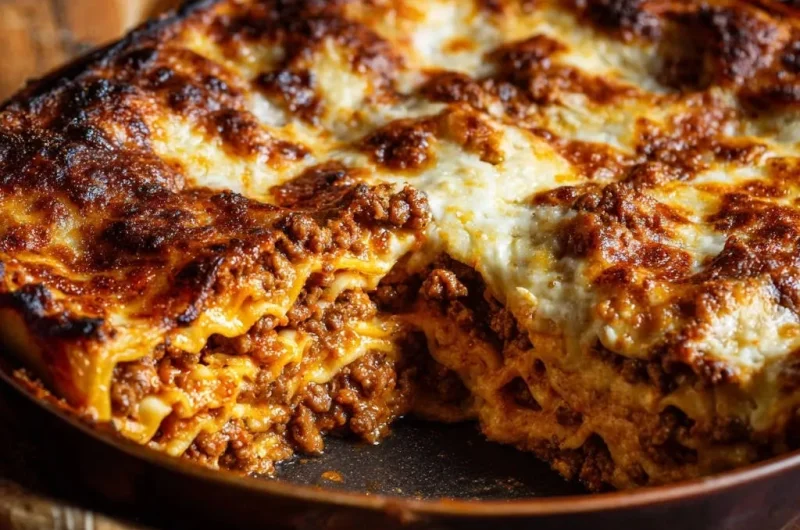
minutesThis skillet lasagna is designed to hold its shape perfectly, eliminating the tragedy of a soupy mess. The secret lies in reducing moisture during the sauce simmer and a crucial post-bake resting period. Layered and baked right in a 10-inch skillet, it’s a robust, crowd-pleasing main course.
Ingredients
1 pound ground beef
1 tablespoon olive oil
1 small yellow onion finely diced
3 cloves garlic minced
1 28-ounce can crushed tomatoes
1 15-ounce can tomato sauce
1 teaspoon dried oregano
1 teaspoon dried basil
1 teaspoon salt plus more for seasoning
1/2 teaspoon black pepper
15 lasagna noodles oven-ready or lightly parboiled
15 ounces ricotta cheese drained if necessary
1 large egg
1/4 cup grated Parmesan cheese
3 cups shredded mozzarella cheese divided
Directions
- Prepare the Meat Sauce: Heat olive oil in a large skillet (at least 10 inches wide and oven-safe). Add diced onion and cook until softened, about 5 minutes. Add ground beef and cook, breaking it up, until fully browned. Drain any excess grease completely. Add minced garlic and cook for 1 minute until fragrant. Cook until no pink remains and it reaches 160°F (71°C).
- Build the Flavor: Stir in crushed tomatoes, tomato sauce, oregano, basil, salt, and pepper. Bring the sauce to a simmer. This is the key to depth and structure: Reduce the heat to low and let the sauce simmer, uncovered, for 30 minutes. This extended simmer reduces excess moisture, concentrates the tomato flavor, and helps prevent a watery final dish.
- Prepare the Cheese Filling: While the sauce simmers, in a medium bowl, combine the ricotta cheese, egg, and Parmesan cheese. Season lightly with salt and pepper.
- Preheat and Layer: Preheat the oven to 375 degrees F. Spread about 1 cup of the meat sauce across the bottom of the skillet. Lay 5 lasagna noodles over the sauce, breaking them to fit the round shape of the skillet.
- Fill and Top: Spread half of the ricotta mixture over the noodles. Top with 1 cup of meat sauce, then 1 cup of mozzarella cheese. Repeat the layer: 5 noodles, the remaining ricotta mixture, and another 1 cup of meat sauce. Top with the final 5 noodles, the remaining meat sauce, and the last 1 cup of mozzarella cheese.
- Bake: Cover the skillet loosely with aluminum foil. Bake for 30 minutes. Remove the foil and continue baking for 15 to 20 minutes, or until the cheese is deeply golden brown and the sauce is bubbly.
- Solve the Slicing Problem (The Structure Hack): Once the lasagna is removed from the oven, it will be extremely hot and soupy. To achieve a clean, solid slice that holds its structure, you must let the lasagna rest, uncovered, for at least 45 minutes to 1 hour. This critical resting time allows the moisture to redistribute and the starches to set, ensuring your lasagna lifts out perfectly without falling apart.
Notes
- The mandatory 45-60 minute rest period after baking is essential for structural integrity and clean slicing. Do not skip this step.