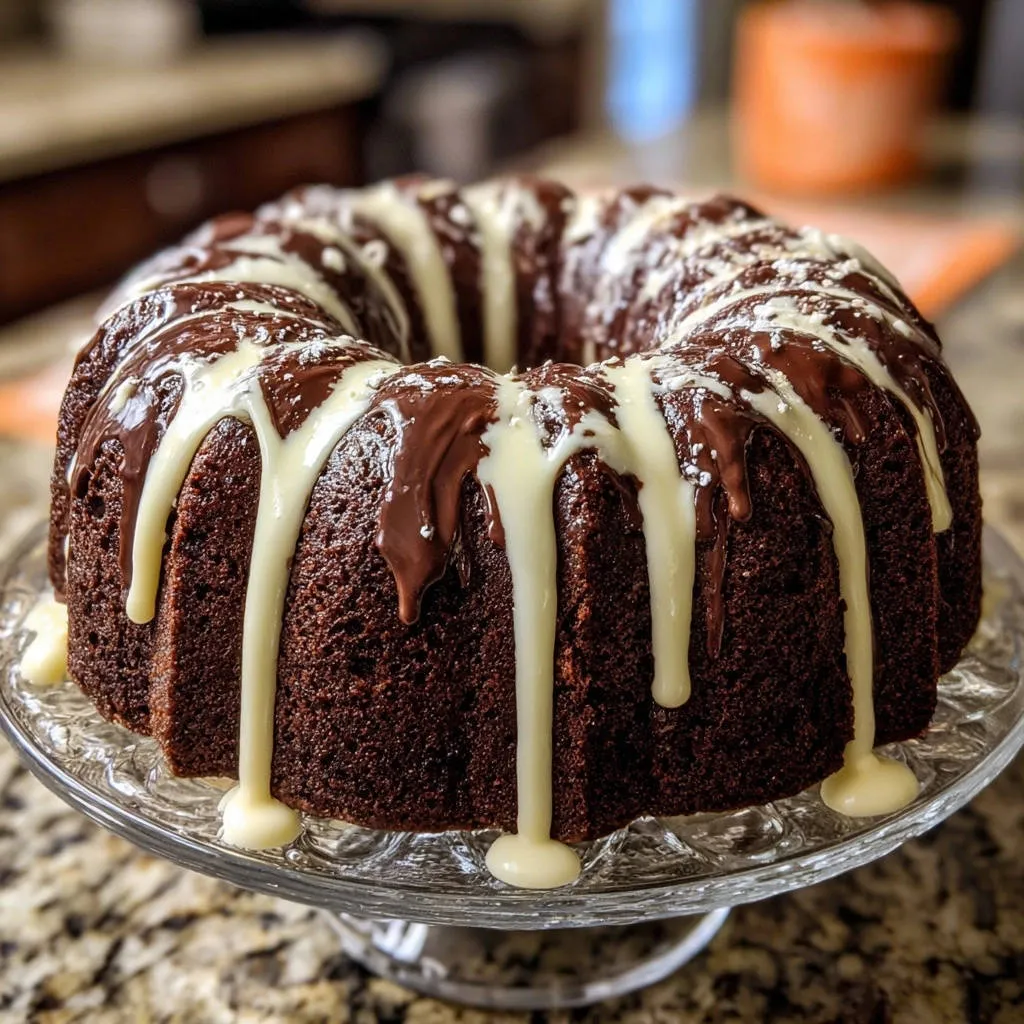
I spent years dreading the moment of the bundt pan flip, until I developed the simple technique behind this perfect Double Glazed Chocolate Bundt Cake.
This recipe guarantees the deepest, darkest chocolate flavor and, crucially, a flawless release every single time, ensuring those sharp lines are preserved.
For more ideas on achieving that perfect texture, check out the no-leak method for red velvet cheesecake stuffed cookies.
It’s time to banish sticking cakes forever and embrace effortless, beautiful bundt results thanks to our proprietary “Clean Flip” method.
Say Goodbye to Sticking: The “Clean Flip” Method Explained
There is nothing more frustrating than watching a perfectly baked chocolate bundt cake crumble when you try to turn it out.
This specialized pan preparation technique-the “Clean Flip” method-solves the sticking problem permanently, ensuring sharp, clean lines and preserving the intricate mold design.
For more on ensuring your cake releases cleanly, check out this guide to a moist chocolate Bundt cake.
What Is Bundt Pan Release Paste? (And Why Cocoa?)
The secret pan release paste is a simple mixture of equal parts solid shortening and flour, with the critical addition of cocoa powder for dark cakes.
Shortening, being a solid, adheres firmly to the cold metal pan walls, while the flour creates a dry, non-stick barrier that releases cleanly from the baked cake surface.
The cocoa powder is non-negotiable for chocolate cakes; it prevents the white flour from leaving unattractive, pale streaks on the dark exterior of your finished treat.
This paste provides a thick, continuous coating that works far better than commercial sprays, which often pool and fail to coat every complex crevice.
The Crucial 15-Minute Rule for Perfect Release
Cooling the cake in the pan for exactly 15 minutes after removal from the oven is vital for structural integrity and release.
During this precise window, the residual steam slightly dries and strengthens the cake’s exterior crust.
If you invert the cake too early, the fragile structure may tear; waiting too long allows cooling sugars to glue the cake firmly to the pan.
This precise timing ensures the cake is strong enough to hold its beautiful shape when inverted.
The Building Blocks of Richness: Essential Ingredients for the Perfect Crumb
Buttermilk and Hot Coffee: The Secret to Ultimate Moisture
Buttermilk is slightly acidic, which is essential for reacting with the baking soda to produce a high, tender lift.
This acid also tenderizes the gluten strands, which is key to achieving a supremely soft and fine texture in this chocolate bundt cake.
Hot brewed coffee serves two crucial functions: it adds necessary liquid moisture without heavy fat, and the heat dramatically deepens the chocolate flavor by “blooming” the cocoa powder.
Balancing Act: The Role of Sugars and Quality Cocoa Powder
We use both granulated and packed brown sugar to achieve the ideal flavor and texture profile.
Granulated sugar provides necessary structure and contributes to the slightly crisp exterior crust.
Brown sugar adds molasses, which increases moisture retention and contributes a subtle, caramel-like complexity to the final flavor.
Always choose a high-quality, unsweetened cocoa powder; the better the cocoa, the more intense and satisfying the overall chocolate flavor will be.
Crafting the Signature Double Glaze Contrast
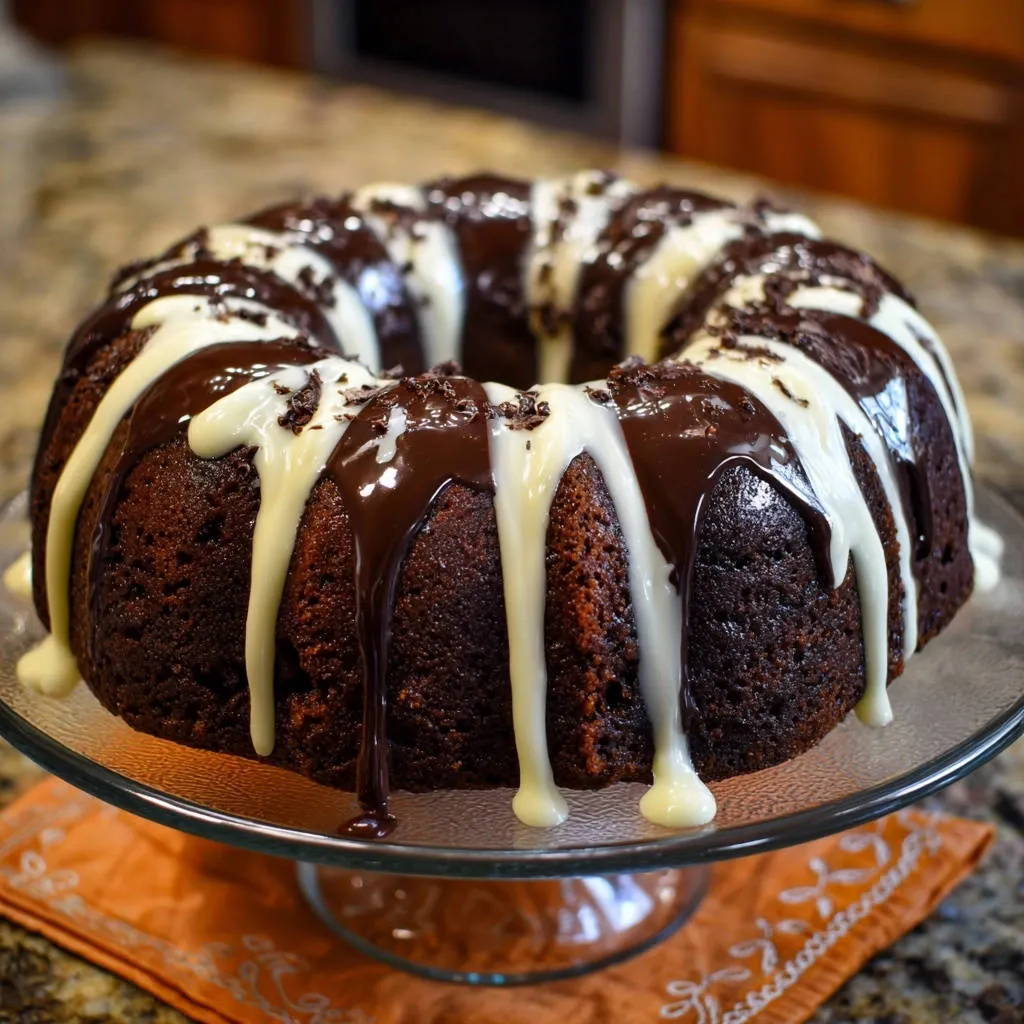
The striking beauty of this recipe lies in the visual contrast achieved by layering dark chocolate and white vanilla glazes.
More Chocolate Delights
If you’ve enjoyed this chocolate Bundt cake, you might also appreciate these other sweet recipes.
- For a morning treat with fruity notes, try our fluffy cranberry maple pancakes, featuring a similar sweet and slightly tart flavor combination.
- If you’re craving another rich chocolate experience, consider making our double chocolate layer cake, perfect for any celebration.
Achieving the correct glaze consistency is essential for elegant drips; it should be thick enough to coat, yet thin enough to flow smoothly down the ridges.
Layering the dark chocolate glaze first, allowing it a quick set time, before finishing with the contrasting white glaze highlights the intricate bundt shape beautifully.
Gathering Your Tools: Essential Gear for Bundt Baking Success
The Bundt Pan: A 10-cup or 12-cup pan is standard for this volume of batter. High-quality aluminum pans offer excellent heat conductivity, but ensure your nonstick surfaces are fully intact.
Electric Mixer vs. Hand Mixing: An electric mixer (stand or hand) is necessary for properly creaming the butter and sugars, but use a spatula for gently folding in the coffee to prevent overmixing.
The Pastry Brush: This is essential for applying the release paste. Use a small, stiff brush to work the cocoa paste into every single ridge and crevice of the pan.
Wire Rack: Proper cooling on a wire rack allows air to circulate around the entire surface, preventing steam condensation which can make the bottom of the cake soggy.
Baking the Best Double Glazed Chocolate Bundt Cake: Step-by-Step Guide
- Prepare the Pan (The Clean Flip Method):
Thoroughly mix the shortening, flour, and cocoa until a thick, uniform paste forms. Using a brush, coat every surface of the bundt pan generously-the thicker the coating, the better the release, especially along the center tube and the base seam.
- Mix Dry Ingredients:
In a large bowl, whisk together the flour, cocoa powder, baking soda, and salt. Setting the dry mix aside ensures efficient and uniform incorporation later, which is crucial for preventing overmixing the final batter.
- Cream Butter and Sugars:
Cream the softened butter, granulated sugar, and brown sugar using an electric mixer until the mixture is light, fluffy, and noticeably paler-this critical step aerates the cake and ensures it is not dense.
Add the eggs one at a time, beating well after each addition to maintain emulsion. Mix in the vanilla extract last.
- Combine Wet and Dry Alternately:
Using an electric mixer on low, alternate adding the dry mixture (three total additions) and the buttermilk (two additions), starting and ending with the dry ingredients.
Mix only until streaks of flour barely remain visible, as overmixing develops tough gluten and results in a dry cake.
- Finish Batter with Hot Coffee:
Slowly fold in the hot brewed coffee until the batter is thin and smooth. The heat of the coffee helps activate and intensify the cocoa, creating a wonderfully dark and liquid consistency.
- Bake to Perfection:
Pour the finished batter evenly into the prepared pan. Bake at 350°F (175°C) for 50-60 minutes.
Test for doneness using a wooden skewer inserted into the thickest part; it should come out clean or with a few moist crumbs attached.
- The Critical Cool and Release Step:
Transfer the cake in the pan to a wire rack and cool for exactly 15 minutes. After 15 minutes, invert the cake onto a serving plate.
If the cake is hesitant to release, a quick, sharp shake should help, but the pan release paste should ensure a flawless drop.
Allow the cake to cool completely before attempting to glaze.
- Mix and Drizzle Glazes:
Whisk together both the dark chocolate and white vanilla glazes separately until they are smooth and free of lumps, adjusting liquid sparingly for optimal viscosity.
Drizzle the dark chocolate glaze first, allowing it to firm slightly (5 minutes) before adding the contrasting white glaze for maximum visual impact.
Solving Common Bundt Cake Challenges: Expert Tips and Troubleshooting
My Bundt Cake is Too Dry: Focusing on the Ratio and Timing
Ensure you are measuring ingredients accurately, especially flour. Use the spoon and level method rather than scooping the flour directly.
Over-measured flour is the most common culprit for dryness and a tough crumb.
Do not rely solely on the suggested bake time. Start checking for doneness 5-10 minutes before the lower end of the time range to absolutely prevent overbaking.
Why Did My Cake Sink in the Middle?
Sinking is often caused by leavening agents (baking soda) that have lost their effectiveness. Always ensure your baking soda is fresh, especially if it has been stored open for a long time.
If the oven door is opened too early, or if the oven temperature is inconsistent, the center structure may collapse before it sets.
Invest in an inexpensive oven thermometer to verify your oven is actually heating to 350°F (175°C) accurately.
Achieving Perfectly Even Glaze Coverage
The cake must be completely cool-even slightly chilled is better-before glazing.
If the cake is even slightly warm, the glaze will melt and absorb into the cake rather than setting up as a glossy layer on the surface.
To control the drip pattern and avoid thick puddles at the base, use a spoon rather than pouring the glaze directly from a bowl.
Lift the spoon high above the cake as you drizzle to create thin, delicate lines that set beautifully.
Make-Ahead, Storage, and Flavor Variations
How Long Does Double Glazed Chocolate Bundt Cake Stay Fresh?
This Double Glazed Chocolate Bundt Cake retains its superb moisture for 3 to 4 days when stored properly in an airtight container at cool room temperature.
Avoid refrigerating the whole cake unless absolutely necessary, as cold temperatures tend to rapidly dry out chocolate cakes.
If you need to store it longer than 4 days, freeze the cake unglazed, wrapped tightly in plastic wrap followed by aluminum foil.
Flavor Boosters: Customizing Your Chocolate Bundt
For an intense mocha flavor, add one tablespoon of instant espresso powder to the hot coffee before mixing it into the batter.
You can enhance the warmth by substituting vanilla extract with almond or peppermint extract for a fun seasonal twist.
A small pinch of cayenne pepper added directly to the dry ingredients provides a subtle, sophisticated ‘Mexican hot chocolate’ warmth that complements the dark cocoa.
Frequently Asked Questions About Bundt Cake Baking
Can I substitute milk for buttermilk in this recipe?
If you don’t have buttermilk, you can easily create a substitute by combining one cup of regular milk (whole milk works best) with one tablespoon of white vinegar or lemon juice.
Let the mixture sit for five minutes until it visibly thickens and curdles slightly before using.
Why do I need hot coffee in the batter?
Hot liquids “bloom” cocoa powder, which means they dissolve the cocoa particles and fully activate their flavor compounds.
This critical step intensifies the chocolate flavor dramatically, resulting in a deeper color and richer, more balanced taste.
How can I ensure the center tube doesn’t stick?
The center tube of the bundt pan is the most common area for sticking due to the concentration of heat.
When applying the pan release paste, be extra generous here, ensuring the paste is worked thoroughly into the seam where the tube meets the base.
Ready to finally achieve that flawless, picture-perfect cake? This Double Glazed Chocolate Bundt Cake recipe, complete with the “Clean Flip” secret, is guaranteed to be your new go-to.
Share your baking triumphs with us-we can’t wait to see your clean lines and glossy glaze!
Happy Baking!
Chocolate Bundt Cake
Course: DessertCuisine: AmericanDifficulty: medium10
cup Bundt Cake30
minutes1
hour260
kcal120
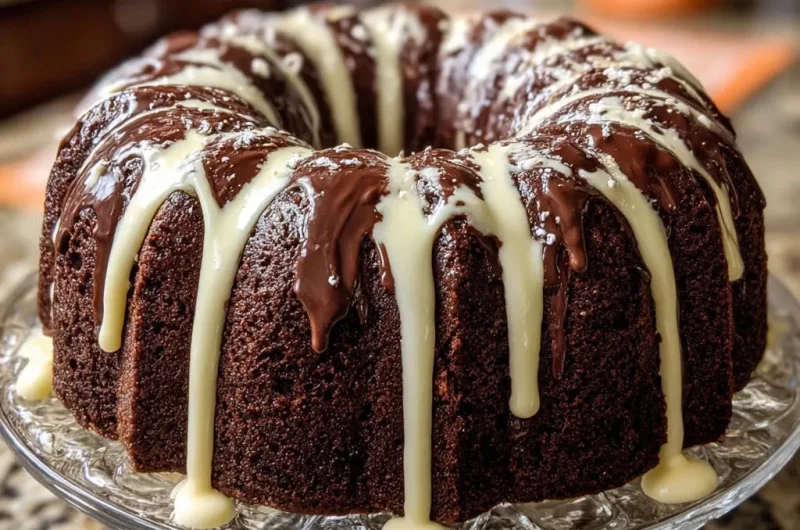
minutesThis deeply rich chocolate bundt cake uses a secret cocoa pan release paste to ensure a flawless, non-stick turn out every single time. Finish this moist cake with contrasting layers of dark and white glaze for a stunning presentation.
Ingredients
For the Cake:
2 cups all-purpose flour
1 cup unsweetened cocoa powder
2 teaspoons baking soda
1 teaspoon salt
1 cup unsalted butter, softened
2 cups granulated sugar
1/2 cup brown sugar, packed
4 large eggs
1 teaspoon vanilla extract
1 cup buttermilk (or 1 cup milk mixed with 1 tablespoon white vinegar)
1 cup hot brewed coffee
For the Pan Release Paste (The Secret):
1/4 cup shortening (like Crisco)
1/4 cup all-purpose flour
2 tablespoons unsweetened cocoa powder
For the Glazes:
Dark Chocolate Glaze:
1 cup powdered sugar
1/4 cup unsweetened cocoa powder
3 tablespoons milk or heavy cream
1 teaspoon vanilla extract
White Glaze:
1 cup powdered sugar
3 tablespoons milk or heavy cream
1/2 teaspoon vanilla extract
Directions
- Prepare the Pan (The “Clean Flip” Method): In a small bowl, combine the shortening, flour, and cocoa powder until a smooth, thick paste forms. Using a pastry brush or your fingers, coat every single ridge and crevice of a 10 to 12 cup bundt pan generously with this paste. Ensure the entire surface, including the center tube, is covered. Preheat oven to 350 degrees F.
- Mix Dry Ingredients: In a large bowl, whisk together the flour, cocoa powder, baking soda, and salt. Set aside.
- Cream Butter and Sugars: In a separate large bowl, use an electric mixer to cream the softened butter, granulated sugar, and brown sugar until light and fluffy, about 3 minutes. Add the eggs one at a time, beating well after each addition. Mix in the vanilla.
- Combine Wet and Dry: Alternate adding the dry mixture and the buttermilk to the butter mixture, beginning and ending with the dry ingredients (3 additions of dry, 2 of wet). Mix until just combined.
- Finish Batter: Slowly and carefully stir in the hot brewed coffee until the batter is smooth and very liquid. Do not overmix.
- Bake: Pour the batter evenly into the prepared bundt pan. Bake for 50 to 60 minutes, or until a wooden skewer inserted into the thickest part comes out clean.
- Cool and Release: Transfer the cake to a wire rack and let it cool in the pan for exactly 15 minutes. This cooling period is crucial for structure. After 15 minutes, place a serving plate upside down over the bundt pan and invert them both. The cake should release cleanly thanks to the cocoa paste coating. Lift the pan slowly. Let the cake cool completely before glazing.
- Prepare Glazes: For the Dark Chocolate Glaze, whisk together the powdered sugar, cocoa powder, milk, and vanilla until smooth. For the White Glaze, whisk together the powdered sugar, milk, and vanilla until smooth. Add more liquid sparingly if glazes are too thick.
- Glaze: Drizzle the cooled cake first with the dark chocolate glaze, allowing it to set slightly. Then, use a spoon to drizzle the white glaze over the top for a beautiful contrast.
Notes
- The 15-minute cooling period in the pan is essential for structural integrity before flipping. The cocoa pan release paste guarantees a perfect cake flip.