Ever scorched your onions black while chasing that perfect caramelization for French onion soup? It happens to everyone. The heat creeps up, and suddenly you’re starting over with bitter bits ruining the pot. But this French onion soup recipe fixes that frustration with a low-slow stir and a simple water splash hack.
Therefore, you get jammy, golden onions every time without the burn. In addition, the rich beef broth builds deep flavor, and bubbly Gruyere crowns it all. This version delivers classic French onion soup comfort, but foolproof.
Here’s the expertise pro tip: keep your heat at medium-low, never exceeding 300F. That steady temp draws out natural sugars slowly. You’ll smell the sweet transformation long before they hit the pan’s bottom.
Core Ingredients for French Onion Soup
Yellow onions form the heart of French onion soup. They offer balanced sweetness without overpowering. Slice four large ones thin; that’s about 12 cups total for rich base.
Unsalted butter lets you control salt perfectly. It melts evenly over medium-low heat. Therefore, pair it with a teaspoon each of sugar and salt, plus black pepper, to kickstart osmosis for faster caramelization.
Flour thickens without clumps if you cook it two minutes post-onions. All-purpose works best over cornstarch here. Use eight cups beef broth, low-sodium if store-bought, for umami depth without excess salt.
More Caramelized Onion Creations
If you love the deep flavor of caramelized onions, explore these other recipes that highlight this ingredient.
- For a savory pastry that uses that same slow-cooked onion sweetness, consider the Caramelized Onion Mushroom Tart with its crisp crust.
- Enjoy another way to use deeply browned onions in these delightful Caramelized Onion and Gruyere Puff Pastry Swirls.
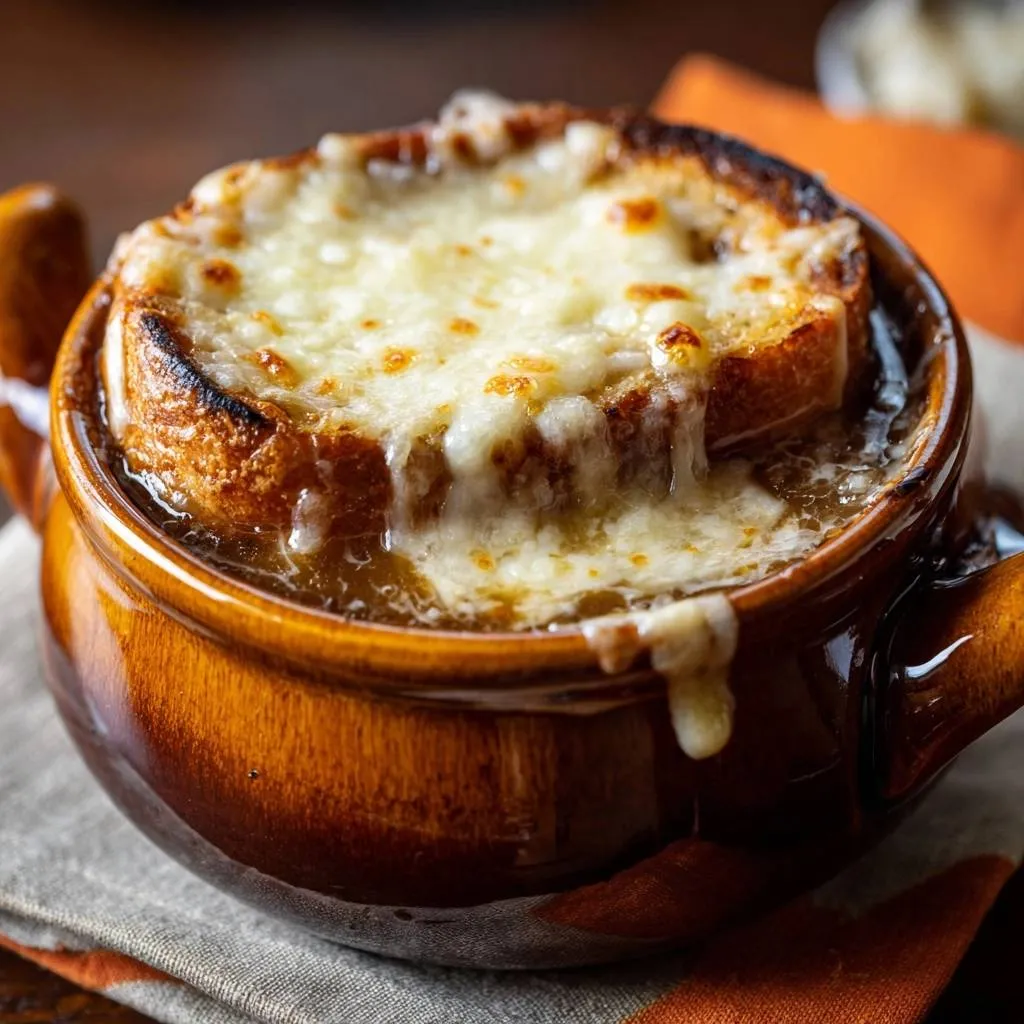
Thick baguette slices soak up broth without sinking. Top with two cups shredded Gruyere. Its nutty melt beats Swiss every time in French onion soup tests.
For perfectly crisp bread with your French onion soup, check out these tips for never-soggy croutons.
Yellow Onions: Slicing and Selection Tips
Grab firm yellow onions with tight skins. Slice uniformly to 1/8-inch with a mandoline for even cooking. Four large yield 12 cups sliced; store extras airtight in fridge up to three days.
Gruyere Cheese: Shredding for Optimal Melt
Shred fresh Gruyere blocks yourself. Pre-shredded loses moisture and won’t melt smoothly. Two cups cover four bowls perfectly, pairing nutty richness with beefy French onion soup.
History of French Onion Soup Origins
French onion soup started in 18th-century Paris bistros. Workers slurped onion scraps simmered in beef stock for warmth. It fueled laborers cheaply and hearty.
By 19th-century Lyon, chefs added broiled cheese topping. Beef broth stayed key for authenticity over chicken. Americans later tweaked with thicker bread floats.
Early recipe: onions, stock, bread. Modern: caramelized onions, flour-thickened broth, Gruyere broil. This evolution makes classic French onion soup timeless.
Equipment Essentials for French Onion Soup
A Dutch oven shines for French onion soup. Cast iron retains even heat for perfect caramelization. Wide surface speeds the process without hotspots.
Use a thermometer to cap at 300F. Oven-safe ceramic bowls beat glass, which risks cracking under broiler. Position three to four inches from heat.
No Dutch oven? A heavy skillet with lid works. Budget thermometers clip on easily. These tools ensure burn-free success.
Mastering Caramelization in French Onion Soup
Start in your Dutch oven over medium-low. Melt butter, add sliced onions, sugar, salt, pepper. Stir to coat evenly every five minutes for 40 to 45.
Maillard reaction browns proteins, but sugars caramelize slowly here. You’ll see translucency first, then golden jam. However, if edges stick, splash two tablespoons water; it steams gently, deglazing without flavor loss.
Check temp every 10 minutes. Stir in figure-eights for full coverage. Those jammy onions smell like pure comfort, ready for broth.
Low-Slow Heat Control Technique
Gas stoves need lower flames than electric. Probe thermometer spots middle of pot base. Stir clockwise every five minutes, scraping edges first.
Water Splash Hack Explained
Add two tablespoons only when onions stick or brown too fast. It creates steam, loosening fond without diluting taste. Repeat as needed; onions stay golden.
Building Broth Depth in French Onion Soup
Sprinkle flour over caramelized onions. Stir two minutes to cook out rawness; this prevents pasty soup. Gradually pour in beef broth to avoid lumps.
Add bay leaf, simmer partially covered 20 minutes. Evaporation concentrates flavors. Taste and adjust salt; discard bay before serving.
Pro tip: low-sodium broth lets onion sweetness shine. The soup thickens naturally, rich and savory.
Broiling Cheesy Tops Perfectly
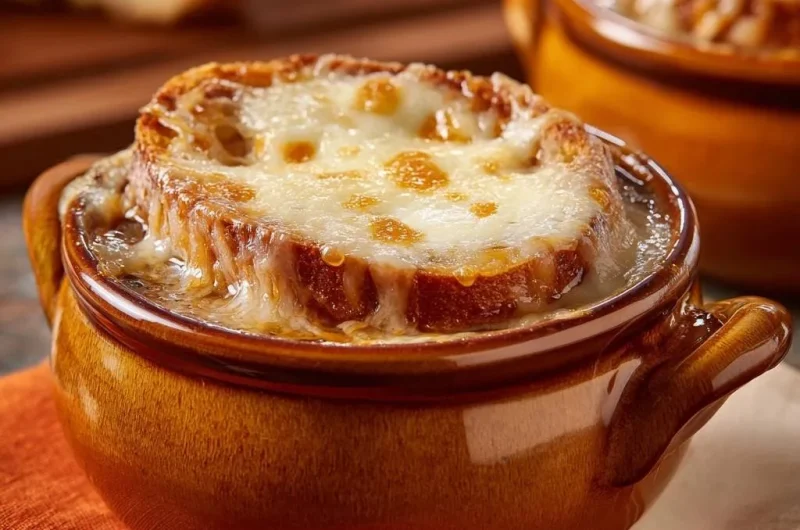
Ladle hot soup into oven-safe bowls, filling three-quarters. Float thick baguette slice, mound half cup Gruyere per bowl. Preheat broiler.
Broil three to four inches away for two to three minutes. Watch for bubbling edges turning brown. Let rest a minute; cheese sets beautifully.
Safety first: use mitts, place bowls on a tray. Crisp, gooey tops make French onion soup irresistible.
For even more deliciousness, explore how to make French onion soup with crispy cheese croutons.
Avoiding French Onion Soup Pitfalls
High heat scorches onions fast. Skip flour, get thin, clumpy soup. Thin baguette sinks; over-broil chars cheese.
Bland broth? Boost umami with extra pepper early. Prevention checklist: medium-low heat, stir cadence, gradual broth pour, watch broiler.
Troubleshoot: watery soup means under-caramelized onions. Reheat gently; it rebounds.
Onion Sticking and Scorch Fixes
Spot dry edges early. Splash water or add butter teaspoon. Stir vigorously; color evens out quick.
Cheese Burn Prevention
Set timer for two minutes. Pull when edges bubble, center melts. Rotate tray halfway if uneven.
Flavor Variations for French Onion Soup
Go vegetarian with mushroom stock; it mimics beef depth. Add thyme and cayenne for spice kick. Lighter version uses chicken broth and Emmental.
Gluten-free? Swap rice flour. Deglaze onions with half cup red grape juice post-caramel for upgrade. Scales easy to eight servings; double everything.
Make-Ahead French Onion Soup Guide
Caramelize onions two days ahead; fridge airtight. Full soup lasts three days chilled, freezes three months without cheese.
Reheat stovetop to simmer. Thaw overnight, broil fresh tops. Double recipe for batches; freezes in portions.
Pairing Sides with French Onion Soup
Crisp green salad cuts richness perfectly. Garlic bread makes great dippers. Lean charcuterie balances heft.
Sparkling cider refreshes alongside. Fall apple slaw adds crunch. These contrast the warm, cheesy bowl.
French Onion Soup FAQ
Can I Use Red Onions?
Yes, but they bleed color and taste sharper. Cut sugar to half teaspoon. Yellow onions give classic balanced French onion soup sweetness.
How Long Do Leftovers Last?
Fridge airtight up to four days. Freeze broth base three months; add fresh cheese before broiling. Reheat gently on stove.
Vegetarian French Onion Soup Option?
Swap beef broth for mushroom or vegetable stock. Mushroom ranks best for umami. Caramelization stays the star.
Why Add Sugar to Onions?
Sugar speeds natural sugars’ breakdown for golden caramelization. It prevents burn while boosting sweetness. Skip for less sweet results.
Best Broth for Flavor?
Homemade beef wins for depth; store low-sodium next. Full-sodium risks oversalt with onions. Simmer longer for concentration.
French Onion Soup
Course: SoupCuisine: FrenchDifficulty: medium4
servings20
minutes1
hour450
kcal80
MinutesTired of onions scorching while trying to caramelize them for French onion soup? This recipe nails sweet, golden onions every time with a simple low-slow stir technique plus water splash hack that locks in flavor without a hint of burn. Cheesy, bubbly perfection awaits.
Ingredients
4 large yellow onions, thinly sliced
4 tablespoons unsalted butter
1 teaspoon granulated sugar
1 teaspoon salt
1/2 teaspoon black pepper
2 tablespoons all-purpose flour
8 cups beef broth
1 bay leaf
4 thick slices baguette
2 cups shredded Gruyere cheese
Directions
- In a large Dutch oven or heavy pot, melt butter over medium-low heat. Add sliced onions, sugar, salt, and pepper. Stir to coat evenly.
- Cook onions uncovered for 40 to 45 minutes, stirring every 5 minutes to prevent sticking. Heres the burn-free secret: Keep heat at medium-low (never higher than 300F if using thermometer). If onions start browning too fast or sticking, add 2 tablespoons water, stir, and continue. This steams them gently for even caramelization without scorching. Onions will turn deep golden and jammy.
- Sprinkle flour over onions and stir 2 minutes to cook out raw taste.
- Slowly pour in beef broth, add bay leaf. Bring to simmer, reduce heat to low, cover partially, and cook 20 minutes for flavor depth. Remove bay leaf, taste, adjust salt.
- Preheat broiler. Ladle soup into 4 oven-safe bowls. Top each with baguette slice, pile on cheese.
- Broil 3 to 4 inches from heat 2 to 3 minutes until cheese bubbles and browns. Watch closely to avoid burning. Serve hot.
Notes
- Keep heat at medium-low (never higher than 300°F if using a thermometer). If onions start browning too fast or sticking, add 2 tablespoons water, stir, and continue for even caramelization without scorching. Watch closely under the broiler to avoid burning the cheese.