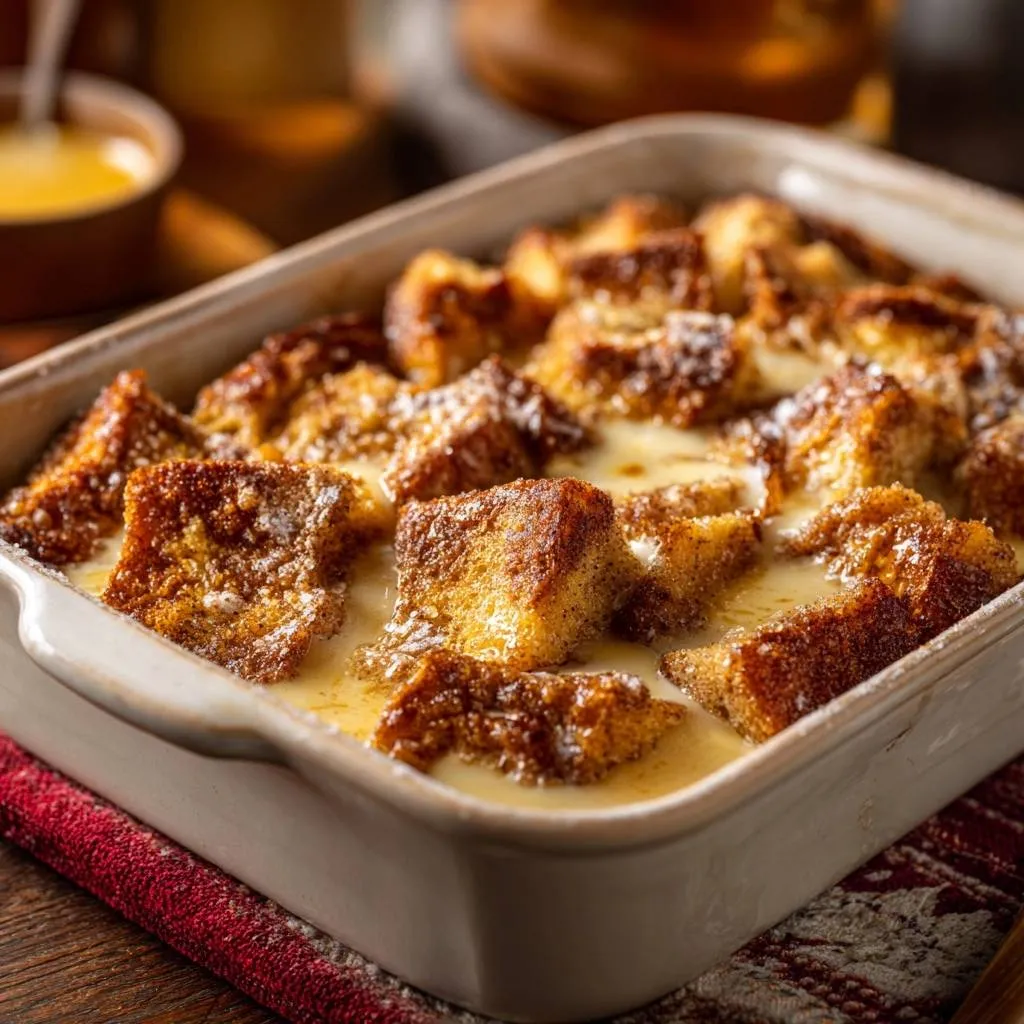
Ever pull a French toast casserole from the oven only to find a soggy, watery mess at the bottom? That frustration ends here. This overnight French toast casserole bake uses stale bread cubes pressed firmly into the custard, so you get perfect absorption without any excess liquid pooling. Instead, picture a creamy center under a shatteringly crisp sugared top that fills your kitchen with warm vanilla aromas.
Therefore, this method delivers the texture contrast everyone craves. No more guessing games with breakfast. It’s ideal for crowds since it serves 8 to 10 effortlessly, and the make-ahead prep means you wake up to breakfast ready to bake.
Here’s the expertise that seals it: the double press, once at assembly and again before baking, forces every bread cube to soak up custard fully. That simple step eliminates dry spots or sogginess. You’ll nail it every time.
Why Stale Bread Defines French Toast Casserole Texture
Stale bread makes or breaks your French toast casserole. Fresh bread turns mushy because it can’t absorb custard without collapsing. However, day-old bread’s dry, porous structure soaks up the liquid perfectly, creating that ideal creamy interior.
In addition, the crust-to-crumb ratio matters. Stale loaves hold their shape during the overnight chill, leading to even baking. You end up with no soggy bottoms, just reliable results.
Choosing French or Brioche for Best Results
Grab a 1-pound loaf of day-old French or brioche for your French toast casserole. French bread’s airy interior excels at custard saturation, while brioche adds subtle richness from its eggy dough. Both give a great crust that crisps up beautifully.
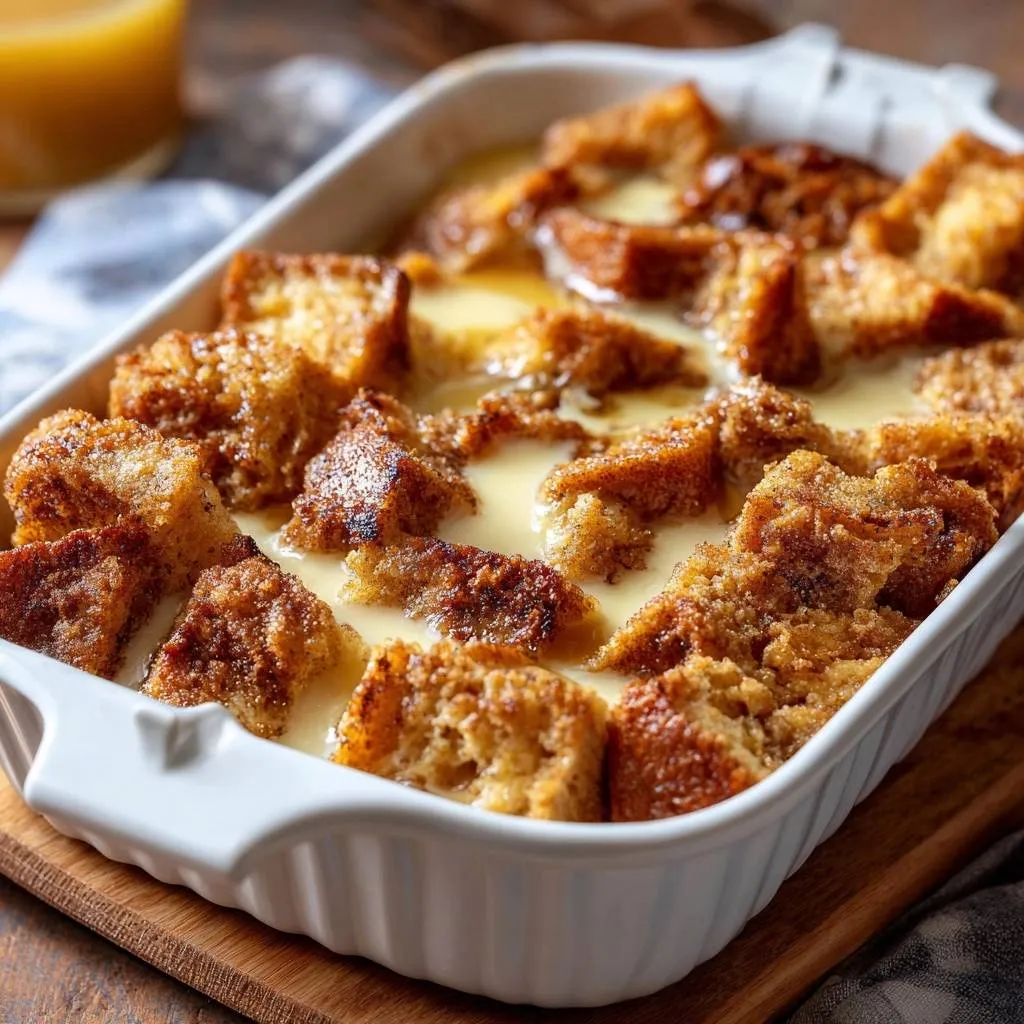
Therefore, avoid sandwich bread; it gets gummy. Check bakery day-olds or slice and dry fresh loaves overnight. Pros of French: lighter texture. Brioche: more tender crumb.
Cubing Technique to Maximize Absorption
Cut the loaf into 1-inch cubes for uniform soaking in your French toast casserole. This size exposes enough surface area without creating mushy bits. Use a serrated knife for clean cuts through crusty edges.
However, don’t go smaller; tiny pieces disintegrate. Spread them evenly in the dish first. That prevents dry centers and ensures every bite delivers.
Custard Components for Flawless French Toast Casserole
The custard relies on 8 large eggs, 2 cups whole milk, 1/2 cup granulated sugar, 2 teaspoons vanilla extract, and 1/4 teaspoon salt. Whole milk provides creaminess without diluting flavors like lower-fat options do. Eggs bind it all for structure.
In addition, sugar tenderizes the bread while helping the top crisp later. Salt sharpens every taste, and vanilla brings warmth. These ratios fill a 9×13 dish perfectly for 8 to 10 servings.
Whisking Method for Smooth Custard Base
Whisk eggs, milk, sugar, vanilla, and salt in a large bowl until fully smooth. Start with eggs and sugar to dissolve granules completely, then add liquids. A hand whisk works fine; it takes 1 to 2 minutes.
However, an electric mixer speeds it up without overbeating. You want no lumps for even pouring. This ensures flawless distribution over the bread.
Overnight Pressing: The Anti-Soggy French Toast Casserole Secret
Generously grease your 9×13 dish with 2 tablespoons softened butter first. Layer in the bread cubes evenly. Pour the custard over, then press down firmly with hands or a spatula until every piece submerges.
Therefore, cover tightly with foil or plastic and refrigerate overnight. This chilling lets the bread absorb fully, eliminating pools of liquid. Press again before baking to catch any surface custard.
Butter Greasing to Block Bottom Moisture
Spread 2 tablespoons softened unsalted butter across the entire 9×13 dish bottom and sides. It forms a barrier that keeps moisture from seeping under, preventing soggy bottoms in your French toast casserole.
In addition, the butter adds flavor as it bakes in. If butter’s unavailable, neutral oil works, but butter crisps better. Apply with a paper towel for even coverage.
Firm Pressing for Total Custard Saturation
Use your hands or a spatula to press bread cubes firmly into the custard right after pouring. Every cube should look coated and submerged; no dry tips poking out. This forces absorption during the overnight rest.
Without it, you’ll get watery excess or untouched bread. Press a second time pre-bake. Hands give the best feel for full saturation.
Baking Science Behind Crisp-Topped French Toast Casserole
Preheat to 350°F. Press the top down once more, sprinkle 1/4 cup sugar evenly, and dot with 2 tablespoons butter cut into pieces. Bake uncovered 40 to 45 minutes until golden, set, and no liquid remains.
However, the Maillard reaction from sugar and butter creates that crisp top while the custard firms to 160°F internally. Let it rest 10 minutes; this sets the structure. Your kitchen smells amazing at this point.
Sugar Topping for Shatteringly Crisp Finish
Sprinkle 1/4 cup granulated sugar evenly right before baking. It melts, caramelizes, and contrasts the creamy center in your French toast casserole. Distribute by hand for no bare spots.
Therefore, it shatters under your fork. Finer sugar speeds browning, but granulated gives reliable crunch.
Butter Dots Role in Golden Browning
Dot the top with the remaining 2 tablespoons butter in small pieces. They melt and baste the surface, promoting even golden crisping without added sogginess.
In addition, butter boosts rich flavor. Space them out for full coverage. It’s a small step with big payoff.
Make-Ahead and Freezing Guide for French Toast Casserole
Assemble fully and chill overnight for peak flavor. It freezes beautifully pre-bake: wrap tightly and store up to 2 months. Thaw overnight in the fridge, then bake as directed.
However, reheat leftovers in a 325°F oven to restore crispness. Store baked in an airtight container up to 3 days. Pro tip: portion into freezer bags for easy brunches.
Scaling for Crowd-Sized French Toast Casserole
Double for two 9×13 dishes or triple for larger groups. Bake times stay similar, but check centers early. Use multiple dishes to avoid overcrowding and sogginess.
Therefore, freeze extras in portions. It’s perfect for holidays serving 16 to 30.
Avoiding Pitfalls in French Toast Casserole Prep
Fresh bread leads to mush; always use stale. Skip pressing, and liquid pools form. Underbake, and it’s runny; watch for a set center.
In addition, no rest means collapse. Fix minor sogginess by toasting bread cubes first next time. Oven middle rack ensures even heat.
Spotting and Fixing Soggy Bottoms
Soggy bottoms come from fresh bread, weak greasing, or no pressing. Prevent with the butter barrier, stale cubes, and firm presses. If it happens, broil the top briefly post-bake or serve drier sections first.
However, follow the method, and it won’t occur. Texture tells all: firm base wins.
Flavor Twists on Classic French Toast Casserole
Add cinnamon or nutmeg to the custard for warmth. Layer berries or apple slices between cubes before pressing. Toss in chopped pecans for crunch.
Therefore, swap half the milk for half-and-half if you want richer. Keep the pressing for anti-soggy success. These keep the core method intact.
Fruit and Spice Infusions for Variety
Layer fresh berries or thin apple slices amid cubes, then press. Add 1 teaspoon cinnamon to custard. Bake 5 minutes longer if fruit releases juice.
In addition, apple-cinnamon French toast casserole shines. It absorbs without watering down.
Perfect Pairings for Your French Toast Casserole
Drizzle with maple syrup right before eating. Pair with fresh berries, yogurt, or turkey bacon for balance. Coffee or tea cuts the sweetness perfectly.
However, the crisp top loves cool contrasts. Build a brunch around it easily. Oh man, that first bite with syrup? Pure joy.
Top Toppings Beyond Basic Syrup
Dust with powdered sugar or add whipped cream after resting. Spoon on berry compote for tartness. Apply post-rest to keep the crisp intact.
For a similarly delightful topping, check out how to achieve no more sinking berries in strawberry bundt cake.
These elevate without sogginess. Fresh fruit works too.
French Toast Casserole Questions Answered
Can You Skip Overnight Soak?
Yes, but press firmly and let sit 30 minutes minimum. Overnight yields best absorption and texture; same-day works in a pinch but tops softer.
Best Bread Substitutes Listed
Challah ranks closest for richness. Italian or sourdough next. Avoid soft sandwich bread; it turns mushy in French toast casserole.
Reheating Without Losing Crispness
Bake slices at 325°F for 10 minutes. Toaster oven crisps edges best. Skip microwave; it steams and sogs everything.
Scaling for Smaller Batches
Halve for an 8×8 dish: 4 eggs, 1 cup milk, etc. Bake 30 to 35 minutes. Press and chill same way for perfect results.
Why Pooling Liquid Happens
Fresh bread or skipped pressing causes it. Stale cubes and firm double-pressing absorb fully. No pools guaranteed with this method.
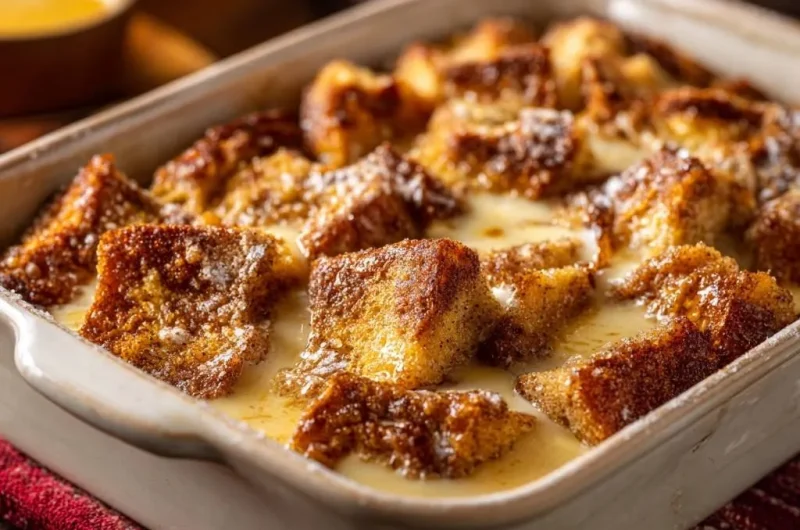
French Toast Casserole
Course: BreakfastCuisine: AmericanDifficulty: easy8
servings15
minutes45
minutes350
kcal780
MinutesSay goodbye to watery, soggy-bottomed French toast casseroles. Our technique uses stale bread cubes pressed firmly into the custard overnight for perfect absorption, delivering a creamy center with zero excess liquid and a shatteringly crisp sugared top.
Ingredients
1 loaf (about 1 lb) day-old French or brioche bread, cut into 1-inch cubes
8 large eggs
2 cups whole milk
1/2 cup granulated sugar, plus 1/4 cup for topping
2 teaspoons vanilla extract
1/4 teaspoon salt
4 tablespoons unsalted butter, softened for greasing
Maple syrup, for serving
Directions
- Generously grease a 9×13-inch baking dish with 2 tablespoons softened butter. This creates a barrier that prevents the bottom from turning soggy.
- Spread bread cubes evenly in the dish. In a large bowl, whisk eggs, milk, 1/2 cup sugar, vanilla, and salt until smooth.
- Pour custard evenly over bread. Press down firmly with your hands or a spatula so every cube is submerged and coated. This anti-soggy step forces full absorption during chilling, eliminating dry spots or watery excess. Cover and refrigerate overnight.
- Preheat oven to 350 degrees F. Remove casserole from fridge; press bread down again to soak up any remaining custard. Sprinkle 1/4 cup sugar evenly over top.
- Dot with remaining 2 tablespoons butter. Bake uncovered 40 to 45 minutes until top is golden and crispy, custard set, and no liquid remains. Let rest 10 minutes before serving with maple syrup. Perfect texture guaranteed.
Notes
- Use day-old French or brioche bread for best texture. Press bread firmly into custard to ensure full absorption and eliminate excess liquid.