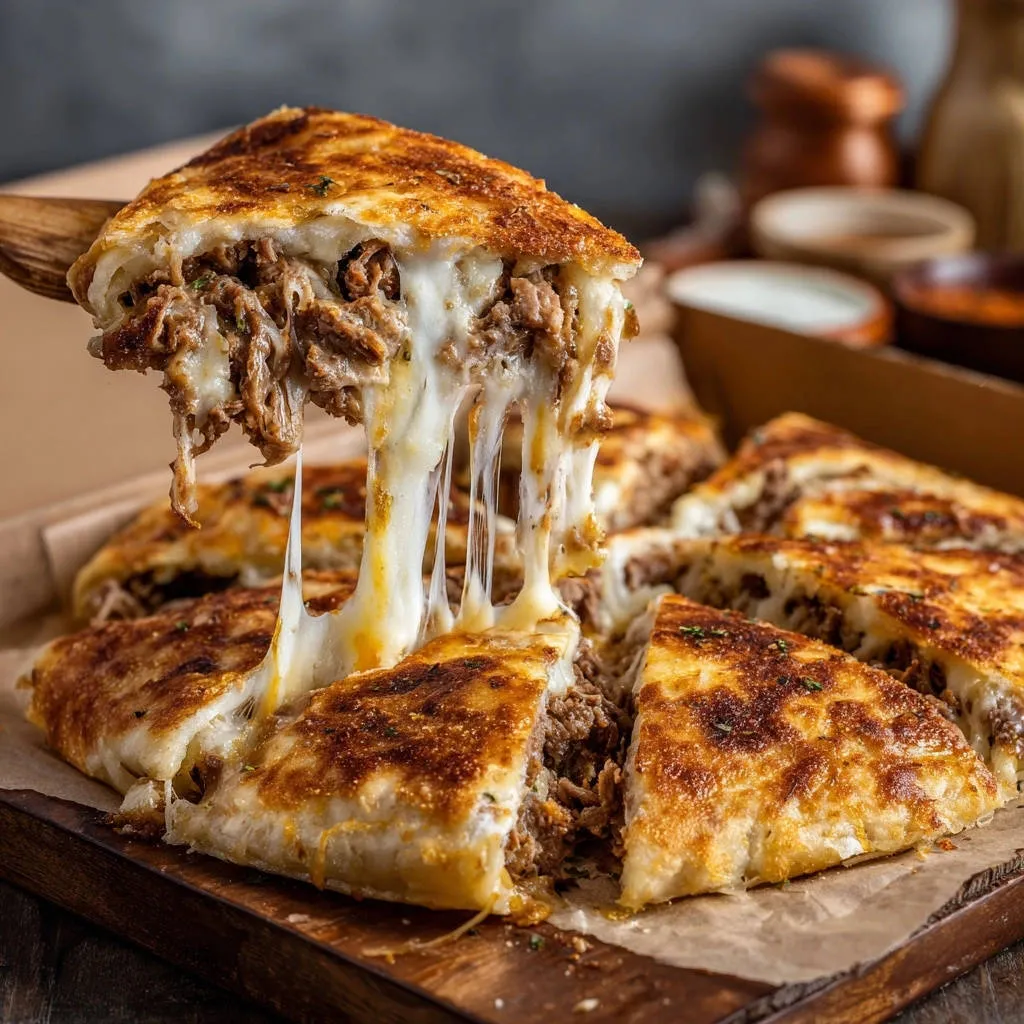
I’ve struggled through too many large skillet dinners that promise a golden crust but deliver a pale, soggy mess upon flipping. That frustrating experience is exactly why I perfected this technique for the ultimate Giant Shredded Beef Skillet Turnover.
This reliable method guarantees a deep, even golden brown exterior and a perfectly melted, juicy filling every single time. It relies on a simple, two-stage cooking trick that eliminates the fear of the dreaded limp tortilla and delivers professional results.
The Secret to Crispy Texture: Why Other Skillet Turnovers Fail (And Ours Wins)
The common failing when cooking large, thick skillet foods is setting the heat too high too early, resulting in a burnt crust before the center is heated through. This quick heat rise forces internal moisture outward, leading to a steamed and pale bottom layer.
Our approach mandates strict temperature regulation, utilizing an initial low-heat phase to ensure the meat filling is piping hot and the cheese is fully melted internally.
Crucially, we introduce fresh butter halfway through the process; this clean, hot fat is essential for achieving the perfect Maillard reaction. Flipping the turnover onto that new heat source instantly creates a maximum golden-brown crispness that lasts.
Building the Perfect Core: Shredded Beef, Spice, and Moisture
Choosing the Right Beef: Pot Roast vs. Chuck
Achieving the best flavor relies on using highly seasoned, already cooked shredded beef, typically sourced from a slow-cooked pot roast or chuck roast.
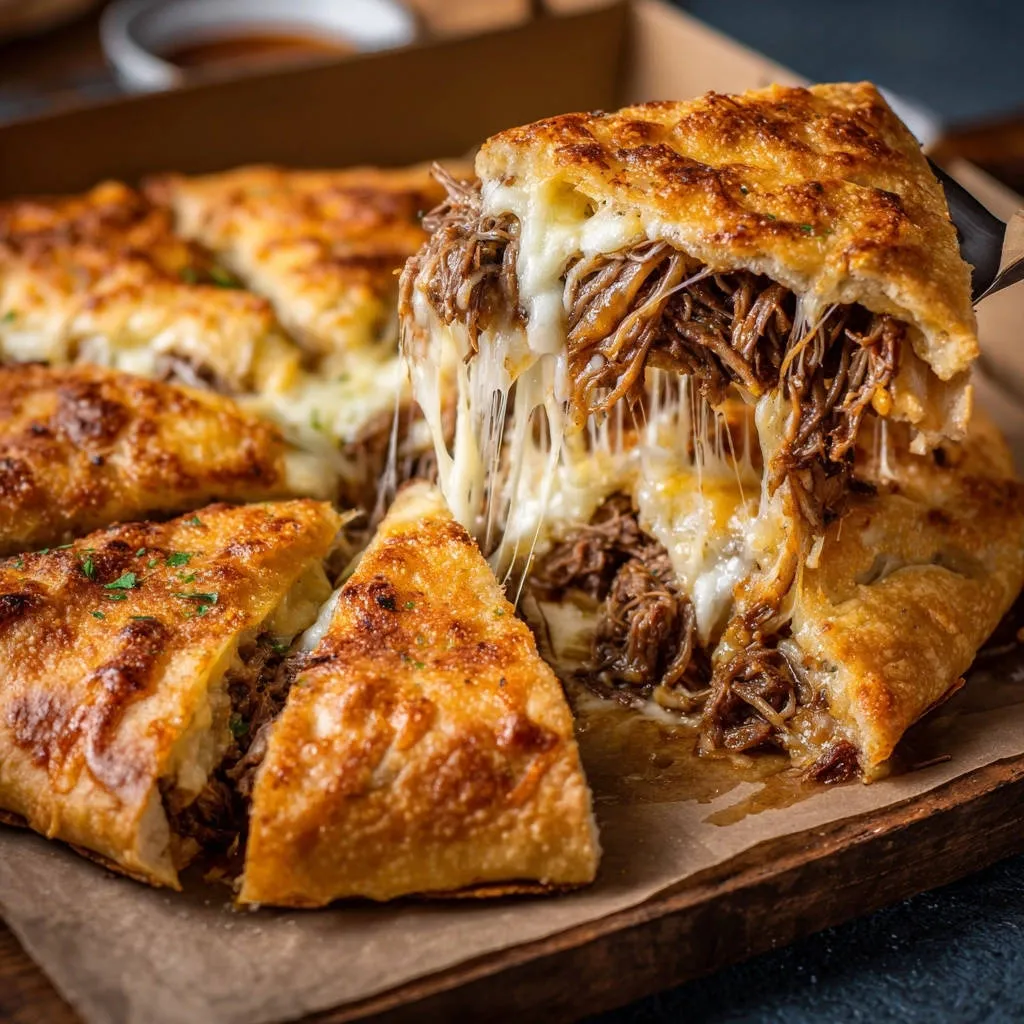
This preparation ensures the meat is fork-tender and ready to absorb the final spice blend before being locked inside the tortilla.
If using leftovers, make sure the meat is finely shredded; large, uneven chunks interfere with the smooth layering and sealing process of the turnover.
The Simple Spice Blend for Deep, Savory Flavor
Cumin and chili powder are non-negotiable here, providing a necessary earthy depth that elevates the simple shredded beef filling beyond standard taco meat.
This simple, focused blend allows the savory beef flavor to shine, complementing the richness of the melted cheese.
Always combine the seasoning directly with the beef and broth, mixing thoroughly so you can taste and adjust the salt and pepper levels precisely before assembly.
The Critical Role of Moisture and Cheese
Adding just one tablespoon of beef broth or water is a critical step; it lubricates the filling, keeping the meat moist during cooking, and helps the spices integrate uniformly.
For a similarly comforting and cheesy skillet rigatoni, consider this simple pasta dish.
We utilize low-moisture mozzarella because it melts cleanly without releasing excessive water vapor into the skillet.
Excess internal steaming is the primary culprit behind a soggy, damp exterior, so selecting quality low-moisture cheese is essential.
Essential Gear for Giant Shredded Beef Skillet Turnover Success
Why a Heavy-Bottomed Skillet is Non-Negotiable
A heavy-bottomed skillet, ideally cast iron, provides superior heat retention and the most even heat distribution necessary for cooking such a wide surface area.
This prevents localized hot spots that can scorch the tortilla edges while the rest of the bottom remains uncooked.
Ensure your skillet is 10 to 12 inches across to perfectly accommodate the large flour tortillas, allowing enough working space to maneuver and press the turnover.
Must-Have Kitchen Tools
A Sturdy Spatula: This is necessary for executing the essential press-down method and ensuring careful, gentle flipping without tearing the delicate tortilla.
Mixing Bowl: Used for achieving the uniform seasoning and proper hydration of the shredded beef filling before assembly.
Crafting the Giant Shredded Beef Skillet Turnover: Step-by-Step Perfection
-
Preparing and Seasoning the Moist Filling:
Thoroughly combine the shredded beef, cumin, chili powder, salt, pepper, and the tablespoon of beef broth or water in a medium bowl until the spices are fully incorporated.
The resulting mixture should be highly flavorful and just moist enough to hold together slightly, which ensures easy, non-crumbling spreading.
For perfectly sealed pockets like these, consider our flaky beef empanadas.
-
The Art of Assembly: Layering and Sealing:
Lay the first large tortilla flat. Spread half of the seasoned beef mixture evenly over its surface, but make sure to leave a clean, one-inch border all the way around the edge.
Top the beef evenly with half of the shredded mozzarella. Place the second tortilla directly on top and press the edges firmly together to create a tight seal that locks in the filling and prevents leakage during cooking.
-
The “Low and Slow” Start (Step 3 & 4):
Melt 1 tablespoon of butter over medium-low heat in your heavy skillet. This low temperature setting is absolutely crucial for controlled heating.
Cook the assembled turnover for the initial 5 to 6 minutes without covering it. The purpose of this stage is exclusively to fully melt the cheese and ensure the internal shredded beef filling is uniformly hot.
-
The Golden Crust Method (Step 5): Achieving Maximum Crunch:
After 6 minutes, gently lift the turnover to check the bottom. If it’s pale, carefully flip it. Add the remaining 1/2 tablespoon of fresh butter to the now-empty side of the skillet and allow it to foam slightly.
Flipping the pale side down into the freshly melted fat is the secret to maximum crispness and deep color, as the clean butter allows for the fastest, most effective browning reaction.
-
The Press and Finish:
Once the turnover is resting on the fresh butter, immediately increase the heat to medium. Use a second skillet or a sturdy, flat spatula to gently but firmly press down on the turnover for 30 seconds.
This press ensures every part of the bottom surface makes continuous, perfect contact with the hot, buttered pan, leading to perfectly deep golden results in 2 to 3 minutes.
Remove the finished Giant Shredded Beef Skillet Turnover, let it rest for 2 minutes, and slice into generous wedges.
Troubleshooting and Chef’s Tips for Maximum Flavor and Crunch
Preventing the Infamous Soggy Bottom
Ensure the heat is correctly increased to medium after the initial slow cook to actively evaporate residual surface moisture and initiate aggressive browning.
Avoid the temptation to keep the heat low during the final crisping stage, as this will lead to steaming rather than browning.
When cooking a large food item like this, maximizing surface area for evaporation is vital; if making more than one, cook them sequentially to avoid overcrowding the pan and dropping the temperature.
Handling and Sealing the Giant Tortilla
If you find the edges of your tortillas are stiff or won’t seal, lightly dampen the perimeter with a tiny amount of water or melted butter before pressing the two layers together.
If the turnover starts to crack or split during the final press, immediately reduce the heat slightly and finish cooking gently.
A small split is usually cosmetic and won’t ruin the integrity of the turnover, but excessive cracking means your heat is too high.
Flavor Boosters for the Skillet Turnover
For added complexity and depth, incorporate deeply caramelized onions, roasted sweet peppers, or a finely chopped jalapeño into the beef mixture before assembly.
Replacing half of the mozzarella with a high-quality sharp cheddar or Monterey Jack cheese will add a robust, tangy flavor depth to the melted core.
Serving, Storage, and Creative Variations
Dipping Sauces and Pairing Ideas
Classic complements include cooling sour cream, fresh chunky salsa, or a vibrant pico de gallo to cut through the richness of the savory shredded beef.
Serve the turnover alongside a crisp, acidic side salad dressed with vinaigrette or a fresh cabbage coleslaw to make it a complete, balanced weeknight meal.
Rounding Out Your Meal
Here are a couple of ideas to complement your Giant Shredded Beef Skillet Turnover.
- For a zesty addition, consider this Southwestern Pasta Salad, which brings a cool, vibrant contrast to the hearty turnover.
- If you’re looking for another way to enjoy savory fillings in a crispy shell, try these Crispy Chicken and Cheese Rolls for a similar textural satisfaction.
Make-Ahead and Storage Solutions
You can assemble the turnover completely (but do not cook it), wrap it tightly, and refrigerate it for up to 24 hours.
If cooking straight from the fridge, add an extra minute or two to the initial low and slow cook time to ensure the center is fully heated.
To reheat leftovers, use an air fryer or a 350°F oven for 5-8 minutes; the microwave will soften the crust, negating all your hard work achieving that magnificent crunch.
Creative Filling Swaps and Dietary Modifications
This crispy skillet technique works beautifully with other fillings, such as shredded chicken tossed in BBQ sauce or even ground meat seasoned with a strong Mexican blend.
For those seeking dietary modifications, look for large, low-carb wraps or substitute the tortilla entirely by forming the filling between two large, thin savory crepes.
Your Giant Shredded Beef Skillet Turnover Questions Answered
Can I Use Different Types of Tortillas (Corn or Whole Wheat)?
We highly recommend using large (10-12 inch) white flour tortillas as they offer the necessary flexibility to seal firmly without cracking under pressure.
Corn tortillas tend to be brittle and too small for this giant format, and whole wheat tortillas sometimes struggle to achieve the same level of deep crispness.
What is the Maximum Heat I Should Use?
The maximum recommended temperature for cooking this dish is medium heat, used only during the final browning stage.
Using high heat at any point will almost certainly lead to burning the outside before the inside can fully melt and the filling is integrated.
Why Does the Recipe Require Extra Butter for the Second Flip?
The initial tablespoon of butter is mostly absorbed by the tortilla or evaporated during the long, low-temperature cook.
Adding fresh, clean butter creates a new, incredibly hot fat surface that has maximum browning capability.
This fresh fat quickly initiates the Maillard reaction, guaranteeing the crucial, even golden hue and maximum crunch that defines a perfect Giant Shredded Beef Skillet Turnover.
Mastering this two-stage temperature control technique is the key to elevating your home cooking and achieving professional-level crispness on any large, stuffed skillet item.
Say goodbye to soggy bottoms and pale exteriors. Try this reliable method today for the most satisfying Giant Shredded Beef Skillet Turnover you have ever experienced, and let me know your favorite sauce pairing!
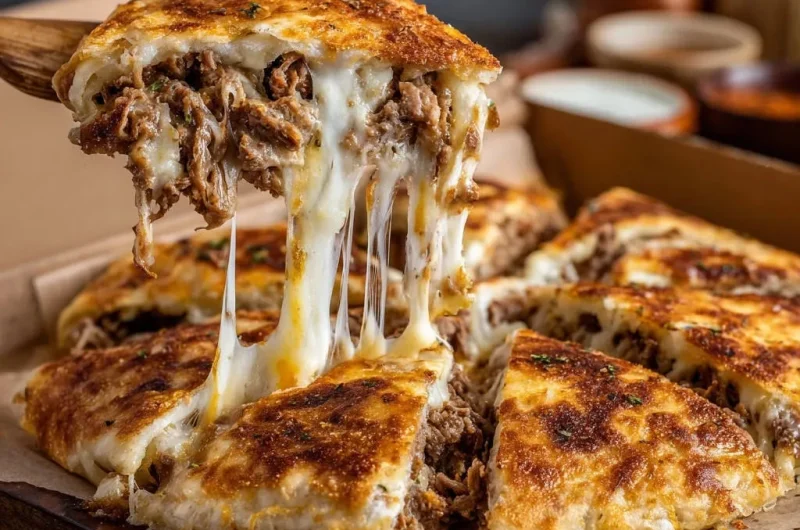
Shredded Beef Turnover
Course: Main CourseCuisine: MexicanDifficulty: easy4
servings (2 turnovers)15
minutes20
minutes450
kcal35
minutesThis recipe reveals the simple trick for achieving a perfect, deep golden brown, crispy crust on thick, stuffed skillet turnovers. Savory shredded beef and gooey mozzarella are sealed inside a large flour tortilla. The key to success is controlling the heat and crisping the turnover in fresh melted butter.
Ingredients
2 cups shredded cooked beef (pot roast or chuck roast works best)
2 cups low-moisture mozzarella cheese, shredded
1 tablespoon beef broth or water (for moisture)
1/2 teaspoon cumin
1/2 teaspoon chili powder
Salt and black pepper to taste
4 large (10 to 12-inch) flour tortillas
3 tablespoons butter, divided
Directions
- Prepare the Filling: In a medium bowl, combine the shredded cooked beef, beef broth, cumin, chili powder, salt, and pepper. The broth is essential for making sure the meat stays moist and integrates well with the cheese. Taste and adjust seasoning as needed.
- Assemble the Turnover: Lay one large tortilla flat. Spread half of the seasoned beef mixture evenly over one side of the tortilla, leaving a one-inch border. Top the beef mixture with half of the shredded mozzarella cheese. Place a second tortilla directly on top of the cheese and beef filling. Press the edges firmly to seal the turnover. Repeat with the remaining ingredients to create a second turnover, if desired.
- Start Low and Slow: In a large, heavy skillet (cast iron works beautifully), melt 1 tablespoon of butter over low to medium-low heat. The low temperature is critical for gradually warming the interior without scorching the exterior.
- The Golden Crust Method: Carefully place one assembled turnover into the skillet. Cook, uncovered, for 5 to 6 minutes. The goal is not to brown it yet, but to fully melt the cheese and heat the meat filling thoroughly.
- Achieve the Crisp: After 6 minutes, gently lift the turnover to check the bottom. If it is still pale, flip it gently. Add 1/2 tablespoon more butter to the empty side of the skillet and let it melt. Flip the turnover back, placing the pale side down into the fresh butter. Increase the heat to medium. Using a sturdy spatula or a second pan, gently press down on the turnover for 30 seconds to ensure maximum contact with the heated, buttered surface. Cook for 2 to 3 minutes, or until the bottom is deep golden brown and crisp.
- Serve: Remove the turnover from the skillet. If making a second one, repeat the process. Let rest for 2 minutes before slicing into wedges and serving immediately while the cheese is still hot and stringy.
Notes
- Use a heavy skillet (cast iron works best) for even heat. Starting the cook on low heat is critical for melting the cheese thoroughly.