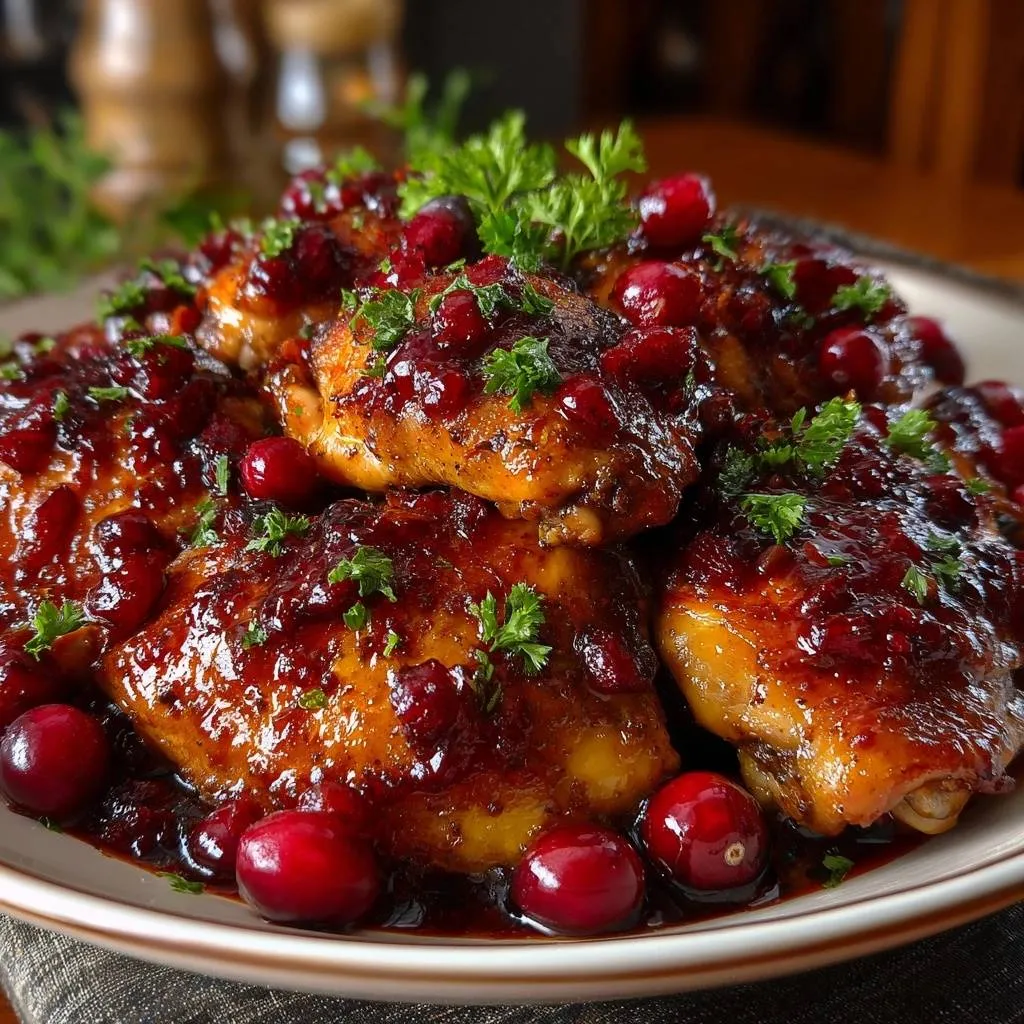
Most fruit-glazed chicken recipes promise a festive centerpiece but deliver a soggy, rubbery disappointment. When you dump a sugary sauce over raw poultry and slide it into the oven, you’re essentially steaming the meat in its own juices. The result is skin that lacks any structural integrity and a sauce that tastes more like boiled jam than a sophisticated glaze.
The secret to these Glazed Cranberry Roasted Chicken Thighs lies in a two-stage cooking process that prioritizes texture above all else. By separating the searing phase from the glazing phase, we allow the skin to reach its full crispy potential before introducing the moisture of the berries. It’s a technical shift that ensures every bite offers a distinct, audible crunch followed by the tart explosion of fresh cranberries.
For a different fruity twist on roasted thighs, explore this blueberry thyme glazed chicken.
I’ve found that the real trick is patting the chicken dry until the paper towel comes away completely clean. Even a microscopic layer of surface moisture will create a barrier of steam in the pan, preventing that deep mahogany crust from forming. If you want that “shatter-crisp” finish, you have to treat moisture as the enemy from the very start.
The Science of Achieving Shatter-Crisp Chicken Skin
Achieving the perfect crunch on a chicken thigh isn’t about luck; it’s about physics and fat rendering. Chicken thighs are naturally marbled with subcutaneous fat located just beneath the skin. To get that skin crispy, you must render that fat out so the skin can fry in its own oils. If the heat is too low, the fat stays trapped, leaving the skin flabby and greasy.
Setting your oven to 425°F is non-negotiable for this recipe. This high temperature provides the thermal energy needed to break down tough connective tissues while simultaneously dehydrating the skin’s surface. At this heat, the Maillard reaction—the chemical dance between amino acids and reducing sugars—happens rapidly, creating those complex, savory flavors we crave in roasted meats.
The initial 6 to 8-minute sear in the skillet is where the heavy lifting happens. By placing the thighs skin-side down in a hot pan, you jumpstart the rendering process. You’ll notice the skin begins to shrink and tighten as the fat liquefies. This creates a sturdy, golden foundation that can withstand the later addition of the cranberry glaze without turning into mush.
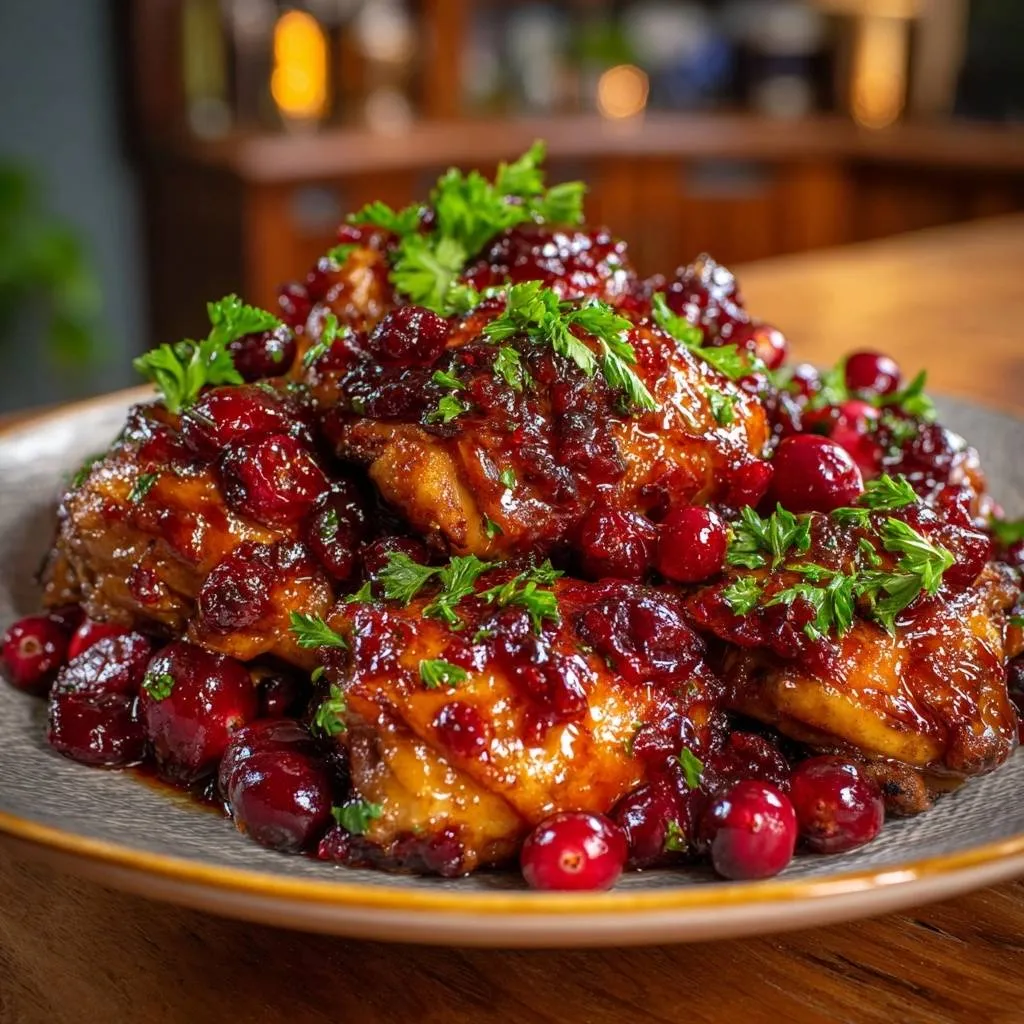
Essential Components for Glazed Cranberry Roasted Chicken Thighs
Choosing bone-in, skin-on thighs is the first step toward success. The bone acts as an insulator, slowing down the cooking of the interior meat so it stays juicy while the exterior braves the high heat of the oven. Chicken breasts would dry out long before the skin reached the desired level of crispness, making thighs the superior choice for roasting.
Fresh cranberries are the star here because of their high pectin content. Pectin is a natural thickening agent found in the cell walls of the fruit. As the cranberries simmer in the honey and balsamic mixture, they release this pectin, which transforms a thin liquid into a glossy, jam-like lacquer. Frozen berries work in a pinch, but they release more water, which can slightly thin out your final sauce.
The balance of honey and balsamic vinegar provides the “lacquer” effect that makes this dish look professional. The honey offers the sugars needed for stickiness, while the acidity of the balsamic cuts through the richness of the chicken fat. I add smoked paprika not just for its earthy undertone, but because it provides a deep red hue that mimics hours of slow-smoking in just thirty minutes.
Finally, the aromatic duo of garlic and dried thyme builds the savory floor for the tart fruit to stand on. Thyme has a woody, lemony quality that bridges the gap between the savory poultry and the bright cranberries. Using dried thyme here is actually preferable to fresh, as it stands up better to the intense 425°F heat without burning and turning bitter.
Selecting the Best Poultry and Produce
When you’re at the grocery store, look for air-chilled chicken thighs. Most commercial chicken is chilled in water baths, which means the meat absorbs extra liquid that leaks out during cooking. Air-chilled poultry has a tighter skin and a more concentrated flavor, which is exactly what you need for a high-heat roast. For the produce, choose cranberries that are firm and bouncy; if they feel soft or look shriveled, they won’t “pop” beautifully in the pan.
Preparation: Eliminating Moisture Before the Heat
I cannot overstate the importance of the “pat dry” technique. Take each thigh and press it firmly between layers of paper towels. You want the skin to feel tacky, not slippery. If the skin is wet when it hits the oil, the temperature of the pan will plummet as the water evaporates, and you’ll end up boiling the meat instead of searing it.
Timing your seasoning is just as vital. Salt draws moisture out of meat through osmosis. Therefore, you should season your chicken immediately before it goes into the skillet. If you salt it and let it sit for twenty minutes, you’ll find a pool of moisture on the surface again, undoing all your hard work with the paper towels. Season generously, then get that chicken into the heat right away.
Step-by-Step: Searing and Roasting for Maximum Crunch
Start by heating your olive oil until it shimmers. When you lay the chicken in the skillet, you should hear a loud, aggressive sizzle. If it’s quiet, your pan isn’t hot enough. Resist the urge to poke, prod, or move the thighs for at least six minutes. The skin needs time to develop a crust; if you flip it too early, the skin will stick to the pan and tear away, ruining the presentation.
Once you flip the thighs, they should be a stunning deep golden brown. Now, scatter the first cup of whole cranberries directly into the pan juices. As these roast in the oven, they’ll soften and release their juices into the rendered chicken fat, creating a flavorful base for the pan sauce. This first batch of berries is for flavor, while the second batch is for the final glaze.
While the chicken is in its first roast, focus on the glaze reduction in a separate saucepan. You’re looking for the “bursting point.” You’ll actually hear the cranberries pop as the steam inside them expands. Once they pop, the pectin mixes with the honey and balsamic, thickening the sauce until it coats the back of a spoon. This concentrated syrup is what gives the chicken its holiday glow.
The Lacquering Technique: Applying the Cranberry Glaze
The most common mistake in glazed recipes is applying the sugar too early. Honey and balsamic vinegar have high sugar contents that burn quickly at 425°F. By waiting until the final 5 to 8 minutes of cooking to apply the glaze, you allow the sugars to caramelize into a sticky lacquer without crossing the line into charred bitterness.
When you remove the skillet to apply the glaze, use a spoon to carefully drape the thickened sauce over the highest points of the chicken. Try to nestle the burst berries on top of each thigh. This creates a “jeweled” effect that looks incredible on the plate. Returning the chicken to the oven for those last few minutes sets the glaze, ensuring it clings to the meat rather than sliding off into the pan.
Troubleshooting Common Roasting Obstacles
If you find that your chicken skin isn’t as crisp as you’d like after the roasting time is up, don’t panic. You can switch your oven to the broiler setting for 60 to 90 seconds. However, you must watch it like a hawk. The honey in the glaze can go from perfectly caramelized to burnt in a heartbeat. Keep the oven door cracked and pull the skillet the second you see the glaze bubbling vigorously.
Sometimes cranberries can be exceptionally tart depending on the time of year. If your glaze tastes too sharp, whisk in an extra tablespoon of honey while it’s still in the saucepan. Conversely, if the glaze feels too thick to pour, a splash of water or chicken stock will loosen it up without sacrificing the flavor profile. The goal is a consistency similar to warm maple syrup.
Optimal Side Dishes for Tart Cranberry Glaze
Because this dish is both sweet and acidic, you want sides that offer an earthy or creamy contrast. Roasted Brussels sprouts are a natural partner; their slight bitterness balances the honey glaze perfectly. A wild rice pilaf with toasted pecans also works well, providing a nutty crunch that echoes the festive flavors of the cranberries.
If you want something more comforting, serve the chicken over a bed of creamy polenta or thick mashed potatoes. These act as a sponge for the balsamic-cranberry reduction that collects in the bottom of the skillet. Avoid sides like glazed carrots or sweet potatoes, as the sugar overlap can make the entire meal feel more like a dessert than a savory dinner.
Storage and Reheating Without Losing Texture
Leftover chicken thighs will stay fresh in an airtight container for up to three days. However, the refrigerator is the enemy of crispy skin. The cold air causes the fat to solidify and the skin to soften. Whatever you do, avoid the microwave when reheating. It will turn the skin into a rubbery mess and make the cranberry glaze watery.
To revive the original texture, use an air fryer or a standard oven. Reheat the thighs at 375°F for about 8 to 10 minutes. This temperature is high enough to re-crisp the skin and melt the glaze back into a glossy coating without overcooking the meat. If the glaze looks a little dull, a tiny brush of fresh honey before reheating can bring back that professional shine.
Expert Tips for Professional Presentation
Before you serve, let the chicken rest for at least five minutes. This allows the muscle fibers to relax and reabsorb the juices. If you cut into it immediately, all that moisture will run out onto the plate, leaving the meat dry. Garnish heavily with fresh chopped curly parsley right before the skillet hits the table. The bright green contrast against the deep red cranberries makes the colors pop and adds a necessary hit of freshness to the rich dish.
How do I know if the chicken is fully cooked without a thermometer?
While a meat thermometer is the most reliable tool, you can check for doneness by piercing the thickest part of the thigh with a knife. The juices should run completely clear, not pink. Additionally, the meat should begin to pull away slightly from the bone. However, for the best results and food safety, aim for an internal temperature of 165°F.
Can I use dried cranberries instead of fresh?
I don’t recommend using only dried cranberries for this recipe. Dried cranberries are usually sweetened and lack the moisture and pectin needed to create the thick, tart glaze. If you can’t find fresh berries, frozen ones are a much better substitute. If you must use dried, soak them in hot water for 15 minutes first, but be aware the flavor will be much sweeter and less complex.
Why did my cranberry glaze turn out too thin?
A thin glaze usually means the sauce wasn’t simmered long enough to reach the “bursting point” of the cranberries. The pectin inside the berries is what thickens the sauce naturally. If it’s already on the chicken and still too thin, you can carefully drain the pan juices into a small saucepan and boil them down for 2-3 minutes until syrupy, then pour it back over the meat.
Is it possible to make this with chicken breasts?
You can, but you’ll need to adjust your timing significantly. Chicken breasts are leaner and cook much faster than thighs, meaning they often dry out before the skin gets crispy. If using breasts, I recommend keeping the skin on and using the same searing method, but start checking the internal temperature after 10 minutes of roasting to ensure they don’t exceed 165°F.
How do I store leftovers so they don’t get soggy?
Store the chicken in a single layer in an airtight container. If you stack the thighs, the moisture from the bottom pieces will steam the skin of the ones on top. Keep them in the fridge for up to 3 days. When reheating, always use an oven or air fryer at 375°F to help the skin regain some of its original crunch and to keep the glaze from becoming runny.
Can I substitute the balsamic vinegar?
If you don’t have balsamic, red wine vinegar or apple cider vinegar can work. However, since these are thinner and more acidic than balsamic, you should add an extra tablespoon of honey to compensate for the loss of sweetness and body. The flavor will be slightly sharper, but it will still provide that necessary acidic balance to the rich chicken fat.

Cranberry Roasted Chicken Thighs
Course: Main CourseCuisine: AmericanDifficulty: easy4
servings15
minutes35
minutes450
kcal50
MinutesA festive chicken dish featuring bone-in, skin-on thighs roasted with fresh cranberries and a honey-balsamic glaze. This method prioritizes crispy skin by applying the glaze during the final minutes of cooking.
Ingredients
2 pounds bone-in, skin-on chicken thighs
2 cups fresh whole cranberries, divided
1/2 cup honey
1/4 cup balsamic vinegar
2 tablespoons olive oil
1 tablespoon minced garlic
1 teaspoon dried thyme
1/2 teaspoon smoked paprika (for color and depth)
Salt and black pepper to taste
Fresh curly parsley, chopped for garnish
Directions
- Preheat your oven to 425 degrees F. High heat is essential for rendering the fat and preventing soggy skin.
- Pat the chicken thighs extremely dry with paper towels. Moisture is the enemy of crunch. Season both sides generously with salt, pepper, thyme, and smoked paprika.
- Heat olive oil in a large oven-safe skillet over medium-high heat. Place chicken skin-side down and sear for 6 to 8 minutes without moving them until the skin is deep golden brown and crispy.
- While the chicken sears, whisk together the honey, balsamic vinegar, and garlic in a small bowl.
- Flip the chicken thighs so they are skin-side up. Scatter 1 cup of the fresh cranberries around the chicken in the skillet.
- Transfer the skillet to the oven and roast for 15 minutes.
- While the chicken roasts, place the remaining 1 cup of cranberries in a small saucepan with the honey-balsamic mixture. Simmer over medium heat for 5 minutes until the cranberries just begin to burst and the sauce thickens into a jam-like glaze.
- Remove the skillet from the oven. Spoon the thickened cranberry glaze over the chicken thighs, ensuring the berries sit on top as seen in the image. By waiting until the final 5-8 minutes of cooking, the sugars will lacquer onto the skin without softening the crunch.
- Return to the oven for 5-8 more minutes or until the chicken reaches an internal temperature of 165 degrees F.
- Let the meat rest for 5 minutes. Garnish heavily with fresh chopped parsley to match the visual presentation. Serve with the reduced pan juices.
Notes
- Pat the chicken extremely dry before seasoning to ensure maximum crispiness. Use an oven-safe skillet like cast iron for the best searing results.