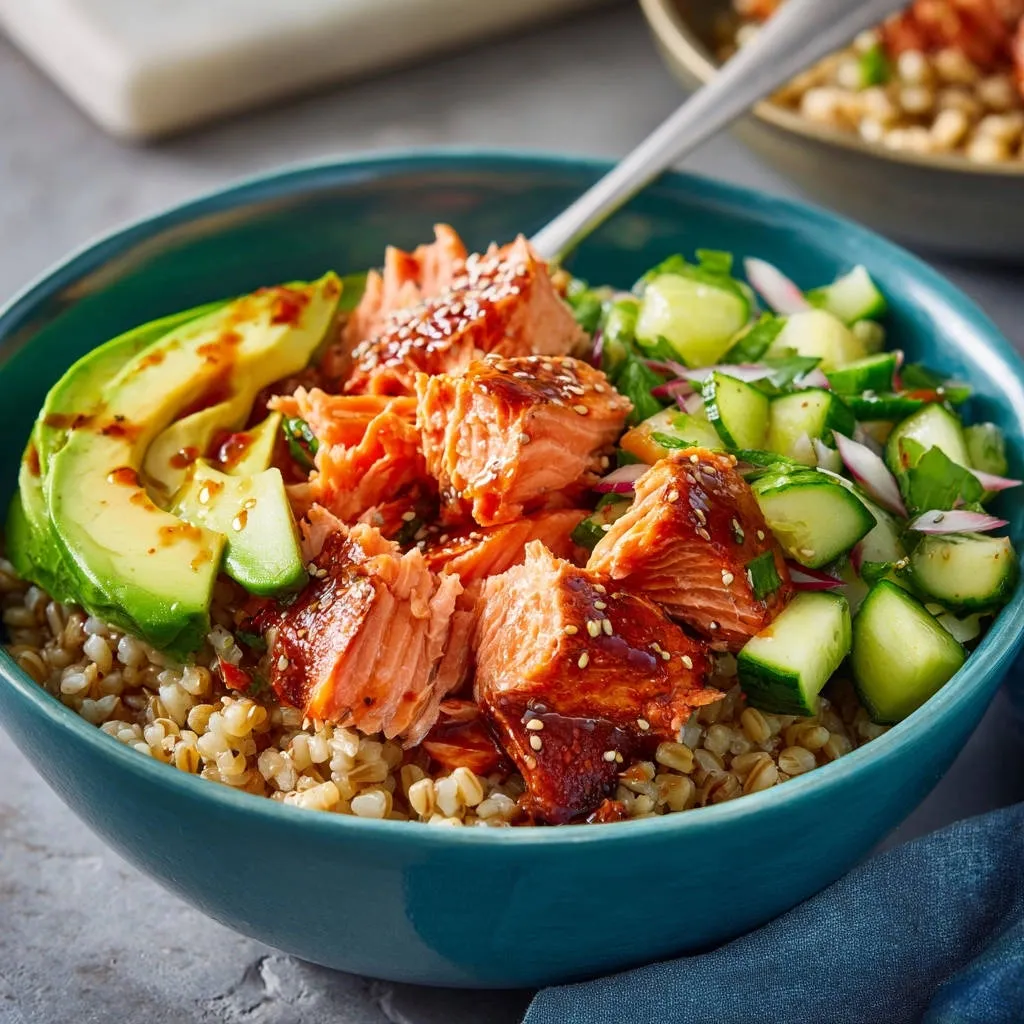
The frustration of cutting into a beautiful piece of salmon only to find it chalky and dry is completely avoidable. This Glazed Salmon Power Bowl recipe guarantees consistently tender, flaky fillets every single time, thanks to our moisture-retaining low-temperature baking method.
As an expert chef, I’ve refined this technique to ensure the delicate protein holds its sweet and savory glaze perfectly, making it the ideal centerpiece for quick weeknight meals and healthy meal prep.
For that perfect texture, learn how to achieve fluffy sushi rice in your next poke bowl.
Beyond Basic Bowls: Why This Glazed Salmon Power Bowl Wins
The Promise: Consistently Tender, Flaky Salmon
Unlike high-heat methods that shock the fish and force moisture out rapidly, baking salmon at 350°F is the key to tenderness.
For more ideas on achieving that perfect flaky texture, check out this easy flaky glazed salmon dinner.
This gentle temperature prevents the tightening of muscle fibers, allowing the salmon to cook through slowly and evenly, locking in natural juices for that perfect flakiness.
Quick Assembly for High-Impact Weeknight Meals
The beauty of the power bowl lies in its structure: a healthy grain base, a rich protein, and a vibrant, crisp salad component.
Because the glaze and salmon only require about 20 minutes total cook time, you can prep all your fresh components simultaneously, making this an ideal, balanced, high-protein meal prep candidate.
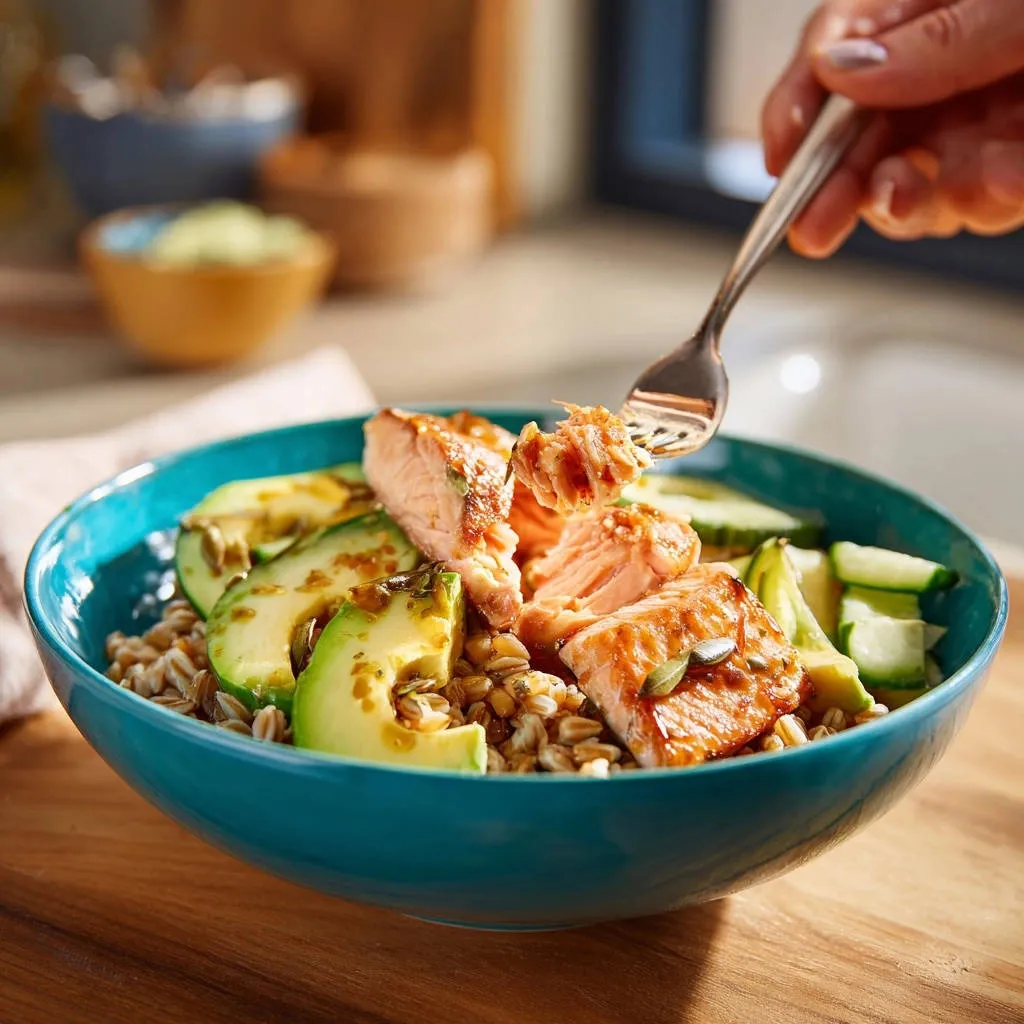
The Finishing Glaze Technique for Maximum Freshness
The secret to a dynamic flavor profile is the double-duty glaze strategy.
By reserving half of the raw glaze mixture and drizzling it over the finished, resting salmon, you introduce a layer of fresh, bright, unbaked ginger and vinegar flavor, maximizing moisture and taste.
The Building Blocks of Flavor: Salmon, Glaze, and Grain
Selecting the Perfect Salmon Fillet
Aim for 6-ounce portions of uniformly thick fillets, as thinner pieces will inevitably overcook before the center is ready.
Wild-caught Sockeye offers a rich color and firm texture, while Atlantic salmon is slightly fattier and more forgiving in the oven; remove the skin for best glazing results.
Crafting the Savory-Sweet Glaze Base (Tamari, Maple, Ginger)
The Tamari or soy sauce provides essential umami depth and saltiness, which caramelizes beautifully with the maple syrup.
Fresh grated ginger and garlic powder infuse the glaze with aromatic warmth, balancing the sharp rice vinegar and creating a complex, addictive flavor.
Choosing the Right Base Grain: Farro vs. Brown Rice
Farro, the traditional base for this recipe, offers a delightful chewy texture and nutty flavor that stands up well to the richness of the salmon.
If using farro, ensure it is cooked according to package directions, typically requiring simmering for 25-30 minutes; brown rice or quinoa are excellent, quick-cooking substitutes.
The Fresh Elements: Adding Crunch and Creaminess
Cucumber and radishes provide crucial cooling hydration and a sharp, refreshing crunch that cuts through the savory glaze.
Sliced ripe avocado introduces necessary healthy fats and a luxurious creaminess that harmonizes the entire Glazed Salmon Power Bowl.
Detailed Guide: Achieving Glazed Salmon Power Bowl Perfection
Prepping for Success: The Dry Pat and Seasoning
Before seasoning, use paper towels to pat the salmon fillets completely dry on all sides; this is absolutely critical.
Moisture on the surface prevents the glaze from adhering and encourages steaming, which works against the flaky texture we are aiming for.
Mixing the Double-Duty Glaze
Combine the Tamari, maple syrup, rice vinegar, ginger, and garlic powder in a small bowl until fully smooth.
Immediately set aside exactly half of this mixture to be used later as the fresh finishing sauce; this portion should not be baked.
Initiate the Low-Temperature Cook (The Moisture Secret)
Preheat your oven to 350°F (175°C) and line a baking sheet with parchment paper.
Brush the salmon fillets generously with half of the remaining glaze (one-quarter of the total) and bake for the initial 10 to 12 minutes.
Finishing the Glaze and Hitting the Target Temperature
Remove the sheet and brush the final portion of baking glaze evenly over the tops of the fillets.
Return to the oven for an additional 3 to 5 minutes, checking the internal temperature with a thermometer; remove the salmon once it hits 140°F (60°C) to allow for resting carryover.
Assembling the Power Bowl Components
While the hot salmon rests for 5 minutes (it will continue cooking to 145°F), combine the chopped cucumber, sliced radishes, and herbs.
Divide the cooked grain base (farro or rice) between two serving bowls, preparing the canvas for the salmon.
Flaking, Dressing, and Serving the Glazed Salmon Power Bowl
Use a fork to gently flake the perfectly cooked salmon into large, tender chunks and place them over the grain.
Arrange the fresh salad and avocado beside the salmon, then drizzle the reserved, unbaked glaze over the salmon, avocado, and grain for maximum flavor impact and moisture.
Complementary Dishes
To round out your meal with the Glazed Salmon Power Bowl, consider these other seafood and fresh options.
- For a warming seafood starter, explore the Creamy Spicy Seafood Soup, offering tender bites.
- Add a fresh, vibrant element with the Spicy Peanut Crunch Salad for delightful crispy greens.
Chef’s Secrets: Elevating the Texture and Taste
Utilizing Carryover Heat for Optimal Flakiness
The target temperature for removing the salmon from the oven is 140°F, not 145°F.
The 5-minute rest allows the internal temperature to rise the final five degrees, ensuring the fish is perfectly cooked (145°F) but remains juicy and ultra-tender.
Don’t Waste the Pan Drippings
After removing the salmon, scrape any caramelized glaze and juices left on the parchment paper into the bowls.
These drippings are pure flavor concentration and add depth before you introduce the fresh finishing glaze.
Toasting Sesame Seeds for Maximum Aroma
For a richer, nuttier flavor, toast your sesame seeds in a dry pan over medium heat for 2-3 minutes, stirring constantly until fragrant and light golden.
Alternatively, toss them onto the baking sheet during the last 2 minutes of the salmon’s cook time.
Advanced Flavor: Adding a Citrus Zest
Just before drizzling, stir the zest of half a lime or lemon into the reserved finishing glaze.
This adds an incredible lift and brightness that balances the sweetness of the maple and the saltiness of the Tamari.
Customizing Your Power Bowl Experience
Ingredient Swaps and Veggie Alternatives
If cucumbers and radishes are unavailable, shredded carrots, thinly sliced bell peppers, or steamed edamame are great textural substitutes.
For a boost of greens, line the bottom of your bowl with massaged kale or baby spinach before adding the cooked grain.
Making the Glaze Ahead of Time (Meal Prep Strategy)
The raw glaze mixture is highly stable and can be prepared up to five days in advance.
Store the full batch in an airtight container in the refrigerator; when ready to cook, divide it into the baking portion and the finishing portion.
Scaling the Recipe: Cooking for a Crowd
When cooking four or more fillets, use a larger, rimmed baking sheet and ensure there is ample space between each fillet for proper air circulation and glazing.
The 350°F temperature and 140°F internal temp goal remain the same, but you may need to add 3-5 minutes to the total bake time if the oven is crowded.
Troubleshooting: Solving Common Glazed Salmon Problems
“Why is my salmon still dry, even at low temperatures?”
Dryness often occurs if the fillet tapers sharply at one end; aim for consistently thick center-cut pieces.
Most importantly, ensure your oven thermometer is accurate and always rely on an instant-read thermometer to confirm the internal temperature of 140°F, preventing guesswork.
My glaze keeps sliding off the salmon during baking.
This is almost always a sign that the salmon surface was not properly dried before the first application of glaze.
The oil, salt, and pepper should be applied immediately after patting dry, creating a better surface for the viscous glaze to cling to.
Can I grill or air fry the salmon instead?
You can use these methods, but understand they utilize high, dry heat, which makes achieving the delicate flakiness more difficult.
If grilling or air frying, stick to the glaze sequence but monitor closely, cooking only until the internal temperature just reaches 140°F, and use the reserved finishing glaze generously.
Glazed Salmon Power Bowl FAQs and Dietary Adaptations
How do I make this Glazed Salmon Power Bowl gluten-free?
The primary adjustment is confirming the Tamari or soy sauce replacement is certified gluten-free, as standard soy sauce contains wheat.
Also, swap the Farro, which is a wheat product, for a naturally gluten-free grain like quinoa or brown rice.
What is the best way to reheat leftover salmon?
To preserve moisture and flavor, never reheat salmon in the microwave, which turns it rubbery.
Reheat leftovers gently in a 275°F oven for 10-15 minutes, or use an air fryer set to 300°F for about 5 minutes, until just warmed through.
Can I substitute other proteins for salmon?
Yes, this versatile glaze works beautifully on boneless chicken thighs or firm tofu.
The low-temperature baking method is still ideal, but chicken thighs may require 25-30 minutes, and tofu should be baked for 20 minutes before glazing.
Ready to Impress? Share Your Glazed Salmon Power Bowl Masterpiece!
You now possess the insider technique for achieving perfectly tender, never dry glazed salmon-the ultimate foundation for a spectacular power bowl.
Embrace the unique dual-glazing strategy and the low-temperature bake, and watch this Glazed Salmon Power Bowl become your most requested weeknight meal.
Try the recipe tonight, utilize the expert tips, and enjoy the delicious confidence of serving truly flaky, juicy fish.
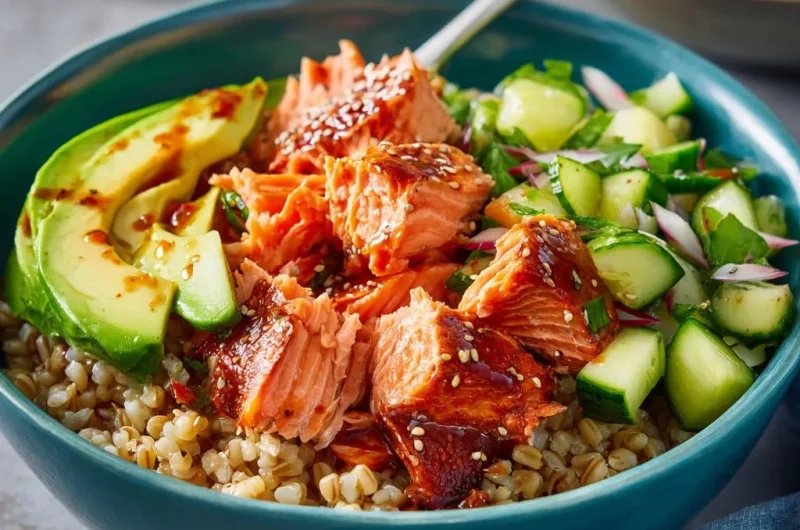
Glazed Salmon
Course: Main CourseCuisine: AsianDifficulty: easy2
servings15
minutes15
minutes650
kcal30
minutesNever suffer through dry salmon again! This method uses a low-temperature, gentle bake to guarantee consistently juicy and flaky results. Served over Farro or rice with fresh vegetables and a vibrant Tamari glaze, this Glazed Salmon Power Bowl is ideal for healthy meal prep.
Ingredients
2 6-ounce salmon fillets skin removed
1 tablespoon olive oil
Salt and pepper to taste
1 cup cooked Farro or brown rice
1/2 medium ripe avocado sliced
1 cup chopped English cucumber
1/4 cup thinly sliced radishes
2 tablespoons chopped fresh parsley or cilantro
1 tablespoon toasted sesame seeds for garnish
For the Glaze:
1/4 cup Tamari or soy sauce
2 tablespoons maple syrup or brown sugar
1 tablespoon rice vinegar
1 teaspoon grated fresh ginger
1/2 teaspoon garlic powder
Directions
- Prepare the Salmon and Glaze: Preheat your oven to 350 degrees F. Line a small baking sheet with parchment paper or foil. Pat the salmon fillets completely dry with paper towels; this is crucial for even cooking and preventing steaming. Season lightly with salt and pepper and place on the prepared sheet.
- Mix the Glaze: In a small bowl, whisk together the Tamari, maple syrup, rice vinegar, ginger, and garlic powder until smooth. Set aside half of the glaze mixture.
- Initiate the Low-Temp Cook (The Moisture Secret): Brush the top of the salmon fillets generously with half of the remaining glaze. Place the baking sheet into the 350 degree F oven. Bake for 10 to 12 minutes.
- Finish Glazing and Flake: After the initial cook time, remove the salmon from the oven. Brush the remaining glaze mixture evenly over the top. Return the salmon to the oven and cook for another 3 to 5 minutes, until the salmon reaches an internal temperature of 140 degrees F. This gentle baking temperature prevents the rapid loss of moisture, ensuring the fillets remain tender and flaky.
- Prepare the Salad: While the salmon rests (it will carryover cook to 145 degrees F), toss the chopped cucumber, sliced radishes, and parsley/cilantro together in a small bowl.
- Assemble the Bowls: Divide the cooked farro between two serving bowls. Gently flake the salmon using a fork, separating it into generous chunks, and place it over the grain. Arrange the sliced avocado and the cucumber radish salad beside the salmon.
- Serve: Drizzle the remaining unbaked glaze (the half set aside in Step 2) over the salmon and avocado for maximum fresh flavor and moisture. Garnish generously with toasted sesame seeds and serve immediately.
Notes
- Patting the salmon completely dry before baking is crucial for even cooking. Reserve half of the unbaked glaze to drizzle over the finished bowl for maximum fresh flavor.