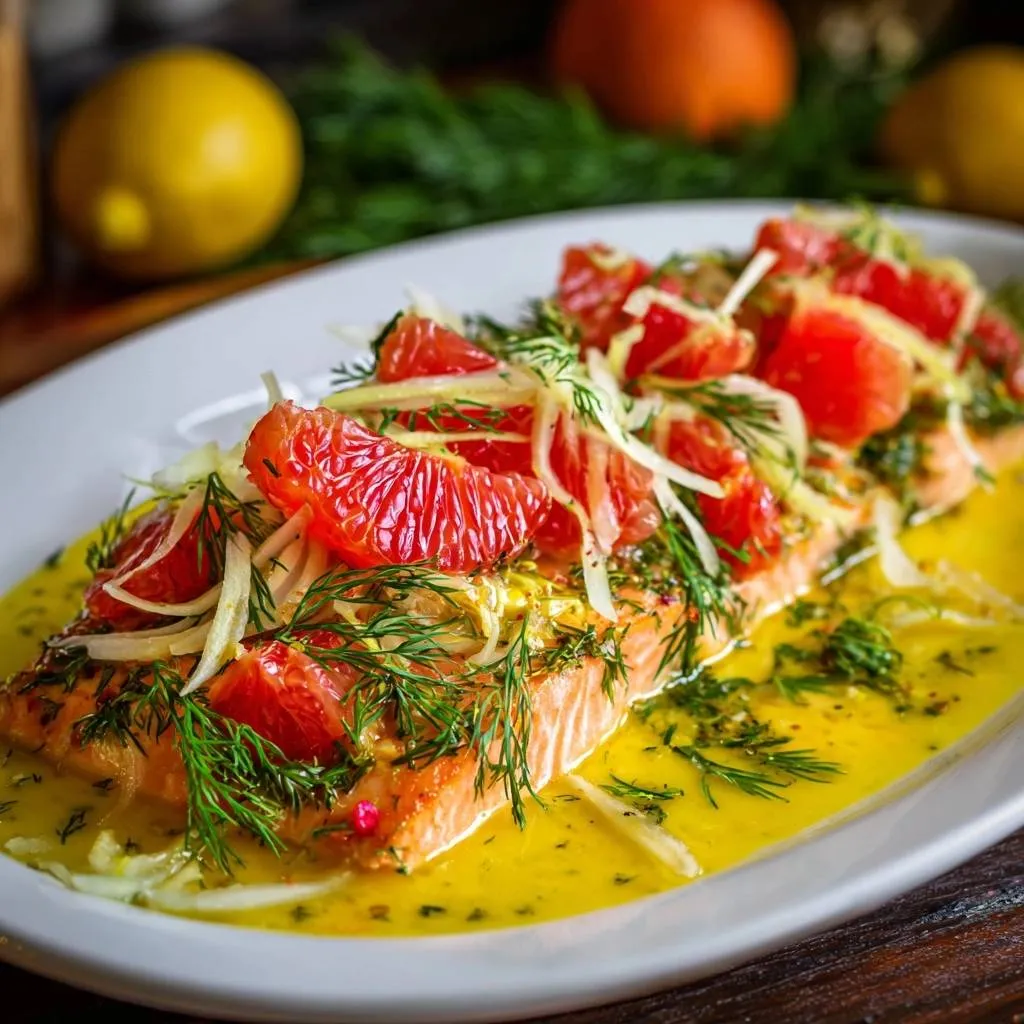
Ever pull salmon from the oven only to find it dry and chalky? This Grapefruit Fennel Salmon fixes that fast. You bake it low and slow at 275°F, so the fish stays moist and flaky every time. No more takeout cravings when dinner’s this easy and fresh.
Here’s why it works so well. Traditional high-heat methods squeeze out all the juices, leaving tough fish behind. However, this gentle approach lets the skin render fat slowly while citrus bastes from above. In addition, the bright grapefruit and crisp fennel cut through the richness perfectly.
The real secret? Hit an internal temp of exactly 125°F. That’s when the salmon flakes glossy and tender without drying out. You’ll taste the difference in the first bite.
Why Low-Temp Baking Transforms Grapefruit Fennel Salmon
High-heat baking at 400°F or more forces proteins to seize up fast. Therefore, the salmon turns dry before you know it. But at 275°F, everything changes for your Grapefruit Fennel Salmon.
The low temp slowly renders fat from the skin, which bastes the flesh naturally. Meanwhile, grapefruit juices steam and tenderize from the top. You get moist, flavorful results without foil or fuss.
Traditional methods often overcook the edges while the center stays raw. This way, however, even cooking happens throughout. Plus, the fennel stays crisp, adding perfect crunch.
Science of Slow-Rendered Salmon Fat
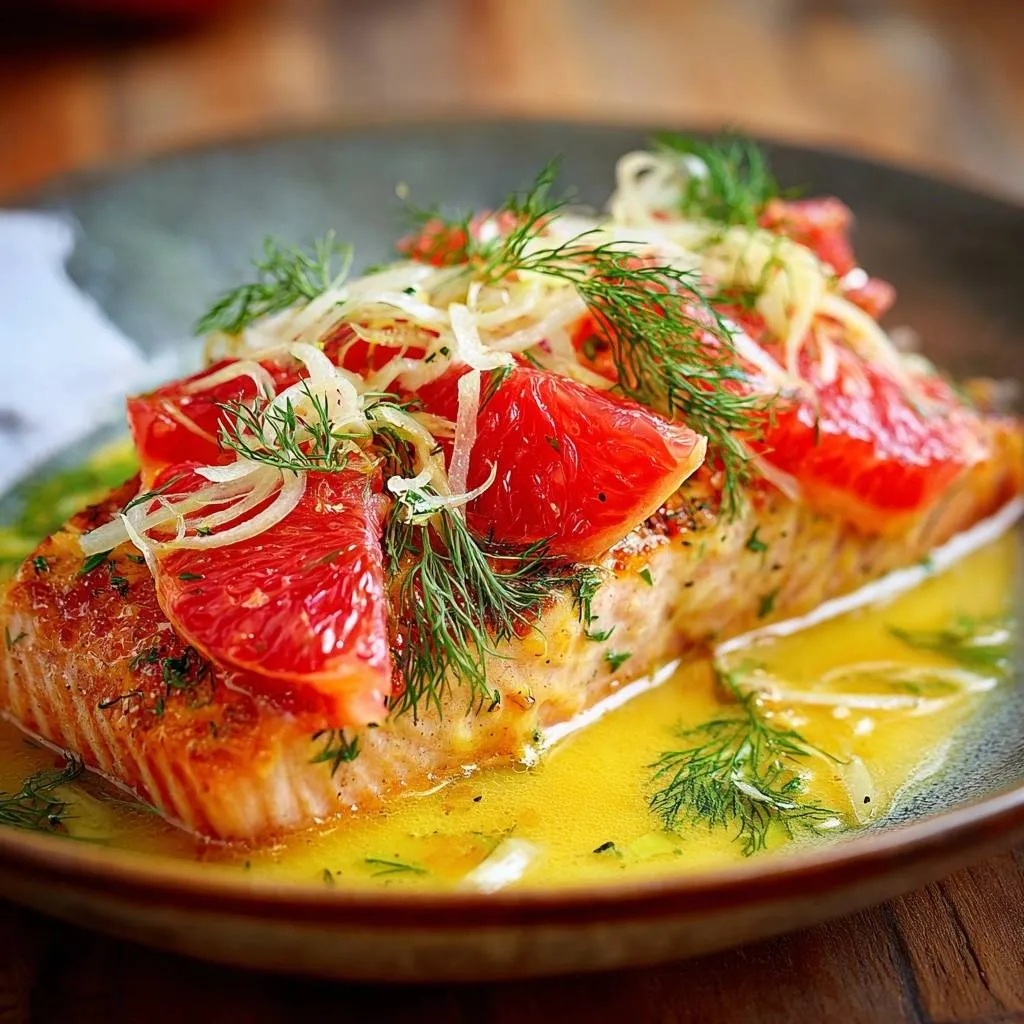
Collagen in salmon breaks down best between 120°F and 130°F internal. At low oven temps, this takes 18 to 20 minutes for a 2-pound fillet. Therefore, you end up with flaky texture, not toughness.
Time charts show 275°F hits the sweet spot. The fat melts gradually, keeping everything juicy. In addition, the skin crisps without burning.
Citrus Juices as Natural Basting Agent
Grapefruit supremes release acids and enzymes that tenderize proteins gently. Their low pH helps unwind the fish structure without cooking it harshly. Fennel volatiles amp up the fresh aroma too.
Juices pool and steam the salmon, locking in moisture. This basting mimics pro techniques. However, skip bottled juice; fresh segments work best.
Key Ingredients for Grapefruit Fennel Salmon Balance
Skin-on salmon fillet carries the dish. It protects the flesh and renders rich fat. Ruby red grapefruits bring tart brightness that balances the oiliness.
Shaved fennel adds crunch and subtle licorice notes. Fresh dill ties it with herbal freshness, while lemon zest and juice sharpen everything. Use extra-virgin olive oil for smooth drizzling.
Quality matters here. Pick wild salmon if you can for better fat marbling. Therefore, source firm grapefruits and crisp fennel bulbs.
For more ways to prepare this fish, see how to make lemon dill salmon.
Selecting Skin-On Salmon Fillet
Look for firm, shiny flesh with a fresh ocean scent. Skin-on is key because it renders fat during baking. A 2-pound side serves 6 to 8 easily.
Wild salmon has more omega-3s and firmer texture. Farmed works too but check for even color. Pat it dry right away.
Supreming Grapefruits Properly
Cut off top and bottom, then slice away peel and pith. Hold over a bowl and cut segments from membranes. This lets juices pool for basting your Grapefruit Fennel Salmon.
Ruby red varieties taste sweetest. White ones work but lack vibrancy. Save any extra juice for drizzling.
Shaving Fennel for Crisp Contrast
Trim fronds and core, then shave thin with a mandoline. Safety first: use a guard. Thin slices keep crunch without wilting in the oven.
Thicker cuts turn soft. Therefore, aim for paper-thin for that fresh snap against the salmon.
Prep Phase: Seasoning Grapefruit Fennel Salmon Base
Start by patting the salmon dry thoroughly. This helps salt and pepper stick instead of steaming the skin. Season both sides generously.
Drizzle with olive oil and half the lemon juice. It preps the surface for toppings. Layer everything evenly for uniform flavor.
Patting Dry and Initial Seasoning
Paper towels absorb excess moisture, preventing a steamed texture. Salt 30 minutes ahead if you have time for better penetration. Use fresh-ground pepper for punch.
Don’t skimp on seasoning. It draws out then reabsorbs moisture for juicier fish.
Layering Citrus and Fennel Topping
Place grapefruit segments evenly so juices pool around edges. Scatter fennel and chopped dill next. Finish with remaining oil, juice, and zest.
Even distribution ensures every bite pops. Chop dill fine for better integration.
Baking and Resting Grapefruit Fennel Salmon
Preheat to exactly 275°F. Bake 18 to 20 minutes until it flakes with a fork. Check the thickest part hits 125°F.
Rest 2 minutes off heat. Carryover cooking finishes it perfectly. Spoon pan juices over for extra flavor.
Monitoring Internal Temperature Closely
Insert probe into the thickest part, avoiding bone. Look for glossy, moist center. Stop at 125°F to dodge dryness over 140°F.
Fork test works too: gentle flake, not mush. Adjust time for fillet thickness.
Resting for Final Moisture Lock
Two minutes lets juices redistribute evenly. The skin crisps further from residual heat. Don’t skip this step.
Pro tip: tent loosely with foil if your kitchen’s drafty. It keeps heat in without steaming.
Science Behind Moist Grapefruit Fennel Salmon
Low temps denature proteins slowly, avoiding tough contraction. Maillard browning stays minimal, preserving moisture. Citrus pectin gels slightly, thickening juices.
Fennel anethole releases volatiles that bind to fish fats. Therefore, aromas bloom without bitterness. Moisture migrates evenly for perfect texture.
Low-Heat Collagen to Gelatin Conversion
Collagen turns to gelatin at 120 to 130°F over time. This creates that silky flake. High heat skips this, leaving chewiness.
Patience pays off. Your Grapefruit Fennel Salmon shines here.
Fennel-Grapefruit Volatile Compound Release
Baking gently activates aromatics. Dill terpenes cling to fats for lasting flavor. No harsh bitterness develops.
These compounds enhance salmon’s natural richness. It’s why this combo sings.
Avoiding Dry Grapefruit Fennel Salmon Pitfalls
High oven temps are the biggest culprit. They cause albumin to seize and squeeze out moisture. Stick to 275°F.
Overcrowding toppings traps steam. Pat dry well too. Check thickness and adjust time accordingly.
High-Heat Oven Mistakes
At 400°F, proteins tighten fast, drying the fish. Drop to 275°F for gentle cooking. You’ll see the glossy difference.
Always use an oven thermometer. It prevents hot spots.
Overlayering Toppings Issues
Too much creates steam pockets, wilting fennel. Distribute sparingly and evenly. This keeps crunch intact.
Less is more for balance.
Flavor Variations for Grapefruit Fennel Salmon
Swap grapefruit for blood orange for deeper sweetness. Tarragon replaces dill nicely. Add thin shallots or capers for pop.
Try sumac rub for citrusy tang. Scale down for two by halving everything. Tofu works vegan-style at same temp.
Citrus and Herb Swaps
Lime and mint make a zesty twist. Meyer lemons soften the acidity. Both keep moisture locked in.
Match herbs to your taste. Fresh always wins.
Adding Umami Boosters
Brush with miso thinned in lemon juice pre-bake. Preserved lemon adds salty depth. They amplify without overpowering.
Use sparingly. Taste as you go.
Pairing Sides with Grapefruit Fennel Salmon
Crisp greens cut the richness. Quinoa pilaf soaks up juices. Roasted asparagus adds char contrast.
Sauvignon Blanc pairs bright. Plate salmon whole for drama, then slice tableside.
Vegetable Complements
Shaved cucumber salad echoes fennel crunch. Charred broccolini brings smokiness. Both stay simple.
Season lightly to let salmon shine.
Grain and Starch Matches
Herbed farro absorbs pan juices perfectly. Fingerling potatoes roast alongside. They balance the plate.
Keep grains al dente.
Grapefruit Fennel Salmon Troubleshooting
Sticky Skin After Baking?
Always use parchment and a touch of oil under the skin. It releases cleanly. No parchment leads to sticking every time.
Fennel Lacks Crispness?
Shave even thinner next time, or salt lightly before shaving to draw out excess water. Thick slices wilt fast in oven heat.
Reheating Leftovers Moist?
Bake covered at 250°F with a splash of lemon juice until 125°F internal. Or steam gently. Microwave dries it out.
Adjusting for Thicker Fillets?
Add 5 minutes per extra inch of thickness, checking temp religiously. Thinner spots hit doneness first, so probe multiple areas.
Why Is My Salmon Pale?
Overlayering blocks heat penetration. Use fewer toppings and ensure even oven heat. Fresh ruby grapefruit adds natural pink hue too.
Can I Make Grapefruit Fennel Salmon Ahead?
Prep toppings up to 4 hours early, but bake fresh. Leftovers store well, but assembly right before ensures peak crispness and moisture.
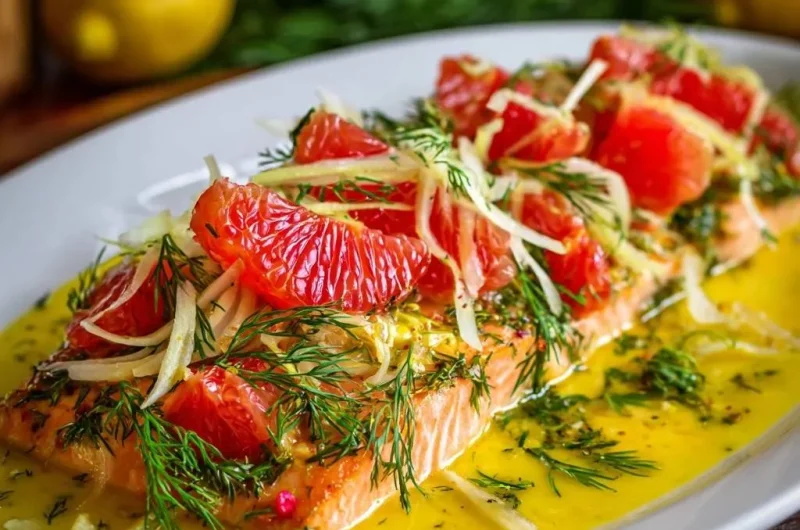
Grapefruit Fennel Salmon
Course: Main CourseCuisine: AmericanDifficulty: easy6
servings15
minutes20
minutes450
kcal35
MinutesTired of salmon turning dry and chalky? This recipe uses a low-temperature bake that gently cooks the fish to perfect moist tenderness while citrus juices baste it from above. Fresh grapefruit segments and shaved fennel add crunch and zing.
Ingredients
1 side skin-on salmon fillet (about 2 pounds)
2 ruby red grapefruits, supremed (segments cut from membranes)
1 large fennel bulb, shaved thin with a mandoline or knife
1 bunch fresh dill, fronds chopped (plus extra for garnish)
2 lemons, zested and juiced
1/4 cup extra-virgin olive oil
Salt and black pepper to taste
Directions
- Preheat oven to 275 degrees F. Pat salmon dry with paper towels, season both sides generously with salt and pepper, and place skin-side down on a parchment-lined baking sheet. Drizzle with 2 tablespoons olive oil and half the lemon juice.
- Arrange grapefruit supremes evenly over the salmon, letting their juices pool around it. Scatter shaved fennel and chopped dill on top. Drizzle with remaining olive oil, lemon juice, and lemon zest.
- Bake for 18 to 20 minutes, until salmon flakes easily with a fork but remains moist and glossy in the center (internal temp 125 degrees F). The low heat slowly renders fat from the skin while citrus juices baste and steam the fish, locking in every bit of moisture, no foil or parchment pouch needed.
- Remove from oven, let rest 2 minutes. The residual heat finishes cooking perfectly. Garnish with extra dill and serve with pan juices spooned over. Flaky, juicy salmon every single time.
Notes
- Low heat slowly renders fat from the skin while citrus juices baste and steam the fish, locking in moisture—no foil or parchment pouch needed. Internal temperature should reach 125°F for perfect doneness.