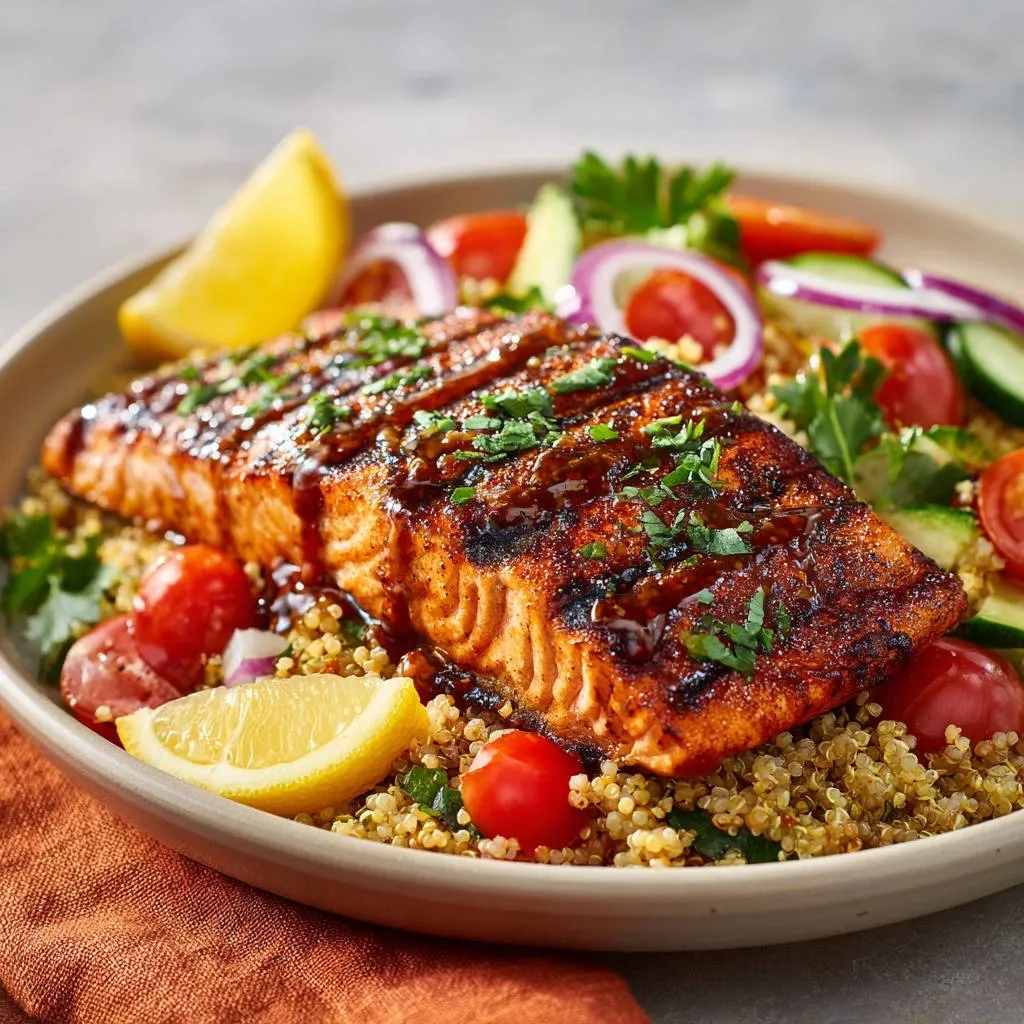
There’s nothing quite as satisfying as biting into a piece of perfectly cooked salmon, yet so many home cooks struggle to achieve that ideal flaky, moist texture without it turning dry or bland. After countless attempts to perfect a go-to weeknight recipe, I’ve cracked the code for an exceptional Grilled Glazed Salmon that delivers restaurant-quality results every single time.
This recipe isn’t just about grilling fish; it’s about mastering a few simple techniques and a vibrant, savory-sweet glaze that transforms humble salmon fillets into an unforgettable meal. Get ready to impress your family and yourself with truly irresistible Grilled Glazed Salmon.
Beyond Basic: What Makes Our Grilled Glazed Salmon So Special?
The “Never Dry, Always Moist” Promise
The biggest challenge with cooking salmon is often preventing it from becoming dry. Our approach emphasizes crucial steps like thoroughly patting the fillets dry before seasoning, precise cooking times, and a vital resting period post-grill.
These techniques work together to lock in moisture, ensuring your Grilled Glazed Salmon remains incredibly flaky and juicy, never overcooked.
Restaurant-Quality Flavor, Effortlessly Achieved
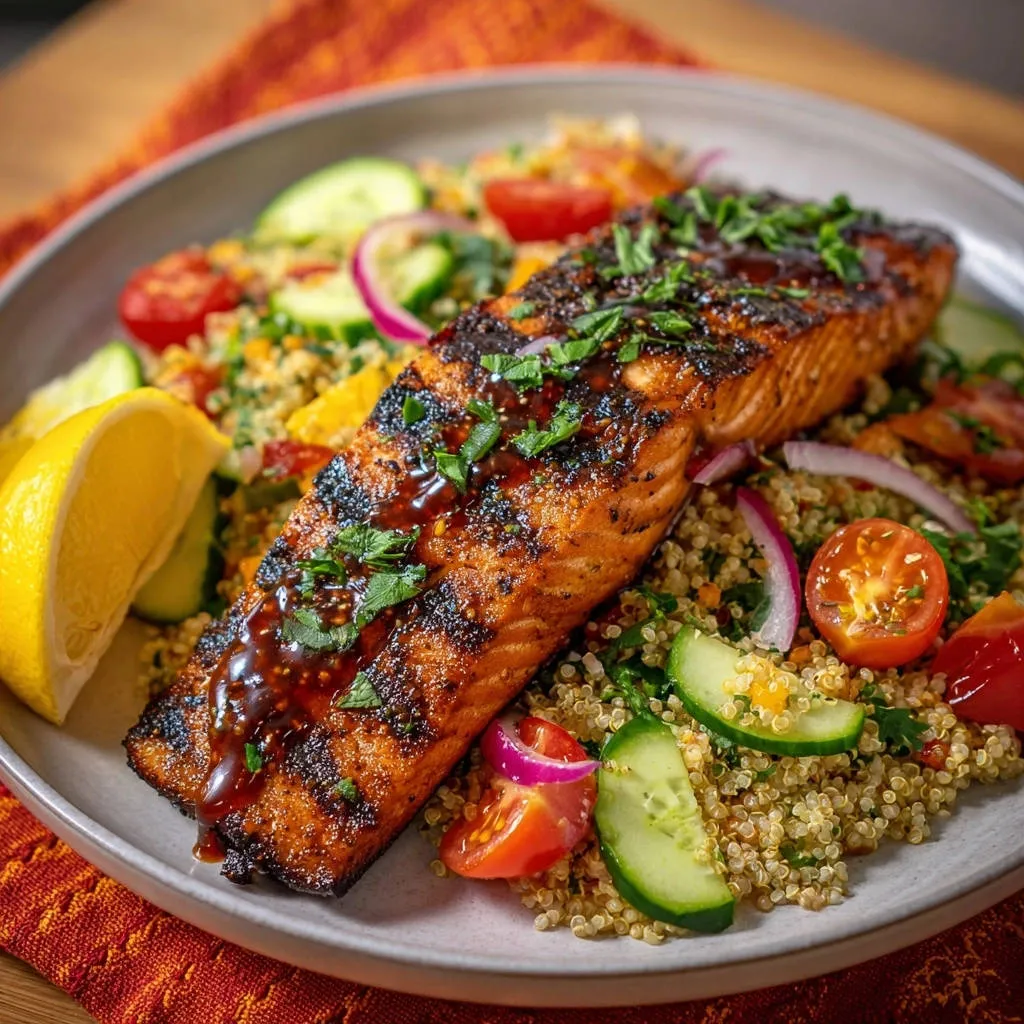
Who says gourmet has to be complicated? This recipe pairs a rich, smoky seasoning blend with a simple yet sophisticated glaze crafted from soy sauce, honey, rice vinegar, and fresh ginger.
The combination creates a harmonious balance of sweet and savory notes, caramelizing beautifully on the grill to deliver a truly memorable flavor profile with minimal fuss.
A Quick & Healthy Meal Solution
In our busy lives, finding delicious, healthy meals that don’t take hours is a win. This Grilled Glazed Salmon comes together quickly, making it perfect for a nutritious weeknight dinner.
It’s packed with lean protein and omega-3 fatty acids, making it a wholesome choice for the entire family.
The Building Blocks of Flavor: Essential Ingredients for Your Grilled Glazed Salmon
Star of the Show: Choosing Your Salmon Fillets
Start with two salmon fillets, about 6 ounces each, whether skin-on or skin-off. Look for vibrant, firm flesh without any strong fishy odor.
While skin-on offers protection and can become crispy, skin-off fillets are often easier to handle for beginners.
The Savory Seasoning Blend
Our simple seasoning elevates the salmon’s natural taste. Smoked paprika adds a beautiful depth and color, while garlic powder provides a foundational aromatic kick.
For a different take on seasoned fish, consider smoked salmon bundles for a crisp-tender finish.
A generous sprinkle of salt and freshly ground black pepper enhances all the other flavors, making each bite pop.
Crafting the Irresistible Glaze
The glaze is the secret weapon for this Grilled Glazed Salmon. Low sodium soy sauce (or tamari for a gluten-free option) provides the umami base.
Honey or maple syrup adds a touch of sweetness for caramelization, balanced by the tang of rice vinegar and the pungent warmth of grated fresh ginger.
Fresh Sides for a Complete Meal
For a balanced plate, we serve this salmon over fluffy cooked quinoa. Bright, fresh accompaniments include halved cherry tomatoes, thinly sliced cucumber, and red onion.
A sprinkle of fresh chopped parsley and a wedge of lemon for serving add essential brightness and acidity, rounding out the meal beautifully.
Gear Up: Essential Tools for Grilling Success
Grill or Grill Pan: Choosing Your Cooking Surface
An outdoor grill imparts wonderful smoky flavor and classic grill marks. Ensure your grates are clean and well-oiled for best results.
An indoor grill pan is a fantastic alternative, allowing you to achieve similar searing and marks right on your stovetop, perfect for any weather.
The Right Utensils: Spatulas, Brushes, and Tongs
A thin, flexible fish spatula is indispensable for carefully flipping delicate salmon fillets without breaking them. A basting brush is essential for evenly applying the glaze.
Tongs are useful for handling other ingredients and adjusting your grill, but stick to the spatula for the fish itself.
Temperature Checks: The Importance of a Meat Thermometer
For truly foolproof, moist salmon, an instant-read meat thermometer is your best friend. It eliminates guesswork, ensuring your fish reaches perfect doneness without drying out.
Aim for an internal temperature of 145°F (63°C) at the thickest part for optimal texture and safety.
Mastering the Grill: Your Step-by-Step Salmon Guide
Preparation is Key: Drying and Seasoning Your Salmon
Thoroughly pat the salmon fillets very dry with paper towels. This crucial step removes surface moisture, promoting a beautiful sear and preventing the fish from steaming instead of grilling.
Season both sides generously with salt, freshly ground black pepper, smoked paprika, and garlic powder. Don’t be shy with the seasoning; it forms the foundational flavor.
Whisking Up the Perfect Glaze
In a small bowl, whisk together the low sodium soy sauce (or tamari), honey (or maple syrup), rice vinegar, and grated fresh ginger. Continue whisking until the mixture is well combined and smooth.
This creates a balanced, savory-sweet glaze that will caramelize beautifully on your Grilled Glazed Salmon.
Preheating for Optimal Sear
Preheat your grill or grill pan to medium-high heat. Achieving the right temperature is key for a good sear and preventing sticking.
Once hot, lightly brush the grill grates or pan surface with olive oil. This adds a crucial layer of non-stick protection for your delicate salmon.
Grilling to Flaky Perfection: The First Side
Place the salmon fillets on the hot grill. If using skin-on, place skin-side down; for skinless, place the “presentation” side (the side you want facing up on the plate) down first to get those perfect grill marks.
Cook for 4 to 6 minutes without moving it. Resist the urge to peek or move the fish; this allows a crust to form and prevents sticking. Watch for the sides of the fillet to start turning opaque about halfway up, indicating it’s cooking evenly.
Glazing and Finishing: The Flip Side
Carefully flip the salmon using your thin fish spatula. Immediately brush generously with the prepared glaze, ensuring full coverage.
Continue to cook for another 3 to 5 minutes, brushing with more glaze occasionally. Cook until the Grilled Glazed Salmon is cooked through, flakes easily with a fork at its thickest part, and reaches an internal temperature of 145°F (63°C).
The Art of Resting: Don’t Skip This Step!
Remove the salmon from the grill immediately and transfer it to a clean plate. Cover loosely with foil and let it rest for 3 to 5 minutes.
Resting allows the juices to redistribute throughout the fillet, ensuring a perfectly moist and tender texture that truly elevates your Grilled Glazed Salmon.
Plating Your Grilled Glazed Salmon Masterpiece
Serve the perfectly cooked, glazed salmon over a bed of fluffy cooked quinoa. Arrange the cherry tomatoes, cucumber slices, and red onion alongside for a vibrant presentation.
Garnish with fresh chopped parsley and a squeeze of fresh lemon juice, which brightens all the flavors. Enjoy your exquisite Grilled Glazed Salmon!
Unlock Pro Secrets for Your Best Grilled Glazed Salmon Yet
The Power of Patting Dry: A Crucial First Step
Removing excess moisture from salmon fillets is paramount for achieving a beautiful, crispy sear and preventing a dreaded “steamed” texture. Moisture on the surface drastically lowers the cooking temperature at the point of contact.
This means your salmon will struggle to brown and develop that desirable crust, instead just releasing steam. A bone-dry surface allows for immediate caramelization and deep flavor development.
Temperature Control: The Enemy of Dry Salmon
High heat for a quick sear followed by moderate heat for cooking through is ideal. Overcooking is the single biggest culprit for dry Grilled Glazed Salmon.
Always use an instant-read thermometer to aim for 145°F (63°C) at the thickest part. Remove it from the heat just before it hits this target, as it will continue to cook slightly while resting.
Glaze Timing: When to Apply for Maximum Flavor & No Burning
Apply the glaze after you flip the salmon. The sugars in honey or maple syrup can burn quickly if exposed to high heat for too long.
Brushing it on during the second side of cooking allows it to caramelize beautifully, creating a sticky, flavorful crust without scorching.
Skin-On vs. Skin-Off: A Grilling Consideration
Grilling skin-on salmon provides an extra layer of protection, keeping the flesh moist and intact. The skin can also get wonderfully crispy.
If grilling skin-on, start skin-side down and cook until crispy before flipping. For skinless, focus on getting a good sear on the presentation side first.
Alternative Cooking Methods: Baking or Pan-Searing
No grill? No problem! For baking, preheat your oven to 400°F (200°C). Bake for 12-15 minutes, brushing with glaze halfway through, until 145°F.
For pan-searing, heat a non-stick skillet over medium-high heat with a tablespoon of olive oil. Sear for 4-5 minutes per side, glazing the second side as described for grilling.
Perfect Pairings: What to Serve with Grilled Glazed Salmon
Complimentary Grains and Greens
Beyond quinoa, consider serving your Grilled Glazed Salmon with fluffy couscous or a light lemon-herb rice. For vegetables, roasted asparagus, sautéed spinach, or a crisp green salad with a vinaigrette dressing are excellent choices.
The freshness of these sides perfectly complements the rich flavors of the glazed salmon.
Sauces and Garnishes to Elevate the Experience
A sprinkle of toasted sesame seeds over the top adds a lovely crunch and nutty flavor. A drizzle of extra virgin olive oil or a few fresh dill sprigs can also enhance the presentation and taste.
For an extra kick, a tiny dash of sriracha in the glaze or a dollop of chili-garlic sauce on the side can be delightful.
Beverage Pairings for an Enhanced Meal
For a refreshing option, a light-bodied sparkling grape juice beautifully complements the rich, savory-sweet profile of Grilled Glazed Salmon. These grape juice offer a balance that won’t overpower the fish.
Non-alcoholic options include sparkling water with lemon and ginger, or a refreshing iced green tea, which cleanses the palate wonderfully.
Planning Ahead: Tips for Make-Ahead & Storage
Can You Prep the Glaze in Advance?
Absolutely! The glaze can be whisked together up to 3-4 days in advance and stored in an airtight container in the refrigerator. This makes weeknight cooking even faster.
Just give it a good whisk again before using, as the ingredients may separate slightly.
Best Way to Store Leftover Grilled Salmon
Allow any leftover Grilled Glazed Salmon to cool completely before transferring it to an airtight container. Refrigerate promptly and consume within 2-3 days.
Proper storage is key to maintaining freshness and safety, although salmon is always best enjoyed fresh off the grill.
Reheating Grilled Salmon Without Drying It Out
To reheat gently, place the salmon in a foil packet with a tablespoon of water or broth, and warm in an oven preheated to 275°F (135°C) for 10-15 minutes.
Alternatively, microwave on low power in short bursts until just warmed through. Avoid high heat, which will quickly dry out the delicate fish.
Troubleshooting Your Grilled Glazed Salmon
“Why is My Salmon Dry and Overcooked?”
This usually comes down to overcooking. Ensure your grill isn’t too hot, and use an instant-read thermometer to pull the salmon off the heat precisely at 145°F (63°C).
Don’t skip the resting step; it’s crucial for juice redistribution and maintaining moisture.
“My Salmon is Sticking to the Grill!”
Ensure your grill grates or grill pan are thoroughly preheated and lightly brushed with oil before adding the fish. More importantly, resist the urge to move the salmon too early.
Allow a good sear to form (about 4-6 minutes on the first side), and it will naturally release from the grill when it’s ready to be flipped.
“The Glaze Isn’t Sticking / It’s Burning!”
If the glaze isn’t sticking, the salmon surface might still be too wet, or the grill isn’t hot enough to create the initial caramelization. Ensure the fish is patted dry and your grill is at medium-high.
If it’s burning, your grill is likely too hot or you applied the glaze too early. Remember to apply the glaze only after the flip, and ensure your heat isn’t excessively high.
Grilled Glazed Salmon FAQs
What kind of salmon is best for grilling?
Fattier salmon varieties like Atlantic, King (Chinook), or Sockeye salmon are excellent choices for grilling. Their higher fat content helps them stay moist and flavorful under high heat.
Look for thick, even fillets (about 1-inch thick) for best results, as they cook more uniformly.
How do I know when salmon is done without a thermometer?
While a thermometer is ideal, you can tell salmon is done when it flakes easily with a fork at its thickest part. The flesh should change from translucent to opaque throughout, with some white albumin appearing on the surface.
Be careful not to overcook once these visual cues appear.
Can I make this recipe without a grill or grill pan?
Yes, absolutely! This versatile recipe can be easily adapted for baking in the oven or pan-searing on the stovetop. Refer to the “Alternative Cooking Methods” section for specific instructions.
Is this Grilled Glazed Salmon recipe gluten-free?
Yes, this recipe can easily be made gluten-free by simply substituting low sodium soy sauce with tamari, which is a gluten-free alternative. All other ingredients are naturally gluten-free.
Can I use different sweeteners for the glaze?
Certainly! While honey and maple syrup provide a balanced sweetness and caramelize well, you can experiment with alternatives like brown sugar or agave nectar. Brown sugar will yield a deeper, more molasses-like flavor and color.
Adjust quantities to taste, keeping in mind that different sweeteners may caramelize at slightly different rates.
Your Journey to Flaky, Flavorful Grilled Glazed Salmon Awaits!
You now possess the secrets to creating truly exceptional Grilled Glazed Salmon, a dish that will undoubtedly become a staple in your culinary repertoire. From selecting the freshest fillets to mastering the art of the perfect glaze and flawless grill technique, you’re equipped with expert knowledge.
Embrace the joy of cooking something truly delicious, healthy, and impressive with confidence. Go ahead, fire up that grill tonight and savor the exquisite results of your very own perfectly flaky, moist, and flavorful Grilled Glazed Salmon!
Grilled Salmon
Course: Main CourseCuisine: InternationalDifficulty: easy2
servings15
minutes10
minutes550
kcal30
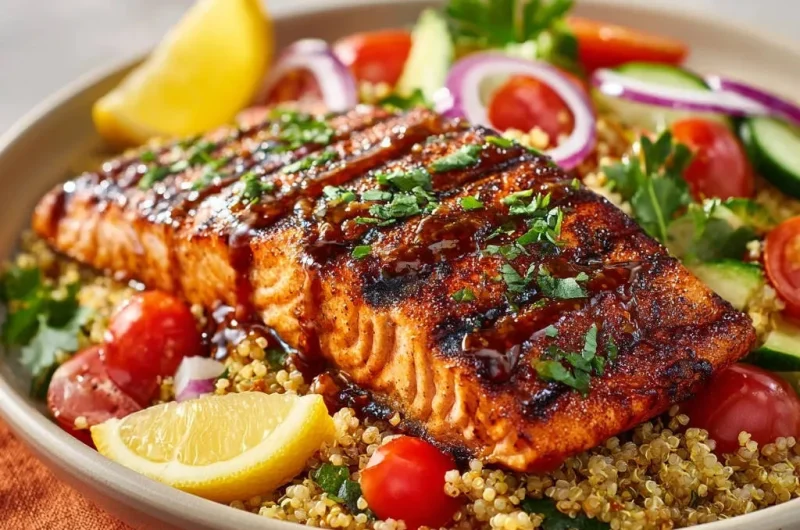
minutesSay goodbye to dry, bland salmon! This recipe guarantees perfectly flaky and moist grilled salmon every single time, coated in a delicious, savory-sweet glaze. Impress your family and friends with restaurant-quality results right from your kitchen.
Ingredients
2 salmon fillets (about 6 oz each), skin on or off
1 tablespoon olive oil
1/2 teaspoon smoked paprika
1/4 teaspoon garlic powder
Salt and freshly ground black pepper to taste
2 tablespoons low sodium soy sauce (or tamari for gluten-free)
1 tablespoon honey or maple syrup
1 teaspoon rice vinegar
1/2 teaspoon grated fresh ginger (or 1/4 teaspoon ground ginger)
Cooked quinoa, for serving
Cherry tomatoes, halved, for serving
Cucumber, thinly sliced, for serving
Red onion, thinly sliced, for serving
Fresh parsley, chopped, for garnish
Lemon wedges, for serving
Directions
- Pat the salmon fillets very dry with paper towels. This crucial step helps with even cooking and prevents steaming. Season both sides generously with salt, pepper, smoked paprika, and garlic powder.
- In a small bowl, whisk together the soy sauce, honey or maple syrup, rice vinegar, and grated ginger to create your glaze.
- Preheat your grill or grill pan to medium-high heat. Once hot, lightly brush the grill grates or pan surface with olive oil.
- Place the salmon fillets on the hot grill, presentation side down first if grilling directly, or skin-side down if keeping skin on. Cook for 4 to 6 minutes without moving it. The key to juicy salmon is not overcooking. Watch for the sides of the fillet to start turning opaque about halfway up.
- Carefully flip the salmon. Brush generously with the prepared glaze. Continue to cook for another 3 to 5 minutes, brushing with more glaze occasionally, until the salmon is cooked through and flakes easily with a fork at its thickest part. Do not exceed an internal temperature of 145 degrees Fahrenheit to keep it moist.
- Remove the salmon from the grill immediately and let it rest on a clean plate for 3 to 5 minutes. Resting allows the juices to redistribute, ensuring a perfectly moist texture.
- Serve the perfectly cooked, glazed salmon over a bed of fluffy quinoa, accompanied by cherry tomatoes, cucumber slices, and red onion. Garnish with fresh chopped parsley and a squeeze of fresh lemon juice.
Notes
- For best results, do not overcook salmon; aim for an internal temperature of 145°F and rest before serving.